Giant Flower Props for Film, Theater, and Stage Productions
Key Takeaways
If you've ever watched a music video and thought, "wait, are those flowers real?" — they're not. And honestly, that's kind of the magic. Giant flower props for film and theater have been showing up everywhere lately, from major label music videos to Broadway-inspired stage productions to indie film sets that need big visual impact on a small budget. I've had the honor of creating pieces for some incredible productions, and every single time, the reaction on set is the same: pure, wide-eyed delight.
I'm Adriana, and I've been building giant EVA foam flowers out of my Houston studio for years now. What started as wedding decor work quietly grew into something I never expected — prop work for film crews, theater companies, dance productions, and live events. People kept finding me because they needed something that looked incredible on camera, held up under stage lighting, and didn't cost a fortune to source.
So if you're a set designer, a theater director, a prop stylist, or just a creative person trying to figure out how to build something stunning for your production — this guide is for you. I'm going to walk you through everything I know about designing, building, and sourcing giant flower props that actually perform under pressure.
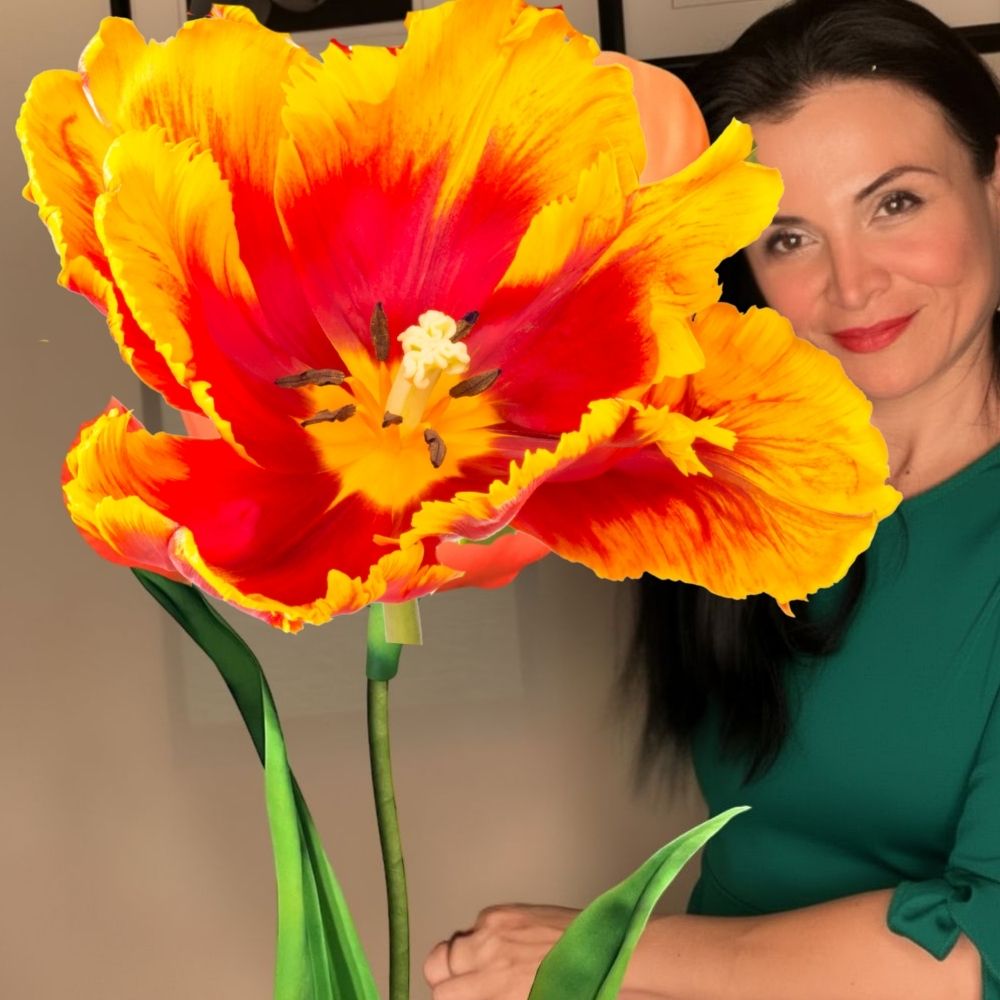
There's a reason production designers keep coming back to oversized florals. They're visually arresting. One 4-foot peony in the background of a shot does more storytelling work than a whole table of regular-sized props.
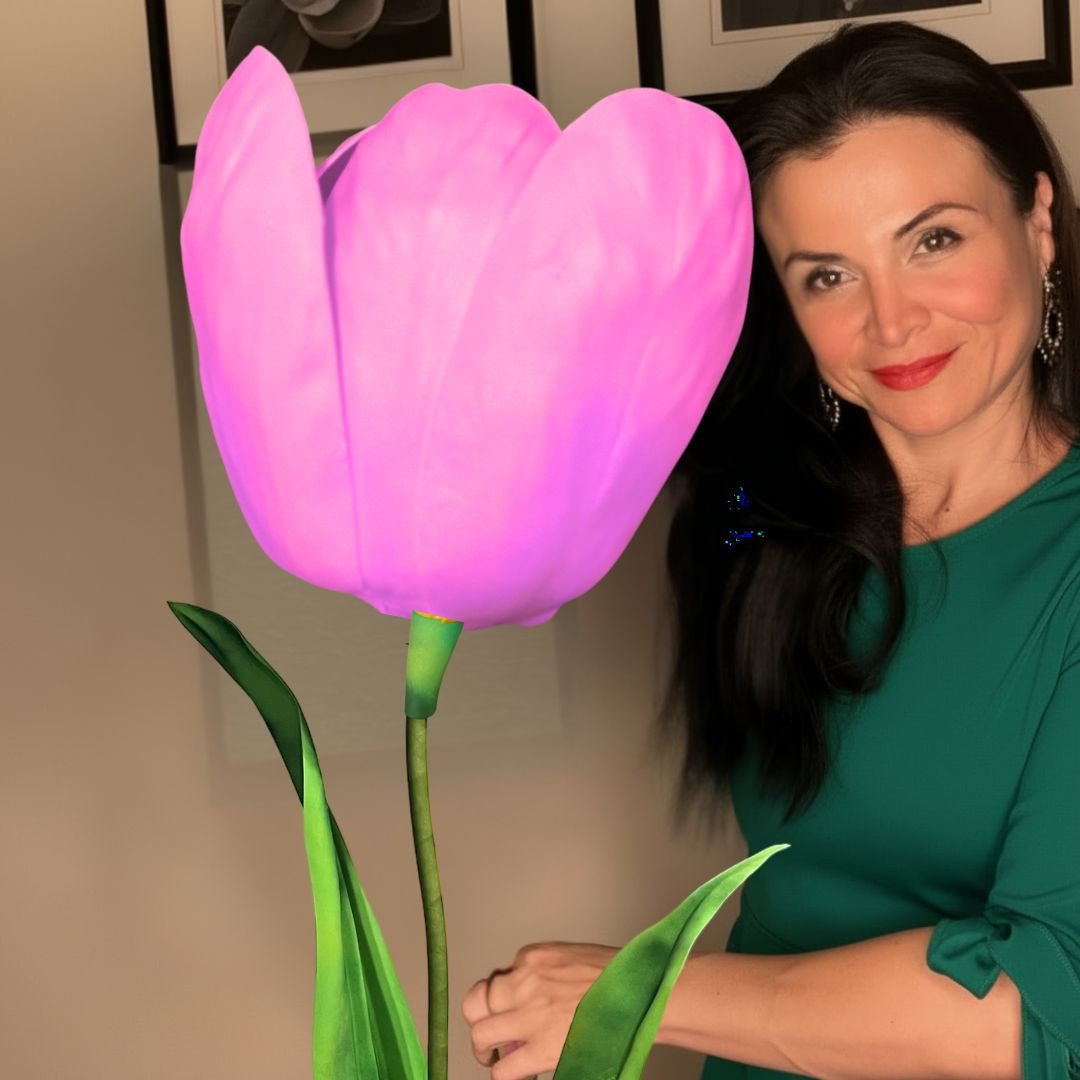
Scale is everything in visual storytelling. When you put a human being next to a flower that's taller than they are, something clicks in the viewer's brain — it's whimsical, surreal, dreamlike. You can set a mood in seconds without a single line of dialogue.
The Industry Is Investing More in Physical Props Than Ever
According to IBISWorld, the US event and production services industry generates over $6 billion annually, and visual prop design is one of the fastest-growing segments within it. Productions are investing more in physical, tactile set pieces because they photograph and film beautifully in ways that digital backgrounds simply can't replicate.
According to Statista, the global film and entertainment industry is valued at over $90 billion, and prop and set design budgets have grown significantly as streaming platforms demand higher production quality. That means prop stylists have more resources — but also more pressure to deliver.
According to The Production Directory, physical set pieces and practical props have seen a significant resurgence in demand as productions move away from over-reliance on green screen and digital backgrounds. Directors and cinematographers increasingly prefer the way real, tangible props interact with light and with performers. That's genuinely exciting to me — it means the craft I've dedicated years of my life to is more valued now than it's been in a long time.
Real talk? A foam flower prop holds up under hot stage lighting in a way that fresh flowers never could. I've seen real florals wilt under theatrical lighting in under an hour. EVA foam? It just sits there looking gorgeous, take after take after take.
The other thing nobody talks about enough is repeatability. Film productions often shoot the same scene multiple times over multiple days. You cannot do that with fresh flowers. But a well-made foam flower prop can last through an entire shoot schedule and still look perfect on the final day.
I've also found that giant flower props photograph with this beautiful, almost painterly quality. The EVA foam has a slight texture and matte finish that catches light in a really flattering way — it doesn't look plastic or cheap on camera when it's made correctly.
The Five Types of Giant Flower Props for Film and Theater
Not all giant flowers are created equal. The right choice depends on your production type, your lighting setup, your budget, and honestly — how much time your team has to assemble things on set. Let me break down the main categories so you can make a smart decision from the start.
The most important question to ask yourself before ordering or building is: will this prop be in motion? A flower that sits on a set is a very different build than one that a performer is going to carry, swing, or interact with physically.
For static set dressing, you have more flexibility with layering and detail. For performance props, you want to prioritize weight, balance, and stem flexibility above everything else. Getting this wrong is the most common mistake I see first-time buyers make — and it's completely avoidable.
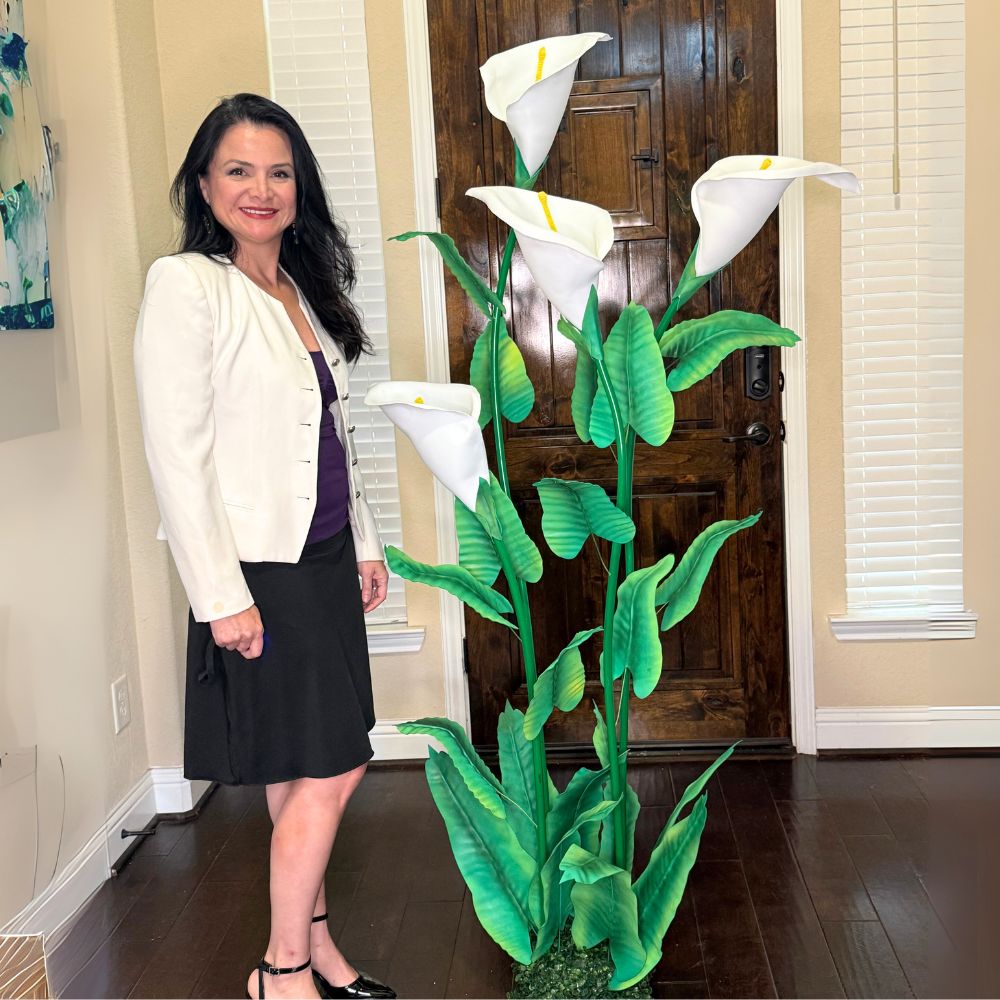
This is where it gets really fun — because the material question is everything, and most people get it wrong the first time. I've tested basically every material you can imagine for giant flower construction over the years: crepe paper, cardstock, tissue paper, silk, felt, and about a dozen types of foam. And for production use specifically? EVA foam is the clear winner every single time.
Honestly? Skip the cheap crepe paper for anything that's going to live on a professional set. It tears, it fades under lighting, and it just doesn't have the structural integrity for repeated use.
The one exception is if you need a very specific soft, tissue-like texture for a close-up shot. In that case, 160gsm crepe paper can be beautiful — but only for static props that won't be handled. Think of it as a specialty tool, not a go-to material.
For stems, I always recommend our bendable pipe stems. They're heavy-gauge enough to support a full flower head but flexible enough that a performer can carry one without it feeling rigid and unnatural. A good stem makes the difference between a prop that looks alive and one that looks stiff.
When I first started making giant flowers, I ruined so many petals trying to get the heat gun technique right. Too much heat and the foam bubbles. Too little and it won't hold its shape. It took me a solid month of practice before I felt confident. That's exactly why our kits come with detailed video tutorials — I want to save you that learning curve entirely.
Sizing, Pricing, and What to Budget for Your Production
I get asked about sizing and cost constantly, so let me just lay it all out clearly. These are the ranges I recommend based on years of real production work — no guesswork, just what I've seen actually work on set.
A report from The Knot found that couples spend an average of $2,000–$3,000 on floral decor for a single event. For a theater production running multiple nights, that kind of recurring cost for fresh flowers is simply unsustainable. A one-time investment in quality foam props that can be reused across an entire season makes so much more financial sense.
According to Backstage, set design accounts for 15–25% of a theater production's total budget in mid-size regional theater companies. Getting your props right the first time — choosing materials that last and look great — is genuinely one of the smartest financial decisions you can make in pre-production.
So let's say you've decided on your flowers, you've got your materials, and now you need to actually put together an installation that's going to survive a full production run. Here's how I approach it — from the first planning call to load-in day.
The first thing I always figure out is the anchor system. How is this flower going to stay in place? The answer changes completely depending on whether you're doing film, theater, or a live event.
For film sets, most giant flower props are either freestanding on weighted bases or rigged from above using standard grip equipment. The nice thing about EVA foam is that it's light enough to fly — meaning you can suspend it from a lighting rig without any structural concerns.
For theater productions, I usually recommend building a modular system. Each flower is a self-contained unit that can be attached to a flat, a wing, or a backdrop panel using industrial velcro or hook-and-loop fasteners. This way, your stage crew can set up and strike the flowers quickly between scenes.
Step 2: Think About Color Under Your Specific Lighting
Color is something I want to spend a minute on because it matters more than people realize for production work. Colors that look beautiful in person can read completely differently under stage lighting or on camera.
Warm tones — blush, coral, peach, gold — tend to glow beautifully under theatrical lighting. Cool tones — lavender, dusty blue, sage — can sometimes wash out under warm stage lights unless you compensate with your lighting design. I always recommend talking to your lighting director before finalizing your flower colors. It's a five-minute conversation that can save you a lot of heartache on opening night.
If you're building a full floral environment for a stage production, our guide to freestanding giant flower arrangements has a really detailed breakdown of how to layer different flower sizes and types for maximum visual depth.
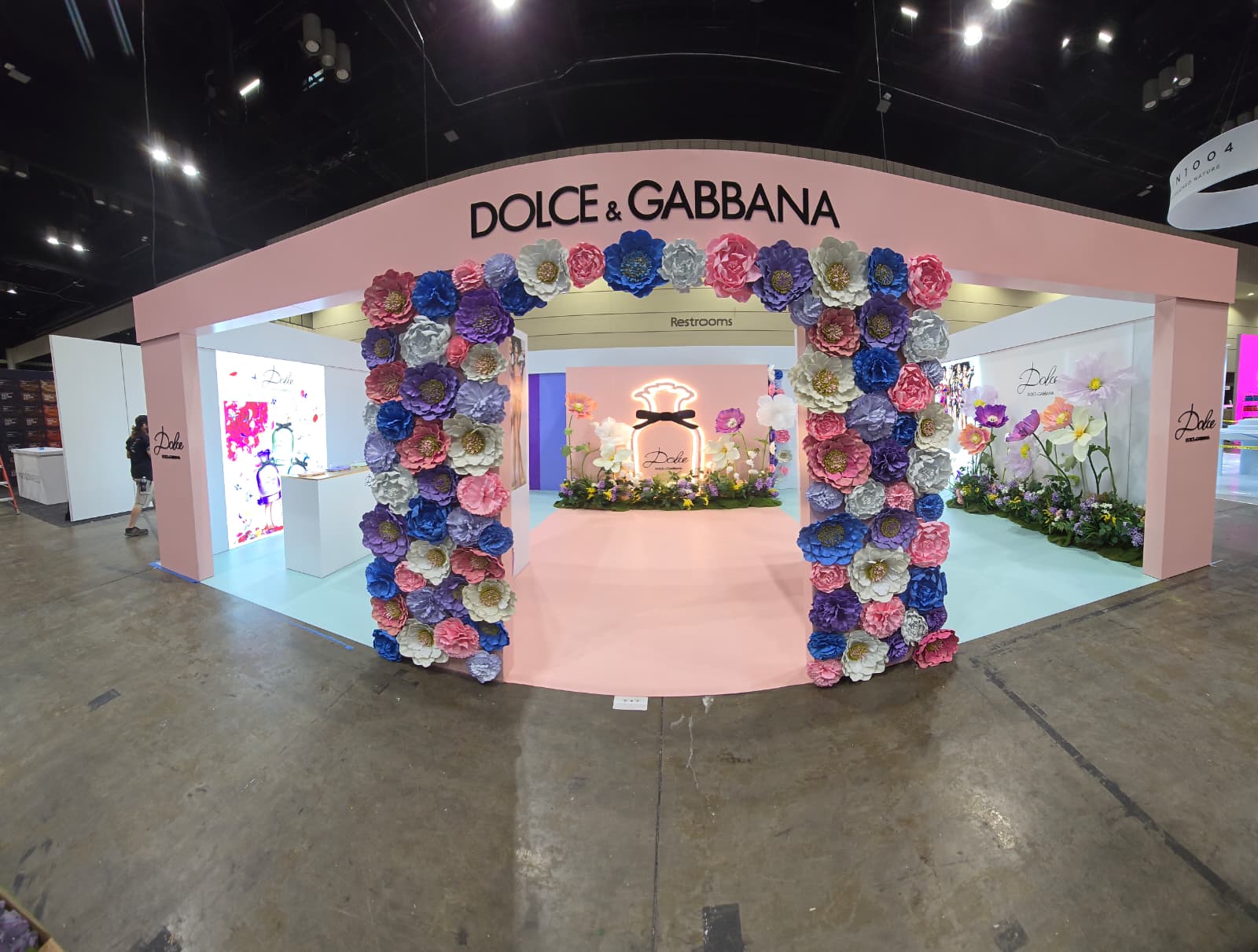
Working with clients at the level of Disney and Dolce & Gabbana taught me things I couldn't have learned any other way. Here's what I wish someone had told me earlier.
A report from Event Marketer found that 74% of consumers say engaging with branded event experiences makes them more likely to buy — which is why so many brands are investing in theatrical, immersive visual environments. Giant flower installations are showing up in brand activations, pop-up experiences, and commercial shoots more than ever before.
And honestly, the demand keeps growing. I get inquiries from production companies every week now — people who found us through word of mouth or saw our work in a shoot and tracked us down. The market for high-quality, reusable giant flower props for film and theater is real and it's expanding fast.
Corporate Productions and Brand Activations
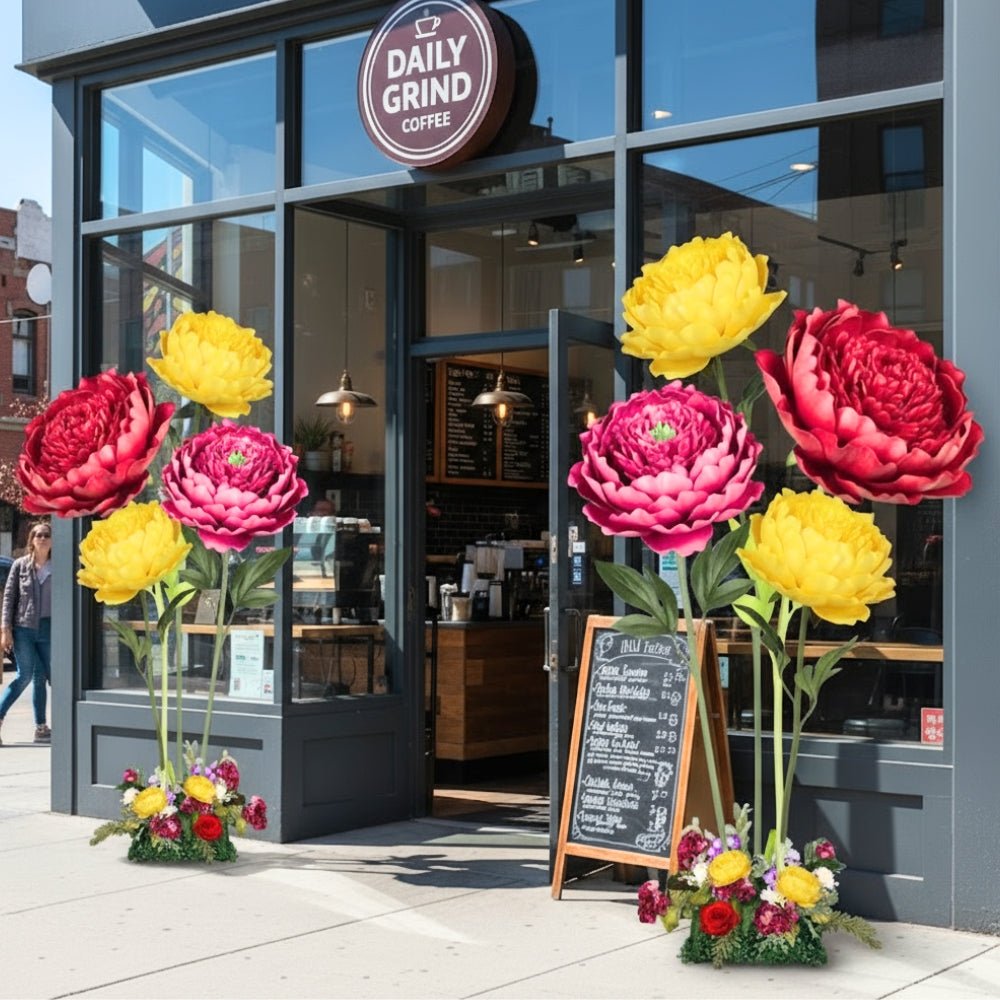
If you're working on a corporate production or brand activation, our corporate event engagement ideas post has some really specific examples of how giant flower installations have been used in commercial contexts — with results that actually moved the needle for the brands involved.
For visual merchandising applications — think retail pop-ups or showroom installations — our visual merchandising guide for boutiques is worth a read too. The same principles that make giant flowers work on stage make them incredible in a retail environment.
Music video directors love giant flower props for the same reason theater directors do: instant visual impact, zero setup complexity, and a finished look that feels expensive even when the budget isn't. I've had props appear in videos that racked up millions of views — and every time, comments flood in asking where the flowers came from.
For streaming and digital content specifically, the matte finish of EVA foam is a genuine advantage. It doesn't create the blown-out highlights or lens flares that shiny or metallic props can produce — which means your colorist has a much easier time in post.
With proper handling, a well-built EVA foam flower prop can last through an entire multi-week production run — and then some. I have clients who've been using the same set of flowers across multiple productions spanning two or three years.
The main things that shorten a prop's life are rough physical handling and improper storage. Store them flat or hung vertically, away from direct sunlight when not in use, and they'll stay looking sharp for a very long time.
Can giant flower props be used outdoors for film shoots?
Yes, with some caveats. EVA foam handles moderate outdoor conditions really well — light wind, indirect sun, and mild temperatures are all fine. What you want to avoid is sustained direct sunlight over many hours, which can cause slight color fading over time, and heavy rain, which can affect any painted finishes.
For outdoor shoots, I always recommend sealing painted flowers with a matte UV-resistant clear coat. It adds maybe 20 minutes of prep time and dramatically extends the life of the prop in outdoor conditions.
For wide shots — establishing shots, full-stage views, or scenes where the flower is part of the background environment — I recommend flowers in the 3–5 foot range. They read clearly at distance without overwhelming the frame.
For close-up or medium shots where the flower will be in the foreground or interacting with a performer, 18–30 inch blooms give you the most realistic petal detail and the best texture response under camera lighting. If you're planning both types of shots in the same production, it's worth having both sizes in your prop kit.
Absolutely — and this is honestly one of my favorite parts of the work. I regularly create custom colorways to match a production designer's specific vision, whether that's a particular Pantone reference, a color pulled from a costume, or a gradient effect across a full installation.
Custom orders do require a bit more lead time — typically 2–3 weeks depending on the complexity and quantity — so reach out as early in pre-production as possible. The earlier we connect, the more options we have to get it exactly right.
Are the kits easy enough for a stage crew to assemble without prior experience?
Yes — that was a deliberate design goal from the beginning. Every kit comes with step-by-step video tutorials that walk you through the full assembly process, and most people complete their first flower in under 90 minutes with no prior crafting experience.
For large theater installations, I recommend designating one or two crew members to become your "flower leads" — people who assemble the first batch and then guide the rest of the team. Once you've built one, the rest go much faster. Most crews can assemble a full 10-flower set in a single afternoon.
The key is to think modular. Flower heads and stems should always be stored and transported separately, then assembled on location. I recommend large wardrobe boxes or flat-pack storage bins lined with tissue paper for the flower heads — they're lightweight enough that a single person can carry several boxes at once.
For arch installations or large wall arrangements, I build each section as a self-contained panel that can be broken down to fit in a standard cargo van. If you're shipping cross-country for a production, reach out and I can walk you through the best packing approach for your specific installation.
Whatever you're building — a music video set, a school theater production, a professional stage show, or a commercial shoot — I hope this guide gave you a real foundation to work from. The world needs more beautiful, handmade, physical things. And giant flowers? They make people genuinely happy. Every single time.
If you're ready to get started, come browse our full collection at Amazing Giant Flowers. And if you have questions about a specific production — reach out. I love talking through projects and helping people figure out exactly what they need. What kind of production are you working on? I'd genuinely love to know.
Ready to Create Something Amazing?
Browse our collection of giant flower kits and start your next project today.