Cover Table Party Perfection: A Step-by-Step Guide

You’ve got the venue booked, the flowers ordered, the playlist locked in, and then the tables show up looking like an afterthought. That’s where many parties lose visual impact.
A strong cover table party setup fixes that fast. The right table cover doesn’t just hide folding legs or protect surfaces. It sets the mood, sharpens the theme, and gives every floral detail a stage.
The tables guests lean on, photograph, gather around, and remember should work harder than “good enough.” When you pair a smart foundation with oversized floral styling, a plain surface becomes a focal point.
Tables carry more visual weight than most hosts expect. Guests may not consciously study a table cover, but they notice immediately when it’s wrinkled, too short, cheap-looking, or disconnected from the rest of the room.
That’s why table covers should be chosen early, not at the end. They’re the base layer that makes centerpieces, signage, florals, and place settings look intentional.
A good table cover signals hospitality
This idea isn’t new. The ancient Romans used tablecloths in lavish banquets around 2,000 years ago, turning meals into theatrical displays of wealth and presentation, as noted in this history of table linen through the ages.
That history matters because the job of a table cover hasn’t really changed. It still communicates care, status, and atmosphere before a guest even sits down.
Tables don’t disappear into a room. They either support the design or undermine it.
For planners, that shows up in familiar frustrations:
The fastest way to improve a room is to treat every table as a mini set. That applies to:
If you’re trying to create a more cohesive guest experience, it helps to think beyond linens alone and study how custom décor pieces work together. Resources on personalized party decorations are useful for seeing how tables, signage, and statement elements can reinforce one visual story.
A practical rule is simple. Choose the cover first, then build upward. Florals, chargers, candles, menus, and props all read better when the base looks deliberate.
A polished table doesn’t always require luxury rental linen. It requires intention. Even modest setups can look polished when the drape is correct, the color is clean, and the floral layer adds shape and scale.
For lower-cost celebrations, this roundup of budget wedding decoration ideas is useful because it shows how strong visual choices often matter more than expensive materials.
The biggest shift is mental. Stop treating the table cover as a supply item. Start treating it as part of the decor architecture.
Choosing Your Foundation The Right Cover Material
Material choice changes everything. The same floral arrangement can look soft and romantic on linen, sharp and modern on spandex, or practical and festival-ready on vinyl.
Pick the wrong base and you’ll spend the rest of setup compensating for it. Pick the right one and the rest of the table styles itself.

Here’s the fast read I use when choosing a cover for an event.
“Average cost” varies by supplier, rental market, and custom sizing, so compare locally. What matters most is matching the material to the event’s stress points.
Plastic table covers get dismissed too quickly. Used well, they’re practical and efficient. For durable plastic covers, a proven method is to allow a 12 to 18 inch overhang, confirm they can handle 20 to 50 lbs per sq ft for centerpieces, and secure them with clips so they don’t slide. Benchmarks in the same guidance report 92% spill resistance, 40% cost reduction versus paper, and note that undersizing causes 25% of setup failures in this plastic table cover product guidance.
That tells you where plastic shines. It’s not for every event, but it’s excellent when spills, turnover speed, or budget control matter most.
Practical rule: Use your prettiest fabric where guests linger longest, and your toughest material where cleanup will be hardest.
If you need a shortcut, use this:
The best material isn’t the fanciest one. It’s the one that supports the look you want without creating avoidable setup problems.
Most bad table setups come down to sizing. Not styling. Not flowers. Not lighting.
If the cover is too short, the table looks skimpy. If it’s too long, guests step on it, chairs catch it, and the room starts feeling clumsy.
Start with the table itself, not the cloth listing. Get three numbers if needed:
For round tables, measure diameter and height.
For rectangular tables, measure length, width, and height.
For cocktail tables, measure top diameter and overall height.Then decide how much drop you want.
Know the look you’re aiming for
Different events need different drapes:
The sizing logic is simple. Add the drop amount to both sides of the table.
For example, if you want a floor-length cloth on a rectangular table, add the table height twice, once for each side. For a round cloth, add the drop twice to the diameter.
Highboys are where many cover table party setups fall apart. People either order a standard topper that looks undersized or use a full cloth with no thought to movement.
A useful note from this highboy styling reference is that a 114 to 120 inch round cloth fits a standard cocktail table well, but the bigger missed opportunity is using that covered highboy as a base for oversized florals such as sunflowers or Texas bluebonnets.
That’s the difference between a useful standing table and a photo-worthy moment.
Prep work that saves the setup
Before the cloth goes on, handle the details that people usually skip:
If you’re building around custom foam floral elements, clean edges matter. A resource on foam custom cut is helpful when you need shaped pieces to sit neatly against table edges, risers, or wrapped bases.
Measure for movement, not just for looks. Guests pull chairs, caterers pass trays, and wind doesn’t care about your mood board.
A properly measured table doesn’t call attention to itself. That’s the point. It lets the styling look effortless because the practical part is already solved.
A fitted cover alone can look polished. It rarely looks memorable.
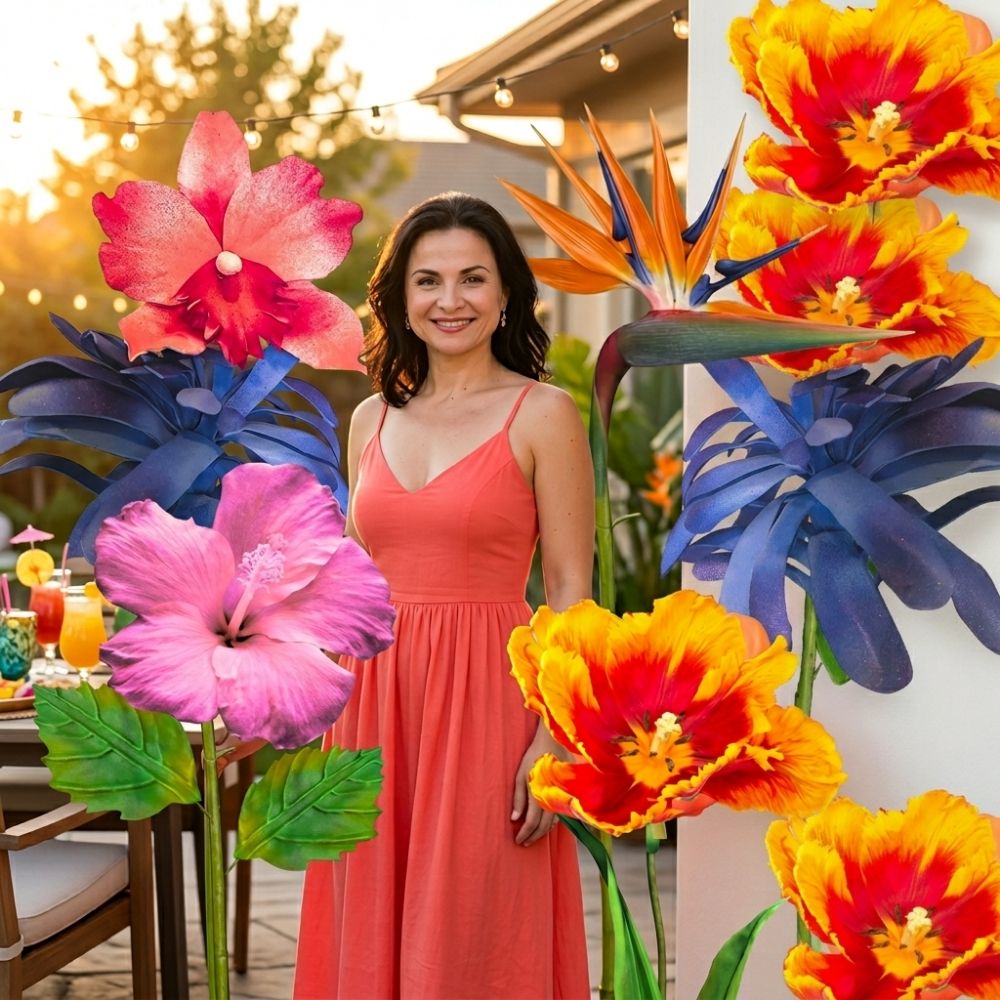
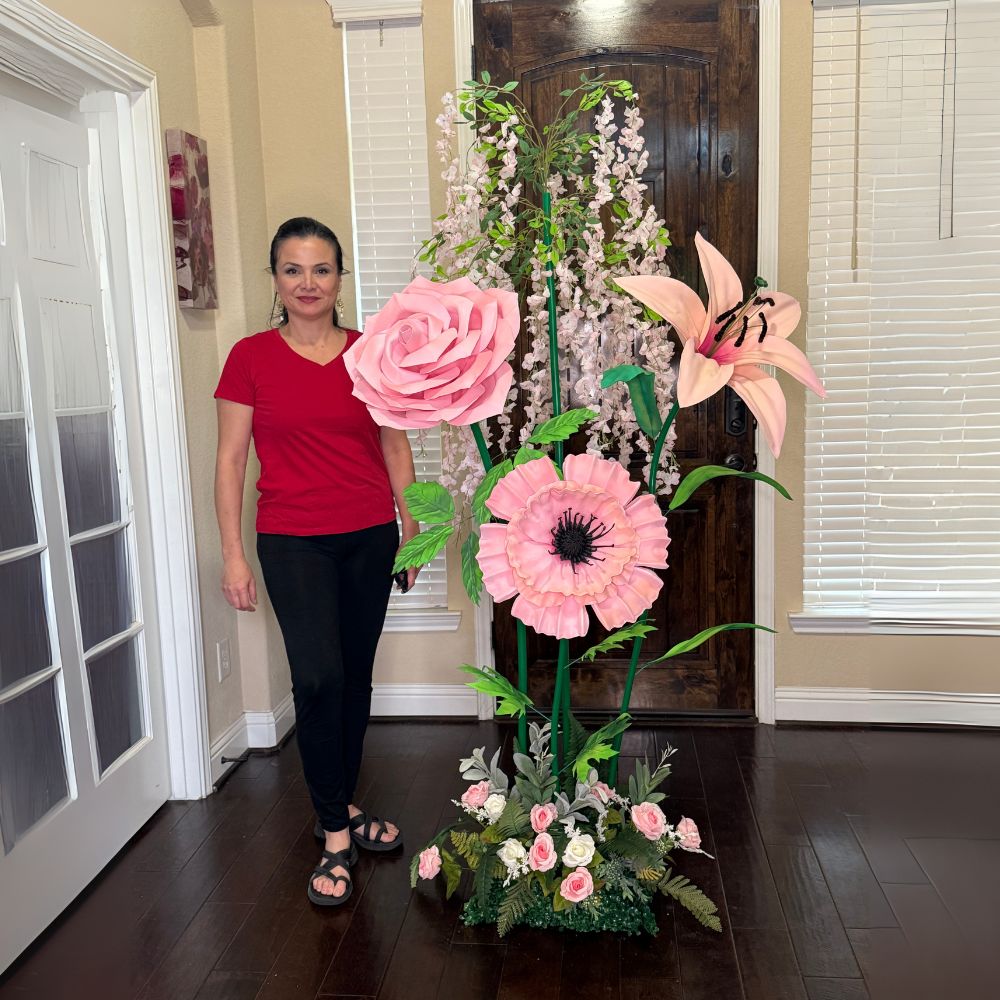
The tables people photograph most are the ones with shape, height, and something unexpected crossing the edge of the table. Oversized florals do that job better than almost any other decor element because they soften hard table lines while adding instant focal points.
There’s a popular habit in event styling to chase the perfect fitted cover and stop there. That works for clean trade show utility. It doesn’t always work for guest engagement.
A more useful view comes from experiential event guidance noting that hybrid floral overlays outperform plain covers for attention. The same source says giant floral elements can increase dwell time by 30% at brand activations, and that 25% of outdoor events face weather disruptions, which makes practical floral integration more important than many guides admit in this stretch cover and outdoor event reference.
That lines up with what stylists see in the field. A table can be neat and still disappear. Florals keep it from disappearing.
Three setups that work
Wedding head table
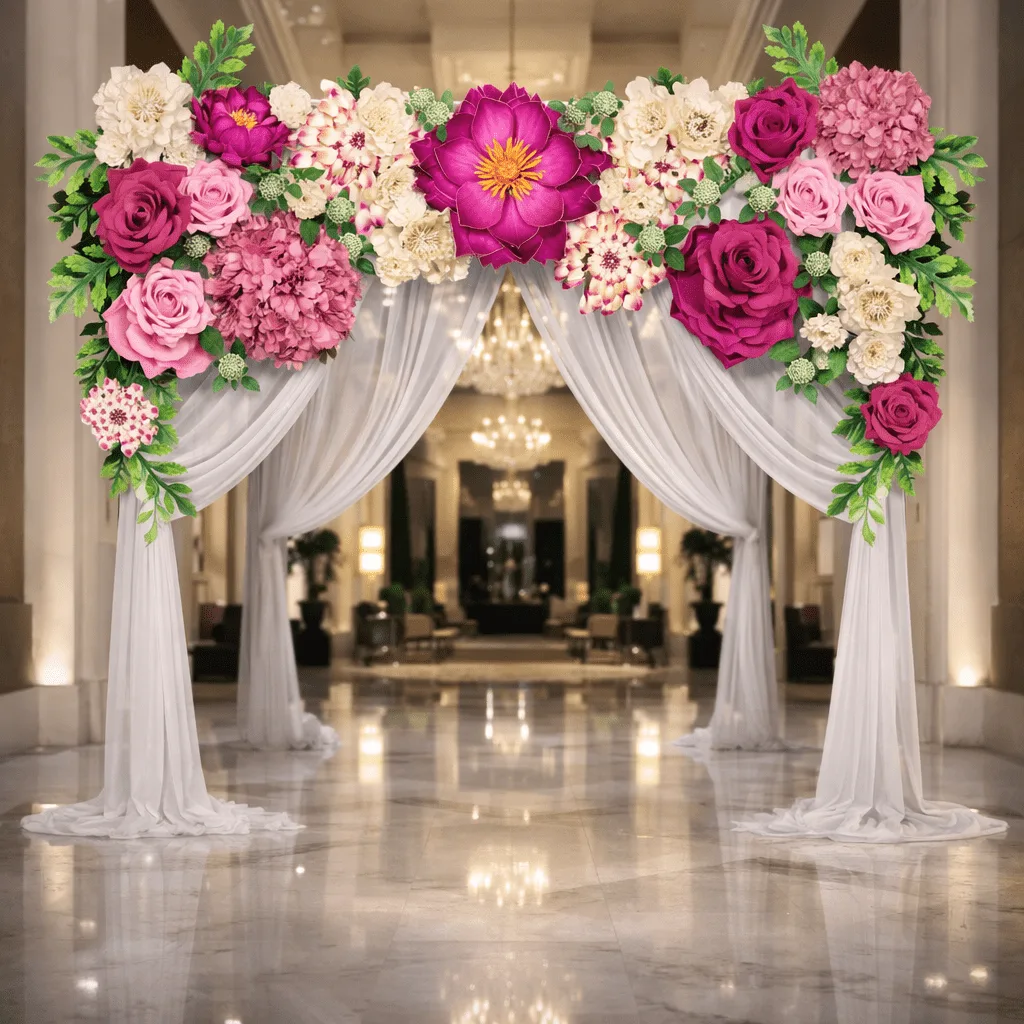
A floor-length neutral cloth gives you calm. Then you add drama across the front edge rather than only on top.
Use oversized blooms to create:
This works especially well when the flowers extend slightly below the tabletop line. That drop creates dimension without forcing guests to look around a giant centerpiece.
For branded events, the goal isn’t softness. It’s recognition.
Use a fitted cover in the brand color, then integrate oversized flowers in one or two controlled shades. The floral layer keeps the display from feeling sterile while still allowing product, signage, or sampling elements to stay legible.
A clean approach:
- Cover the table in a solid fitted fabric
- Add one asymmetrical floral cluster
- Leave negative space for QR signage, product, or touchpoints
- Repeat flower shapes in the backdrop so the table doesn’t feel isolated
If wedding work is your main lane, this gallery of large flower arrangements for weddings can help you think about scale and placement in a way that translates well to reception tables and sweetheart setups.
Wind changes design. So does heat. So does foot traffic.
For outdoor tables, skip fragile draping that depends on staying perfectly still. Use secure attachment points, keep the heaviest floral elements low or anchored, and avoid building tall arrangements that turn into sails.
Big flowers work best when they’re treated as structural styling, not as something you simply set on top and hope behaves.
This visual walkthrough is useful if you want to see floral scale in action before building your own layout:
Here’s what consistently works:
The best floral table styling doesn’t bury the table. It upgrades it. The cover provides discipline. The florals provide spectacle.
DIY table styling works best when it solves two problems at once. It cuts custom decor costs, and it gives guests something more engaging than passive decor.
That’s why interactive table covers paired with foam flower crafting can be so effective. They turn the table itself into part activity, part backdrop, part finished display.
A format that works for workshops and parties
One of the better practical methods uses an 80gsm paper cover with non-toxic markers, then adds foam blooms after the drawing phase. The guidance recommends a 30-minute guest drawing session before attaching flowers with adhesive rated for 10 lbs per sq in, and reports 42% social lift at selfie stations compared with plain covers in this interactive activity table cover guidance.
That format is useful because it keeps the messy part first and the dimensional decorating second.
If you want a clean result, follow this sequence:
Lay down the base cover
Keep it flat and secure before any markers come out. Movement ruins lines and causes accidental smears.
Give guests one zone to personalize
Frames, signatures, doodles, prompts, and message areas work better than asking people to decorate the whole table.Assemble foam flowers off to the side
Don’t build directly on the active tabletop if guests are still writing or drawing.
Attach finished blooms after the activity window closes
This keeps petals cleaner and prevents guests from leaning on dimensional work.Use the completed table as a photo moment
Once the flowers are added, the table changes from craft station to display.
For planners or makers who want ready-to-build floral components, the DIY giant foam flower kit collection is a practical starting point because it supports freestanding, wall-mounted, and handheld applications that can be adapted to table decor.
DIY can look polished, but only if you respect the mechanics.
The strongest DIY tables have one clear idea. Guests should know whether they’re meant to sign, draw, build, or photograph the moment.
That clarity keeps the setup fun instead of chaotic.
A beautiful table plan can still fail in the loading dock. The event day version of a cover table party is all about timing, sequencing, and small rescue moves.
The cleanest setups usually follow the same rhythm. Tables go in. Covers go on. Florals go on last. Then someone circles back for alignment, stain checks, and quick fixes before guests enter.
If you want fewer problems later, use a practical event-day checklist:
If you’re coordinating many moving pieces, a strong corporate event planning checklist helps keep linens, florals, signage, and staffing aligned on load-in day.
Every stylist needs a short rescue list.
Good teardown is planned early. That sounds obvious, but many teams ignore it.
Keep packaging, label bins, and separate reusable items from disposable ones as you work. A floral table with multiple layers can become a tangled mess if nobody decided in advance what gets saved, cleaned, or discarded.
One overlooked detail is guest flow around specialty tables. If seating assignments, escort displays, or welcome tables create congestion, people tug at cloths and knock decor off center. Using a clear wedding seating chart tool can reduce that crowding by making directional tables easier to read and faster to move through.
Renting versus buying
The decision usually comes down to reuse, storage, and control.
Buying makes sense when:
- You repeat the same event format often
- You need exact color consistency
- You have storage and cleanup capacity
Renting makes sense when:
- You want premium fabrics without maintaining them
- You need unusual sizes temporarily
- Your event style changes often
The best operators stay flexible. Buy the basics you use constantly. Rent the specialty pieces that would otherwise sit on a shelf.
Smooth event styling comes from reducing variables. The fewer surprises in fabric, fit, and attachment method, the more polished the room feels.
A table should still look composed at the end of the night. That’s the ultimate test. If the cover held, the florals stayed clean, and teardown didn’t become a salvage mission, the design worked.
If you want oversized floral installations or DIY kits that turn ordinary tables into camera-ready focal points, Amazing Giant Flowers is worth exploring. They create handcrafted giant flowers for weddings, brand activations, retail displays, festivals, and photo backdrops, plus DIY options for makers who want to build their own standout table moments.
Ready to Create Something Amazing?
Browse our collection of giant flower kits and start your next project.
Shop All Flowers