10 Best Craft Ideas with Flowers for 2026

Bloom Big: Transform Spaces with Unforgettable Flower Crafts
You need a flower moment that feels memorable, not flimsy. Fresh florals can look beautiful for a few hours, then wilt, bruise, or push the budget harder than expected. Small paper crafts have their place, but they rarely deliver the scale event planners, retailers, and brand teams need when the brief calls for impact.
That’s where giant flower crafting stands out. The floral craft and decoration market reached an estimated $5.2 billion in 2023, with growth tied to personalized event decor and home crafting, according to Craftulate’s flower crafts market overview. In practice, that demand shows up everywhere. Weddings want statement backdrops, stores want photo-ready windows, and creators want projects that last longer than a weekend.
EVA foam solves several of the usual pain points. It’s lightweight, durable, shapeable, and far more forgiving than generally thought. You can heat-form petals, build depth, store the finished pieces, and reuse them across multiple setups. That makes it one of the most practical materials for high-impact craft ideas with flowers.
You don’t need to start with a massive installation, either. Some of the best projects begin with a handheld bloom, then scale into walls, arches, selfie stations, and branded environments.
Small flower crafts teach assembly. Giant flower crafts teach presence.
Large backdrops are where flower crafting stops feeling like a hobby and starts behaving like event design. A giant EVA foam wall or freestanding floral build can anchor a ceremony space, define a stage, or turn a blank venue wall into the part guests photograph.
The biggest mistake I see is uniformity. If every flower is the same size, the backdrop looks flat even when the flowers themselves are beautifully made. Mixing oversized focal blooms with medium transition flowers and smaller filler petals gives the arrangement rhythm and makes photos look more dimensional.
For planners and designers, oversized foam flower wall art ideas from Amazing Giant Flowers show how these pieces translate from decor into a true focal installation.
Practical rule: A backdrop should frame people, not swallow them. Leave room for bodies, bouquets, signage, and movement.
Use cases that perform especially well:
If you want a project that’s approachable but still polished, start with a handheld giant flower. Kits remove the hardest early hurdles, especially petal sizing, material matching, and tool guesswork. That matters because beginners usually don’t struggle with creativity. They struggle with sequence.
The paper-based segment of the DIY artificial flower market is projected to grow at a CAGR of 8.2% from 2025 to 2030, according to Grand View Research’s artificial flowers market report. That projection points to a clear shift toward hands-on decorative making, especially when the materials are easier to work with and more accessible for home crafters.
A clean first project
A good handheld bloom works for:
Using handheld flower kits from Amazing Giant Flowers keeps the project focused on shaping and assembly instead of hunting down supplies.
A few build habits make a major difference:
What doesn’t work is overbuilding. Beginners often add too many petals because they think “fuller” means “better.” It usually means heavier, messier, and harder to hold.
Aim for a flower that has a clear center, a believable curve, and a stem you can grip comfortably. If those three things are right, the bloom already looks professional.
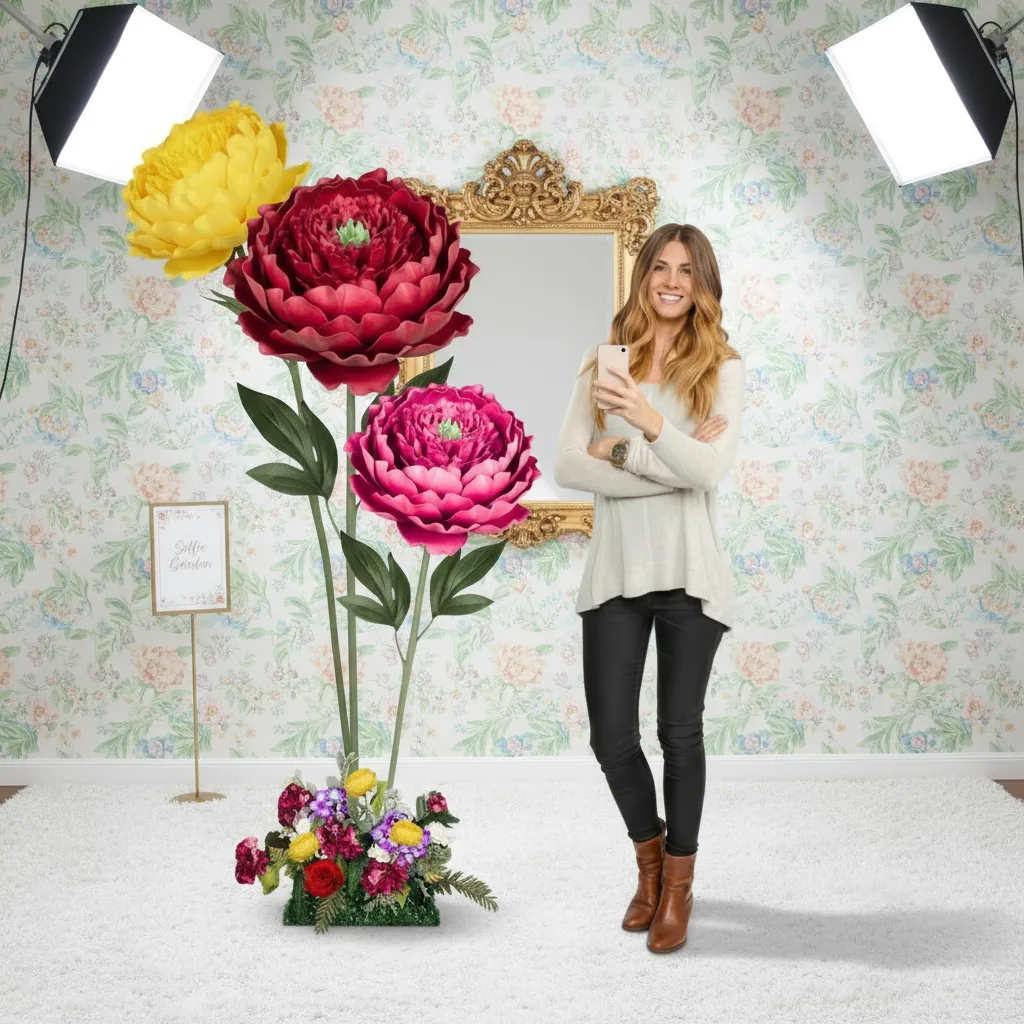
Guests round the corner, see a wall of oversized blooms, and stop without being prompted. That is the test of a good selfie station. It has to pull people in, place them naturally, and give them a flattering frame the second they step into view.
Large floral photo moments work because they solve three event problems at once. They create a focal point, encourage guests to interact with the space, and produce branded images people want to share. For planners and makers who want more than a pretty wall, selfie station ideas from Amazing Giant Flowers show how to build around guest behavior instead of decoration alone.
The strongest setups usually include:
- A clear standing zone: Guests should know where the photo looks best
- Layered flower placement: Floor-level blooms, mid-height flowers, and overhead framing read better on camera
- Front-facing light: Soft, even light matters more than adding extra props
- Controlled branding: A logo, hashtag, or product cue should support the photo, not take over the background
Placement decides whether the station gets used. Put it near natural traffic, but not where a crowd blocks the shot. I usually leave enough depth for one person, a couple, or a small group because cramped installations create awkward posing and slow the line.
A few mistakes show up often:
Scale also needs discipline. Bigger flowers photograph well from a distance, but too many oversized heads can flatten the composition. A better approach is to combine statement blooms with open negative space so faces stay visible and the arrangement keeps its shape in both close-ups and wide shots. That same planning approach shows up in large wedding flower arrangement concepts from Amazing Giant Flowers, especially where photography and guest flow matter as much as the flowers themselves.
Selfie stations fit wedding receptions, beauty launches, retail pop-ups, and conference lounges especially well because they turn floral craft into an experience with a clear return. Guests get a better photo. Hosts get a busier, more memorable space.
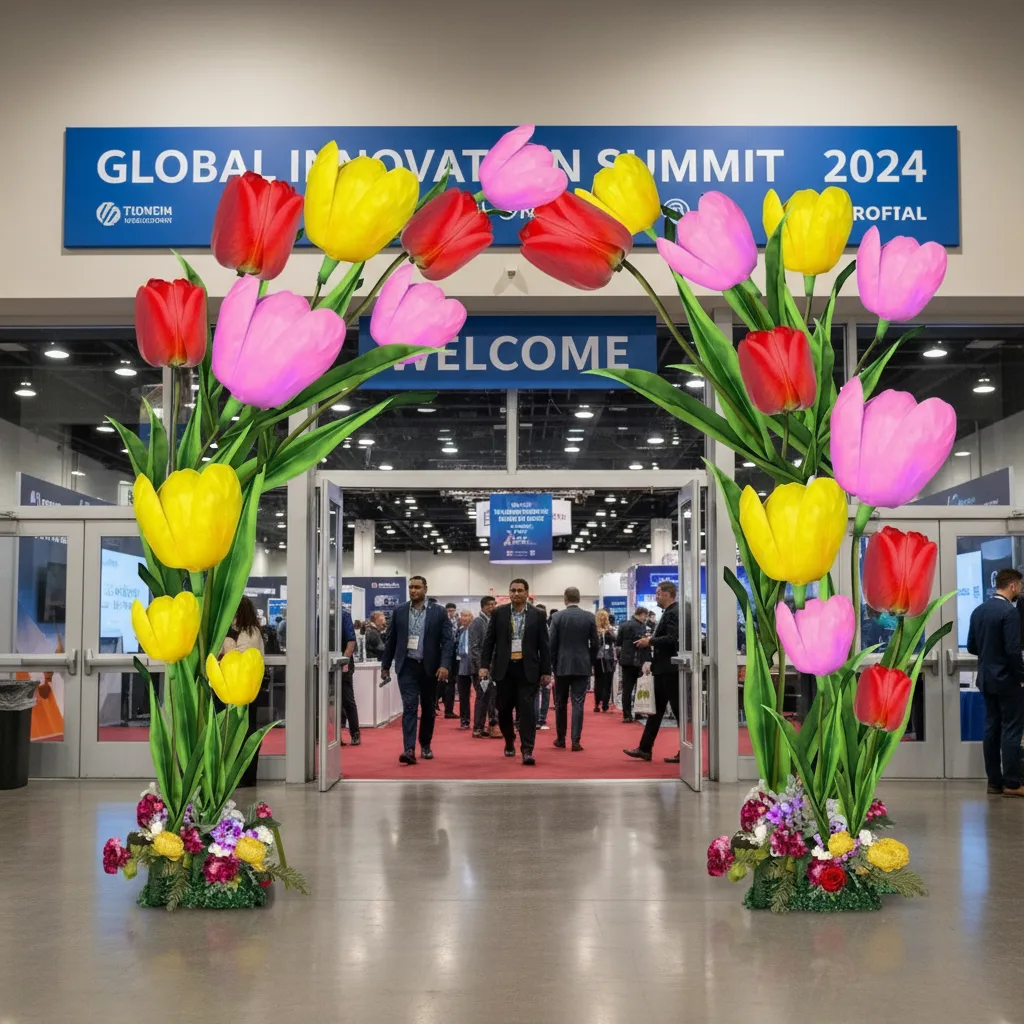
The ceremony starts in twenty minutes, the florist is still refreshing centerpieces, and the couple wants the arch to read clearly in photos from the back row and on a phone screen. That is where EVA foam earns its place in wedding work. It holds shape, keeps color consistent, and gives designers far more control over scale than fresh flowers alone.
Fresh florals still carry the table work, personal flowers, and close-up bouquet moments at many weddings. Giant foam flowers solve a different problem. They handle the pieces that need presence, stability, and repeatable color from setup through the last dance. Large flower arrangements for weddings from Amazing Giant Flowers show how that approach works best when the install is planned around sightlines, ceiling height, and the couple’s palette instead of treated like a generic add-on.
Where custom foam flowers work best
- Ceremony arches: Full coverage without the weight and hydration demands of heavy fresh installs
- Aisle markers: Clean, consistent blooms that stay intact through outdoor heat and long timelines
- Sweetheart tables: Strong focal pieces that hold color under mixed venue lighting
- Escort card and welcome displays: Statement florals that frame signage without crowding it
The trade-off matters. Foam flowers look strongest when they are allowed to be sculptural. Trying to mimic a delicate hand-tied bouquet petal for petal usually gives a weaker result up close. For weddings, I use foam for the architectural elements and reserve fresh flowers for places guests will inspect from inches away, especially bouquets, boutonnieres, and low table arrangements where scent and texture carry more weight.
Custom work also needs logistics discipline. Build pieces in transportable sections. Test the base weight before load-in. Match foam flower size to the room, because a bloom that looks dramatic in a studio can disappear in a ballroom with tall ceilings. Designers who also create branded environments often apply the same planning habits used in floral visual merchandising for commercial displays, where scale, traffic flow, and focal hierarchy all have to work together.
A wedding arch, entrance installation, or reception focal wall gives giant flowers the right job. In those placements, they read as intentional design, not a substitute for something else.
A shopper passes your window in three seconds. If the display does not read instantly, the opportunity is gone. Giant EVA foam flowers work well in retail because they create scale, color, and a clear focal point without the maintenance issues of fresh product styling.
The key is restraint. Retail installs are selling tools first. Flowers should frame the hero product, direct the eye, and support the campaign message. If the petals get more attention than the merchandise, the design missed its job.
I set retail flower displays by category, because each department needs a different visual weight. Beauty counters can carry denser clusters, saturated color, and closer placement around testers or gift sets. Apparel usually performs better with taller stems, more negative space, and cleaner edges so mannequins, folded product, and signage stay readable from the aisle.
Smart display strategy
- Window storytelling: Use oversized blooms to frame a launch, seasonal story, or limited-time promotion
- In-store zoning: Place flowers where you need customers to pause, such as feature tables, mirrors, or cashier adjacencies
- Reusable seasonal assets: Build durable pieces that can be stored, refreshed, and reused across multiple campaigns
- Brand color matching: Tie flower tones to packaging, signage, and point-of-sale graphics so the install feels intentional
The commercial advantage is repeat use. A well-built foam flower set can move from window to entry display to event corner with minor updates, which makes it more practical than one-time prop decor. Brands that want a stronger system for this approach can study floral visual merchandising for commercial displays, especially the way scale, sightlines, and product hierarchy work together.
This is also where the Amazing Giant Flowers ecosystem makes sense beyond hobby crafting. The same materials and methods used for DIY kits can scale into retail windows, shop-in-shop moments, and full campaign installations without changing your core process.
What fails most often is proportion. Small boxed products disappear beside oversized blooms unless the shelf height, pedestal level, and sign placement are adjusted with the flowers. Strong retail work keeps the flowers as the invitation and the merchandise as the answer.
A festival gate opens, the first crowd rushes in, and the install gets tested immediately. Guests touch petals, crews shift barricades, wind hits from the side, and anything underbuilt starts showing stress within the first hour. For immersive floral work in these settings, structure decides whether the piece still looks premium by sunset.
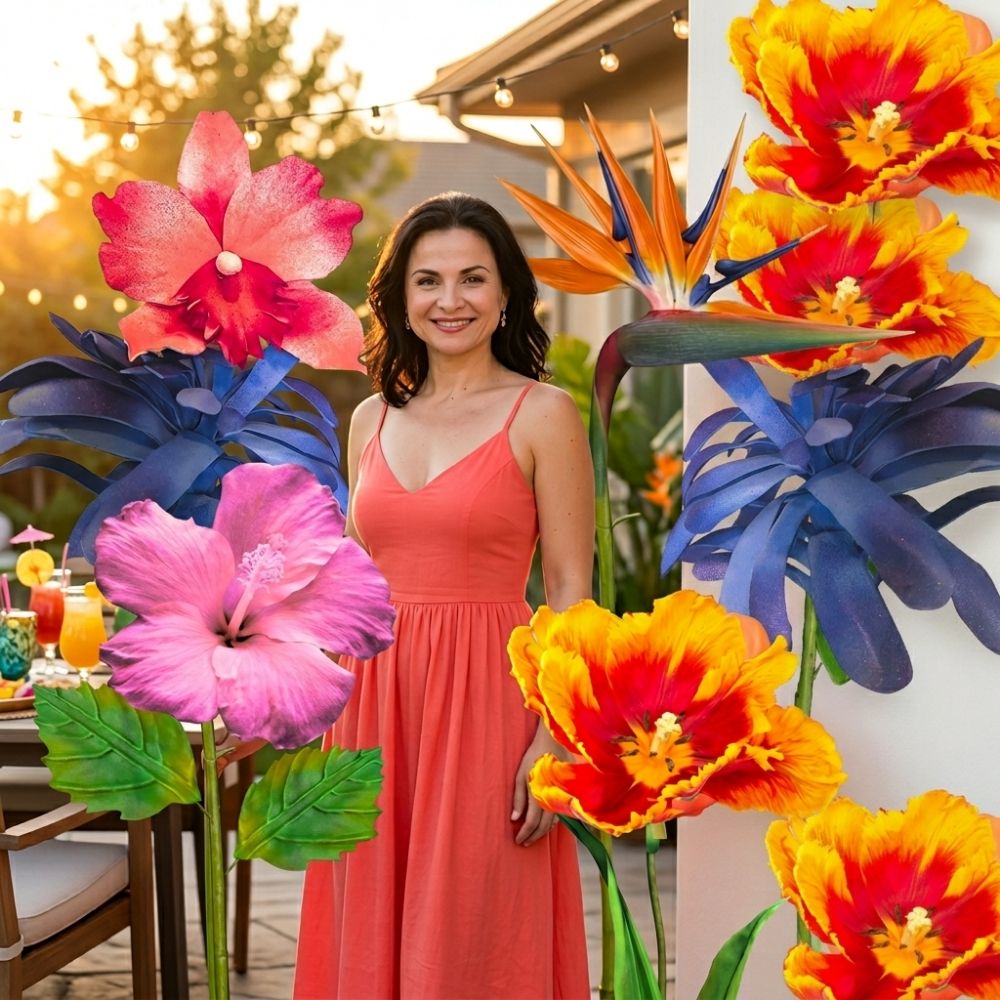
Large EVA foam flowers earn their place at festivals because they read from far away, photograph well, and hold a theme across a wide footprint. The stronger use case is not a single pretty backdrop. It is a full environment with entry moments, walk-through clusters, stage-side accents, and clear photo zones that help guests understand where to gather.
Before committing to an outdoor floral build, watch how large-scale pieces behave in real environments:
What outdoor installations need
- Weighted bases: Height means nothing if the footprint is too narrow for wind and foot traffic
- Petal control: Wide-open blooms look dramatic, but tighter shaping usually performs better outdoors
- Guest flow planning: Leave room for lines, strollers, security paths, and the natural crowd around photo moments
- Repair capacity: Bring spare petals, adhesive, paint, zip ties, and one technician who knows the build system
The usual failure point is engineering. Many tutorials show how to assemble a flower, but they skip how to anchor it, how to break it down for transport, and how to color-match a large set for sponsor branding. That gap matters at festival scale, where a piece has to survive weather, load-in pressure, and thousands of guest interactions without looking patched together.
I recommend designing these installs as landmarks first and decor second. A tall sunflower cluster can mark a beverage garden. A tunnel of oversized roses can define the entry to a VIP zone. A field of mixed blooms can turn an empty patch of turf into a destination that gives the event more usable, memorable space.
The Amazing Giant Flowers ecosystem fits this kind of work because the same core methods can scale from a kit-built flower to a branded festival environment. That consistency helps with staffing, training, reorders, and replacements. It also makes the jump from DIY crafting to paid event production far more realistic.
Outdoor floral installations succeed when they are planned like event infrastructure. Beauty still matters. Stability, serviceability, and crowd behavior matter first.
7. Corporate Gala and Award Ceremony Floral Centerpieces
Corporate events need polish without fragility. At gala tables and award dinners, fresh centerpieces can be beautiful, but they also create familiar problems: limited height options, scent sensitivity, delivery timing, and inconsistent bloom quality across large guest counts.
Foam flower centerpieces work best when they lean into sculptural elegance. Instead of copying a standard banquet arrangement, create one strong hero bloom or a grouped cluster with clean negative space. That gives the table impact without blocking conversation or fighting with glassware, menus, and sponsor materials.
For galas and fundraisers, use:
What doesn’t work is making every centerpiece oversized just because the material allows it. Guests still need to see the stage, the auctioneer, and each other.
Formal events reward restraint. One exceptional floral gesture beats five average ones.
A strong example is a black-tie awards dinner with ivory roses, metallic accents, and a matching floral stage piece. The centerpieces echo the brand tone while the larger installation carries the room. That balance feels intentional and expensive, even when the decor has to travel, store, and return for future use.
The night before a wedding is a bad time to discover that a craft idea looked easier on Pinterest than it is in real life. A well-run bridesmaid flower station solves that by giving the group a controlled, useful project with a clear finish line. With EVA foam, that usually means wearable flowers, bouquet accents, cake-table blooms, photo-area details, or welcome-sign pieces that can be completed in batches and still look polished.
This works best when the station is treated like a mini production setup, not an open-ended craft table. Pre-cut petals save time. Color choices need to be limited. One approved sample should stay on the table the entire time so every finished piece matches the wedding palette and scale.
For weddings, I set these stations up around repetition and quality control:
- Choose one flower recipe: One rose, camellia, or peony style keeps the output consistent
- Build in tiers of difficulty: Simple petal shaping for beginners, assembly and finishing for the steadiest hands
- Prep tools before anyone arrives: Glue, wires, stems, heat tools, and trays should already be placed by seat
- Set a production target: Decide whether the group is making 8 bouquet accents or 30 chair flowers, not "as many as possible"
- Assign a final checker: One person compares every piece to the sample before it goes into event inventory
That last step matters. Group crafting is fun, but weddings still need clean results. If ten people make ten different versions of the same bloom, the final styling reads inconsistent, especially in photos.
The strongest use for a bridesmaid station is selective contribution. Ask the group to make the pieces that benefit from repetition and personality, then keep technical installations in professional hands. Large arches, suspended florals, and load-bearing backdrops still require experienced setup, secure mechanics, and transport planning. That trade-off gives the wedding a personal layer without risking the parts guests will stare at all ceremony long.
There is another practical upside. A flower station can also test whether this skill set has legs beyond one event. Brides, planners, and creative entrepreneurs often realize during these sessions that packaged kits, workshop hosting, and digital teaching are real revenue paths. If that is part of the long-term plan, this guide on how to sell online courses is a useful next business step.
Common mistakes are predictable:
- starting too close to the wedding date
- offering too many flower styles
- inviting reluctant participants
- skipping a trial run
- assuming every handmade piece belongs in the final design
A simple station, a narrow scope, and a strong sample bloom usually produce the best results. The goal is not to turn the bridal party into florists for a night. The goal is to create a wedding project that feels collaborative, photographs well, and fits into a larger professional decor plan.
Skill growth is what separates one good-looking flower from a repeatable body of work. If you want to move from occasional projects into consistent professional output, training matters. Not because flower crafting is mysterious, but because scale, finishing, and installation all involve decisions you only learn through method.
Structured learning is especially useful for crafters who want to sell workshops, build event inventory, or add floral installs to another service line. The sell online courses guide from Zanfia is a useful companion if your longer-term plan includes teaching what you make, packaging tutorials, or building a creative education business around your expertise.
A membership format works best when you apply the lessons to live projects. Watching tutorials without making anything creates false confidence. Building flowers, photographing them, correcting mistakes, and repeating the process is what creates a professional eye.
One practical use case is the event designer who already handles balloons, signage, or styling and wants to add giant flowers as a premium upsell. Another is the stay-at-home maker who begins with giftable flowers and gradually moves into backdrops and weddings. Both benefit from having one ecosystem for techniques, supplies, and visual standards.
It removes the stop-start cycle. Instead of guessing your way through every new flower, you develop a repeatable system for planning, making, storing, and presenting the work.
Brand activations need decor that photographs well, supports the message, and survives multiple touchpoints in a short time. Giant flower environments do that well because they can be color-matched, scaled for the venue, and built around customer flow instead of treated as an afterthought.
The strongest pop-up environments use flowers as architecture. A floral entry moment, product discovery wall, branded mirror zone, or check-out frame can shape how people move through the space. That’s more effective than scattering flowers around a room and hoping it feels immersive.
Planning for a branded environment
- Anchor the concept in one visual idea: A rose tunnel, a bloom wall, a garden frame, or a suspended floral canopy
- Integrate products early: The install should support the merchandise footprint, not crowd it
- Design for content capture: Leave clear camera angles, standing zones, and vertical-photo compositions
- Plan for transport: Pop-ups often need quick install, breakdown, and reassembly
A sustainability angle is becoming harder to ignore. Recent 2025 Nielsen reporting cited in this YouTube research reference on sustainable giant flower preservation notes that 68% of U.S. consumers prioritize sustainable event decor. That aligns well with reusable giant flower systems that can return for multiple activations instead of being discarded after one launch.
The best use case here is a beauty, fashion, or lifestyle brand that wants a temporary shop to feel larger than its square footage. A well-planned floral environment gives the brand a visual signature people remember after the pop-up closes.
Flower crafting has moved far beyond pressed petals, paper blooms, and small tabletop DIYs. Those projects still matter, and they’re often where many makers begin, but the significant opportunity today is scale. Giant foam flowers let you create statement pieces that hold their shape, travel well, and work across weddings, retail, festivals, corporate events, and branded pop-ups.
That flexibility is what makes them so valuable. A single material system can support a handheld bloom for a workshop, a wedding arch for a ceremony, a selfie station for a launch, or a reusable display for a storefront. Few craft mediums make that jump as cleanly. EVA foam does, because it combines durability with visual softness and enough structure to perform in professional settings.
There’s also a practical advantage many people overlook. These projects solve real problems. They reduce the stress of perishability, make color matching easier, and allow planners and makers to prepare important installations ahead of time. When done well, they don’t feel like a compromise. They feel deliberate.
If you’re exploring craft ideas with flowers for the first time, start smaller and build your eye. A handheld kit or a simple photo-corner piece will teach you shaping, layering, and proportion...
Ready to Create Something Amazing?
Browse our collection of giant flower kits and start your next project.
Shop All Flowers