EVA Foam vs Craft Foam: Which Is Better for Flowers?

If you've ever stood in a craft store holding two different foam sheets wondering which one is actually going to work for your giant flowers, you are not alone. The whole eva foam vs craft foam flowers debate is real, and honestly, it's one of the questions I get asked the most. People assume foam is foam. It's not. Not even a little bit.
I've been making giant flowers for years — for weddings, quinceañeras, corporate events, photo booths, you name it — and I've worked with both materials extensively. The difference between a flower that looks gorgeous and holds its shape versus one that flops over and tears at the first sign of heat? A lot of the time, it comes down to the foam you chose at the very beginning.
So let me give you the real, honest breakdown. No fluff, no sales pitch — just what I've actually learned from making hundreds of these blooms and hearing from thousands of crafters in our community.
Key Takeaways
Ok, let's start at the very beginning because the naming situation is genuinely confusing. EVA stands for Ethylene-Vinyl Acetate — it's a closed-cell foam that's dense, flexible, and incredibly resilient. You've seen it in yoga mats, shoe soles, and cosplay armor. It's a serious material.
Craft foam — the stuff you find in packs of 10 sheets at the dollar store — is usually a much lower-density open-cell foam. Sometimes called foamies or fun foam. It feels spongy and soft. It tears pretty easily. And it does NOT like heat.
Here's where it gets messy: some brands label their craft foam as EVA foam because technically it contains EVA polymer. But the density, quality, and thickness are nowhere near what you need for giant flowers. Not all EVA foam is created equal. When I talk about EVA foam here, I mean the thick, rollable, heat-shapeable sheets — 2mm through 10mm — that we sell in our shop specifically for this kind of work.
"The foam you choose at the start of your project determines everything that comes after — the shape, the durability, the finish, and whether your flower is still standing at the end of the event."
EVA Foam vs Craft Foam for Flowers: The Core Differences
Let me break this down properly. Because when you're choosing between these two materials for a flower project, there are a few key things that actually matter.
Craft foam sheets are almost always 1mm to 2mm thick. That's it. At that thickness, a large petal — say, 8 or 10 inches — will flop. It has zero structural integrity on its own.
EVA foam comes in 2mm, 3mm, 4mm, 6mm, and 10mm thicknesses. A 4mm or 6mm sheet gives a large petal the backbone it needs to stand up, curve naturally, and hold its shape without extra support. For really oversized blooms, I'll sometimes use 6mm for outer petals and 3mm for inner petals to create that layered, dimensional look.
If you've ever tried to shape craft foam with a heat gun, you know what happens. It kind of… warps awkwardly and then goes back to flat. Or it melts unevenly. It's frustrating.
EVA foam is literally designed to be heat-shaped. Run a heat gun over it for a few seconds, press it into a mold or over your hand, and it holds that curve perfectly as it cools. That's how you get petals that cup inward, tips that curl back, and flowers that actually look like flowers. If you want to go deeper on this technique, I wrote a whole guide on heat gun techniques for shaping foam flower petals that walks you through it step by step.
Craft foam tears. Especially at the edges, especially when you're cutting detailed petal shapes, and especially when you're hot gluing layers together. I've seen crafters lose an entire afternoon's work because a seam gave out.
EVA foam is tough. It resists tearing, handles hot glue beautifully, and — if you store your flowers properly — they can be reused event after event. I have clients who've been renting out the same EVA foam flower walls for two years. That's real value.
💡 Pro Tip
If you're making flowers for a one-time classroom project or a quick party decoration that won't be handled much, craft foam can work fine. But if your flowers need to travel, be installed outdoors, or survive an entire wedding weekend? Go EVA every time. The cost difference is minimal compared to the heartbreak of a flower falling apart mid-event.
Here's everything side by side so you can see it clearly at a glance.
I want to be fair here. I'm not here to trash craft foam entirely — it has its place. Here's when it genuinely works:
But the moment you're going bigger than about 5 inches, the moment you need a petal to curve or cup, the moment your flowers need to survive more than one use — craft foam is going to let you down.
Ok, this is where it gets really fun. Because once you've decided EVA foam is your material (good choice!), the next question is which thickness to reach for. And this is actually a creative decision, not just a technical one.
Light and flexible. Great for small inner petals, delicate flower varieties like anemones or ranunculus, and any petal that needs a soft, gentle curve. Also fantastic for layered petals where you want that thin, almost-translucent look at the edges.
My everyday workhorse. This is what I reach for most often for medium-sized flowers — roses, dahlias, peonies in the 12 to 18-inch range. It's thick enough to hold shape but still flexible enough to curve beautifully with a heat gun.
For large outer petals on oversized blooms — we're talking 20-inch-plus flowers. Also great for flowers that need to be freestanding or are going into a freestanding flower kit where the petals take on more structural load. The extra thickness means extra rigidity, which is exactly what you want when your flower is three feet tall.
This is the statement piece thickness. I use 10mm for flower centers, sculptural bases, and any element that needs to be genuinely three-dimensional and chunky. It's also amazing for cosplay armor and props if you're in that world.
💡 Pro Tip
Mix thicknesses within a single flower for the most realistic result. Use 6mm for the outer petals, 3mm for the middle layer, and 2mm for the innermost petals or stamens. The variation in stiffness mimics how real flower petals actually behave.
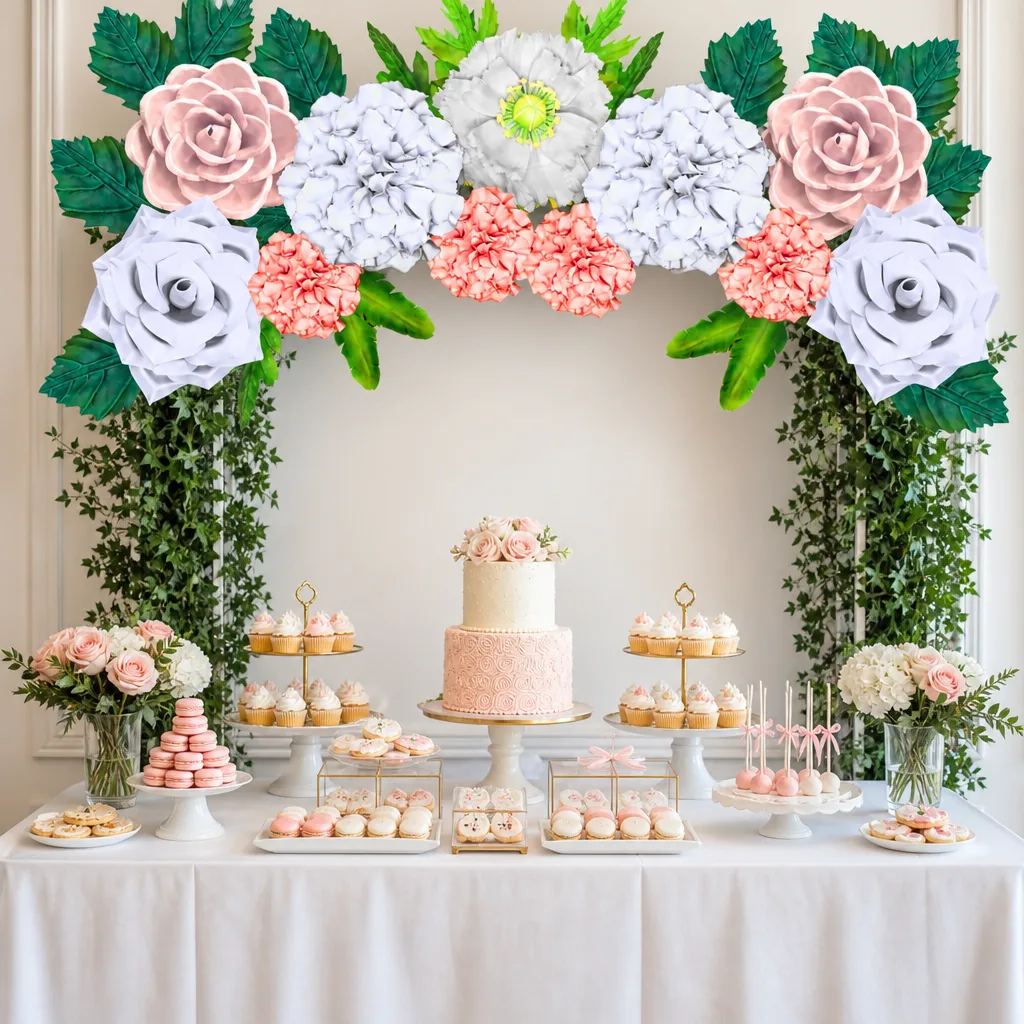
Let me paint you a picture. A giant rose backdrop for a wedding, each bloom about 18 inches across, petals curling naturally, colors graduating from blush to deep mauve. That's EVA foam. That's heat shaping, layering, and the right thickness working together.
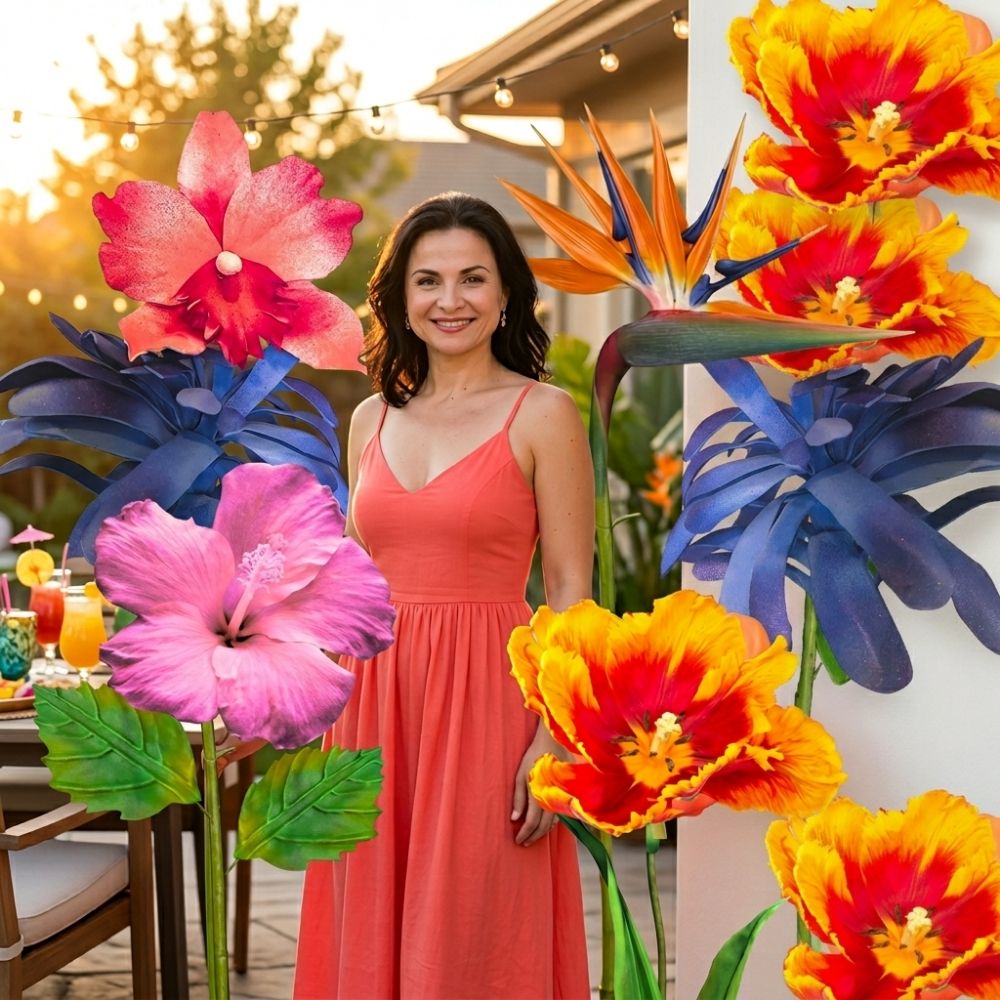
Or a freestanding dahlia on a 5-foot stem for a quinceañera — the kind that guests gather around for photos all night. You can check out some incredible inspiration in our post on quinceañera backdrop ideas with giant flowers. None of that is possible with craft foam. The petals would collapse before you even finished assembling the flower.
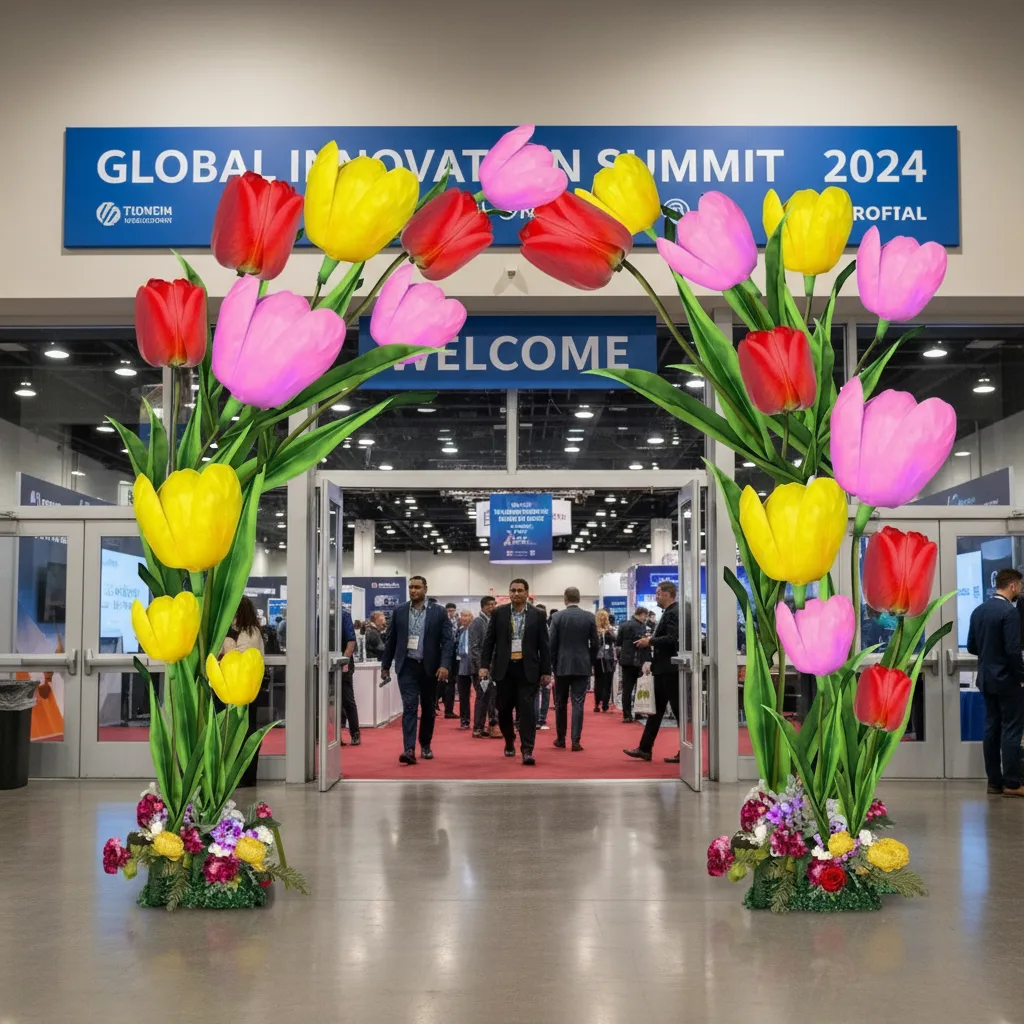
- Giant flower arches and backdrops — EVA foam petals hold their shape under the weight of installation
- Freestanding flower arrangements — paired with bendable pipes for stems, EVA foam creates flowers that stand tall
- Outdoor event flowers — EVA foam handles humidity and light wind in a way craft foam absolutely cannot
- Cosplay and theater props — durable, lightweight, and paintable for professional-level results
- Reusable rental inventory — if you're building a flower rental business, EVA foam is the only material that makes financial sense
🌸 Ready to get started?
Browse our full EVA foam collection — rolls and sheets in every thickness from 2mm to 10mm, ready to ship. Find your perfect match and start building something beautiful.
Short answer: yes. EVA foam takes acrylic paint beautifully. The closed-cell surface doesn't absorb paint the way craft foam does, so your colors go on more evenly and you use less paint overall. A light base coat, let it dry, and you're good.
Craft foam is more porous and can soak up paint unevenly, leaving a blotchy finish. You can work around it with a sealer first, but it's an extra step and an extra cost. If you want to go deep on finishing foam surfaces properly, I have a great resource on painting on foam core that covers a lot of the same principles.
And if you're wondering about sealing your finished flowers for longevity, especially for outdoor events? A clear acrylic sealer is your best friend. It protects the paint and adds a subtle sheen that makes EVA foam flowers look even more polished.
"EVA foam doesn't just hold its shape — it holds
Ready to Create Something Amazing?
Browse our collection of giant flower kits and start your next project today.