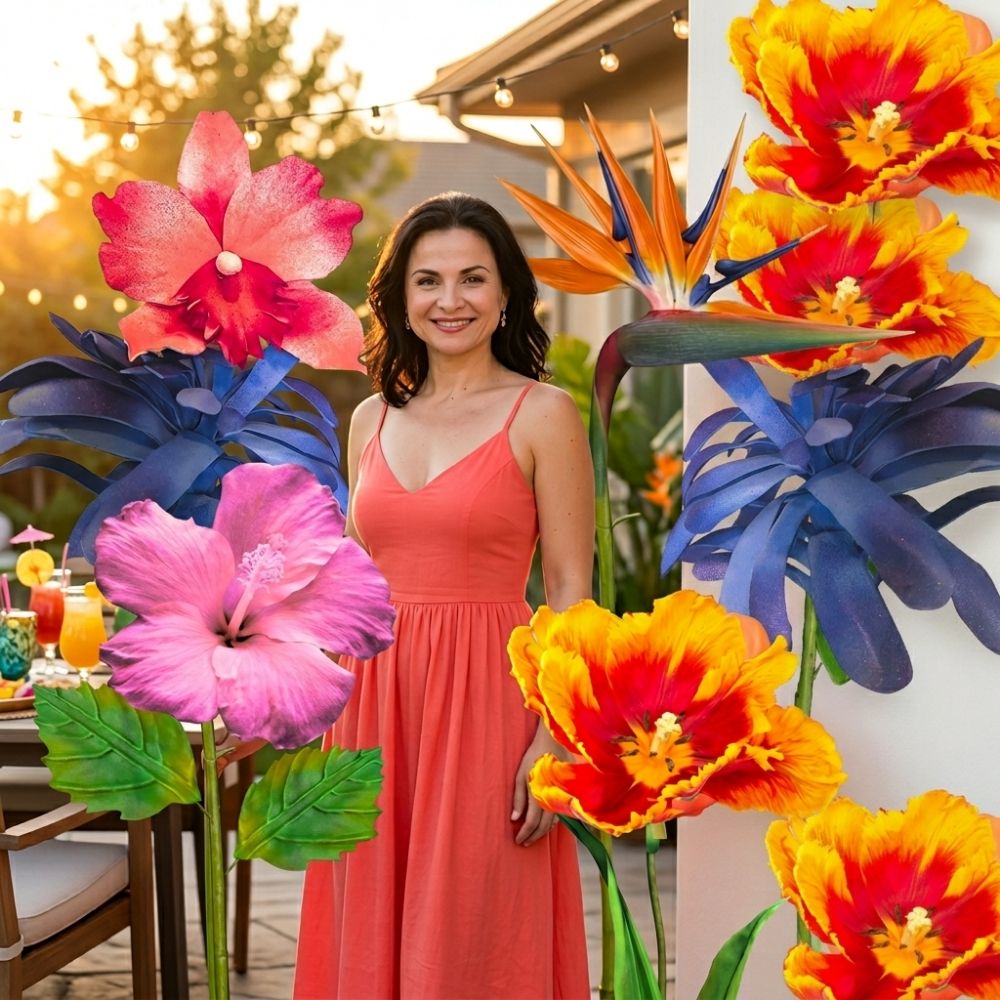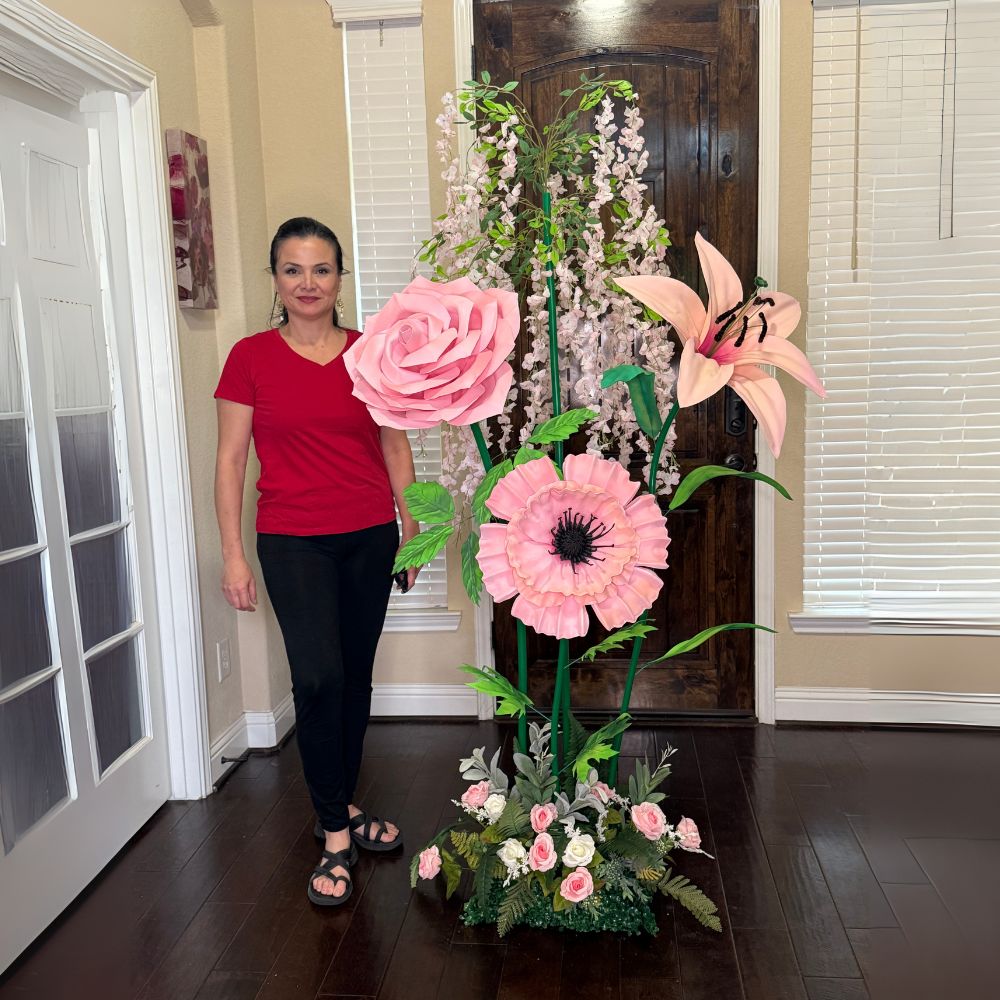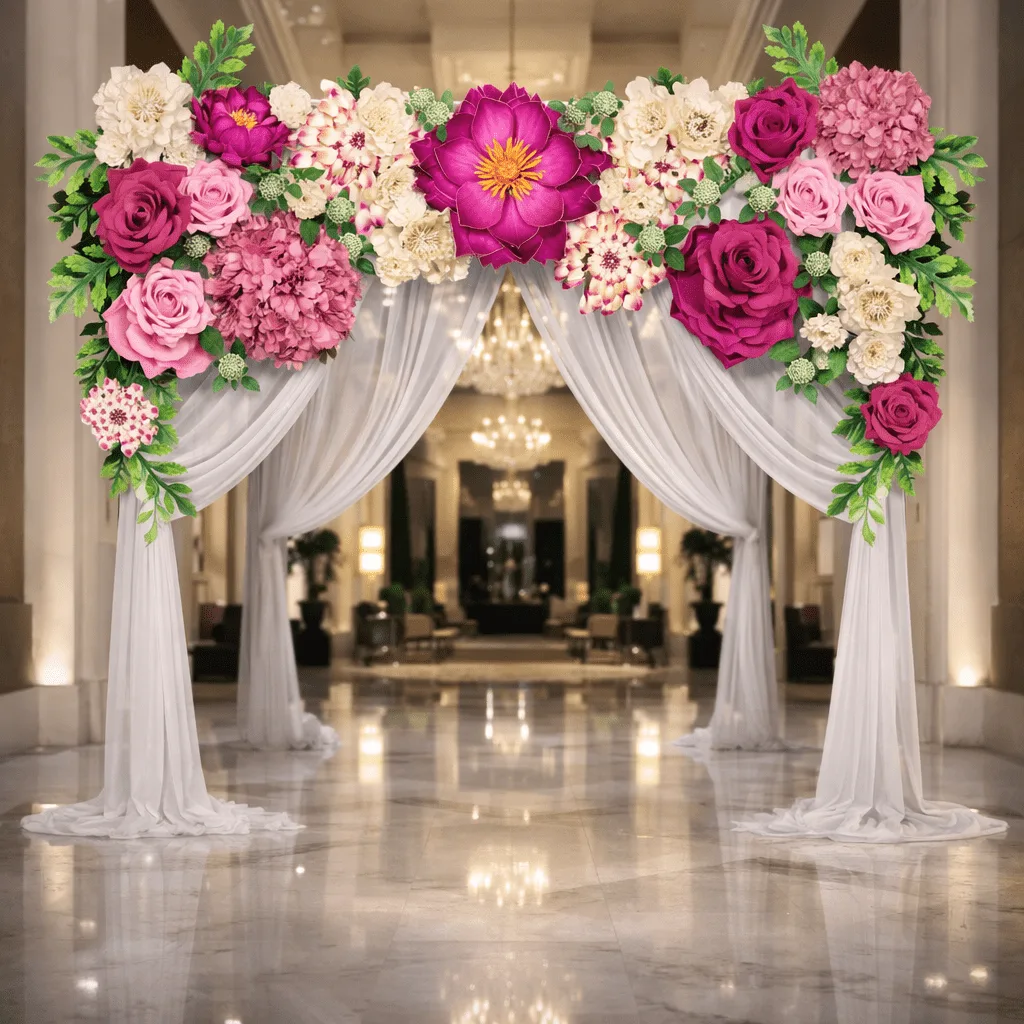
Amazing Giant Flowers by Adriana Wells

Inspiring Foam Board Projects for Events and Decor

Adriana Beaman February 13, 2026 21 min read
Inspiring Foam Board Projects for Events and Decor

Foam board is one of those materials that’s both incredibly simple and surprisingly powerful. It's the secret weapon for anyone—from seasoned event planners to passionate DIYers—looking to create stunning decor, massive backdrops, and eye-catching displays. Thanks to its lightweight and versatile nature, you can bring some seriously ambitious ideas to life.

This guide provides clear, step-by-step instructions to turn simple foam sheets into high-impact creations.


A photography studio setup with white foam boards, lighting, a smartphone on a tripod, and a 'Creative Potential' banner.

Welcome to the world of foam board, where your biggest creative ideas become reality. We're going to skip the fluff and get right into why this material is a game-changer. It’s the perfect blend of strength and simplicity.


The goal here is to unlock your creativity and show you what's possible. Think about what you could build:

The magic of foam board is that it closes the gap between a big creative vision and what's actually possible to build. It puts professional-grade results within reach for everyone.


And this isn't just a niche hobby. The demand for these kinds of displays is booming. The global foam board market hit $9.7 billion in 2024 and is on track to reach $15.8 billion by 2033. For our work at Amazing Giant Flowers, this growth shows just how much clients value high-impact visuals that make their events unforgettable.

Once you master the basics, the possibilities really open up. For projects needing high-quality images or graphics, professional foam core printing is a fantastic option that delivers a clean, sharp finish.


You can also start mixing materials to add texture and depth. Combining rigid foam board with flexible materials like our EVA foam kits can create incredible results. To see this in action, check out our guide on how we use foam for flower decoration: https://www.amazinggiantflowers.com/blogs/news-amazing-giant-flowers/foam-for-flower-decoration.

Consider this your foundation. With these insights, you'll be ready to tackle your next foam board project with total confidence.

Getting Your Toolkit and Supplies in Order

A flat lay of various crafting supplies including foam boards, paints, ruler, and tools on a cutting mat.

Any great project starts long before you make the first cut. It begins with gathering the right tools. Having the perfect supplies ready to go makes the creative process more enjoyable and elevates your final piece from a simple craft to a professional-quality creation. This prep work is your secret to achieving clean edges and sturdy joints.


Think of it this way: your materials are the foundation of your project. Starting with the right kind of foam board and a truly sharp blade is non-negotiable if you want that clean, polished look. It’s the difference between a wobbly, homemade-looking sign and a sturdy, event-ready display that wows.

Not all foam board is the same. The type you pick has a huge impact on your project's durability and overall finish.


While you don't need a full-blown workshop, a few key items will make all the difference in getting those clean cuts and strong bonds. Investing in quality basics is something you’ll thank yourself for on every single project.

Here are the absolute must-haves:

  • A Sharp Craft Knife: This is your #1 tool. A dull blade is the main cause of crushed edges. I recommend a knife with snap-off blades so you always have a sharp point ready.
  • Self-Healing Cutting Mat: This mat will protect your work surface and extend the life of your blades. It also provides a slight grip to prevent the foam board from shifting.
  • Metal Ruler with a Cork Back: The metal edge provides a straight, sturdy guide. The cork backing is a game-changer—it keeps the ruler from slipping, which improves both safety and accuracy.
  • The Right Glue: You need an adhesive that creates a strong bond without melting the foam core. A low-temperature hot glue gun is fantastic for quick assembly, while a high-quality craft tacky glue or a special foam-safe adhesive provides a more permanent, rigid hold.

A sharp blade isn’t just a nice-to-have; it's the single most critical factor for getting professional results. Do yourself a favor and pop in a new blade for every major project. You will immediately see and feel the difference.

Deciding which tools to buy can be tough. This table breaks down the essentials versus the pro-level upgrades to help you build a toolkit that matches your ambition.


Ultimately, starting with the essentials is perfectly fine. You can always add the advanced tools later as you take on bigger and more intricate projects.

Once you have the basics down, the real fun begins. You can start bringing in specialty materials to give your projects texture, dimension, and personality.


Our EVA foam DIY kits are the perfect partner for foam board. Imagine building a sturdy wedding arch from foam board and then covering it in gorgeous, handcrafted giant flowers made from our flexible EVA foam. The mix of a rigid structure with soft, dimensional details creates a truly stunning visual. Our molds are also great for creating consistent, beautiful embellishments to attach to any foam board base.

Ready to really nail your cuts? Our detailed guide on the best way to cut foam shares more in-depth tips to help you master this fundamental skill. It’s a must-read for anyone serious about creating pristine foam board art.


Jumping into your first foam board project is the best way to really understand what this material can do. With just a few core skills, you can create high-impact decor that looks professionally made. Let's walk through two fantastic beginner projects designed to build your confidence and deliver impressive results.

These tutorials focus on mastering the essentials: transferring a design, making clean cuts, and assembling pieces seamlessly. My goal is to make the whole process feel smooth, creative, and fun.

Project 1: Custom 3D Lettering

Creating your own 3D lettering is a perfect first project. It's an incredibly versatile skill, great for adding a personal touch to a wedding, a branded sign for a corporate event, or a bold statement piece for your home. This process is the ideal training ground for handling both straight lines and curves, a foundational skill you'll use in almost every foam board project.

The idea is simple: cut out several identical letter shapes, stack them up, and create a dimensional effect that really pops.


What You'll Need:

The secret to perfectly clean cuts is the "multi-pass" method. If you can resist the urge to power through the board in one go, you'll avoid crushed edges and get a professional finish every time. It’s the single best tip I can give you.


A sleek tabletop sign holder is another fantastic beginner project. It’s incredibly practical for displaying menus, table numbers, or promotional signs. With this build, you'll learn the basics of creating stable, freestanding structures.

The design is deceptively simple but incredibly effective. It's just a main display panel and a sturdy, interlocking base that lets it stand on its own. It's a quick build that delivers a highly functional and polished final product. For another fun and budget-friendly idea, you could also make your own easy DIY photo booth props—it's a perfect use for leftover foam board scraps.

Here’s How to Build It:

  • Step 1: Cut the Panels. First, cut your main display panel to the size you want (an 8x10 inch panel is a great start). For the base, you'll need two identical rectangular pieces (for an 8x10 panel, try 3x8 inches).
  • Step 2: Create the Interlocking Slits. Find the exact center of each base piece. Cut a slit halfway through the width of the board on each one. The trick is to cut the slit on the first piece from the top, and on the second piece from the bottom. The slit should be as thick as your foam board.
  • Step 3: Assemble the Base. Slide the two base pieces together where you made the slits. They should interlock perfectly, forming a stable "X" shaped stand.
  • Step 4: Attach the Display Panel. Finally, run a bead of glue along the front edge of your assembled base and attach the main display panel.

These foundational skills are just the beginning. The broader foam market, which was valued at USD 119.02 billion in 2025, is projected to hit an incredible USD 186.16 billion by 2033. That kind of growth shows a real, sustained demand for custom, handcrafted creations in the event and retail industries. For makers like us, this expanding market means that foam crafting skills are more valuable than ever.

By starting with these projects, you're not just making decor; you're building a skill set you can scale up for much larger, more complex creations. If you find you love the process, taking the next step with something like our DIY giant foam flower kits can be a fantastic way to combine the structure of foam board with the beauty of handcrafted floral elements.


Ready to go big? Taking your foam board skills from tabletop pieces to a full-scale event display is an exciting jump. When you start building massive pieces, you’re not just dealing with size—you’re also solving for structural integrity, transport, and quick on-site assembly. A little planning and a few advanced tricks can turn an ambitious idea into a stunning, rock-solid reality.

A wobbly backdrop or a collapsing selfie station can ruin the atmosphere at an event. When you go large, your project must defy gravity and withstand bumps. The key is to build a hidden internal "skeleton" that provides strength without adding significant weight.


The secret to stopping a giant foam board project from warping or bowing is a hidden internal support frame. It’s a simple grid-like structure, usually made from strips of the same foam board, glued on its edge to the back of the main display. Think of it like the studs inside a wall—it provides incredible rigidity.

Creating this frame is surprisingly straightforward, and the payoff is huge. Imagine you’re building an 8-foot-tall media wall. A single, flat sheet of foam board that size would be a floppy mess. Instead, you build a lightweight internal skeleton to keep it perfectly flat and strong.

How to Build the Support Frame:

  • Step 1: Cut Your Grid Strips. Slice long strips of foam board, usually about 2-3 inches wide.
  • Step 2: Lay Out the Frame. Arrange the strips in a grid pattern on the back of your main panel. A spacing of about 12-18 inches apart is a good rule of thumb.
  • Step 3: Glue It Down. Use a strong, foam-safe construction adhesive or a high-temp hot glue gun to fix the strips securely on their edge. This simple grid distributes all the weight and stress evenly.

This technique is essential for any large, flat surface, ensuring a professional-looking display that stays rigid and flat throughout an event.

Most foam board comes in standard sheets, like 4x8 feet. So, what do you do when you need a truly massive, seamless backdrop? You join multiple panels together so cleanly that the seam completely disappears.


The process is methodical. This flow diagram for 3D lettering shows the core principles of template, cut, and assemble—and that same precision is exactly what you need when joining large panels.

Diagram illustrating the 3D lettering process flow with steps for template, cut, and assemble.


To get that invisible seam, you must start with perfectly straight edges. Always use a long metal ruler and a fresh, sharp blade for the cleanest cut possible. Lay your panels flat on the floor, butt the edges together as tightly as you can, and run a thin line of adhesive right in the joint.

But the real magic happens on the back. Once the front is joined, carefully flip the whole thing over.

Pro Tip: For the strongest possible bond between panels, run a strip of gaffer tape along the entire length of the seam on the back. It’s incredibly strong and flexible, and it will keep that seam from cracking or separating when you move the piece.

This reinforcement gives your large-scale project the durability it needs for event life.


Logistics can be a major challenge for event professionals. A giant, fully assembled backdrop is difficult to transport. The solution? Design your project to be modular from the start. Think of it not as one giant piece, but as a set of interlocking components that come together on-site.

Here are a few strategies I’ve learned over the years:


By planning for transport from the beginning, you save yourself a world of stress. And there’s never been a better time to build big. The market for the rigid foam used in these displays was valued at USD 39.02 billion in 2024 and is on track to hit USD 50.60 billion by 2032, ensuring that high-quality materials are affordable and easy to find.

Want to take your backdrop to the next level? A sleek media wall built with these techniques can be completely transformed with dimensional add-ons. You can learn how to make incredible giant foam flowers to attach to your backdrop for a truly show-stopping effect.


A great build is only half the battle; the real magic happens in the finishing touches. This is where you transform a raw foam board structure into a polished, high-end masterpiece that looks incredible and is built to last. A flawless finish not only elevates the look but also protects it from damage.

The key is to properly prep the surface and choose materials that work with the foam, not against it. With the right techniques, you can achieve a vibrant, durable finish every single time.

Step-by-Step: Prepping Your Surface for a Flawless Finish

  1. Seal the Surface: The paper facing on foam board is very porous and will soak up paint, leading to a blotchy finish. To prevent this, apply a thin, even coat of a water-based primer like acrylic gesso.
  2. Create a Smooth Canvas: The primer creates a non-porous barrier that stops the paint from soaking in.
  3. Enjoy the Benefits: This simple step ensures your colors will be brighter, more vibrant, and apply evenly, requiring fewer coats of paint.

Choosing the Right Paint for Foam Board

This is critical. Using the wrong kind of paint can permanently ruin your project. The number one rule is to avoid any solvent-based paints, as they contain chemicals that will dissolve the inner foam core.

Here are the best foam-safe options:


Always—and I mean always—test your paint on a scrap piece of foam board before committing it to your final project. This quick check can save you from a major disaster and ensures the color and finish are exactly what you're picturing.

Once your base coat is dry, it’s time to add custom details that will make your project unique. This is your chance to add personality, texture, and branding elements.


Here are a few ideas to get you started:

Finally, to ensure your hard work lasts, apply a protective topcoat. A clear, water-based sealant like a matte or satin polycrylic will protect the paint from scratches and scuffs. For a deeper dive, our complete guide on painting on foam core breaks down the entire process.


As you start working with foam board, you're going to have questions. Getting past common hurdles is what separates a frustrating afternoon from a project you're genuinely proud of. I've been there, and I’ve fielded these questions hundreds of times.

Think of this as your personal troubleshooting guide, built from years of experience. We're going to clear up the confusion so you can get back to the fun part—creating something amazing.

How Do I Cut This Stuff Without Mangling the Edges?

A clean, sharp edge is everything. It's the first thing people notice. If your edges are crushed and jagged, it's almost always because of a dull blade. A blade that isn't perfectly sharp won't slice the foam core; it will tear and compress it.

Follow these steps for a perfect cut every single time:


Once you get the hang of this, you’ll never go back. Your cuts will look incredibly crisp and professional.

When you start building bigger pieces, stability becomes the name of the game. A large display needs to hold its own without bending or flexing. The professional solution is to build a lightweight internal support frame on the back. It acts like a skeleton, making the structure incredibly rigid without adding a ton of weight.


Here’s how to make your large-scale piece absolutely rock-solid:

Choosing the right paint is critical. The wrong kind can literally dissolve the inner foam core. The number one rule is to avoid solvent-based paints. That means most standard aerosol spray paints are out—their chemical propellants are the enemy of foam.

Your best friends are always going to be water-based paints.

The safest and most reliable choice for any foam board project is a water-based paint. Simple acrylic craft paints are fantastic for details, while water-based latex house paints are perfect for rolling on color over large areas. If you absolutely have to use a spray can, make sure it is specifically labeled as "foam-safe."

No matter what, always test your paint on a small scrap piece first. This is a five-second step that confirms it won't melt the foam and that the color is exactly what you want. It's the best insurance policy for a beautiful, durable finish.


Ready to bring your vision to life? The Amazing Giant Flowers shop is your one-stop source for top-tier EVA foam DIY kits, molds, and supplies that perfectly complement your foam board projects. Dive into our collections and start building something truly unforgettable today.

Published via Outrank

Ready to Create Something Amazing?

Browse our collection of giant flower kits and start your next project.

Shop All Flowers