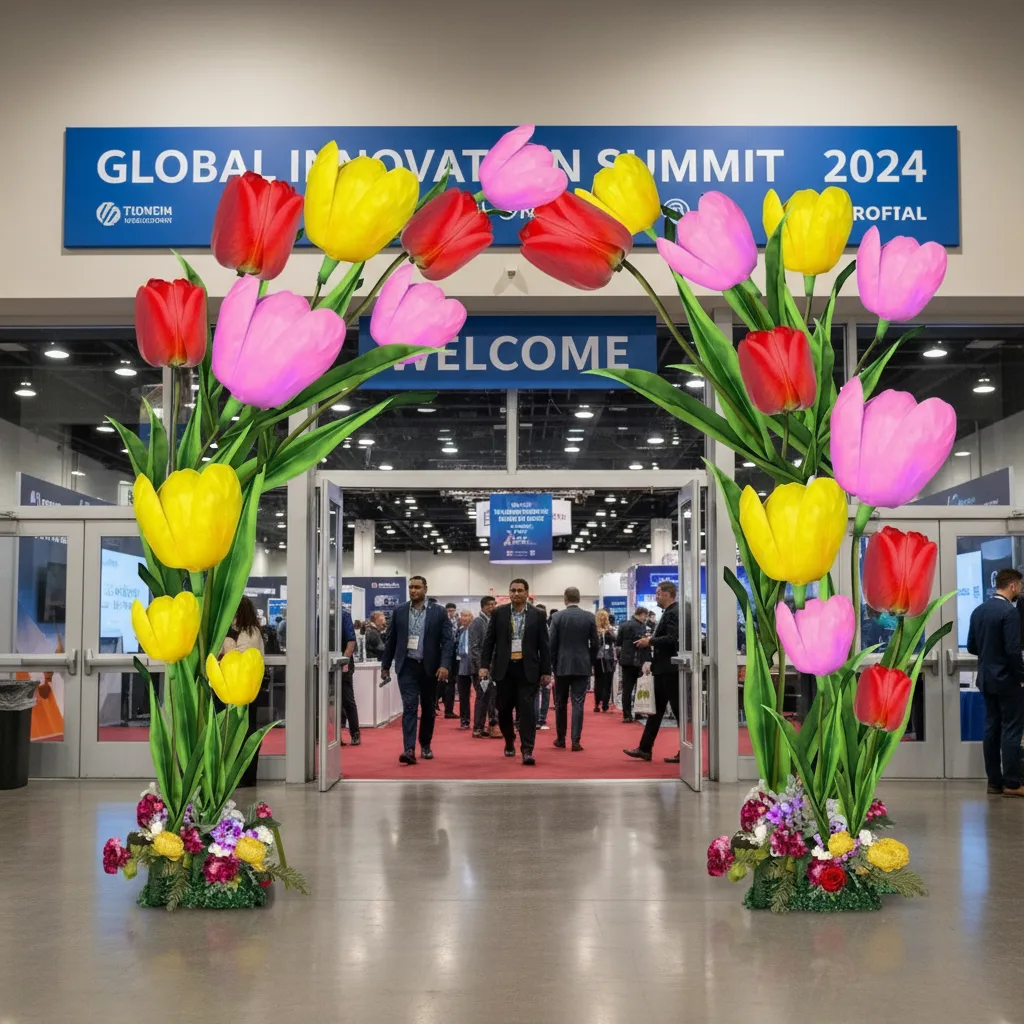
Giant Flower Wedding Arch: A Complete Guide for 2026
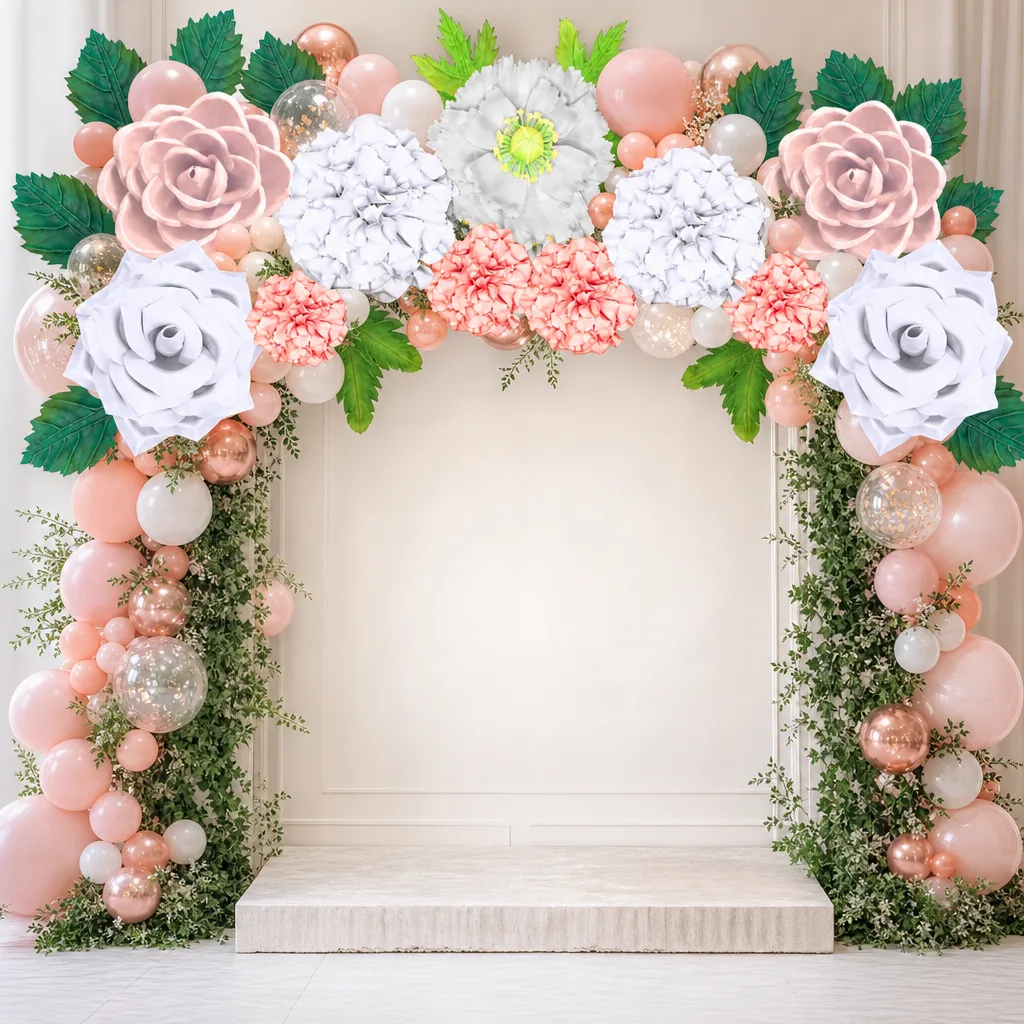
You’re probably staring at inspiration photos, a venue floor plan, and a budget that doesn’t agree with your wish list. That’s normal. A giant flower wedding arch can look effortless in photos, but success comes from decisions most couples and even some planners make too late: scale, materials, transport, setup time, and whether the thing will stay upright once the wind picks up.
The good news is that a dramatic arch is absolutely doable. The best results come from treating it like both a design piece and a temporary structure. Get the vision right, choose the right build path, and handle the mechanics early. That’s how you end up with an arch that looks stunning in person, photographs beautifully, and doesn’t become the most stressful item on your wedding day.
You walk into the venue for a site visit and the room feels bigger than it looked online. The ceiling is high, the ceremony area is wider than expected, and the “dream arch” saved on your phone suddenly looks too small, too flimsy, or too complicated for the load-in window. That is the point where good arch planning starts.
The first design decision is not the flower variety. It is the job the arch needs to do. A ceremony focal point in a windy lawn has different requirements than a photo backdrop in a ballroom. One needs visual reach and real stability. The other may need less depth, faster setup, and cleaner sightlines for photographers.
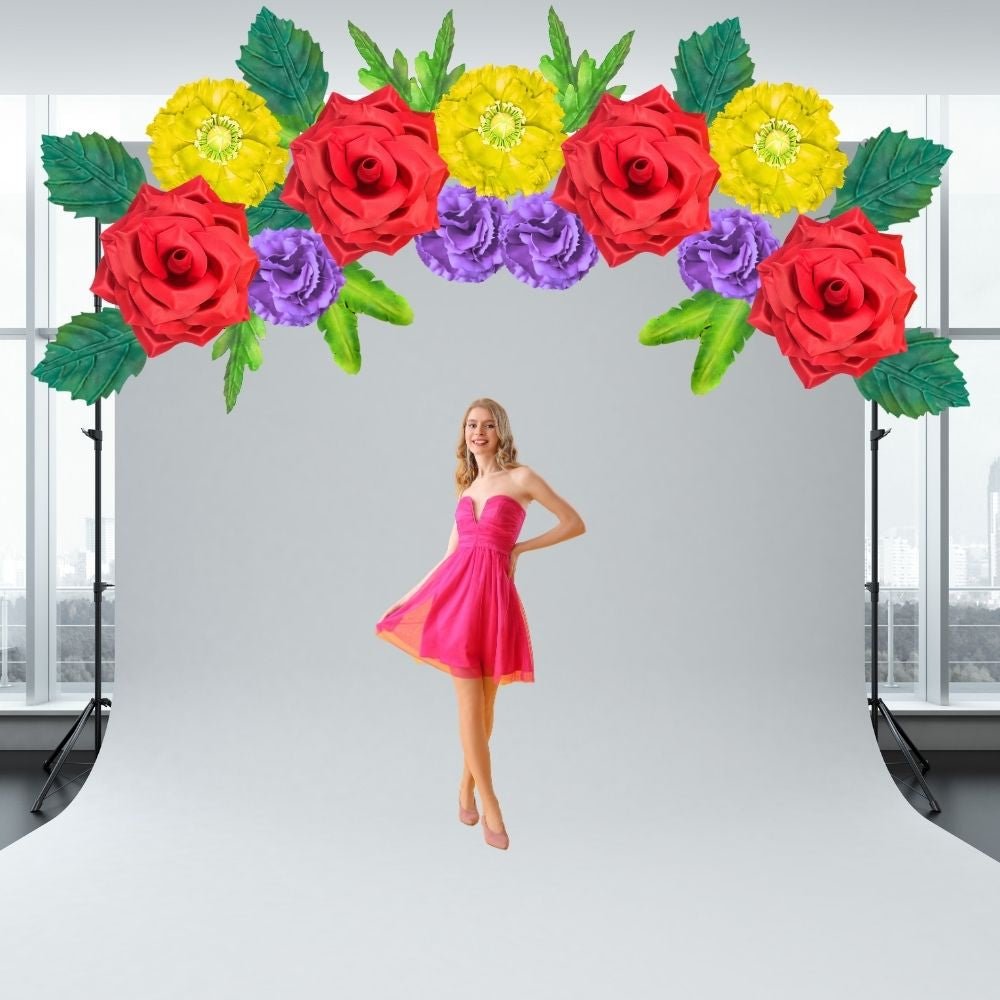
Start with scale, then check the room
Wedding arches are often built in the standard event range of roughly 7 to 8 feet tall and 6 to 8 feet wide, as noted in Ellermann Flowers’ guide to wedding flower arches. That baseline helps, but the venue decides whether it will look intentional or undersized.
Use the space, not Pinterest, to set proportions. In a small ceremony setup, a narrower arch keeps the couple framed without crowding the aisle. In a large ballroom or outdoor ceremony, the arch usually needs more width, stronger shape definition, or larger floral elements so it still reads from the back row and in long-lens photos.
Ceiling height matters too. I have seen beautiful floral work disappear visually because the installer chose a low, compact arch for a tall room with dark walls behind it.
Round arches are common because they are forgiving and photograph well from multiple angles. They are not always the best answer.
A square or rectangular arch usually suits modern venues with clean architecture. A triangular form carries better in outdoor settings where you need shape and height without a heavy top line. A deconstructed arch works well when the ceremony area already has strong architectural framing and only needs directional floral movement, not a full outline.
If you are still comparing formats, these wedding ceremony backdrop ideas for different venue styles are useful for narrowing the look before you commit to materials.
Shape also affects engineering. A full round arch spreads visual weight evenly, but it can act like a sail outdoors if the floral coverage is dense. Asymmetrical builds often reduce material cost and wind resistance, but they require better composition because every imbalance shows.
Build the color plan for the camera, not just the mood board
A giant arch magnifies every color choice. A palette that feels soft in a bouquet can look busy when repeated across a large frame.
Start with one base tone and one supporting tone. Then add a neutral, greenery, or a quieter texture to keep transitions clean. Check that palette against the ceremony chairs, aisle treatment, attire, and whatever sits behind the arch. Stone, hedge walls, drape, water, stained wood, and open sky all shift how color reads in photos.
Strong contrast is useful, but place it with intention. If every flower competes for attention, the couple gets lost in the frame.
Fresh flowers give you movement, scent, and natural variation. They also come with stricter timing, refrigeration concerns, water management, and more day-of labor. Foam and high-quality faux flowers give better control over transport, earlier assembly, and reuse after the wedding. They are often the smarter choice for oversized installations, destination events, or builds that need to be staged in sections and reassembled on site.
Logistics naturally begin to influence design at this stage. While a lush arch might appear straightforward in a reference photo, the essential questions are practical. Can it fit through the venue doors? Can it be broken into modules? Is there enough setup time to attach florals on site? Is the venue floor level enough for the base to sit correctly?
Those questions affect the final look as much as the flowers do.
Lock these decisions before you buy anything
Get these five points clear first:
Once those decisions are set, the arch stops being a vague inspiration image and becomes a buildable, safer, budget-aware event piece.
The romantic idea transforms into a production decision. Some people should absolutely build their own arch. Others should hand it off. The right answer depends less on taste and more on your capacity for assembly, transport, troubleshooting, and staying calm when setup runs behind.
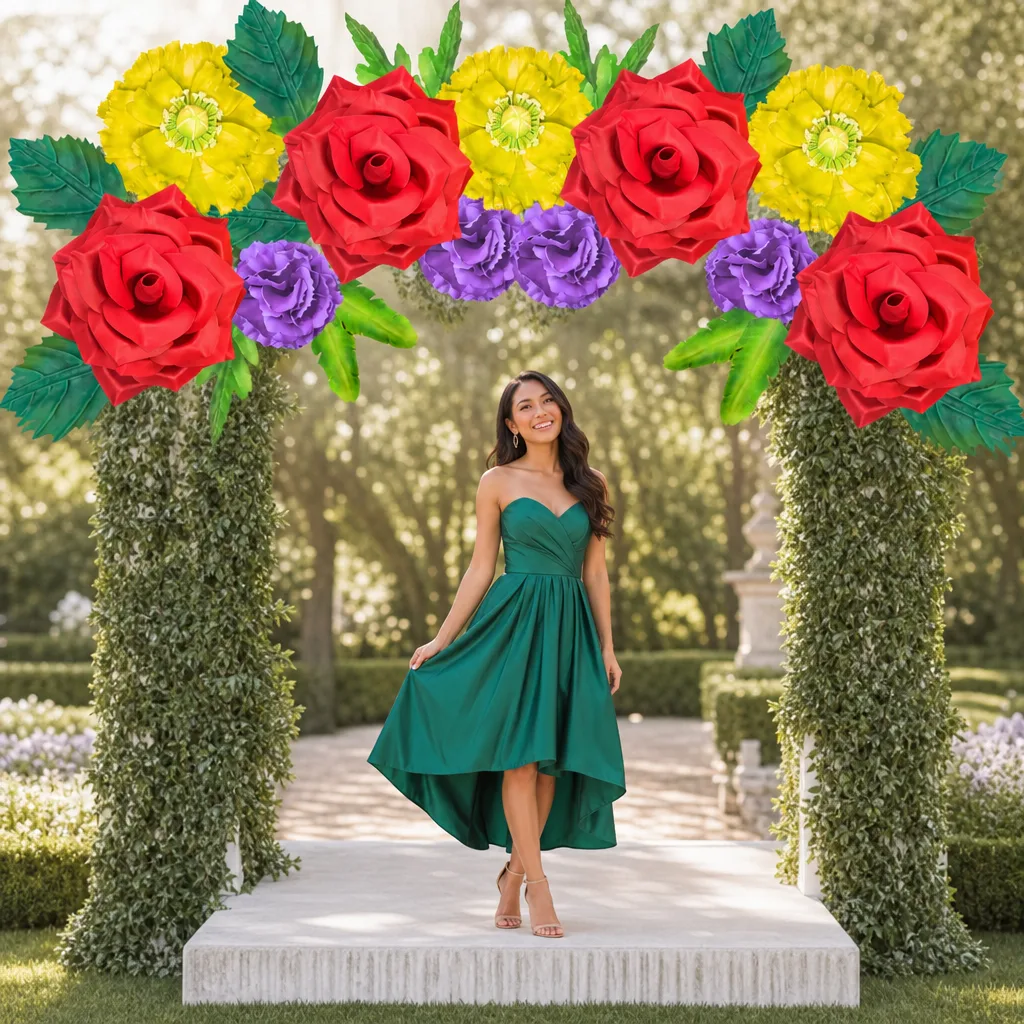
DIY works best when you want creative control and you have enough lead time to practice. It also works when your design uses repeatable elements and materials that travel well.
Good candidates for DIY usually have:
A quality DIY giant foam flower kit can close the gap between full custom and fully self-sourced materials, especially for makers who want structure without starting from scratch.
Custom creation is usually the better path when the arch is oversized, highly visible, venue-restricted, or outdoors. It’s also the right choice if the couple doesn’t want family members assembling décor during what should be a calm wedding morning.
Custom service removes common pain points:
The most expensive arch is often the one that looked cheaper on paper but required emergency fixes, extra transport, and rushed labor at the venue.
If you’re on the fence, answer these questions:
If most answers lean no, go custom. If most lean yes, DIY can be a satisfying option.
What works:
What doesn’t:
The best decision isn’t the cheapest one. It’s the one you can execute cleanly.
The arch looks perfect in the sketch. Then setup starts, the lawn slopes more than expected, the floral mass sits heavier on one side, and a light breeze turns a pretty backdrop into a safety problem. That is why the base and frame need to be settled before anyone starts attaching oversized blooms.
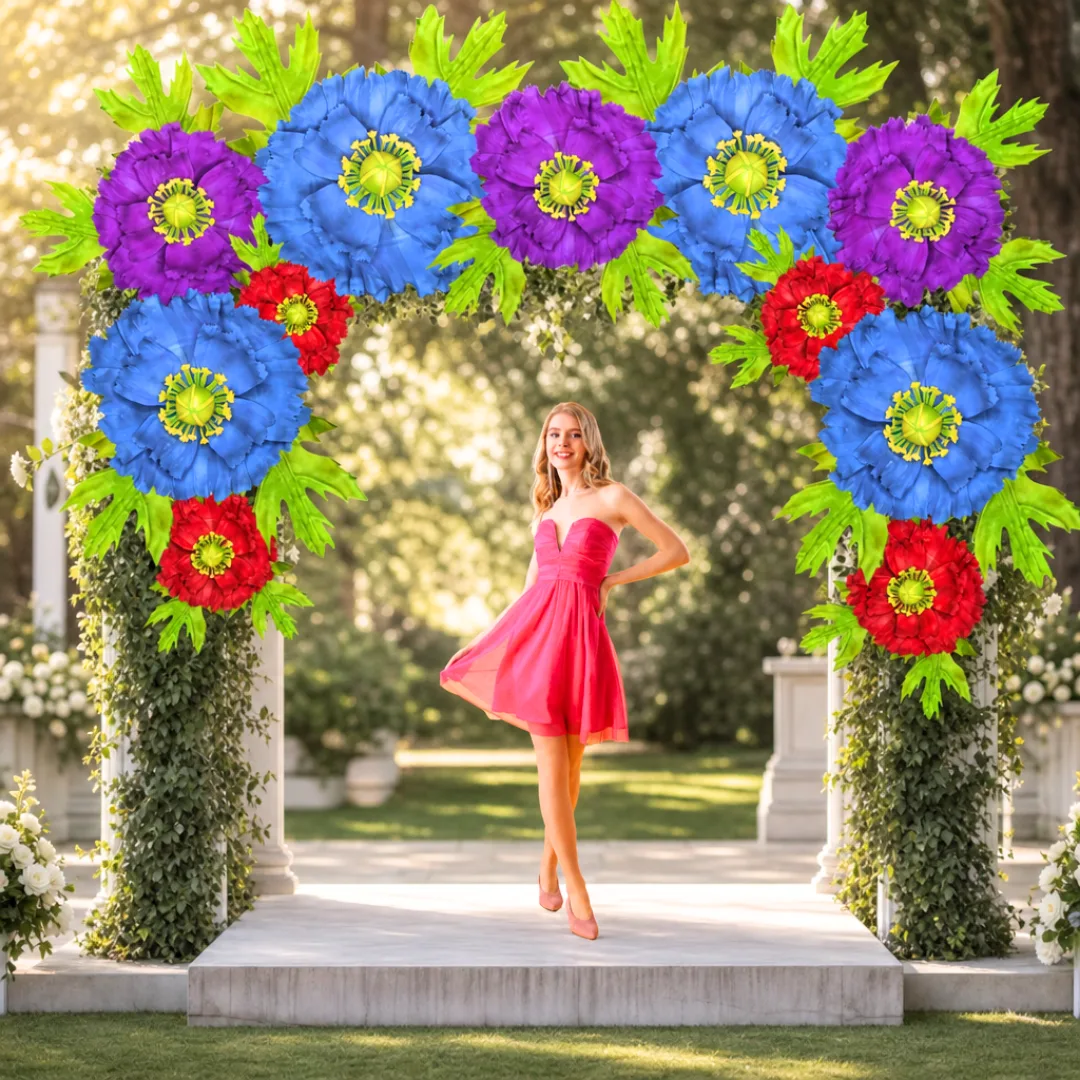
A giant flower arch is a temporary structure, not just decor. Outdoors, it has to handle wind, soft ground, and uneven surfaces. Indoors, it still has to stay put around polished floors, guest traffic, and tight install windows. The best-looking arch in the room can still fail if the weight is high, the footprint is narrow, or the connections loosen during transport.
The frame controls what you can safely build.
Here is the trade-off. Bigger flowers and fuller coverage create more visual impact, but they also add weight and catch more wind. I usually advise clients to spend less on extra flower volume and more on the support system. Guests will never compliment the ballast, but they will notice a leaning arch.
A dedicated fillable base for large floral structures solves one of the most common install problems, which is too little weight at ground level for the height above it.
For outdoor work, anchoring is not a styling detail. It is basic risk control. Event safety guidance discussed in this outdoor setup reference points to decor failure and poor anchoring as recurring causes of disruption at live events, especially with oversized temporary installations. That aligns with what crews see in the field. Arches rarely fail because the flowers are ugly. They fail because the structure was underweighted, unbalanced, or placed on the wrong surface.
Check these points before the van is unloaded:
A simple rule works well on site. If the structure wobbles when lightly pushed at the side, it is not ready.
Indoor arches get a false sense of security. There is no wind, so teams assume the risk is low. Problems include sliding, narrow decorative feet, crowded layouts, and rushed repositioning between ceremony and reception.
Before install day, confirm these details with the venue:
A quick visual on floral base setup helps teams think more structurally:
Lateral movement causes more trouble than outright collapse. A small side-to-side sway can shift flower heads, crack foam mechanics, loosen fasteners, and leave the whole piece looking tired before guests even sit down. DIY builds often struggle with this. The arch may look finished in the workshop, then transport vibration and fast assembly on site expose every weak point.
The strongest installs treat structure, ballast, and floral design as one system. That approach costs a little more upfront and saves a lot of panic later.
Your 6-Month Arch Planning and Execution Timeline
A giant flower wedding arch gets easier when each decision happens in the right order. The timeline below keeps the project from piling up at the end, which is where most avoidable mistakes happen.
Lock the big choices first.
Turn the idea into a specific build plan.
A delayed decision on the arch usually creates a rushed decision on everything attached to it, including transport, setup labor, and floral finishing.
Focus on logistics, not inspiration.
This is also the right time to review your backup plan if weather or site conditions change.
Test before the wedding week.
Shift from design mode to execution mode.
Keep the team focused on sequence.
The goal is a calm install. If you’re making creative decisions while guests are arriving, the schedule started too late.
The ceremony starts in ten minutes. The arch looks beautiful head-on, but from the aisle the left side is blocked by a speaker stack, the sun is blowing out the flowers, and guests are already setting bags near the base. That is how a strong design ends up underperforming in photos.
A giant flower wedding arch should be staged like a set piece, not treated like decor that serves only to fill a spot. Good placement affects the images, the guest flow, and the safety of the installation once people start gathering around it.
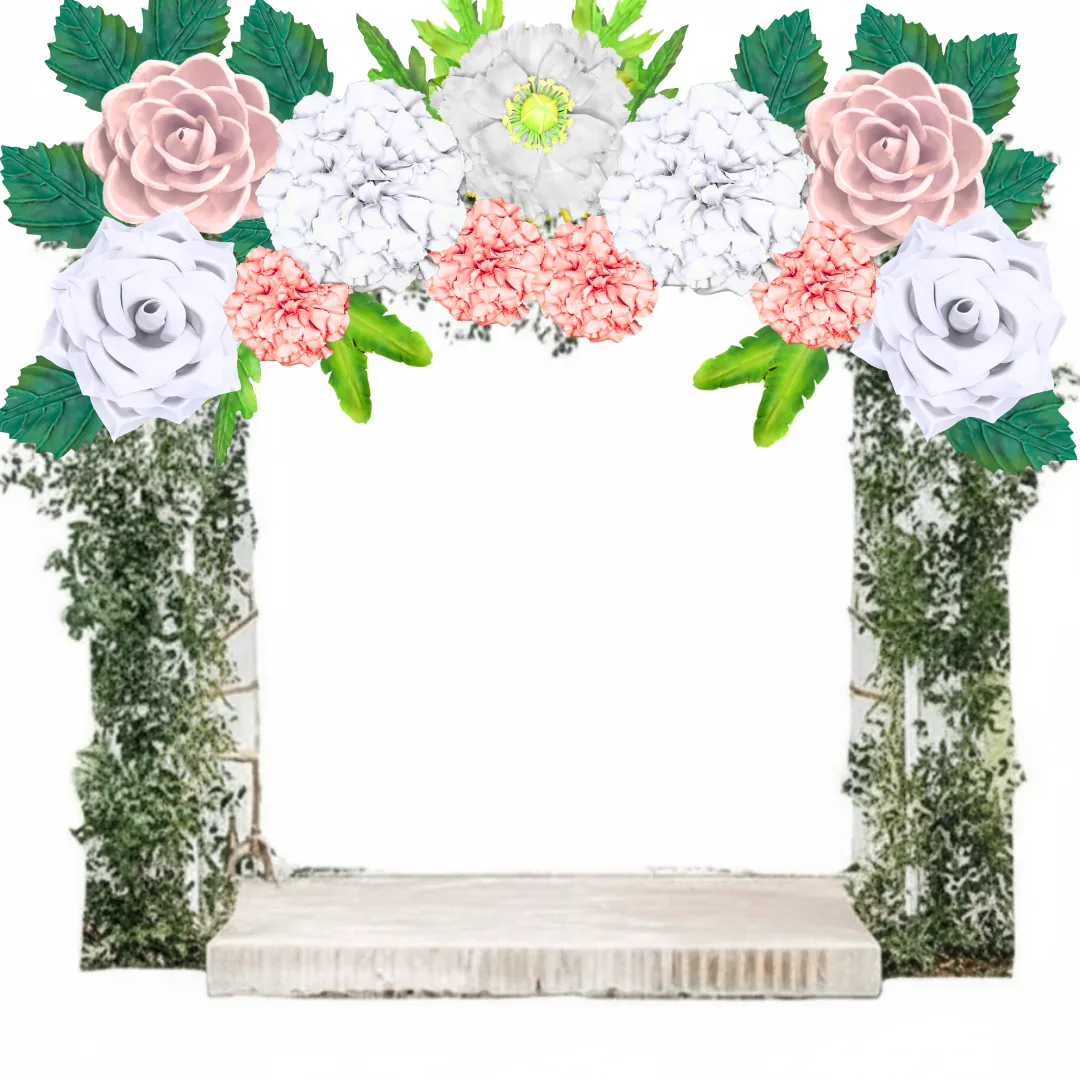
An arch needs negative space around it. If it is boxed in by chairs, DJ gear, signage, heaters, or catering equipment, the shape disappears on camera and the install starts to feel cramped in person.
The best placements usually do four jobs at once:
That fourth point gets missed all the time. A giant arch attracts people. Guests walk up to touch the flowers, fix a jacket, chat beside it, or cut behind it to save a few steps. If the perimeter is too tight, you get cluttered photos and more risk around the base plates, weights, or support legs.
Light matters just as much. Soft side light usually gives giant flowers more depth and texture than harsh backlight. If the ceremony is outdoors, check where the sun will be at the actual start time, not during a midday site visit. If the venue is indoors, watch for uplighting, windows directly behind the couple, and overhead fixtures that create hot spots on foam or reflective petals.
Photographers can improvise, but they work faster and get better variety when the arch has a clear use plan. That matters even more if the install is expensive or complicated to move.
Ask for these images:
I also ask for one image that effectively shows scale. That means pulling back far enough to include architecture, trees, or the full ceremony footprint. Oversized floral work often reads better when the viewer can compare it to the room or surroundings.
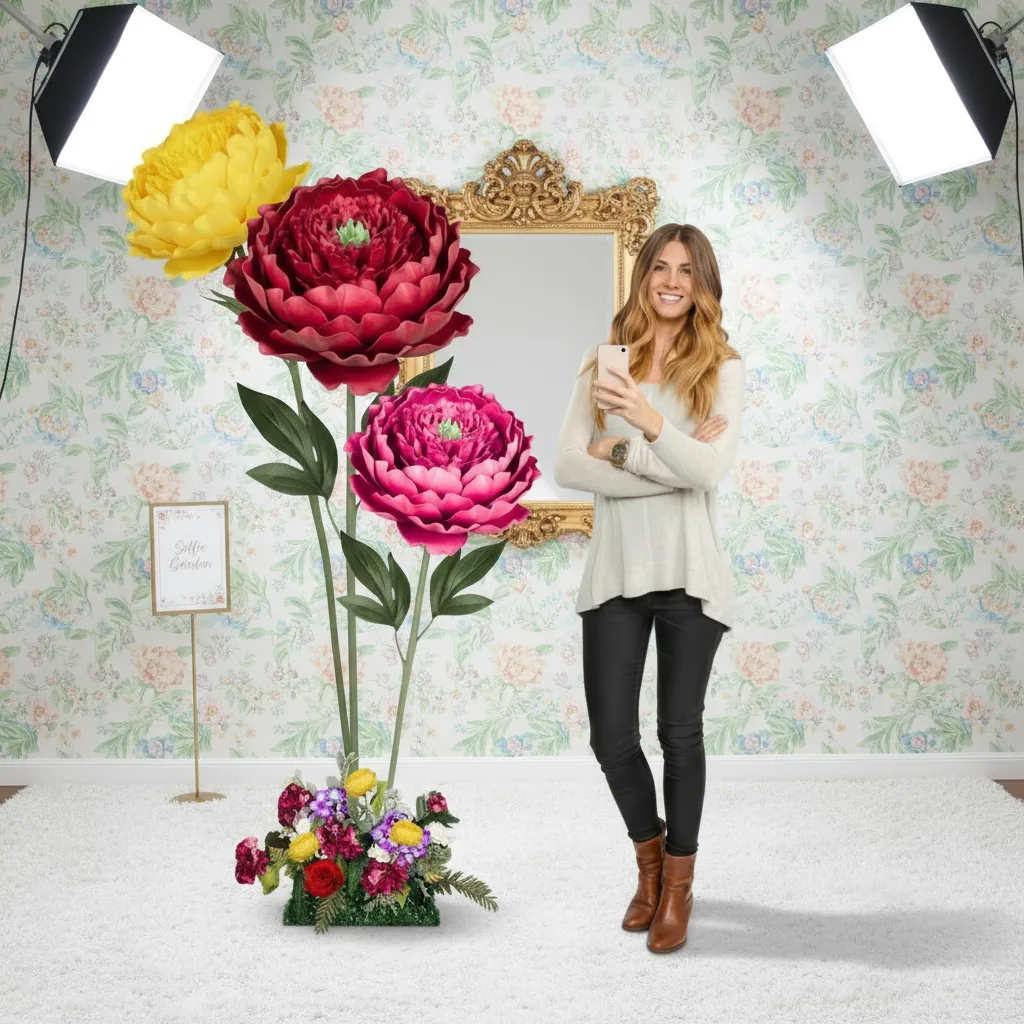
If the arch is staying up after the ceremony, plan for a second life. A ceremony backdrop can become a guest photo moment, sweetheart table backdrop, or cocktail-hour focal point with very little restyling. These giant flower photo booth backdrop ideas are useful if you want the structure working beyond the vows.
A good-looking arch can still fail operationally. Once guests stand, mingle, and take their own photos, the area around the structure changes fast.
Set a small buffer zone around the arch if space allows. Use aisle spacing, low florals, lanterns, or furniture placement to guide people without making the area feel blocked off. If children will be present, or if the arch includes large foam flowers mounted low, assign someone to keep an eye on the setup during the busiest transition points.
This protects the photos and the build. It also protects the venue floor, the floral finish, and the hardware hidden at the base.
Social sharing can be fun, but it should support the event rather than distract from it. A Social Tables study cited by Flowers by Janie found that interactive floral installations can increase guest sharing, but that does not mean every wedding needs QR codes, AR filters, or branded content prompts.
Use a digital add-on only if it matches the couple and the guest experience.
Good fits include:
If the event is formal, intimate, or tight on timeline, skip the extra layer. A well-lit, well-staged arch usually does more than enough on its own.
Assign one person to own this. Shared responsibility usually means no one catches problems early.
That final walk-through is where polished installs separate themselves from rushed ones. The arch should look intentional from every angle and stay stable through every part of the day.
A memorable arch doesn’t happen because the flowers are expensive or the build is oversized. It happens because the design and the logistics support each other. That’s the difference between an install that feels polished and one that feels stressful.
Keep the process grounded in four priorities:
If you’re going DIY, give yourself time to test, adjust, and pack smart. If you’re going custom, ask good questions about setup, stability, and how the design will function in the actual venue. In both cases, the giant flower wedding arch should fit the space, suit the ceremony, and stay safe through every part of the day.
Material choice matters too. If you’re comparing long-lasting floral options, understanding types of foam used in floral crafting can help you make better decisions about realism, durability, and handling.
The best arches feel effortless to guests because someone handled the practical details early. Do that, and your floral vision won’t just look beautiful. It will work.
If you want help turning your concept into a dramatic, camera-ready installation, Amazing Giant Flowers offers both handcrafted custom pieces and DIY kits for weddings, backdrops, and large-format event décor. It’s a strong next step whether you need a full statement arch or just the materials and guidance to build one with confidence.
Ready to Create Something Amazing?
Browse our collection of giant flower kits and start your next project today.