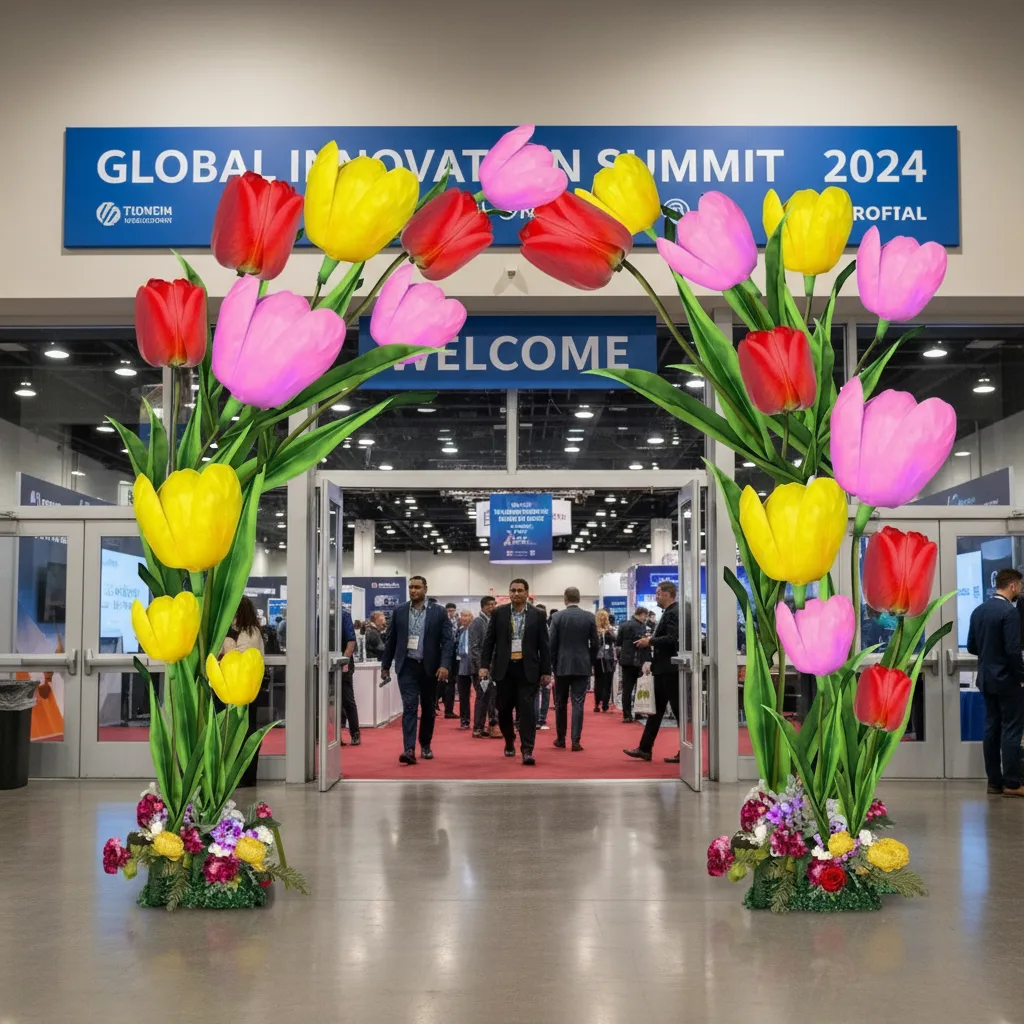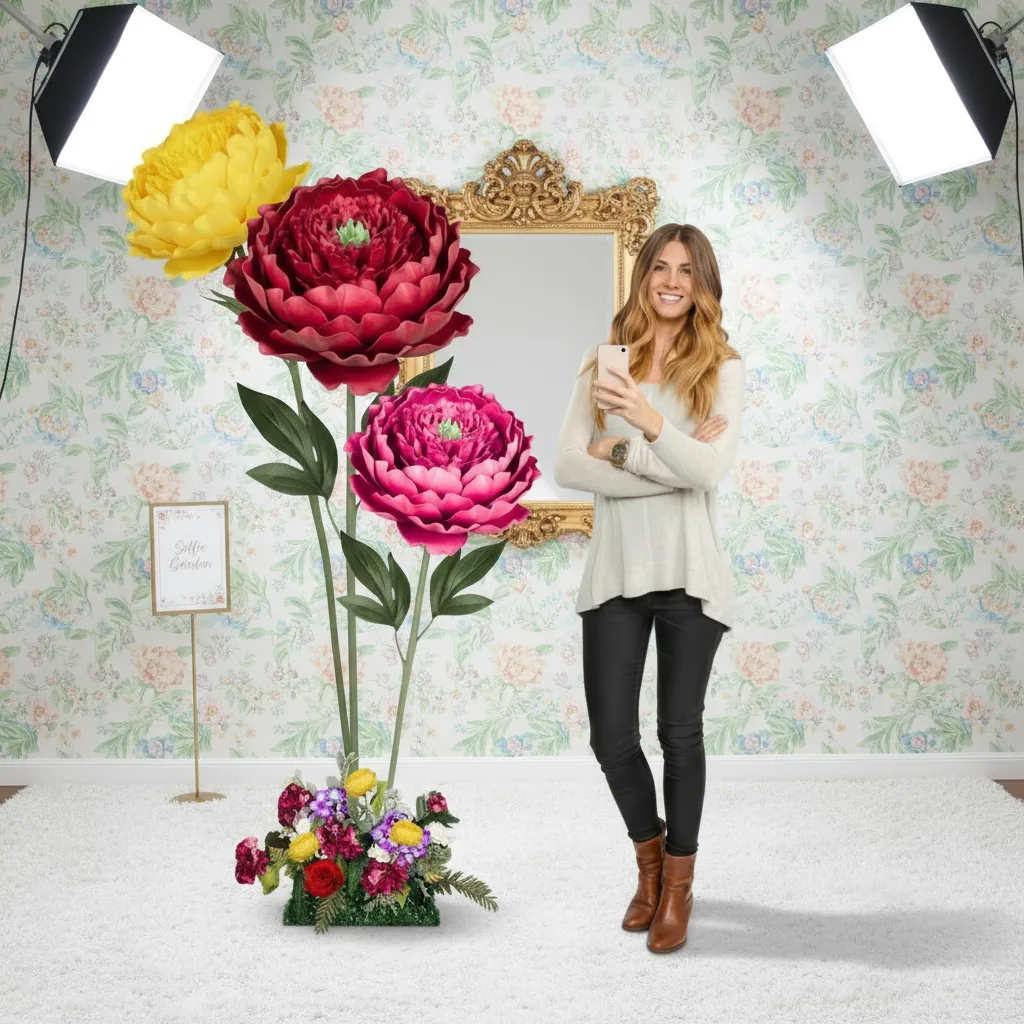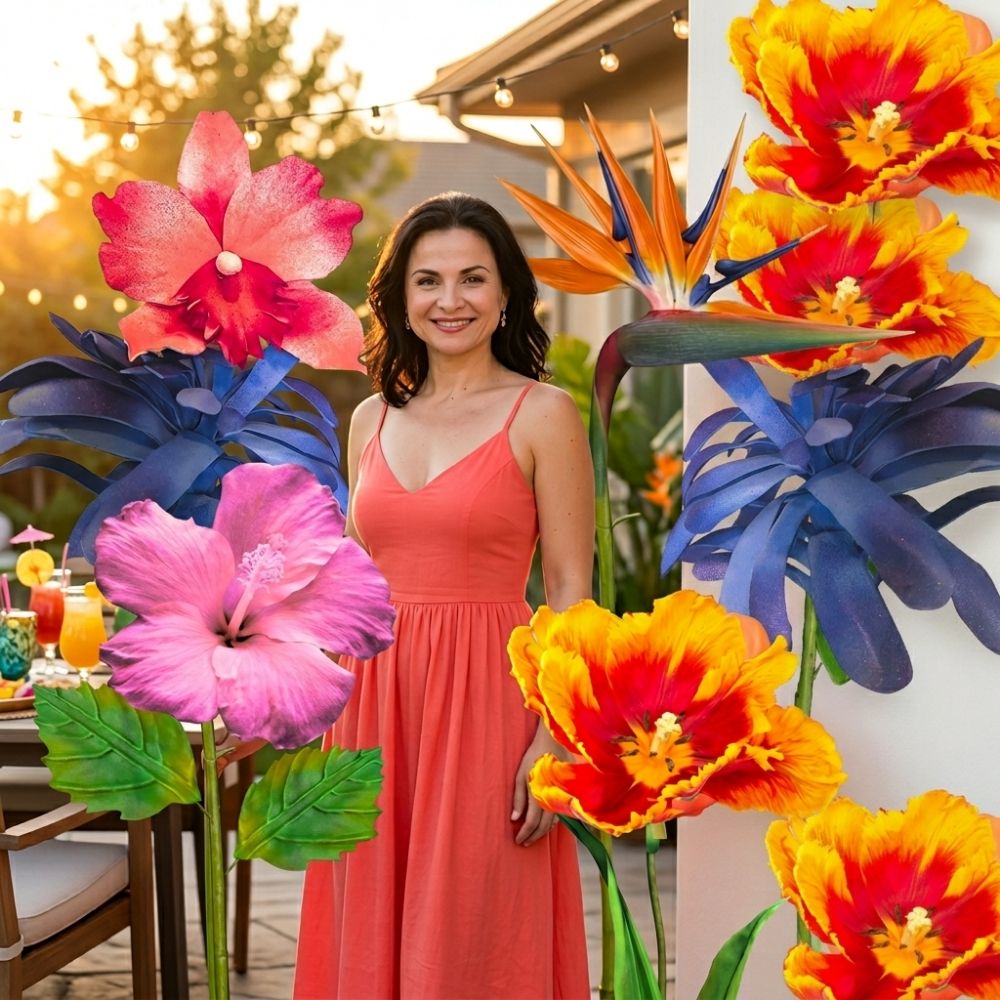
Giant Foam Flower Photo Backdrop: A Complete Guide
Planning a giant foam flower photo backdrop means making real decisions under real pressure — venue deadlines, client expectations, photographer requirements, and a load-in window that's shorter than you'd like. I've worked through all of it, and what I want to give you here is the complete playbook: purpose, design, density, installation, lighting, and long-term care in one place.
A giant foam flower photo backdrop works because it solves several event problems at once. It creates scale, softens hard architectural spaces, gives guests an obvious photo moment, and can be styled for weddings, retail, galas, festivals, and branded activations. But the difference between a backdrop that feels sculptural and one that looks sparse usually comes down to planning, mechanics, and restraint.
Key Takeaways
The first decision isn't flower type. It's purpose. A ceremony backdrop, a trade show selfie wall, and a retail window installation all ask different things from the same material.
A ceremony backdrop can prioritize front-facing beauty — it lives in one place, holds still, and gets photographed from a consistent angle. A branded photo moment has to perform from multiple angles, survive repeated guest interaction, and sit where people naturally stop without blocking service paths or exits.
Start With the Site, Not the Mood Board
Before approving colors or bloom styles, assess the venue like a production manager. Walk the space and answer these questions first:
A good planner also decides early whether the backdrop is the focal point or a supporting scenic layer. That choice affects size, flower density, and where your budget goes. If it's the focal point, invest in density and hero blooms. If it's supporting scenery, a lighter build with strong color coordination is often enough.
Different events have different tolerances and different camera conditions. Here's how I think about it:
If you're weighing rental logic versus ownership for recurring events, reviewing how planners approach a flower wall backdrop rental can help clarify whether reuse is realistic for your schedule.
Sparse installs usually happen because planners count flowers but don't account for overlap. Industry data shows that event planners can achieve full coverage density by adding 10 to 20 percent more stems for complete bloom overlap, and many retailers now offer collections of over 28 flower designs for collage-style backdrops according to Mayesh flower wall planning guidance.
That matters in real builds. On paper, a wall can look "filled." On site, gaps appear once petals curve, stems angle outward, and the camera finds negative space.
Practical rule: Order or build for overlap, not edge-to-edge math. The camera is less forgiving than your sketch.
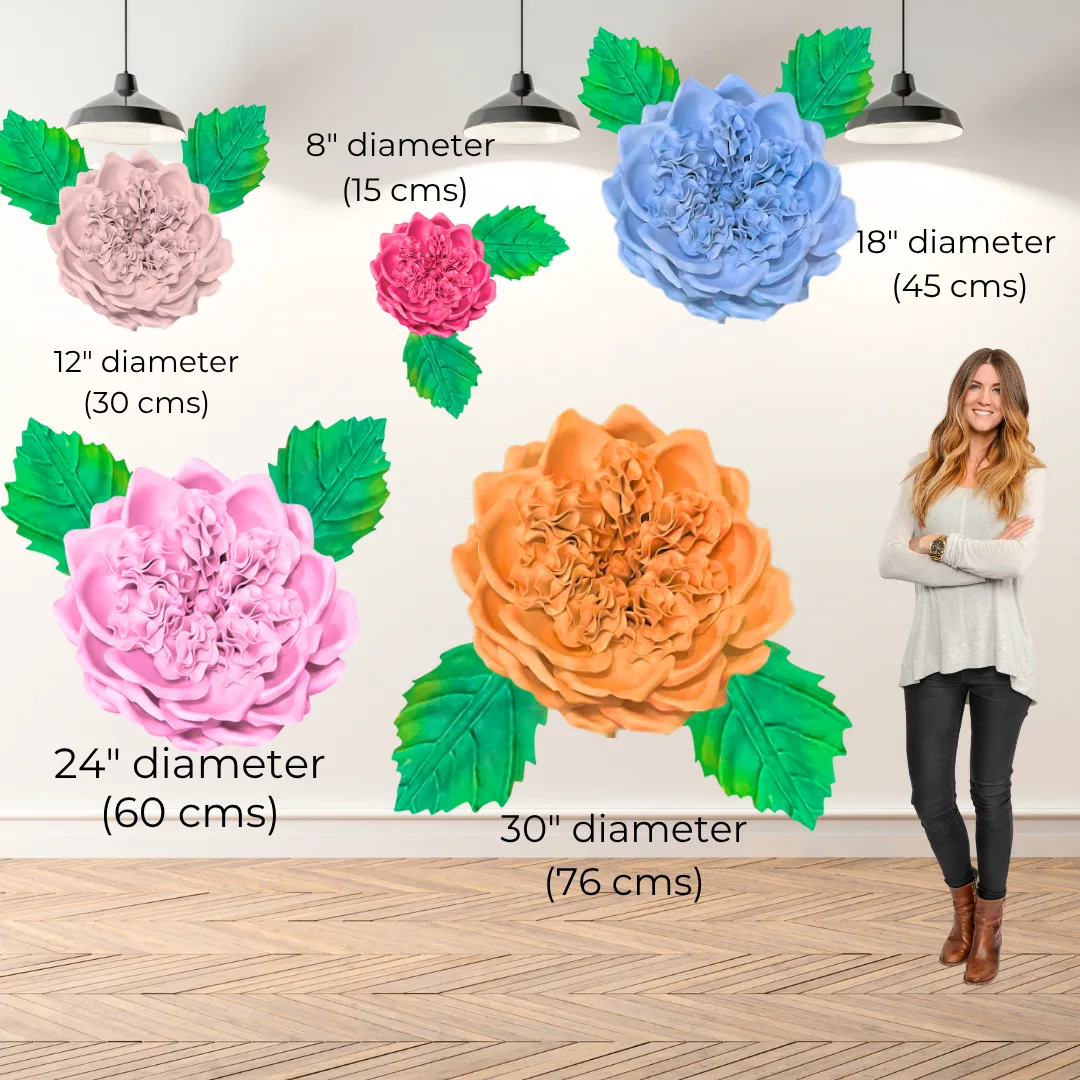
Use this process before you commit to production. Measure your wall width and height in inches, then calculate square footage. Identify your primary flower diameter — a standard giant foam rose runs 12 to 24 inches across. Divide your wall area by the bloom face area, then add 15% for overlap and edge coverage.
For a 8 ft × 8 ft backdrop (64 sq ft) using 18-inch blooms, you'd need roughly 36–40 flowers for full coverage before accounting for size variation and layering. That number surprises most first-time planners — and it's why under-ordering is the most common mistake I see.
Flower Selection and Design Composition
The most memorable backdrops have a point of view. They don't just combine "pretty flowers." They use flower shape, scale, and color to reinforce the event's identity.
A wedding backdrop often needs softness and romance. A retail launch may need stronger contrast, cleaner color blocking, and space for logos or products. A festival photo area usually benefits from bolder silhouettes that read from a distance before guests even step in front of it.
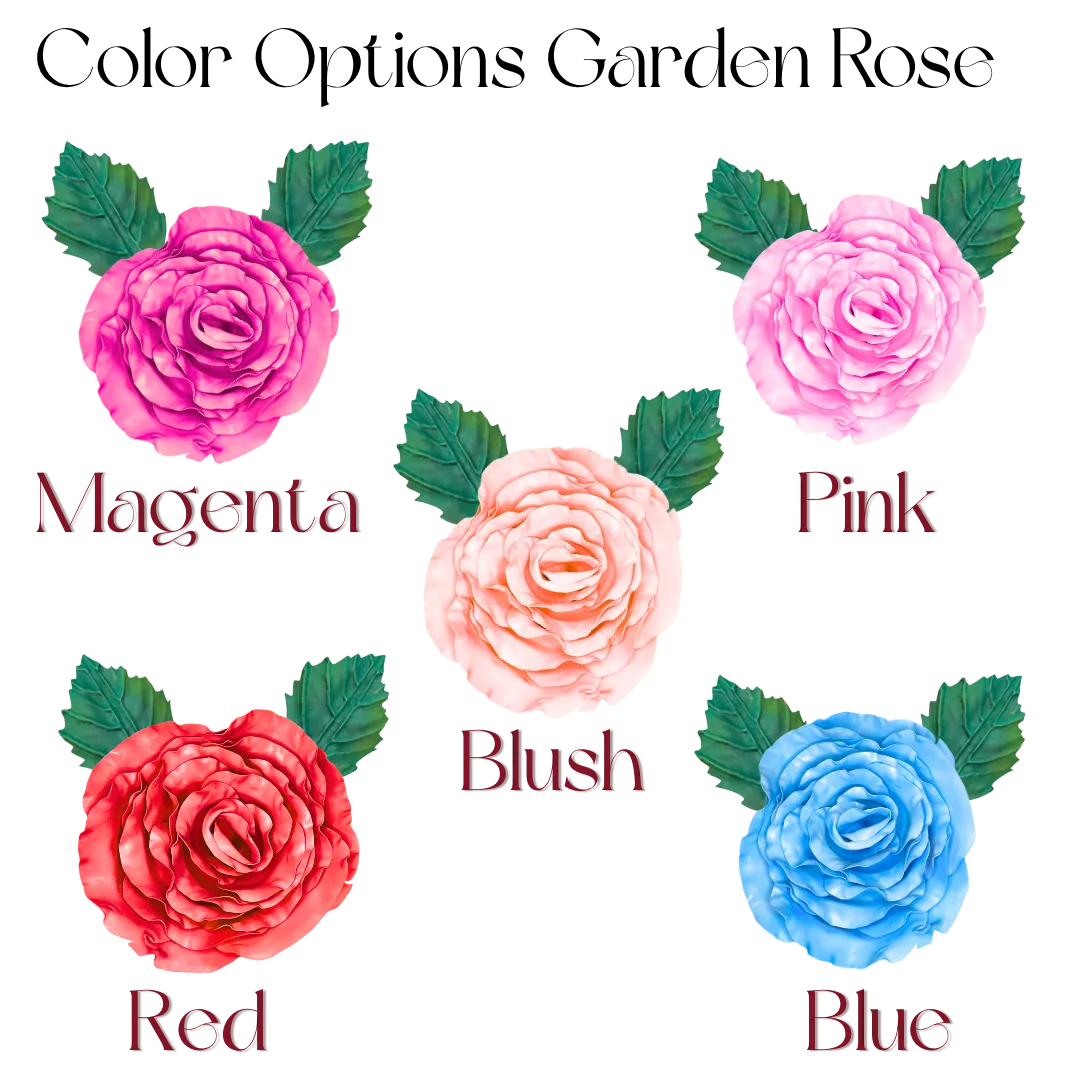
Some flower types have become standard because they solve different design problems cleanly. The market has standardized around roses, sunflowers, lilies, and ranunculus, along with custom builds with color matching for brand guidelines and event themes, as described in this giant foam flower wall decor listing.
The mistake to avoid is treating every wall the same. If every flower is oversized and equally bold, the install can feel visually loud instead of dimensional. Mix at least three size scales — hero, mid, and filler — for a wall that has genuine depth.
For weddings and ceremonies, use roses and ranunculus in tonal shades. Keep transitions gentle and avoid too many novelty flower shapes. This works well behind sweetheart tables, ceremony altars, or indoor photo corners.
For retail and branded environments, use fewer varieties, larger scale shifts, and stronger placement discipline. Clean repetition reads better through storefront glass and in campaign photography. For inspiration on how oversized florals function in store environments, a resource on visual merchandising flowers is useful.
For branded environments specifically, "close enough" color usually isn't close enough. That's why custom color matching matters. If the backdrop is part of an exhibition program, teams often benefit from reviewing broader Exhibition Stand Design approaches so the floral work supports the booth architecture instead of competing with it.
A themed event often benefits from one recognizable hero flower mixed with supporting blooms. That keeps the piece specific without becoming costume-like. A flower backdrop should echo the theme, not overpower it — if guests remember the flowers but not the brand or occasion, the design did only half its job.
Custom Production vs. DIY: Making the Right Call
At this juncture, you either avoid a headache or commit to one. A custom backdrop and a DIY kit can both produce a strong result. The right choice depends on your timeline, tolerance for trial and error, finishing standards, labor availability, and whether this is a one-off event or the start of a repeatable asset library.

Custom is the better path when the backdrop has to do a job without excuses. That includes weddings with tight install windows, corporate events with brand standards, and activations where the photo moment is part of the campaign itself.
Custom also helps when your labor cost is hidden. Many teams look only at material spend and forget the hours involved in cutting, heating, shaping, sealing, packing, and troubleshooting. When you add those hours at real labor rates, the gap between custom and DIY often narrows significantly.
DIY makes sense when your budget is tighter, your schedule allows making time, or your creative goal includes the build process itself. It's also a strong option for makers, balloon artists, set stylists, and in-house event teams who want reusable skills and assets.
Professional tutorials describe an 11-step process for handcrafting giant foam flowers that includes heat-forming EVA foam petals at 250°F, assembling them onto a core, and applying lacquer sealant. Following video tutorials can lead to an 80% first-time success rate for crafters based on this giant wall foam rose tutorial reference.
That's encouraging, but it doesn't mean DIY is effortless. The hidden challenge is consistency — making one strong flower is different from making a cohesive set that reads professionally across a full backdrop. Batch your cuts, batch your heating, and test one complete bloom before making the full set.
Field note: DIY is most successful when you treat it like scenic production, not a weekend craft. Most rough-looking flower walls fail at petal consistency, color uniformity across a batch, or edge finishing where foam shows raw cuts.
| Factor | Custom Production | DIY Kit |
|---|---|---|
| Typical cost range | $800–$4,000+ depending on size and complexity | $150–$600 in materials plus labor hours |
| Lead time needed | 2–6 weeks recommended | Flexible; depends on your making schedule |
| Finish consistency | High — professionally matched and sealed | Variable — improves with practice and batching |
| Best for | Weddings, corporate events, brand activations | Makers, in-house teams, repeatable asset building |
| Reusability | High with proper storage | High — and you can repair or expand your set |
| Labor required on-site | Lower — arrives ready to mount | Higher — assembly and finishing on your team |
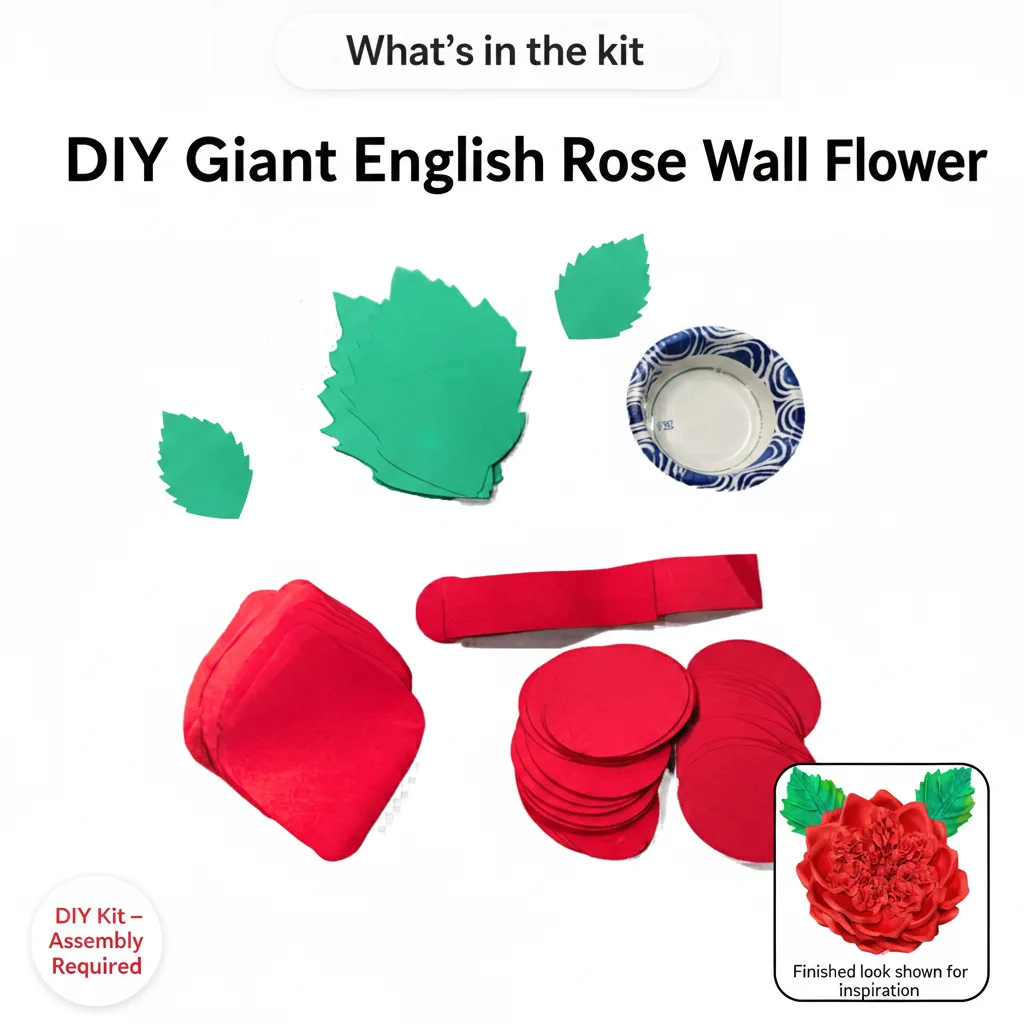
For planners or makers exploring supplies, one strong option in the market is a collection of DIY giant foam flower kits, which are designed around the build-it-yourself route rather than finished scenic delivery.
A backdrop can be beautifully designed and still fail at the final step. Installation is where aesthetics meet safety, venue rules, and the practicalities of uneven walls, short load-ins, and changing floor plans.
Event-grade foam flowers weigh 0.2 to 1.5 lbs per unit and can be mounted on walls using hooks or pads, with load benchmarks of 10 to 15 lbs/ft². For freestanding setups, kits with molds and tutorials achieve an 85% assembly success rate in under two hours according to ShopWildThings foam rose specifications.
Those numbers matter because they tell you two things: foam flowers are light enough for flexible mounting strategies, and the structure behind them still matters enormously.
Wall-Mounted Installs
Use this approach when the venue permits direct attachment and the wall finish is stable. Command strips rated for 3–5 lbs work for individual medium blooms. For heavier hero flowers (1+ lb), use anchor hooks into studs or masonry. If you need a broader reference for hanging decorative weight safely on finished surfaces, this professional guide to secure installation is a practical complement to event-specific methods.
This is the safer route when venue restrictions are strict or when the backdrop has to sit in the middle of a room. A pipe-and-drape frame or a purpose-built panel system gives you a clean surface that travels with you. For teams building dimensional flower placements rather than flat walls, bendable PVC pipes for giant flower stems are one way to shape freestanding arrangements around entrances, stages, and photo zones.
Bring more fastening options than you think you'll need. Install problems usually aren't floral problems — they're surface problems. A kit that includes adhesive pads, hook-and-loop strips, zip ties, and clamps covers most surprises.
A photo backdrop that looks strong in person still needs camera discipline. Foam petals hold shape beautifully, but they can photograph flat if the light is harsh or if guests are positioned too close to the wall. The best results come from treating the backdrop like a set — you're not just decorating a space, you're designing what the lens sees.
Foam flowers look richer under soft, directional light. Overhead venue lighting often flattens petal edges and creates shadows under guests' eyes, which hurts the final image even if the backdrop itself is beautiful.
If your team is coaching guests or creators on social content angles, a practical guide on how to take photos on Instagram can help non-photographers get stronger results from the same setup.
The strongest floral walls invite action. Guests should know, without asking, to stop, pose, and share there. Use simple environmental cues: a small rug or floor decal that marks where to stand, a ring light on a stand that guests can operate themselves, and a printed or neon sign that provides a natural caption.
Selfie-led installs work especially well when they're designed as part of the event experience rather than added at the last minute. For planners developing that kind of shareable moment, these selfie station ideas offer practical inspiration. Guests share more when the setup removes friction — good lighting, obvious positioning, and a backdrop with depth do more work than a pile of props.
Care, Storage, and Outdoor Durability
A giant floral install isn't disposable unless you treat it that way. Most backdrops can be reused, restyled, or broken into smaller scenic moments if they're packed and stored properly after the event. The first rule is simple: don't crush your own investment during strike.
Foam flowers hold up well when they're given air and structure. They don't hold up well when they're tossed into plastic bins with heavy hardware on top of them.
Cleaning is usually straightforward. Dust gently with a soft brush, spot-clean with a barely damp cloth, and avoid scrubbing painted or sealed surfaces aggressively.
A key knowledge gap remains around outdoor durability, and available data suggests unsealed EVA foam can degrade 30 to 50 percent faster outdoors. That has increased demand for sealed, weatherproofed options for festivals and other outdoor events, as noted in this discussion of handmade giant foam floral use.
That doesn't mean outdoor installs are off the table. It means you should plan them differently and ask specifically about weatherproofing before production starts.
For a standard 8 ft × 8 ft photo backdrop using 18-inch blooms, plan for 36–42 flowers before accounting for size variation and layering. The reliable rule is to calculate edge-to-edge coverage and then add 15–20% for overlap — gaps that are invisible on your sketch become obvious once petals curve and the camera finds negative space.
If you're mixing sizes (which I always recommend for depth), anchor that calculation to your mid-size bloom, then add hero flowers as focal points and smaller fillers to close gaps near edges and mounting points.
How long does a DIY giant foam flower take to make?
A single well-finished giant foam rose — cut, heat-formed at 250°F, assembled, and sealed — takes most first-time makers 45 minutes to 90 minutes. With practice and proper batching (cutting all petals first, then heating in sequence), experienced makers can complete a bloom in 25–35 minutes.
The real time cost is consistency across a full set. Budget an honest making schedule before committing to DIY for a deadline-driven event — a 40-flower backdrop is 25–60 hours of work depending on your experience level and workflow.
Can a giant foam flower photo backdrop be used outdoors?
Yes, but with specific precautions. Unsealed EVA foam can degrade 30–50% faster in outdoor conditions, so sealed and weatherproofed flowers are strongly preferable for exterior use. Sheltered placement under a tent or covered entry, short exposure windows, and more robust structural anchoring are all non-negotiable for outdoor installs.
Ask your supplier for specific weatherproofing details — "suitable for outdoor use" without a sealant specification isn't a reliable answer. Direct all-day sun and wind-exposed corners are the two conditions most likely to damage an outdoor foam flower backdrop prematurely.
What is the best mounting method for a foam flower backdrop?
The best method depends on your venue surface and whether the backdrop is wall-mounted or freestanding. For wall-mounted installs on stable drywall, adhesive command strips (rated 3–5 lbs) work for medium blooms, while larger hero flowers need anchor hooks into studs. For venues with restrictions or installs that need to stand in the middle of a room, a pipe-and-drape or panel frame system is the safer, more flexible option.
Always bring more fastening options than you think you'll need — clamps, zip ties, hook-and
Ready to Create Something Amazing?
Browse our collection of giant flower kits and start your next project today.