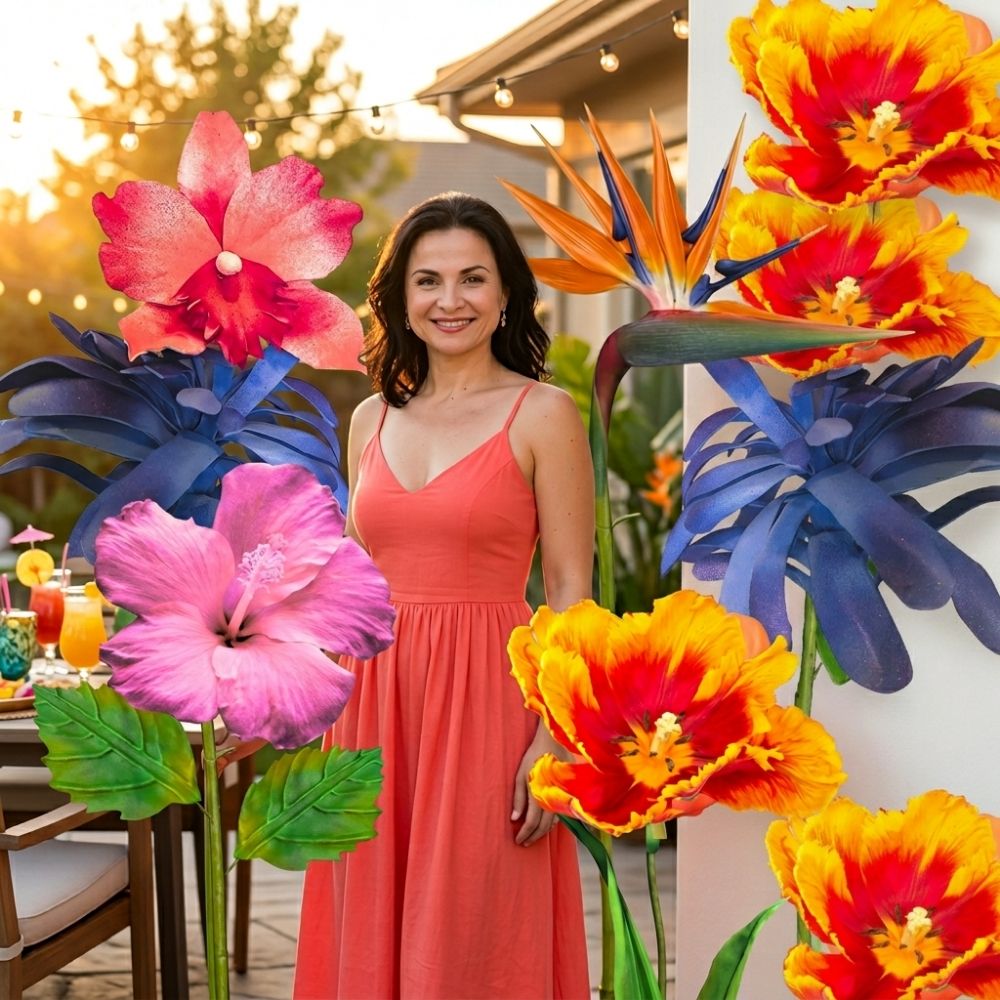
Giant Poinsettia for Christmas: Festive Foam Flower Tutorial

If you've been searching for a way to make your holiday decor genuinely stop-people-in-their-tracks stunning, a giant poinsettia Christmas foam flower is exactly what you need. We're talking 3-4 feet of bold, velvety red petals that look like they belong in a Dolce & Gabbana holiday window display — not a craft store clearance bin.
I've been making giant foam flowers for years, and every holiday season, the poinsettia is hands-down the most requested design I get. There's something about scaling up that iconic Christmas flower that just hits different. It's dramatic, it's festive, and honestly? It's way easier to make than you'd think.
Key Takeaways
In this tutorial, I'm walking you through everything — the materials, the petal shapes, the layering, the finishing touches that make it look professional. Whether you're decorating for a holiday party, a corporate event, or just want to make your living room feel like Christmas exploded in the best possible way, this one's for you.
Real talk? Fresh poinsettia plants are gorgeous, but they're also notoriously finicky. They drop leaves when it's too cold, they wilt near drafts, and a decent-sized one from a nursery runs you $25–$50 — and it'll look rough by New Year's.
A giant foam version? It lasts forever. You make it once, store it carefully, and pull it out every single year.
According to Statista, poinsettias account for roughly $250 million in sales during the holiday season in the US alone — making them the best-selling potted plant in the country. People are obsessed with this flower. So imagine showing up to a holiday party with a 3-foot foam version in deep crimson. You will be remembered.
Event planners especially love this. A single giant foam poinsettia can anchor an entire holiday vignette — next to a fireplace, flanking an entryway, or grouped into a full freestanding giant flower arrangement that transforms a venue.
The Cost Comparison Is Wild
A professional florist charging for large-scale holiday floral installations can run $500–$2,000+ for a single focal piece, according to The Knot's floral pricing guides. A DIY giant foam poinsettia? You're looking at $30–$60 in materials, tops.
That math is genuinely hard to argue with. One afternoon of crafting, and you have a statement piece that pays for itself in the first season alone.
Before we get into the fun part, let's talk supplies. Using the right materials makes an enormous difference — I learned this the hard way when I tried to use cheap craft foam early on and ended up with petals that looked like sad red placemats.
EVA foam is non-negotiable. It's flexible, heat-shapeable, lightweight, and takes paint beautifully. It's what we use in all our kits at Amazing Giant Flowers, and it's what I recommend every single time.
If you want to skip the supply-hunting headache, our Giant Flower Kits come with everything pre-cut and ready to assemble, including video tutorials. But if you're sourcing materials yourself, just make sure you're getting quality EVA foam — the density matters for how well it holds shape after heating.
Ok, this is where it gets really fun. I'm going to walk you through this in layers, because that's exactly how a real poinsettia grows — and mimicking that natural layered structure is what makes the foam version look so convincing.
A poinsettia has two distinct petal types: the large outer bracts (the showy red "petals" everyone recognizes) and the smaller inner bracts (more slender, slightly lighter in color). Then underneath everything, you have the true green leaves.
Trace your templates onto the foam with a chalk marker or light pencil — it wipes off clean. Cut slowly and deliberately. The pointed tips on poinsettia petals are what give it that instantly recognizable silhouette, so take your time there.
When I first started making giant flowers, I rushed the cutting stage constantly. Big mistake. A wobbly petal edge shows up immediately once everything is assembled.
Adding Veining Detail Before You Shape
This step is what separates a flat craft-project poinsettia from one that looks genuinely botanical. Poinsettia bracts have very visible center veins running from base to tip, with smaller branching veins on either side.
Use the back of your craft knife (not the blade) or a ballpoint pen with no ink to press a center vein line down each petal. Then add 4–6 smaller branching lines on each side. Press firmly — you want an actual indentation in the foam. This texture catches paint and shadow in a way that makes the finished flower look genuinely three-dimensional.
Now grab your heat gun. Hold it 6–8 inches from the foam surface and move it in slow passes. The foam will start to soften within seconds. While it's warm and pliable, curve the petal gently upward along the center vein — like a gentle U-shape when viewed from the base. Hold it in that position for 10–15 seconds while it cools.
For the outer bracts, I also like to add a slight backward curl at the very tip — just a small heat-and-bend move that makes the petal look like it's reaching outward naturally. It's a tiny detail that makes a huge visual difference.
Do this for every single petal. Yes, it takes a while. Put on a Christmas playlist and enjoy the process — this is the meditative part of foam flower making, and I genuinely love it.
Even if you started with red EVA foam, painting adds the dimension that makes it look real. A flat red poinsettia looks like a craft project. A shaded, multi-toned one looks like something you'd see in a Neiman Marcus window display.
Let everything dry completely before assembly. I know it's tempting to rush, but wet acrylic plus hot glue is a recipe for a smeared, messy mess. Ask me how I know.
Now we put it all together. This part goes faster than you'd expect once all your petals are prepped and dry.
Start with your green leaf bracts. Arrange them in a circle on your work surface, tips pointing outward, and hot glue them to a circular foam base disc (about 6–8 inches in diameter, cut from your EVA foam scraps). This base disc is what holds everything together and gives you a clean attachment point for the stem.
Next, layer in your large outer red bracts. Stagger them so they fall between the green leaves, not directly on top. Hot glue each one at the base, pressing firmly for a full 30 seconds while the glue sets.
Add your medium bracts in the next layer, again staggered. Then your small inner bracts, angled upward slightly more than the outer layers. The whole flower should start to look like it's blooming — dimensional and full, not flat.
Building the Cyathia Center
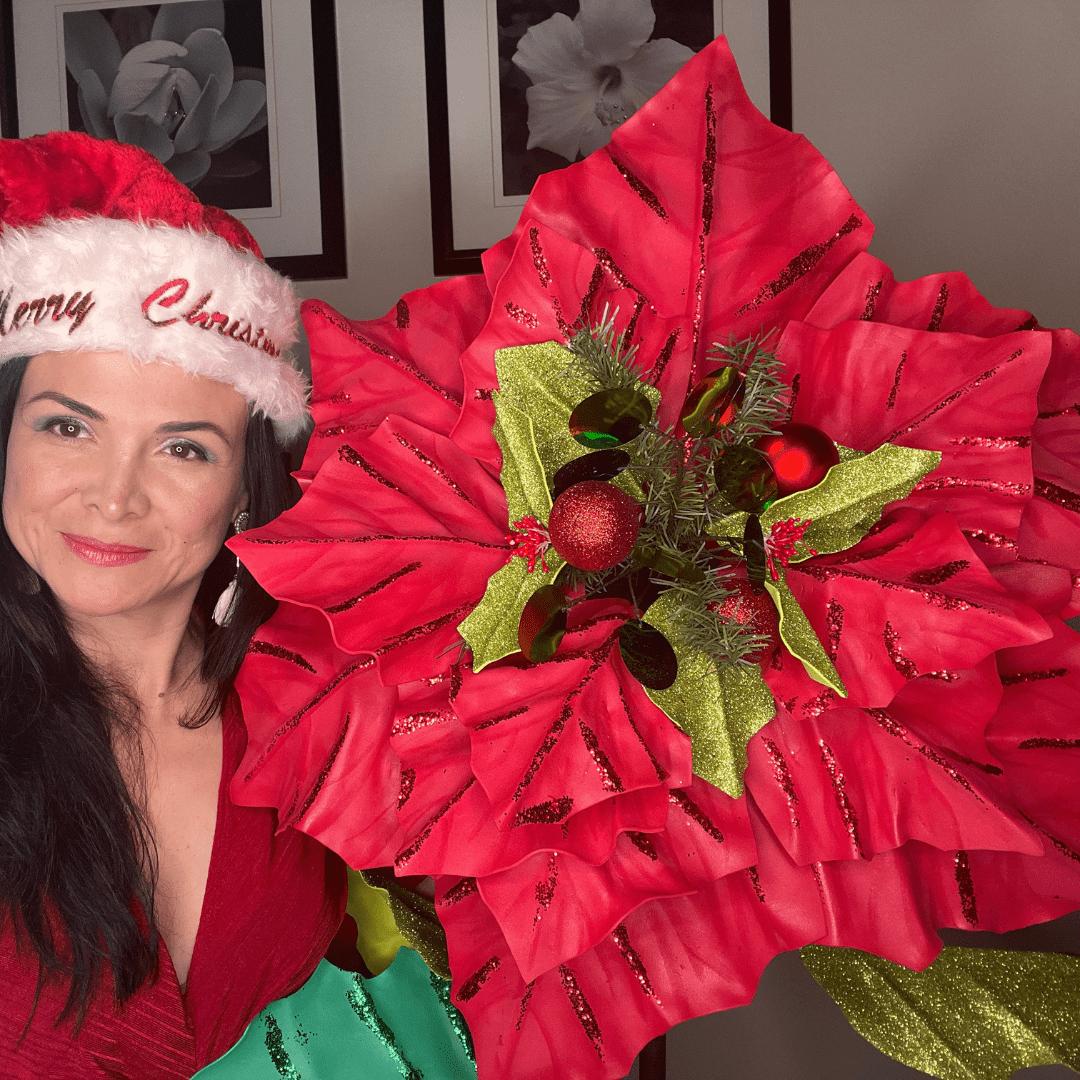
For the cyathia center, cluster your small yellow circles together and glue them as a tight group in the very center. Real poinsettia cyathia are tiny and clustered, so don't spread them out — keep them dense and grouped. You can add tiny dots of orange or red paint on each circle for extra realism.
For a freestanding flower, push your bendable pipe stem through the base disc from underneath before you glue down your first petal layer. Secure it with a generous amount of hot glue and let it cure fully. For extra stability on a very large flower, I sometimes use two stems twisted together — it gives you a much sturdier base.
For a wall-mounted version, skip the stem and instead glue a sawtooth hanger or two loops of heavy ribbon to the back of the base disc. Our wall flower installation guide has great tips on mounting large foam pieces securely.
Now for the fun part — where do you put this gorgeous thing?
According to IBISWorld, the US floral and event decoration industry generates over $7.9 billion annually — and holiday decor is one of the biggest seasonal drivers. If you're an event planner or small business owner, investing in reusable giant foam flowers pays for itself incredibly fast compared to ordering fresh florals every season.
And if you want to go bigger — like a full holiday arch or a backdrop wall — check out our guide on how to make an oversized flower arch backdrop. Giant poinsettias mixed with white foam flowers and greenery make the most incredible Christmas arch you've ever seen.
A HGTV holiday decorating trends report noted that oversized, statement-making decor pieces are consistently among the top holiday decorating trends — people are moving away from tiny tchotchkes and toward fewer, bolder, more impactful pieces. A giant foam poinsettia is exactly that energy.
One last tip before I let you go: store your finished foam poinsettias carefully. Wrap them loosely in tissue paper and store in a large box — don't crush the petals. Stored properly, a well-made EVA foam flower lasts 5–10+ years. That's a lot of Christmases for a $40 materials investment.
For a finished flower in the 3-foot range, I recommend having both 4–6mm EVA foam sheets for the large outer bracts and 2mm sheets for the smaller inner bracts, green leaves, and cyathia center circles. The thicker foam gives the big structural petals enough body to hold their curved shape after heating, while the thinner foam is flexible enough for the delicate inner layers without looking bulky.
A good starting point is two to three large sheets (roughly 12x18 inches) of 4mm red foam and one large sheet each of 2mm red, 2mm green, and 2mm yellow. You'll have some scraps left over, which are perfect for making smaller accent flowers to go alongside your finished poinsettia.
Can a beginner make a giant foam poinsettia, or is this an advanced project?
Honestly, this is one of the most beginner-friendly giant foam flower projects I teach — and I say that as someone who has watched hundreds of first-timers make them. The petal shape is relatively simple to cut (an elongated oval with a pointed tip), and the assembly is straightforward once you understand the layering logic. The two skills that take a little practice are heat gun shaping and dry-brush painting, but both are very forgiving — if a petal doesn't curve the way you want, you can reheat and reshape it.
If you're brand new to foam flowers, I'd suggest starting with our pre-cut kit so you can focus on the shaping and assembly techniques without the added pressure of getting the cutting exactly right on your first try.
For a complete 3-foot flower with full painting and a freestanding stem, budget 4–6 hours total — but that doesn't have to be done in one sitting. Most people spread it over two sessions: one for cutting, veining, and shaping (about 2–3 hours), and a second for painting and assembly once everything is dry (another 2–3 hours). The drying time between painting and gluing is the biggest time factor, so don't try to rush that stage.
If you're working from a pre-cut kit, you can realistically cut that time nearly in half. I've seen people finish a beautiful giant poinsettia in under three hours once the cutting is already done for them.
Absolutely — and some of my favorite versions aren't traditional red at all. White or cream poinsettias with gold-painted vein details look incredibly elegant for a more formal holiday aesthetic. Blush pink is stunning for a softer, romantic Christmas vibe. I've even seen people make them in deep burgundy with silver shimmer paint for a very dramatic, moody holiday look.
The great news is that EVA foam takes acrylic paint so well that you can start with white foam and paint it literally any color you want. If you're going for a non-traditional color, I'd recommend starting with white or light gray foam as your base rather than trying to paint over dark red — it gives you much more color accuracy and vibrancy.
How do I attach a giant foam poinsettia to a wall without damaging it?
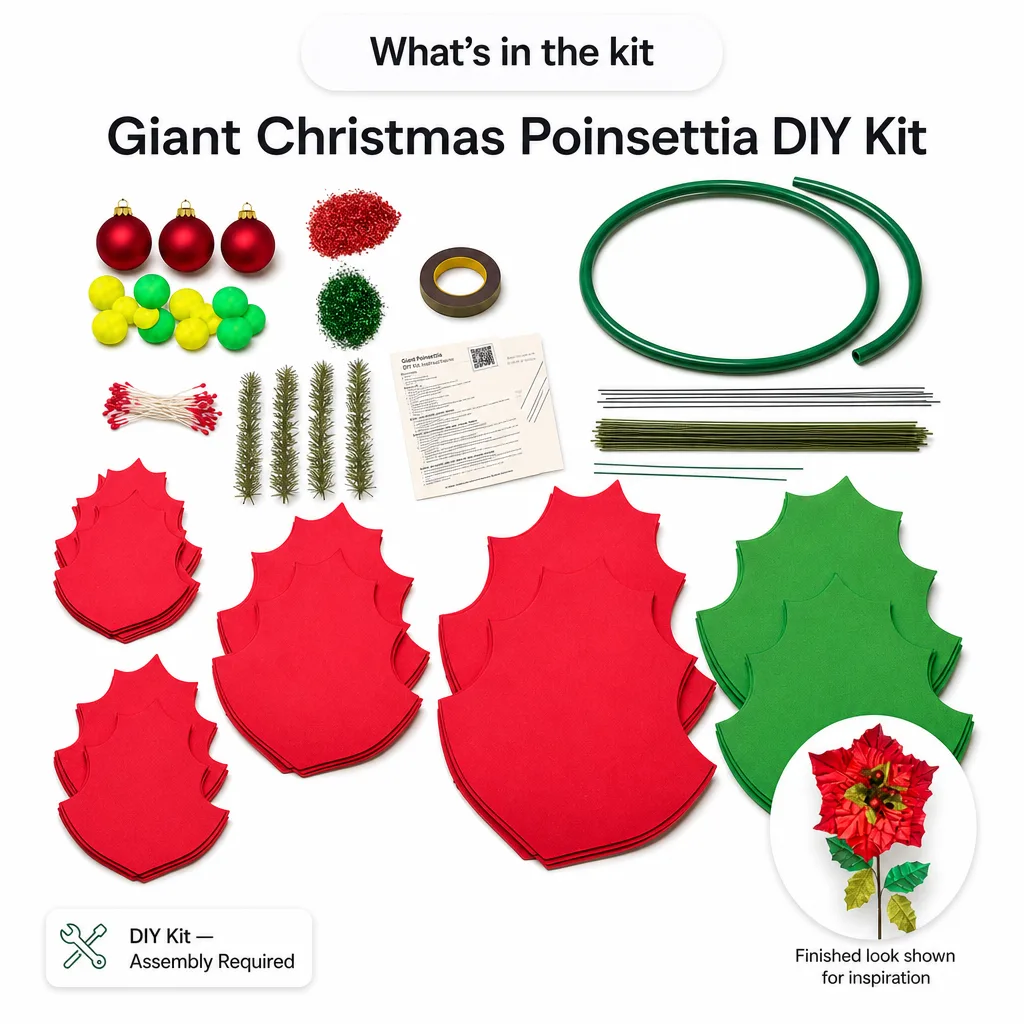
My go-to method for wall mounting is a sawtooth picture hanger hot-glued to the back of the foam base disc, paired with a standard nail or picture hook in the wall. For larger, heavier flowers (anything over 2.5 feet), I recommend using two sawtooth hangers spaced a few inches apart for better weight distribution. This method works on drywall, plaster, and wood paneling without causing significant wall damage.
For temporary installations — like at a rented event venue — heavy-duty removable adhesive strips (the kind rated for 5–7 lbs) work well for flowers up to about 2 feet. Anything larger really does need a nail or hook for safety. Our wall flower installation guide covers this in much more detail, including tips for mounting on brick and textured surfaces.
Are giant foam poinsettias safe for outdoor holiday displays?
EVA foam holds up surprisingly well in mild outdoor conditions, but I always recommend thinking of your giant foam poinsettia as an indoor or covered-outdoor piece first. A covered front porch, a protected entryway, or a shaded pavilion at an outdoor event are all great spots. What you want to avoid is prolonged direct rain and intense UV exposure — both will break down the foam and fade your paint over time.
If you do display it outdoors, a coat of clear acrylic sealer spray over your finished, painted flower adds a meaningful layer of protection. Bring it inside during heavy rain or freezing temperatures. With those simple precautions, your foam poinsettia can absolutely make a stunning statement on a front porch or outdoor display all season long.
Frequently Asked Questions
Where can I buy EVA foam sheets and supplies for a giant poinsettia Christmas foam flower?
You can find everything you need right here at Amazing Giant Flowers! We carry EVA foam sheets in multiple thicknesses, 369 glue and hot glue guns with silicone sticks, acrylic paints, and all the other supplies you need to build a stunning giant foam poinsettia from scratch. Everything ships directly to your door — standard shipping is free on orders of $50 or more, and DIY kits always ship free.
We also offer pre-cut DIY kits if you'd rather skip the cutting stage and jump straight into shaping, painting, and assembly. Please note that bases and stands are sold separately and are not included in the kits — so add one to your cart if you're planning a freestanding display.
What tools do I need to shape the petals on a giant foam poinsettia?
The key to beautiful, realistic-looking foam poinsettia petals is heat shaping, and you have a few great options for that. I personally love a heat gun for the most control, but you can also use a household iron, a flat grill, or a hair styler — any of these will soften the EVA foam enough to curve and cup the petals into natural-looking shapes.
Beyond your shaping tool, you'll also want a veining tool or ballpoint pen for pressing vein lines into the foam, sharp scissors or a craft knife for cutting, and a hot glue gun with silicone sticks (or 369 glue) for assembly. That's genuinely all you need to get started.
Can I use my giant foam poinsettia for events and then store it for next Christmas?
Absolutely — and this is honestly one of my favorite things about giant EVA foam flowers. A well-made foam poinsettia can last 5–10 years or more with proper storage. When the season is over, wrap your flower loosely in tissue paper and place it in a large box where the petals won't get crushed. Keep it somewhere cool and dry, away from direct sunlight.
For event planners and small business owners especially, this reusability is a huge financial win. You make the investment once and pull out a gorgeous, professional-looking piece year after year — no fresh floral budget required every December.
How many petals does a realistic giant foam poinsettia need?
A realistic giant poinsettia typically has three layers of bracts — the large outer bracts, a medium middle layer, and smaller inner bracts — plus a ring of green leaves and a cluster of cyathia (the small round center pieces). For a flower in the 2–3 foot range, that usually means about 5–7 large outer bracts, 5–6 medium bracts, and 4–5 small inner bracts, with 5–7 green leaves tucked in behind.
Don't stress about hitting an exact number — real poinsettias vary quite a bit! The key is building up enough fullness in each layer so the finished flower looks lush and dimensional from every angle. When in doubt, cut a few extra petals. Leftover shaped bracts are easy to tuck in during final assembly wherever you see a gap.
I hope this tutorial gives you the confidence to dive in and make your own giant poinsettia Christmas foam flower this holiday season — it truly is one of the most rewarding projects to finish, especially when you step back and see that bold, beautiful bloom come together. Whether you're decorating your own home, setting up a holiday event, or building a collection of statement pieces for your business, I'm cheering you on every step of the way. If you have questions, drop them in the comments — I read every single one. Happy crafting, and Merry Christmas! 🌟
Shop the supplies
Everything You Need for This Project
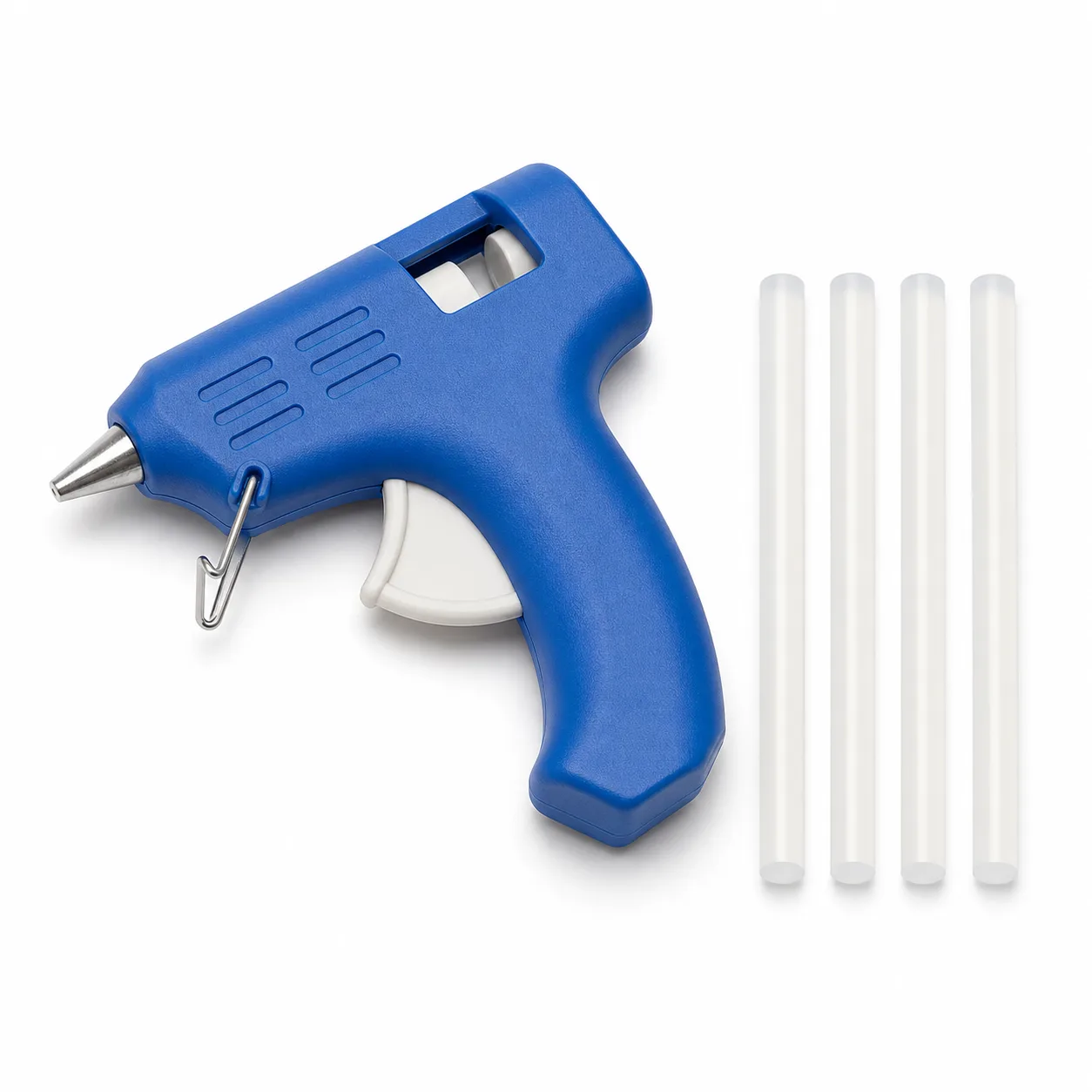
Hot Glue Gun + 4 Silicone Glue Sticks — Fast, Strong Petal Assembly
Holiday Flower Decor Poinsettia Kit – Pre-Cut Easy
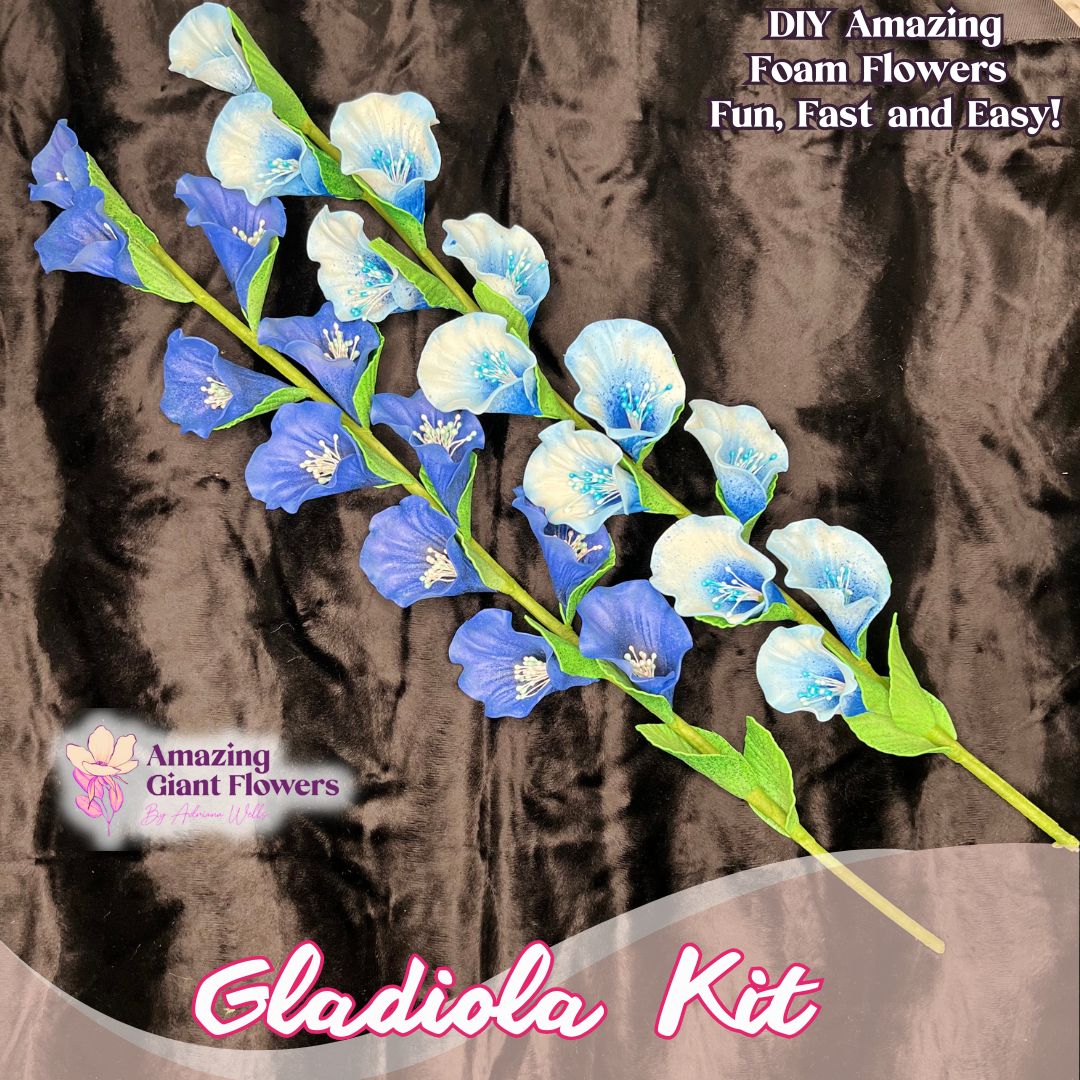
Real Touch Gladiolus Foam Flower Kit (Gladiola) — Two Tall 24" DIY Stems with Reusable Mold, Pre-Cut Petals & Leaves
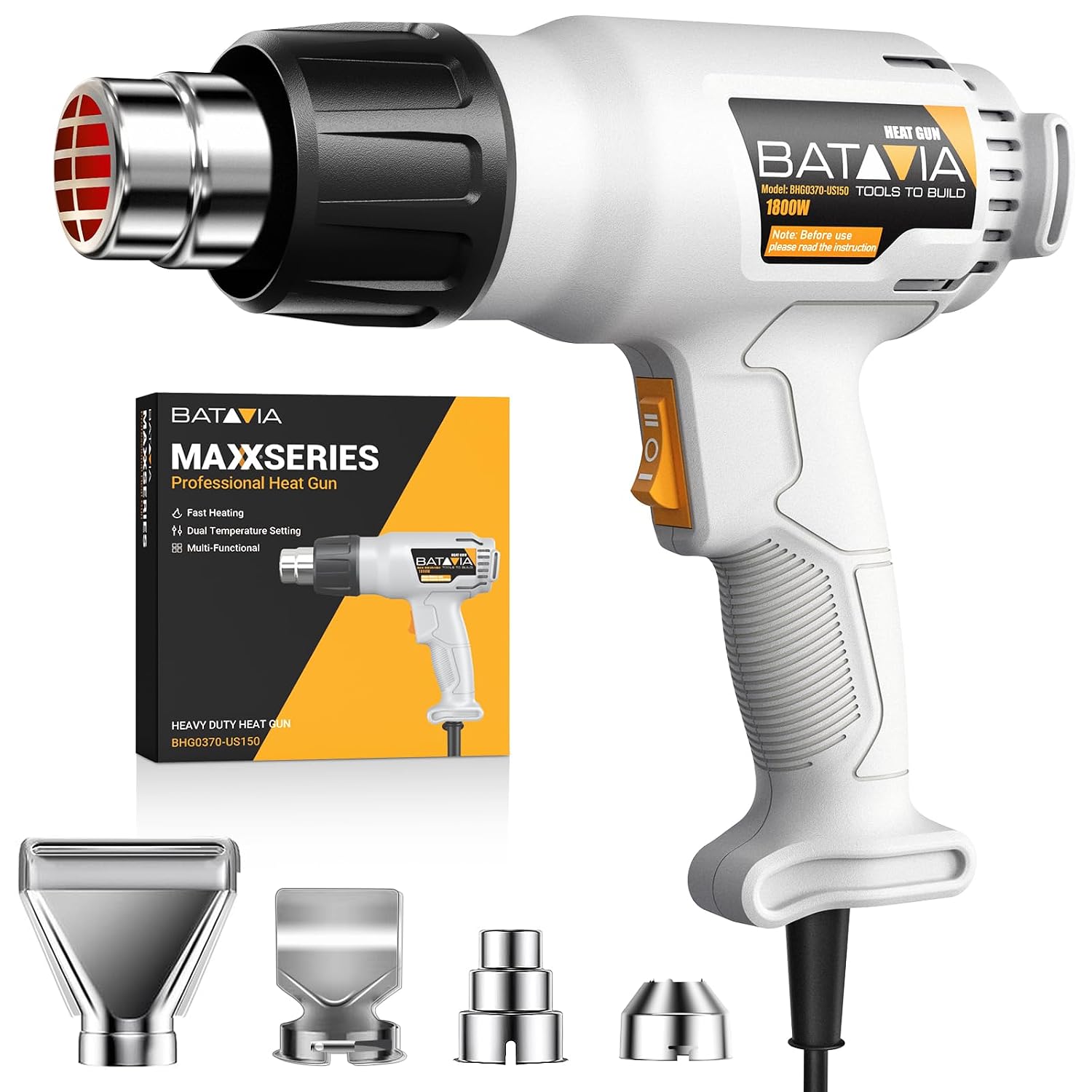
Heat Gun (Dual-Temp) — Thermoshaping Tool for Foam Flowers
Ready to Create Something Amazing?
Browse our collection of giant flower kits and start your next project today.