Amazing Giant Flowers by Adriana Wells

Large Floral Arrangement Ideas for Stunning Displays

Adriana Beaman April 28, 2026 20 min read
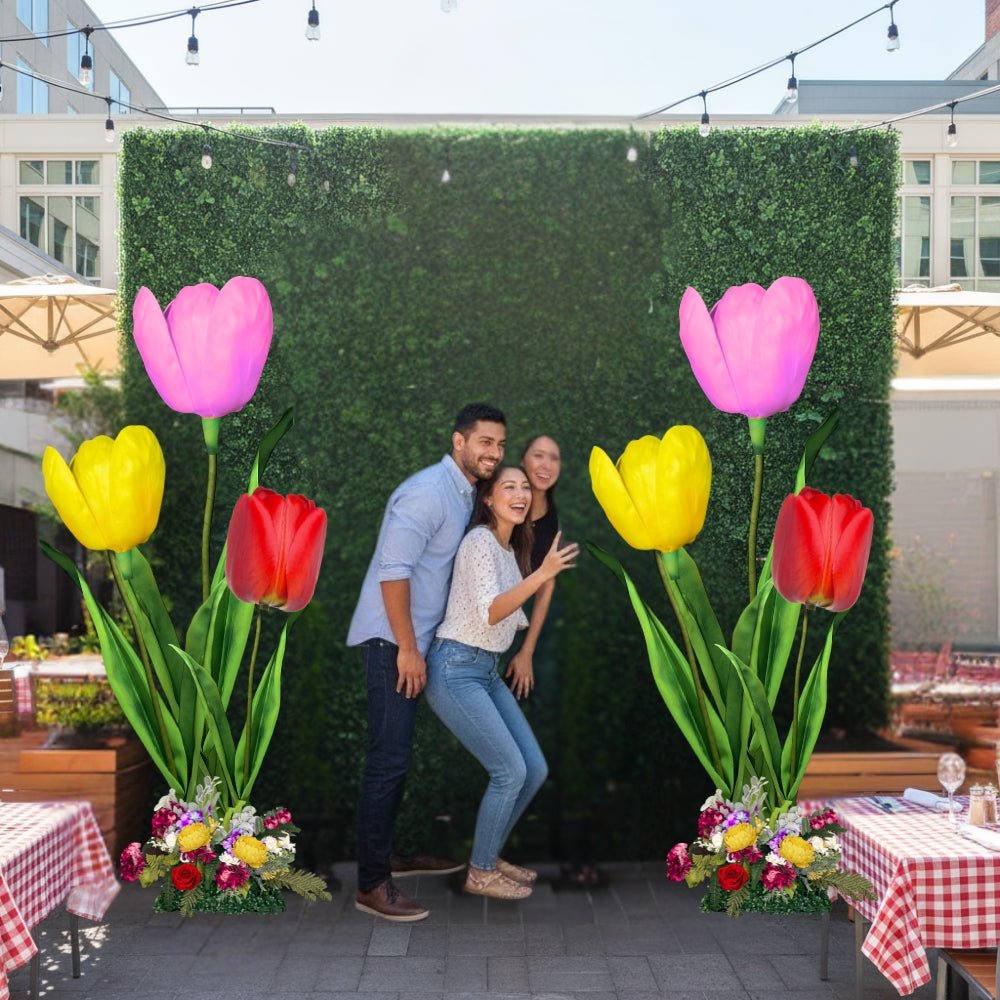
Large Floral Arrangement Ideas for Stunning Displays

You’re often staring at the same problem from two directions at once. The room looks flat, but the budget is real. The client wants a moment people remember, but the load-in window is tight, the venue has rules, and nobody wants a fragile display collapsing halfway through cocktail hour.

That’s why large floral arrangement ideas matter so much. A grand floral piece doesn’t just fill space. It gives a room a focal point, helps guests understand where to look, and can turn an ordinary corner into the most photographed area of the event. For planners, marketers, visual merchandisers, and ambitious DIY makers, that changes the job from “adding decor” to building an experience.


The good news is that large-scale florals aren’t reserved for luxury weddings with unlimited resources. If you understand proportion, structure, materials, and placement, you can create something dramatic with fresh flowers, foam blooms, branches, dried materials, or kits that you assemble yourself. The craft is artistic, but the success of the piece usually comes down to simple decisions made early.

A planner reaches the venue at load-in and sees the underlying problem. The ceiling is soaring, the walls are handsome, and the room still has no center of gravity. Guests will enter and scan for cues. Where is the ceremony focus? Where should photos happen? What part of the room feels intentional instead of empty?


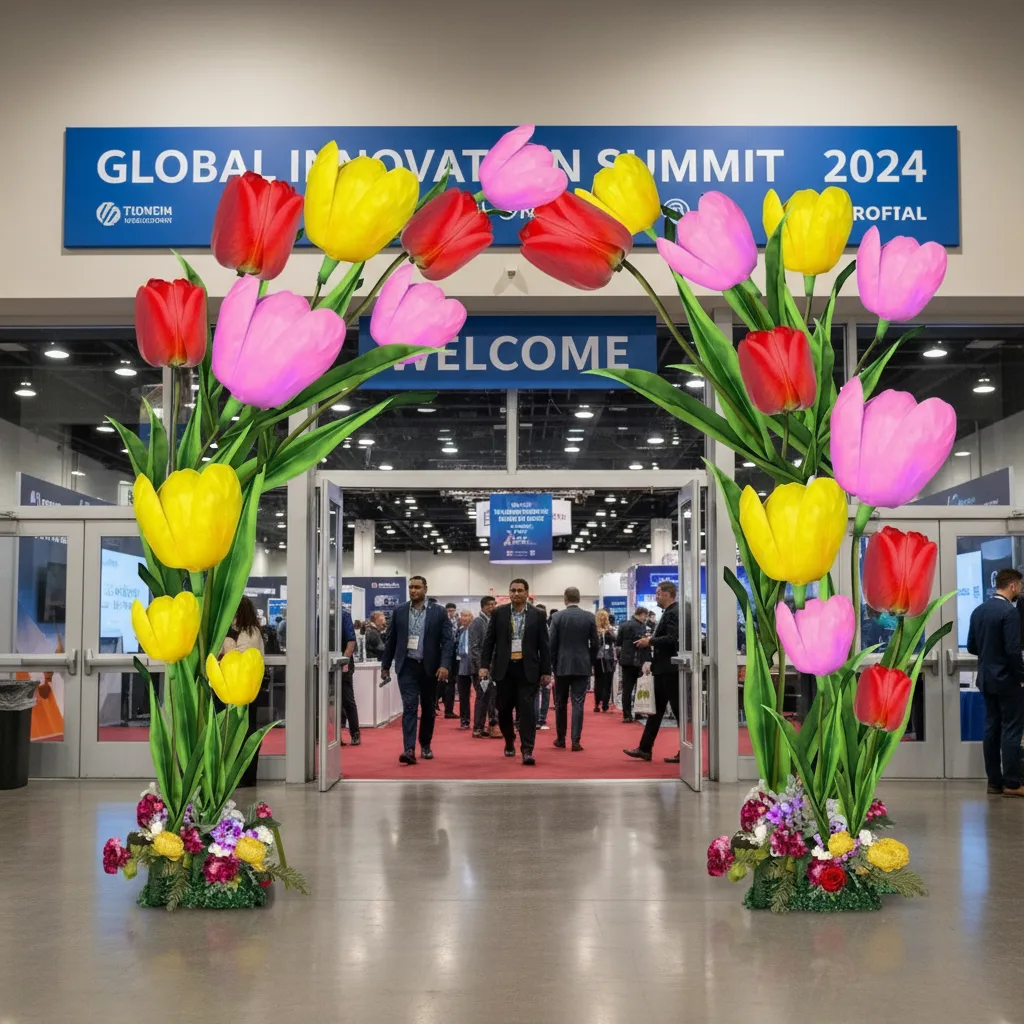
A grand floral arrangement featuring blue, white, and pink flowers positioned between two large classic windows.

Large florals solve that problem because they work like stage lighting for a room. They tell the eye where to land first, then support everything around them. One well-built installation can define an entrance, frame a ceremony, soften an industrial backdrop, and give photographers a layered scene instead of a flat wall.


That shift matters for both design and operations. If one oversized arrangement handles the visual heavy lifting, you can spend with more discipline instead of scattering budget across many small pieces that disappear in the architecture.

A statement arrangement often does five jobs at once:

  • Creates a visual anchor for the stage, ceremony, entry, or photo area
  • Adds presence in rooms with high ceilings or wide open floor plans
  • Softens hard finishes such as concrete, glass, metal, and brick
  • Improves photography with depth, color, and a more flattering background
  • Carries the event theme without coating every table and wall in decor

Why scale changes the room

Small arrangements reward close viewing. Large florals shape the whole environment first.

That distinction is easy to miss until you stand in the venue. A design that looks generous on a worktable can look timid from twenty feet away. Large-scale florals solve that by matching the architecture. In practical terms, they help a ballroom feel full, a retail display feel intentional, or a brand activation feel designed rather than assembled.


Interior designers use the same logic with rugs, drapery, and lighting. A piece has to relate to the room around it or it looks lost. The Lewis and Sheron Textiles design playbook is helpful here because it trains your eye to read proportion, layering, and material impact across an entire space, not just one vignette.

For commercial settings, florals also have a job beyond beauty. They can frame a product zone, pull attention toward a launch table, or make a temporary display feel permanent enough to trust. The examples in visual merchandising with flowers show how floral installations can support traffic flow and product storytelling, not just decoration.

Problems oversized florals solve

Clients usually ask for large floral arrangements because something in the room is not working yet. The pain points are consistent:

A strong oversized floral piece can answer all five. That is why experienced planners often get more visual return from one disciplined installation than from a long shopping list of smaller accents. The bouquet decorates a surface. A large floral arrangement changes how the whole space reads.


Big arrangements fail for predictable reasons. They’re too short, too top-heavy, too dense, or they ignore the lines of the room. Once you know the few core rules behind large-scale floristry, the intimidation drops quickly.

One of the most dependable rules in floristry is proportion. Large floral arrangements are typically about one and a half times taller than their container, as noted in These Four Walls on flower and foliage displays. That’s a simple guideline, but it solves a lot.


If the container is too large for the design, the arrangement looks squat. If the flowers tower too far beyond the base, the whole piece feels unstable even when it isn’t. Your eye notices imbalance before your brain names it.

For beginners, think of the container as the shoes and the arrangement as the outfit. If the shoes are bulky and the outfit is tiny, it looks awkward. If the outfit is huge and the shoes can’t support it, it looks wrong in the opposite direction.


A large arrangement needs one visual decision that leads the rest. That could be:

Many DIY crafters get stuck because they start placing pretty pieces wherever there’s empty space. That creates clutter. Instead, place the focal gesture first, then build supporting material around it.


Practical rule: If every flower is trying to be the star, the arrangement has no star.

Large doesn’t mean packed. Some of the most refined installations feel airy because the designer lets open space do part of the work.

Negative space helps you:

  • Show off the silhouette
  • Prevent visual heaviness
  • Make premium blooms stand out
  • Keep the arrangement readable from a distance

This is the same logic retailers use when setting a window or display table. If everything is crammed together, nothing gets noticed. The primer on what visual merchandising is is a useful parallel because it explains how composition guides attention.

Different room conditions call for different floral forms.


Use upward movement. Think branch-heavy designs, vertical foam flowers, or narrow floor pieces that pull the eye up.

Use lateral spread. A floral wall edge treatment, a long asymmetric installation, or grouped oversized blooms can make the width feel intentional.


Use a design that reads from multiple angles. Avoid making one perfect front and three neglected sides.

Make sure the shape frames the action without blocking it. You want presence, not obstruction.


Symmetry is easy to understand, but rhythm often looks more elegant. Repeat color, flower type, or line direction in a way that feels intentional. That repetition helps a large design feel cohesive instead of random.

A quick self-check before you approve or build any piece:


When those basics are right, almost any style can work. Romantic, modern, minimal, theatrical, whimsical, retail-focused, or brand-driven all sit on the same structural foundation.

Material choice changes everything. It affects labor, transport, durability, storage, setup time, visual style, and how much stress you’ll feel on event day. When facing these choices, a practical decision is often sought over an artistic explanation for every option.


A colorful comparison infographic showcasing the pros and cons of using fresh flowers, floral foam, or DIY materials.

Whatever medium you choose, the arrangement still has to obey balance. In large-scale work, the total height of the design should be 1.5 to 2 times the height or width of the container to maintain visual and physical stability, according to Domestika’s floral design fundamentals. That matters whether you’re working with fresh stems in water, oversized EVA foam flowers, or a mixed-material DIY build.


Fresh florals bring what artificial mediums can’t fully replicate. Fragrance, petal variation, and movement under changing light all add emotional value. For weddings, dinners, and intimate spaces, that can be exactly the right call.

Fresh is a smart choice when:

  • The event is one day only
  • Scent is part of the experience
  • You want seasonal authenticity
  • A florist is handling conditioning and installation

Fresh is harder when the piece must travel long distances, sit in heat, survive a long setup day, or be reused. It also creates pressure around timing. If the truck is delayed or the venue changes access hours, fresh flowers don’t forgive those mistakes.

Foam flowers solve a different set of problems. They’re useful when you need large scale, controlled color, and the ability to install ahead of time without worrying about hydration. They also work well for pop-ups, branded events, window displays, and photo stations where visual consistency matters.


This is one place where a specialist option can make sense. Amazing Giant Flowers’ guide to foam types is helpful if you’re trying to understand the material side before choosing between softer craft foam, more structured builds, and kit-based components.

Choose foam if your priorities include:


The trade-off is aesthetic. Foam gives you a designed look, not a fresh-cut garden feel. That’s not a flaw. It just means you should use it intentionally.

If the installation needs to look pristine through setup, showtime, and strike, foam often removes more risk than it adds.


DIY giant flower kits sit in the middle. They let makers, balloon artists, event stylists, and creative teams build custom displays without designing every petal pattern from scratch.

They’re ideal when:

  • You enjoy hands-on making
  • You need a lower entry cost than a full custom build
  • You want to learn the process
  • You’re decorating a party, shoot, craft market, or boutique setup

The hidden cost of DIY is time. Beginners usually underestimate assembly time, drying time if paint is involved, and the trial-and-error that comes with shaping petals and mounting stems.

If you’re still torn, use this simple sorting method:


There isn’t one “correct” medium. The best one is the one that fits the venue rules, your labor capacity, your timeline, and how many times the piece needs to live after the first event.

The best large floral arrangement ideas start with a setting, not just a flower list. A giant sunflower means one thing at a summer festival and something entirely different in a luxury retail window. The concept becomes stronger when the flowers, structure, and placement all serve the same mood.


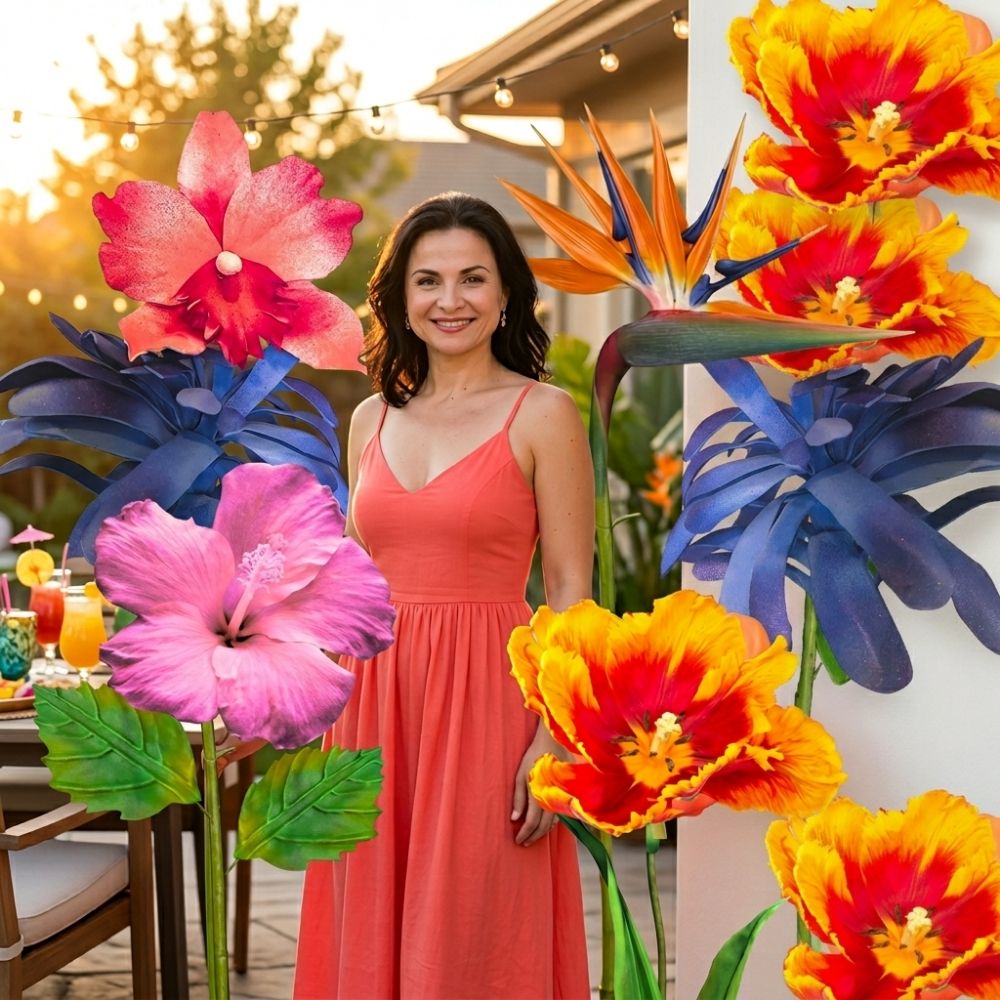
A beautiful large floral arrangement featuring yellow orchids and pink peony flowers in a bouquet.

A couple wants romance, but not the usual tight rose ball and candle package. The venue has beams, stone, and a slightly moody interior. In that room, large florals should feel grown rather than placed.


Use these ingredients:

This concept works best when you resist overfilling. Let some stems arc outward. Let parts of the installation breathe. The goal is immersive, not stuffed.


A corporate event often needs polish without feeling cold. Large florals can make a ballroom or industrial venue feel elevated, especially when the design uses fewer varieties and stronger geometry.

A refined corporate installation usually benefits from:

  • Disciplined color such as white, one brand color, and one grounding neutral
  • Repeated forms like oversized hydrangea-inspired masses, giant anemones, or sculptural lilies
  • Clean containers in matte black, white, clear acrylic, or brushed metallic finishes
  • Open composition so logos, signage, and sightlines remain clean

This is also where parallel systems design becomes useful. According to Goodheart-Willcox floral design instruction, this European technique from the 1980s places stems in non-crossing, equidistant parallel lines to create expansive geometric forms that can double visual impact via negative space utilization. For gala work, that can produce a modern result that reads as architectural instead of fussy.

If you want a practical example of how florals support guest photos in branded environments, a giant flower photo booth backdrop is a useful reference point.


Festival florals need energy first. They must read from far away, survive a lot of photos, and compete with movement, music, and crowd density.

Good festival concepts often use:


For this style, perfection matters less than impact. Strong silhouette matters more than delicate detail. You want guests to spot it, approach it, and understand immediately that it’s meant for interaction.

Here’s a quick visual reference for makers who want to study floral form and display styling in motion:

Chic retail window

Retail florals have a different job. They need to stop passersby, support products, and fit the brand’s aesthetic without overwhelming the merchandise.

A strong retail concept often looks like one of these:


Retail teams often make the mistake of treating every inch of the window as equal. It isn’t. The eye needs one place to land first.

In a window display, one strong floral gesture usually sells better than a dozen competing ones.


If you’re short on time and need a direction, these pairings are reliable:

The strongest concept is the one the venue can support. A dramatic installation in the wrong room feels forced. A clean concept scaled correctly to the space almost always looks more expensive and more intentional.


Beautiful concepts fall apart during planning, not during dreaming. Most large floral projects run into trouble because someone forgot to price labor, ignored access restrictions, or approved a design before confirming how it would be transported.

Don’t start with one total number and hope it stretches. Break the project into real line items.


Include these categories:

A large arrangement can be affordable in one area and expensive in another. For example, the flowers might be manageable, but the labor to install overhead work may not be.


Whether you’re hiring a vendor or building in-house, get answers to the practical questions first.

A large floral installation is easier when you count backward and assign checkpoints.


If you’re considering rental-style backdrop planning as part of your workflow, flower wall backdrop rental considerations can help you think through transport, setup, and venue fit.

The more custom the piece, the less you can leave to event-day improvisation.


These are the budget leaks I see most often:

Outdoor work needs extra caution. Even if the design looks stable indoors, wind changes everything. Fresh flowers dehydrate faster, large petals can catch air, and lightweight structures shift more than people expect.

For busy public events, also think through:

  • Traffic flow so guests don’t crush the display edges
  • Clear photo queue space so the floral area doesn’t jam entrances
  • Base concealment because guests will see lower mechanics from more angles
  • Safety checks for tip risk, tripping hazards, and cable management if lighting is added

A good floral project plan feels a little boring on paper. That’s a good sign. Boring plans produce calm install days.

A large floral installation earns its full value when it keeps working after guests walk away from it. One arrangement can shape the room in person, then keep generating attention in photo galleries, tagged posts, recap reels, and shared guest albums. That shift matters for event planners managing ROI and for brand teams measuring reach.


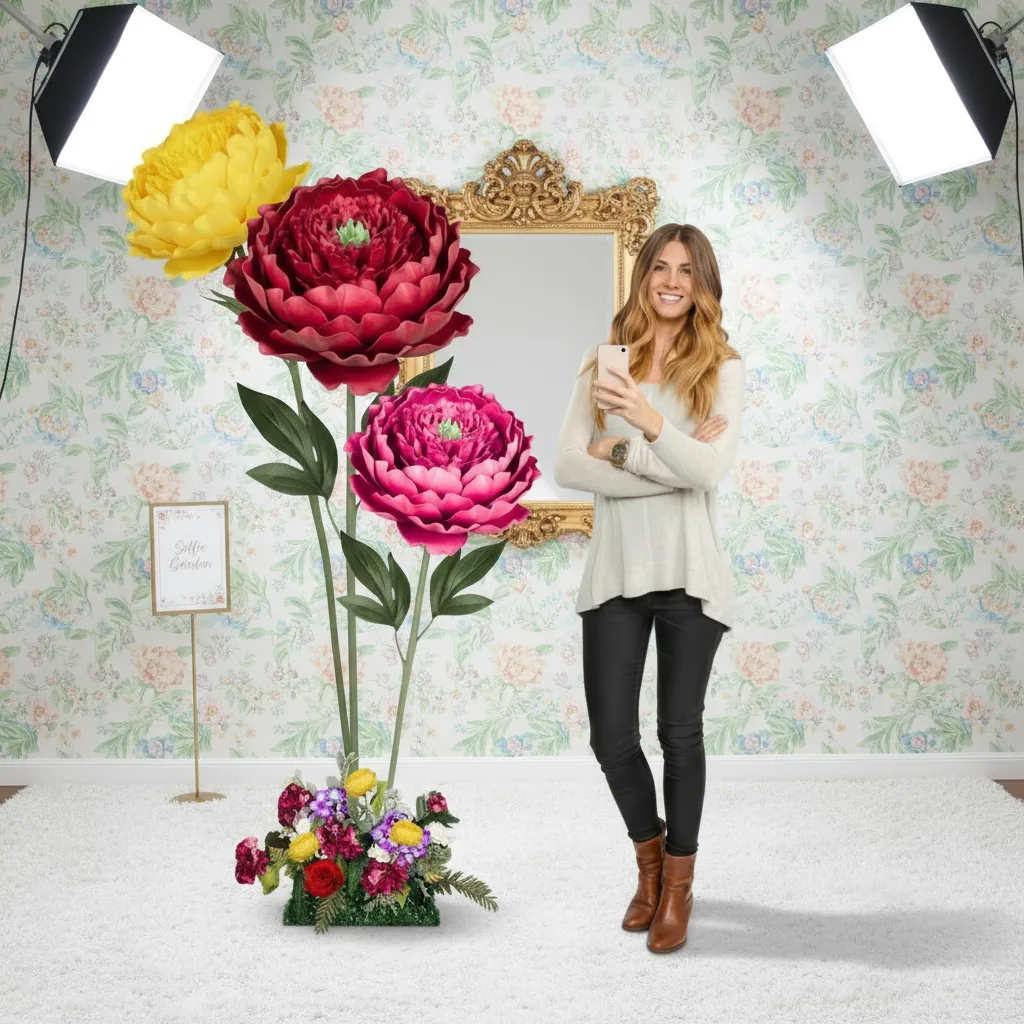
A woman holding a professional camera in front of a beautiful, colorful, large floral arrangement display.

The simplest way to evaluate a statement floral is to ask two questions. Does it stop people in the room? Does it help them create a photo they want to share? If the answer to both is yes, the piece is doing more than decorating. It is acting as a visual marketing tool.

As noted earlier in the article, large floral arrangements are often associated with stronger guest engagement and higher event satisfaction. In practice, that usually happens for a simple reason. People already want a record of the experience, and a well-built floral focal point gives them an obvious place to make one.

What actually photographs well

Designing for the eye and designing for the phone camera are related, but not identical. A floral piece can look rich and sculptural in person, then read as a flat color mass on screen. Camera-friendly work needs clear structure, readable depth, and an obvious place for a person to stand.

The strongest photo installations usually include:


That last point confuses many DIY builders. Bigger is not always better on camera. If every inch is packed with blooms, the subject can get lost. A photo area works like a stage set. The background should support the person, not compete with them.

Good placement follows human behavior. Guests stop where they naturally pause, wait, gather, or transition. Put the arrangement in one of those zones, and usage goes up without much prompting.


Good candidates include entry sequences, lounge edges, bar-adjacent moments, and branded activation areas with enough clearance for a short line. If guest-generated content is one of your goals, these selfie station ideas with giant flowers show how floral styling, signage, and traffic flow work together.

Poor placement usually fails in predictable ways. Harsh overhead light creates unflattering shadows. Tight corners force awkward body angles. Busy backgrounds dilute the floral impact. The arrangement may still be beautiful, but it will not get used nearly as much.

Small production choices create better content

Experienced installation teams protect the investment. They do not just finish the flowers. They test the shot.

Before guests arrive, photograph the setup on several phones from standing height. Check portrait and horizontal orientations. Step back to where a guest would stand, then look for the issues that flatten a good design into an average photo:

  1. Visible mechanics at the base or edges
  2. Gaps that appear behind heads
  3. Hot spots from reflective surfaces
  4. Flowers crossing eye level at the wrong height
  5. Branding that is either missing or too dominant

A good floral photo zone removes friction. Guests should understand where to stand in about two seconds. A subtle floor marker, a cleared posing area, or a staff prompt can improve participation more than adding another dozen blooms.

Extend the value after the event

The social impact of a floral installation does not depend only on the official photographer. Weddings, launches, and experiential events get much of their long-tail visibility from guest photos. If you want those images collected instead of scattered across text threads and disappearing stories, the Eventoly wedding photo guide offers a practical system for gathering them.

For marketers, this is the business case. One large arrangement can serve as decor, directional focal point, branded backdrop, and user-generated content engine at the same time. For planners and DIY hosts, the less...

Ready to Create Something Amazing?

Browse our collection of giant flower kits and start your next project.

Shop All Flowers