Large Paper Flower Arch Decoration: Event Styling Guide

You’re usually in one of three situations when you start looking for a large paper flower arch decoration.
The first is deadline panic. The venue feels flat, the stage needs a focal point, and fresh florals either blew up the budget or can’t deliver the scale you want. The second is creative ambition. You already know the arch has to do more than look pretty. It needs to photograph well, carry the brand palette, and hold up through setup, guest traffic, and teardown. The third is the DIY crossroads, where the idea looks simple online until you realize flowers, frames, transport, and installation are four separate jobs.
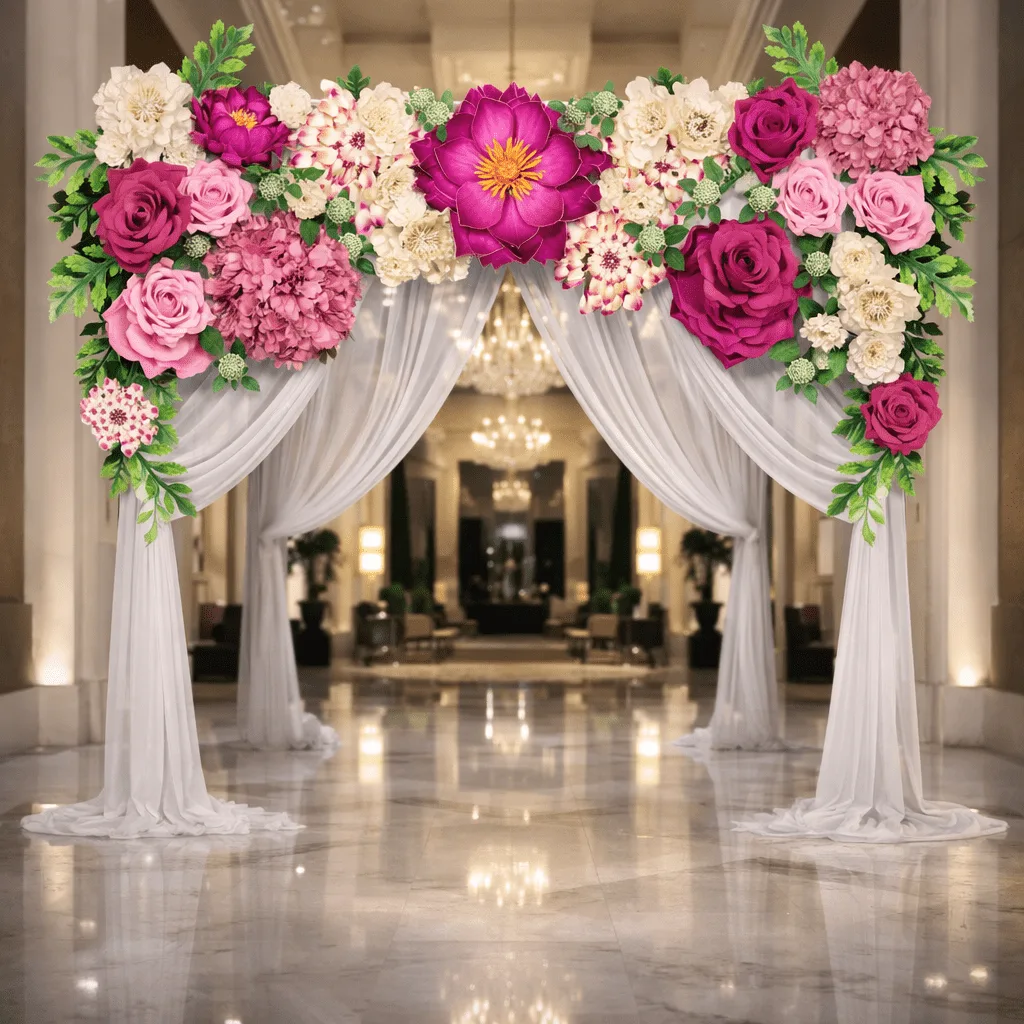
A flower arch can solve all of that when it’s planned like an installation, not just a craft project. The strongest designs balance visual drama with practical reality: the right materials, a frame that won’t fight you on site, and flowers built with enough volume to read from across a room and up close in photos.
A strong arch changes how people move through a space. Guests stop. They take photos. The ceremony area feels intentional. A retail activation suddenly has a clear hero moment. That’s why this format has become so popular across weddings, galas, launches, and branded pop-ups.
The demand is easy to understand. A recent market scan showed over 999 unique paper flower wedding arch products on Alibaba, and related wedding decor reporting notes that 65% of couples prioritize Instagram-worthy elements. These installations also often cost 70 to 80% less than fresh florals while still delivering a high-impact backdrop, according to Alibaba’s paper flower wedding arch marketplace overview.

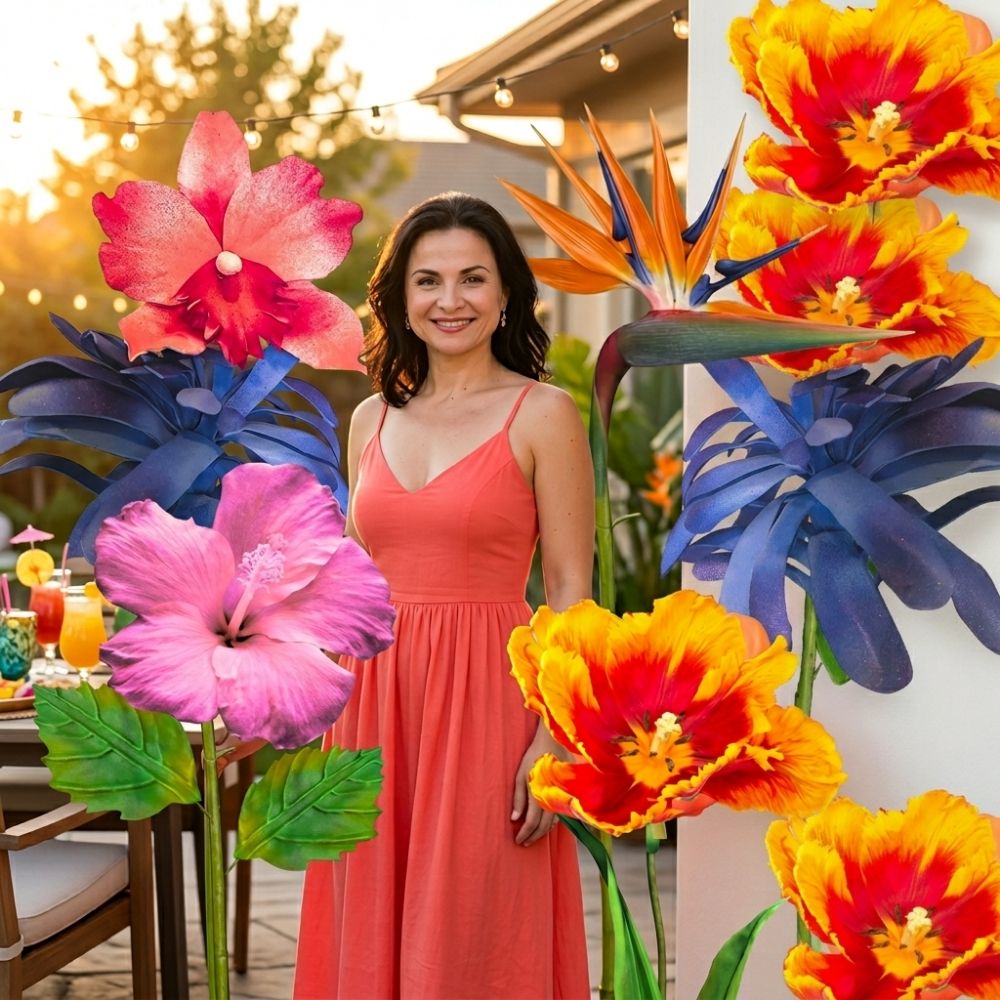
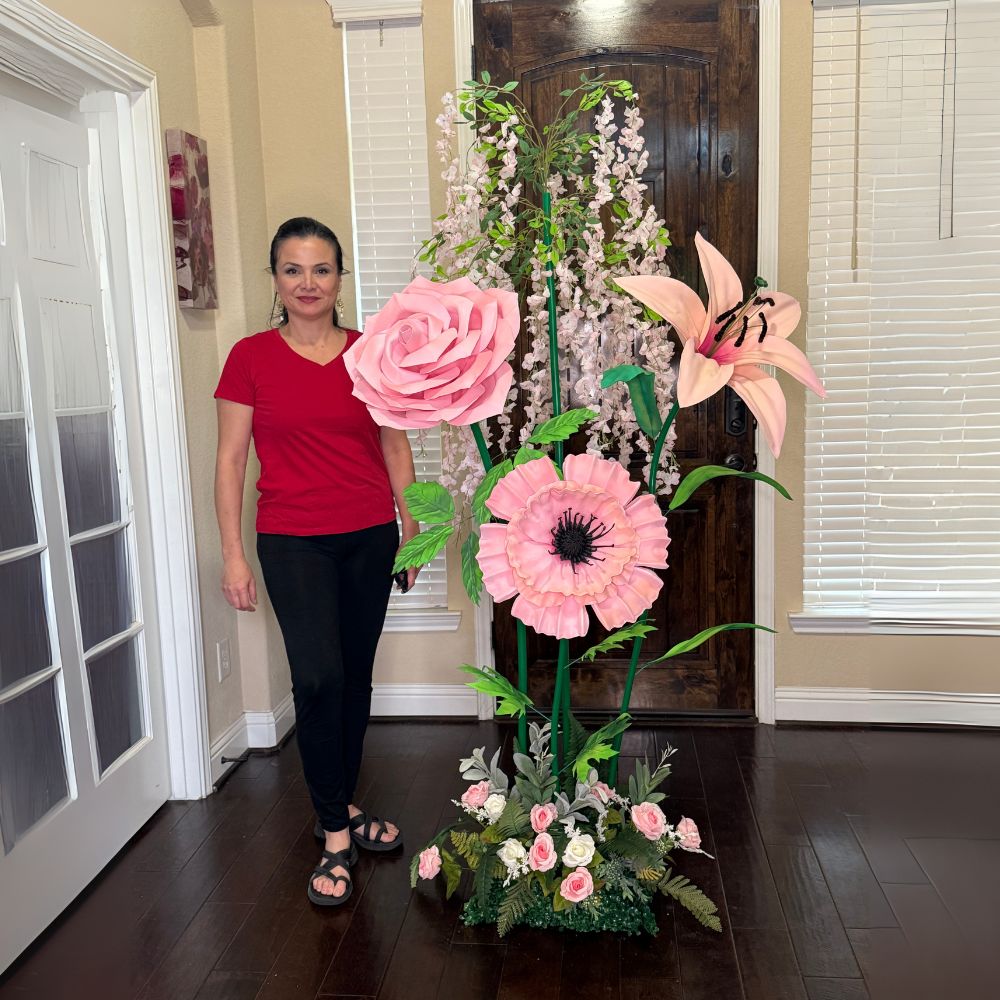
What makes the arch format so effective is range. A romantic ceremony arch and a retail selfie wall use the same basic logic. They create a frame around the subject and pull attention exactly where you want it. If you want to see how that works in commercial settings, browse examples of oversized floral event installations and branded backdrops.
Three ways most projects get built
Some clients should absolutely build from scratch. Others shouldn’t touch the craft table.
Practical rule: Choose your path based on labor tolerance, not just material cost. Most arch projects fail on time and handling, not on aesthetics.
The common mistake is treating all three routes as interchangeable. They aren’t. A handcrafted arch for a bridal shower has one set of demands. A repeat-use activation piece that travels between venues has another. Good outcomes start when the creative vision and the production method match.
Most disappointing arches start with an unclear sketch and a hopeful shopping list. The fix is simple. Decide scale, color strategy, and build method before you buy a single roll of paper.
Measure the space where the arch will live and how it will be viewed. A ceremony backdrop needs to read from aisle distance. A photo moment needs density at camera height. A trade show install has to account for foot traffic, loading limits, and setup windows.
Then define what the arch is doing.
For weddings, start with mood first. Soft tonal layering usually looks better than hard color blocking. If the room already has patterned carpet, dramatic drape, or colored lighting, keep the flower palette tighter so the arch doesn’t look chaotic.
For branded work, exact color matching matters more than floral realism. A giant rose in the wrong brand pink looks careless. In this category, the arch acts like scenic design. It has to support the campaign, not just decorate it.
If the palette is complicated, build one test flower first. A single approved bloom saves a lot of rework later.
If you’re still deciding, the fastest way to narrow it down is to ask one blunt question. Who is responsible if the arch looks sparse, arrives damaged, or takes too long to install? If the answer is “my team,” be realistic about your bandwidth before committing to a scratch build. If you need a custom route, request pricing and production guidance through a made-to-measure floral installation quote.
A good supply list does two jobs. It helps you buy the right materials, and it prevents mid-build substitutions that make the final arch look inconsistent.
One of the most useful benchmarks for planning is efficiency. A standard roll of crepe paper can yield about four giant 16-inch flowers, and some oversized flower builds use 6 sheets of paper per flower, as shown in this giant flower tutorial reference on YouTube. That’s why smart material planning matters more than overbuying.
Flower materials that actually make sense

Your flower material controls look, durability, and handling.
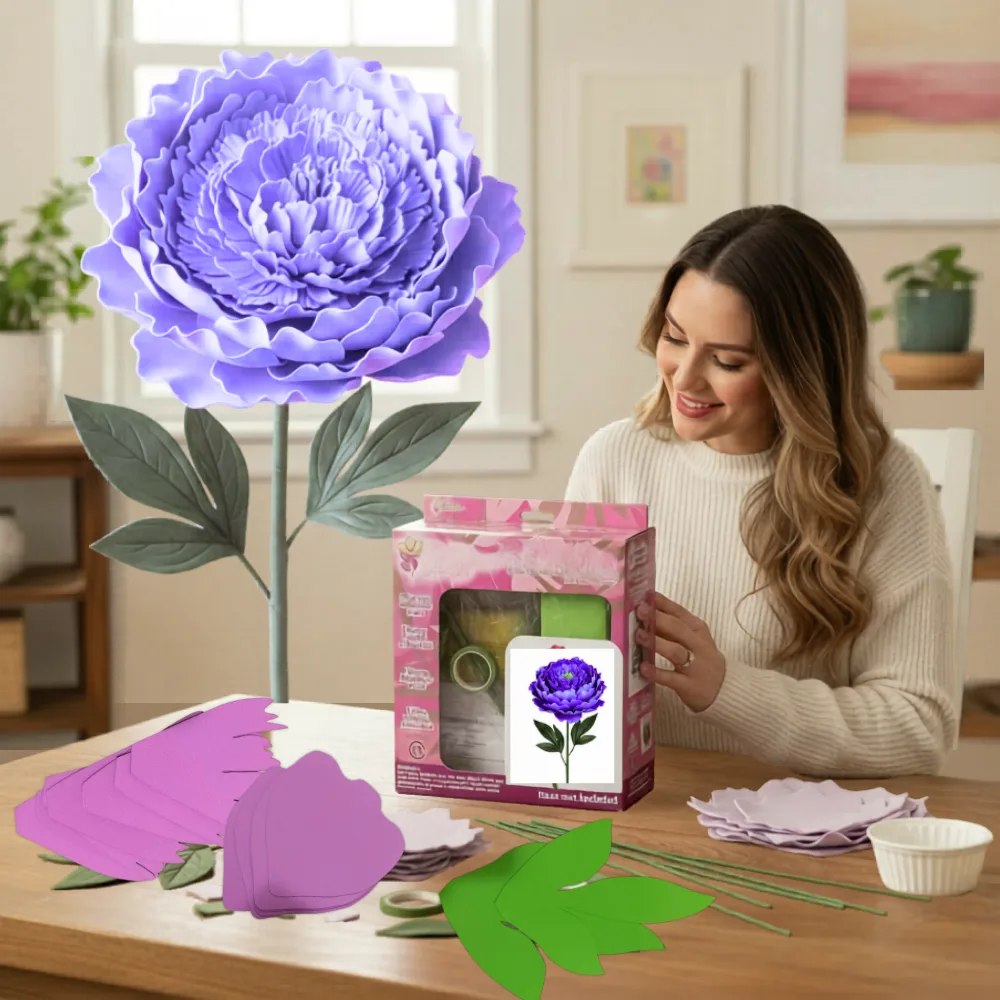
A practical shopping shortcut is to source core components from a specialist supplier that already caters to giant flower builds. For that, a focused catalog of giant flower making materials and supplies is more useful than a generic craft store run.
Most first-time builders obsess over petals and forget the mechanics. You’ll need more than flower materials.
Some tools save time. Others save the project.
Buy extra glue sticks before build day. Running out halfway through assembly is one of those small mistakes that wrecks momentum.
The best shopping list is the one that matches your path. DIY from scratch needs flexibility. A kit build needs compatibility. A professional install needs materials that behave predictably under pressure.
The difference between a polished flower and a flat one comes down to structure. You don’t need fancy tricks. You need consistency in cutting, shaping, and layering.

Professional flower builds rely on a few repeatable methods. Cut crepe strips with the grain for strength, cup-stretch the centers gently, and attach 8 to 10 outer petals to the base with 10 to 15% overlap for density, as detailed in Smile Mercantile’s giant paper flower method. That overlap is what keeps a giant bloom from looking thin once it’s mounted on an arch.
Cut for strength, not just shape
Paper has direction. Ignore that, and petals tear, sag, or refuse to curl properly.
Use templates, but don’t become a slave to perfect symmetry. Real flowers have variation. What matters is that your outer petals are broad enough to create the first silhouette, while the inner petals tighten toward the center.
A strong workflow looks like this:
The shaping step is where giant flowers gain life. Curl edges, cup centers, and create enough movement that each layer reads separately.
Common mistakes usually show up here:
- Over-stretching crepe paper causes weak edges and tearing.
- Using high heat or too much glue can flatten the petal and make it look manufactured.
- Skipping curl direction changes leaves the bloom stiff and one-note.
A giant flower should have tension in it. Some petals open outward, some tuck inward, and some twist slightly. That variation creates realism.
If you want a visual walk-through before you batch a full set, guided video lessons inside a giant flower crafting academy can speed up the learning curve.
A clean giant bloom usually comes together from the outside in. Start with your broad support layer, then tighten the profile as you move inward.
Here’s a useful visual reference before you start batch production:
Flower centers are small, but they decide whether the bloom looks complete. Rolled fringes, layered stamens, and compact inner petals all work. What doesn’t work is leaving the center as an afterthought.
Try these practical options:
Batching helps. Make all your petals first, shape them second, then assemble flowers in runs. That keeps quality more consistent and prevents style drift from bloom to bloom.
The flowers get the attention. The structure decides whether the install survives load-in, setup, guest interaction, and teardown.
A strong build needs two things. First, a frame that suits the event. Second, an attachment method that lets you adjust placement quickly without crushing the flowers.
Freestanding PVC or pipe arches are practical for ceremonies, entrances, and staged photo moments. They’re lightweight, modular, and easy to size for a particular venue. If you need flexible components for a custom frame, bendable installation pipes for oversized flowers can simplify curved forms.
Foam panel backdrops are useful when the arch is really a shaped wall installation. They’re easier to pre-design in sections, which helps if the piece has to travel through elevators, loading docks, or narrow doors.
Existing structures such as metal arches, trellises, and scenic frames are often the fastest route. If the venue already has a solid base, use it. You’ll spend less time engineering and more time refining placement.
Attach flowers so you can still adjust them
Professionals often use 18 to 20 gauge floral wire for stems and attach flowers to the frame by twisting them in clusters. Pre-mockups can produce 30% fewer on-site revisions, and a well-built arch can maintain 92% structural integrity after a 48-hour setup, according to Maison de Pax’s giant paper flower guidance. That’s why wired attachment beats a glue-only approach on most large installs.
The cluster method works well because it gives the arch natural rhythm. Instead of placing every flower one by one in isolation, build mini groups and layer them.
Build the arch face first, then finesse the edges. Guests and cameras read the front plane long before they notice the sides.
A beautiful arch can still fail in the van. Transport planning should happen before assembly starts.
Pre-assemble in modules whenever possible. A flower wall panel, floral corner cluster, or side sweep is easier to move than a fully dressed single-piece arch.
Use soft packing around petals, and don’t stack heavy elements on top of finished blooms. If the flowers have wired stems, leave enough exposed wire that you can reattach and tweak them on site without ripping apart the backing.
A mockup doesn’t need to be elaborate. You just need enough of the structure assembled to test shape, density, and attachment points.
That test usually reveals one of these issues:
- The arch looks sparse at eye level
- The focal flowers are too evenly spaced
- The base needs more visual weight
- Transport breaks the intended composition into awkward pieces
Finish with natural-looking placement
The final polish happens after the main flowers are mounted. Rotate some blooms outward. Tilt some inward. Let a few leaves project beyond the frame line. Those small irregularities make the whole installation feel more organic.
For branded work, keep the logo or hero messaging area clean. For wedding work, keep the center opening generous enough that people don’t disappear into the flowers in photos.
A flower arch isn’t finished when the last bloom is attached. It’s finished when it’s secure, flattering on camera, and styled with intention.
Outdoor setups need special caution. Standard paper arches can struggle badly in wind and humidity. Forum discussions cited in the background for this topic report up to a 70% failure rate in outdoor settings, and reinforced builds with weatherproof materials or rigid backing can last 5x longer, based on the durability concerns summarized in Live Free Creative’s DIY flower arch discussion. If the event is outside, reinforcement isn’t optional.
Lighting and styling are where a decent arch becomes a memorable one. Add foliage only where it improves shape. Don’t bury your flowers just to fill space. If the arch is meant for portraits or product shots, study a few solid product photography lighting tips so your placement works with the actual light in the room, not just the overhead house lighting.
A few styling calls usually pay off:
- Use side light or soft uplight to create depth in layered petals
- Leave negative space where faces will be
- Control the background behind the arch so it doesn’t compete
- Test phone photos and pro camera angles before guests arrive
The arch should frame the subject, not swallow it. If the flowers are all anyone can see, the styling needs editing.
When the safety, lighting, and final edits are right, the arch stops looking homemade and starts reading like set design.
If you want a shortcut to that level of finish, Amazing Giant Flowers offers custom oversized floral installations, DIY kits, materials, and training for planners, makers, and event teams that need a camera-ready result without the usual trial and error.
Ready to Create Something Amazing?
Browse our collection of giant flower kits and start your next project.
Shop All Flowers