How to Make an Oversized Flower Arch Backdrop
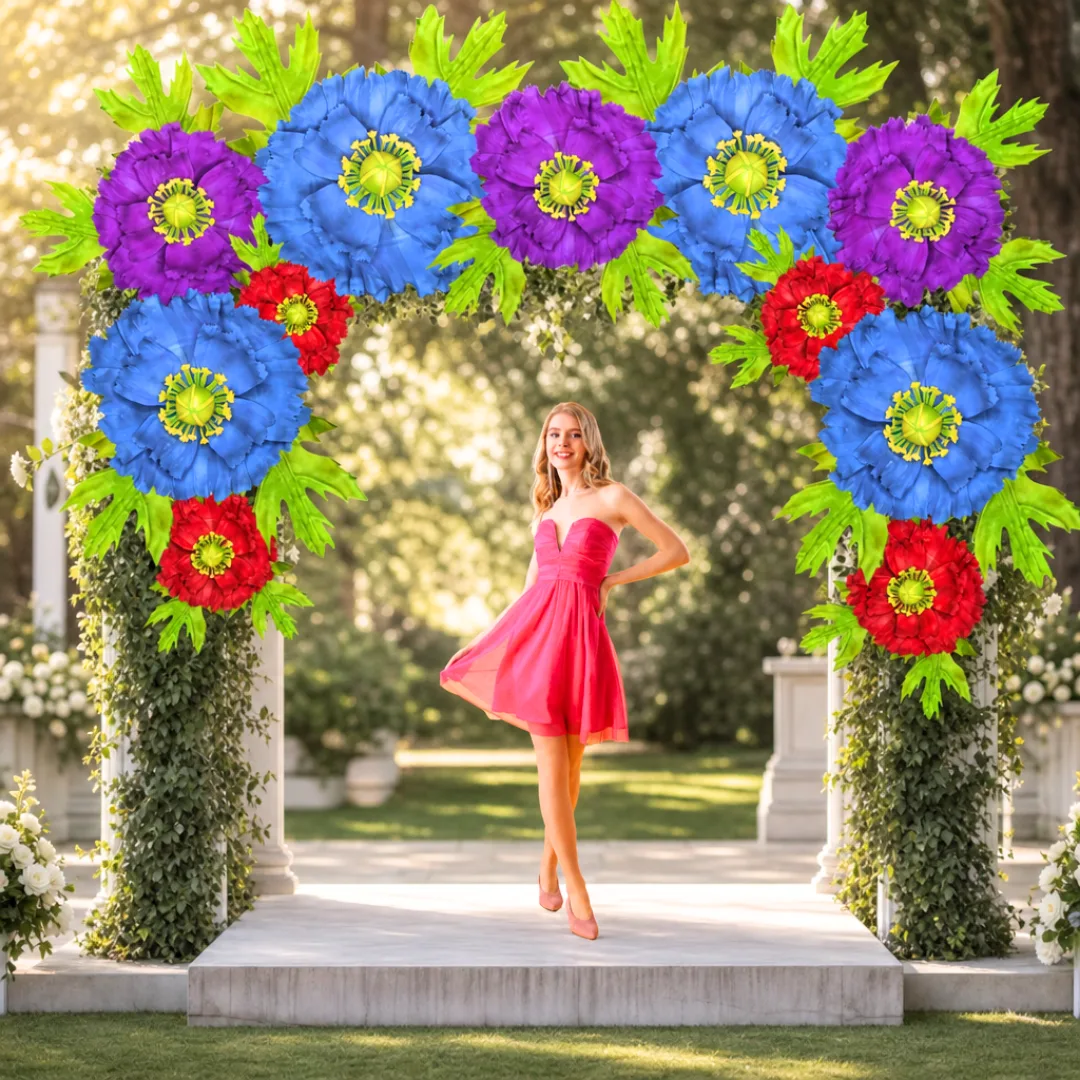
A lot of people start shopping for an oversized flower arch backdrop when they already feel pressure. The venue is booked. The client wants a wow moment. The ceremony space, expo booth, or retail corner still looks flat in photos. What they need isn’t more decor. They need one focal point that can organize the whole scene.
That’s what a well-built oversized floral arch does. It gives guests a visual destination, gives photographers a clean frame, and gives the event a sense of intention the moment people walk in. The mistake is treating it like a surface styling project instead of a design-and-structure project. The best arches succeed because they solve both.
Blank event spaces rarely need more stuff. They need a center of gravity.
An oversized flower arch backdrop does that fast. It can define a ceremony without walls, anchor a stage without a full scenic build, or turn a brand activation into a photo stop people use. When the scale is right, the arch doesn’t just sit in the background. It tells people where to look and where to gather.
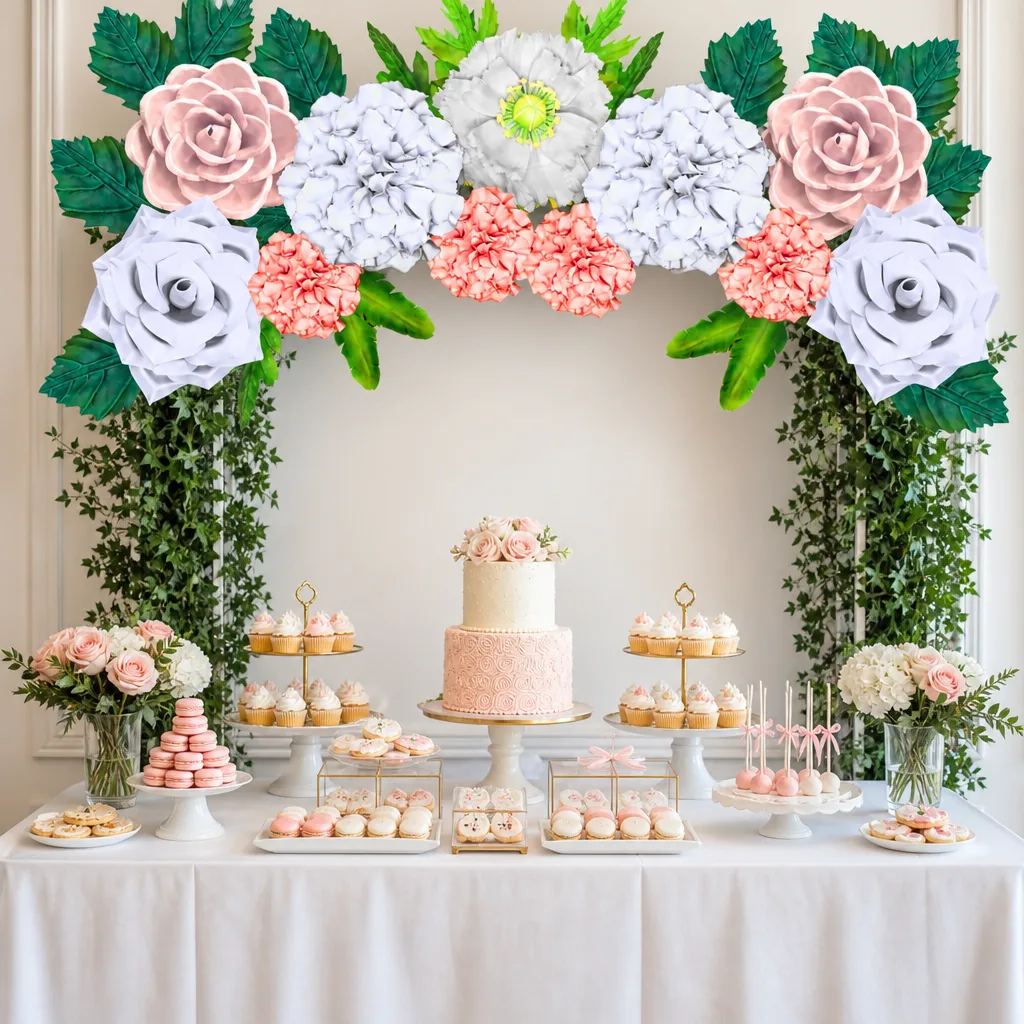
It creates immersion, not just decoration
People respond to scale. A small arrangement can be pretty, but a large-format floral piece changes how a space feels. It can soften hard architecture, pull attention away from venue flaws, and make a temporary location feel designed on purpose.
That matters because floral arches are no longer a niche wedding trend. According to WeddingWire’s ceremony structure guide, the global wedding decor market reached $12.5 billion USD by 2023, with floral arches comprising 25% of installations in major markets. The same source attributes that popularity to their ability to create immersive, photogenic experiences that generate 5x more user-generated content than standard setups.
For planners and producers, that changes the conversation. The arch isn’t only decor. It’s part staging, part branding, part guest experience.
Practical rule: If guests naturally stop in front of the installation before anyone tells them to, the arch is doing its job.
Oversized arches aren’t limited to vows and aisle photos. They perform well anywhere the event needs a focal frame:
A good portfolio helps people see what “oversized” really means in different settings. Reviewing large-scale commercial floral installations is useful because the same design principles apply whether the client is a couple, a retailer, or a production team.
An arch becomes memorable when scale, density, and placement work together. If it’s too small, it disappears. If it’s too large for the room, it crowds the scene and fights the event instead of framing it.
That’s why the essential work starts before any flowers are attached.
Most oversized flower arch backdrop problems start in planning, not in assembly. The frame wobbles because nobody checked the ground. The flowers look sparse because the design was approved without discussing density. The arch feels oddly small because the room was bigger than everyone pictured.
Good planning removes those headaches early.
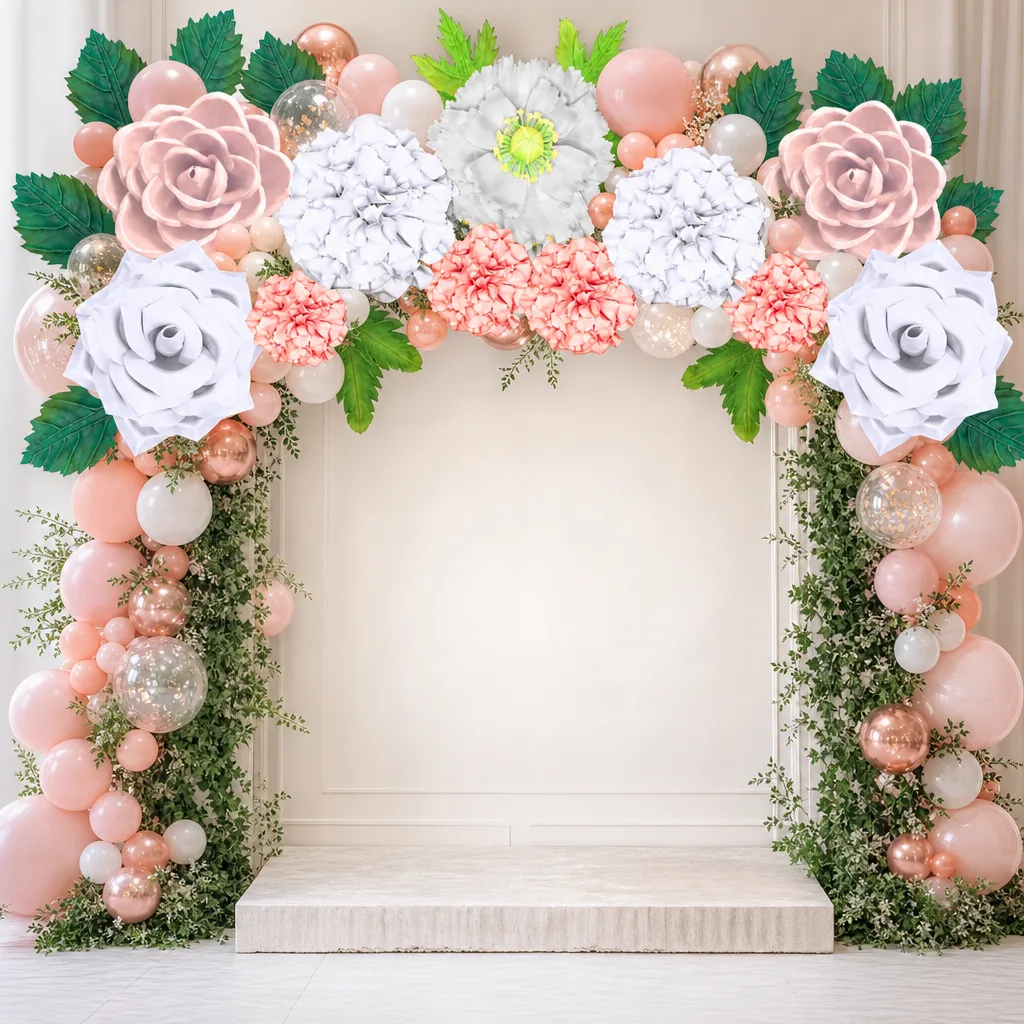
Before choosing flower styles or colors, assess the actual conditions.
Use this planning checklist on every project:
- Measure the footprint: Confirm width, height clearance, and depth. Don’t assume the “ceremony area” is usable edge to edge.
- Check the floor or ground: Uneven pavers, soft lawn, thick carpet, and sloped concrete all affect stability.
- Look for wind exposure: Courtyards, rooftops, beaches, and open fields change anchor needs dramatically.
- Check traffic flow: Guests, servers, photographers, and talent all need room to move around the arch.
- Note the background: Glass, dark drape, open vista, patterned wallpaper, and branded signage all change how the flowers read on camera.
- Find power access if lighting is planned: Even a simple accent light or uplight needs a cable path that won’t create a trip hazard.
- Ask the venue what’s allowed: Some venues won’t allow staking, drilling, taping, or heavy point loads.
A quick sketch with dimensions solves more problems than a long mood board. If the team can’t answer where the arch sits, what it blocks, and what’s behind it, the design isn’t ready.
Scale is where many otherwise beautiful arches go wrong.
For smaller ceremonies, restraint usually looks more expensive than overbuilding. According to Ellermann’s wedding flower arch guide, arches of 6 to 7 feet wide maintain delicate proportions for intimate ceremonies under 50 guests, while larger weddings with 100+ guests need 8 to 10 foot wide structures for visual balance. That same source notes that a mix of full blooms and foliage can achieve 35 to 45% higher social media engagement rates than single-variety designs.
Those numbers line up with what works in practice:
If you want a good refresher on proportion outside the event world, aiStager's guide on interior design scale explains the same principle clearly. The room sets the rules. The decor has to answer them.
The arch should frame the moment, not compete with the people standing inside it.
Once the dimensions are right, choose a floral language that suits the event and the lens.
A few combinations consistently work well:
Use rounded forms and layered petals. Roses, peonies, hydrangea-style forms, and neutral greenery create a forgiving silhouette that photographs well from multiple angles.
Use fewer varieties, stronger color blocking, and clearer edges. This keeps logos, products, and talent from getting visually swallowed.
Choose shapes that read from distance first, detail second. Oversized blooms, bold color grouping, and repeatable motifs work better than tiny nuanced flower mixing.
Signature flowers can give the piece identity. Sunflowers feel direct and cheerful. Bluebonnet-inspired palettes can localize a Texas event without becoming kitschy if they’re handled with restraint.
Density is not something to “see how it looks” on install day. It affects labor, transport, attachment method, and photography.
Use these planning questions:
Mixed-scale florals usually outperform single-size blooms because they create rhythm. Full blooms establish impact. Smaller blooms and foliage bridge the gaps. That’s what keeps the arch from looking flat.
A clean plan saves money, time, and stress. It also makes the next decision much easier. Should you build it yourself, or hand it off to a custom team?
For hands-on makers who want to improve technique before committing to a full event piece, flower-making training and tutorials can help bridge the gap between inspiration and execution.
Choosing Your Build Path DIY Kit vs Custom
The biggest fork in the road is simple. Do you want to build the oversized flower arch backdrop yourself, or do you want a custom piece made for you?
Both paths can work. The wrong choice usually happens when people judge only by budget and ignore labor, transport, skill level, and tolerance for risk.
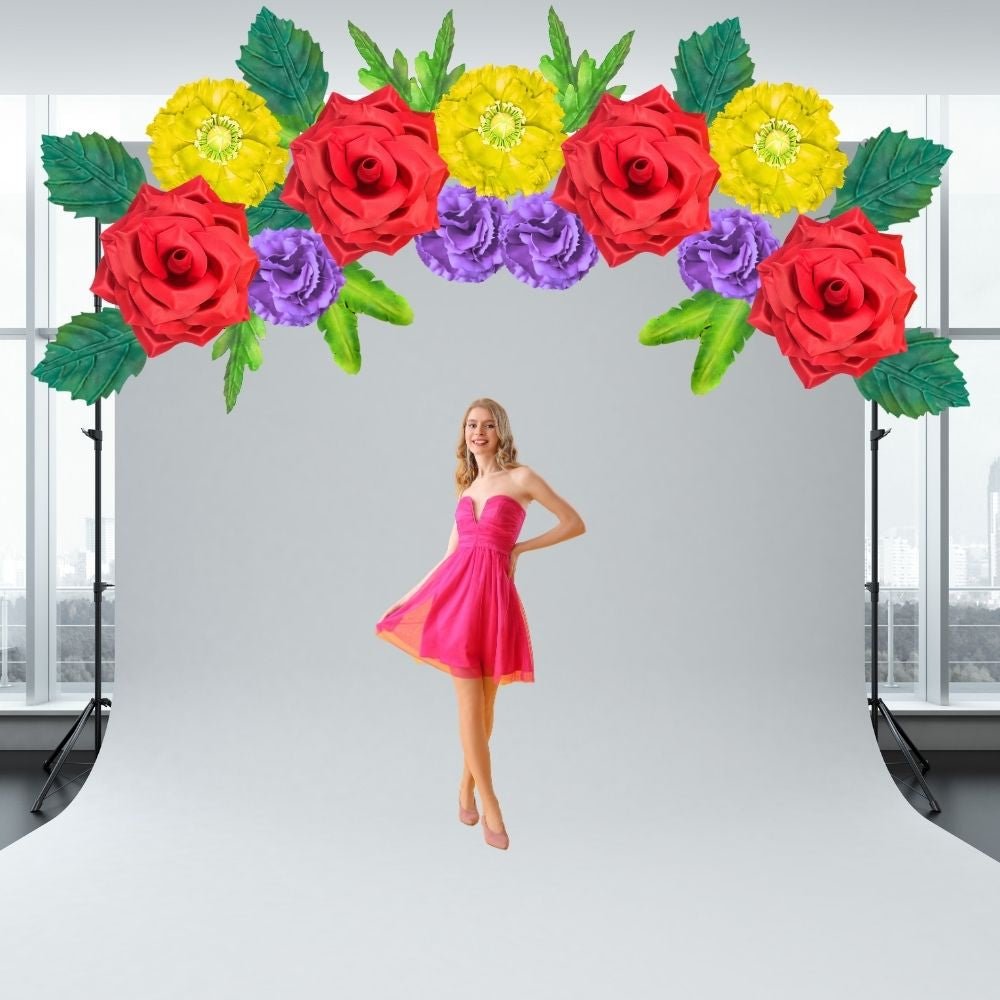
A kit-based approach works well for makers, small event teams, balloon artists, visual merchandisers, and planners who already handle some in-house styling.
DIY is usually the better path when:
- You have lead time: Rushed floral builds are where avoidable mistakes show up.
- Your concept is clear: Revisions are easier when the design is straightforward.
- Your team enjoys fabrication: If no one likes assembly work, the savings can disappear into frustration.
- You want reusable pieces: Modular flowers and reusable mechanics can be adapted across multiple events.
- You need brand consistency across locations: A repeatable kit system helps if one concept will be recreated several times.
DIY becomes much less attractive when the event depends on a flawless first attempt with no setup cushion.
Custom build is the safer path when the arch is central to the event’s success. If this is the hero photo moment, the press backdrop, the ceremony focal point, or the client’s signature reveal, handing it to specialists often protects the entire production.
Choose custom when:
If the install has to be both high-impact and low-drama, custom usually wins.
There’s no virtue in choosing the harder path if it puts the event at risk. There’s also no reason to outsource a design your team can realistically build well.
If you want to explore a kit-based route with modular components, DIY giant flower kits for event makers are a practical starting point.
At this stage, pretty ideas either become professional installs or expensive problems.
A flower arch can look finished and still be structurally wrong. Most failures come from the same few causes: too much floral weight on too little frame, poor weight distribution, weak anchoring, or outdoor conditions that weren’t respected.
A decorative frame is not automatically a load-bearing frame.
According to technical load guidance for foldable giant wedding flower arches, a standard 7.2ft × 4ft metal frame can support 40 to 60 lbs. The same source states that capacity can be increased by 30 to 40% using pipe insulation foam as a load-distribution base, and that outdoor setups need 20 to 30% additional anchoring for wind load.
That single point changes how you should build:
The cleanest builds happen when the structure is finished before the florals go on.
Follow this sequence:
Set the frame in final position Level it before decorating. Small base problems become large visual problems once florals hide the mechanics.
Secure the base Use weighted bases, ground anchors where allowed, or other venue-approved stabilization methods. If you’re outdoors, assume wind will test the piece at the worst time.
Add load-distribution material Pipe insulation foam creates a forgiving surface for attachment and spreads weight more evenly than direct insertion into isolated points.
Mark the main floral zones Identify top focus, side cascades, lower anchors, and any open negative space before attaching stems.
Attach the heaviest elements first Large focal blooms and dense greenery masses should go on while the frame is still visually open and easy to inspect.
Bridge with secondary florals Mid-scale pieces help tie the silhouette together and hide mechanics without overloading one section.
Finish with light detailing Use your smallest stems and finishing pieces last. They should refine the shape, not carry structural responsibility.
Here’s the candid version.
What works
What doesn’t
Field note: If the frame moves more than you like when lightly tested by hand, stop decorating and fix the mechanics first.
Outdoor arches are not indoor arches placed outside.
Wind catches drape, greenery tips, broad petals, and open voids in unpredictable ways. Sun changes how adhesives behave. Ground conditions shift during setup. Even a calm morning can turn by guest arrival.
For outdoor work:
A stable base makes every other decision easier. When additional ballast is needed, a fillable event base for large floral structures is the kind of practical tool that simplifies setup and improves confidence on site.
If the arch is being built off-site, do one full test assembly. Not a partial check. A full one.
That test should answer:
A flower arch should feel magical to the guest. It should feel boringly reliable to the crew.
A stable arch can still underperform if it’s staged poorly. Placement, background, and lighting determine whether guests walk past it or pull out their phones.
That’s why styling the moment around the arch matters just as much as building the arch itself.
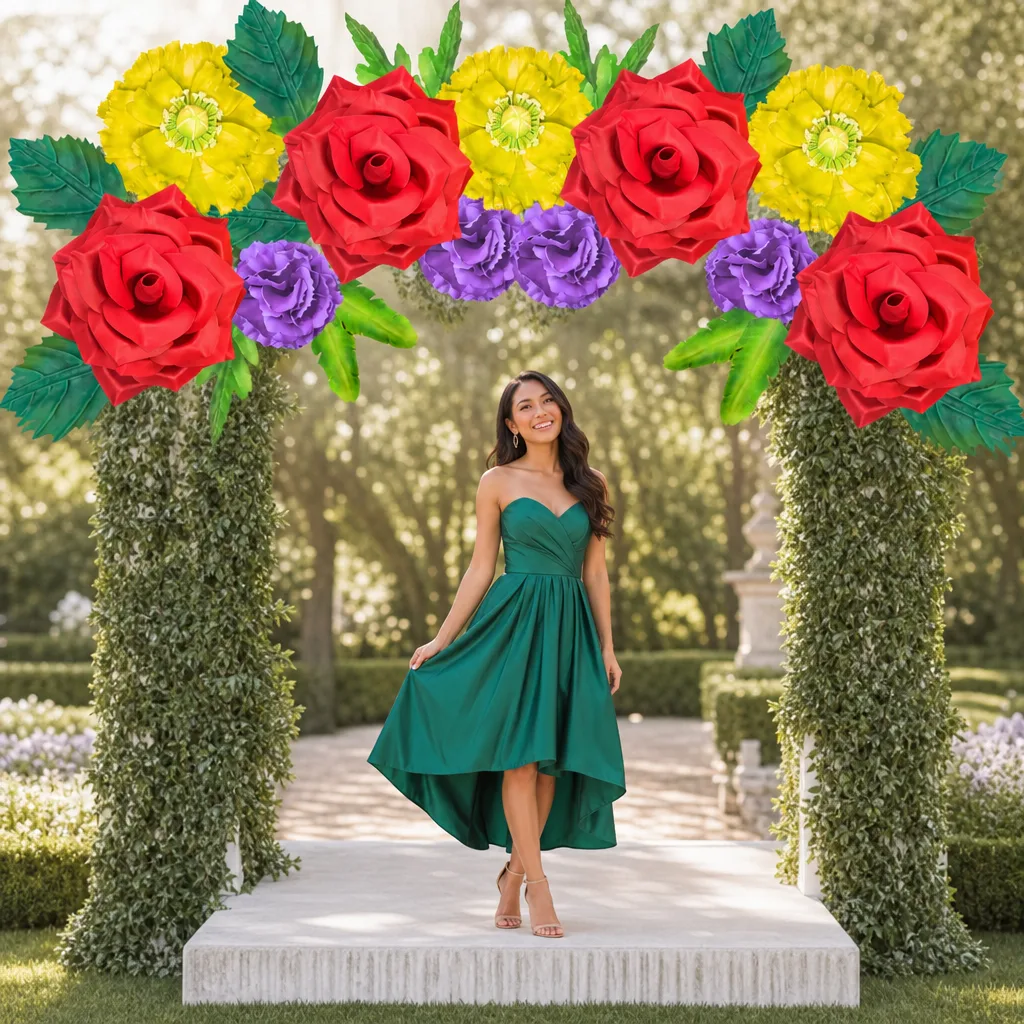
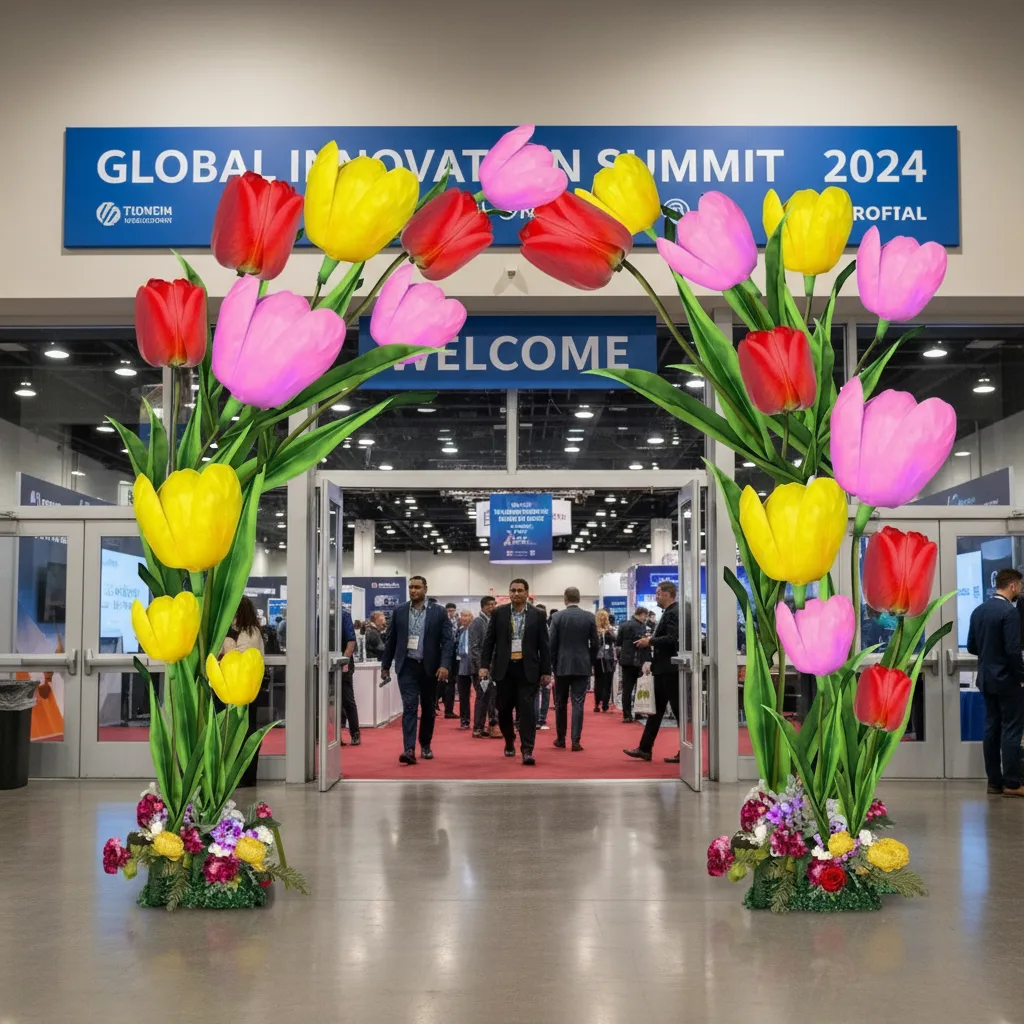
An oversized floral arch works best when it catches people at a transition point. Entry moments, ceremony focal lines, bar-adjacent lounge zones, product reveal areas, and corridor bottlenecks are all strong placements.
That placement matters because, according to event backdrop performance data, oversized floral arches at 8ft+ yield a 25% higher dwell time at events than static displays and can deliver 3x social media engagement lift at brand activations compared to traditional branded banners.
Those results don’t come from the flowers alone. They come from making the arch easy to approach, easy to understand, and easy to photograph.
Some arches look lovely in person and weak on camera because the color contrast is too low or the background is too busy.
Use these staging principles:
For wedding professionals who want to think more like photographers, timeless wedding imagery is a useful reference for how composition, softness, and visual restraint shape memorable images.
A flower arch becomes a stronger photo moment when the couple or guest is the subject and the florals act as the frame.
A lot of teams say “photo op” when they mean “nice thing in a corner.” Those are not the same.
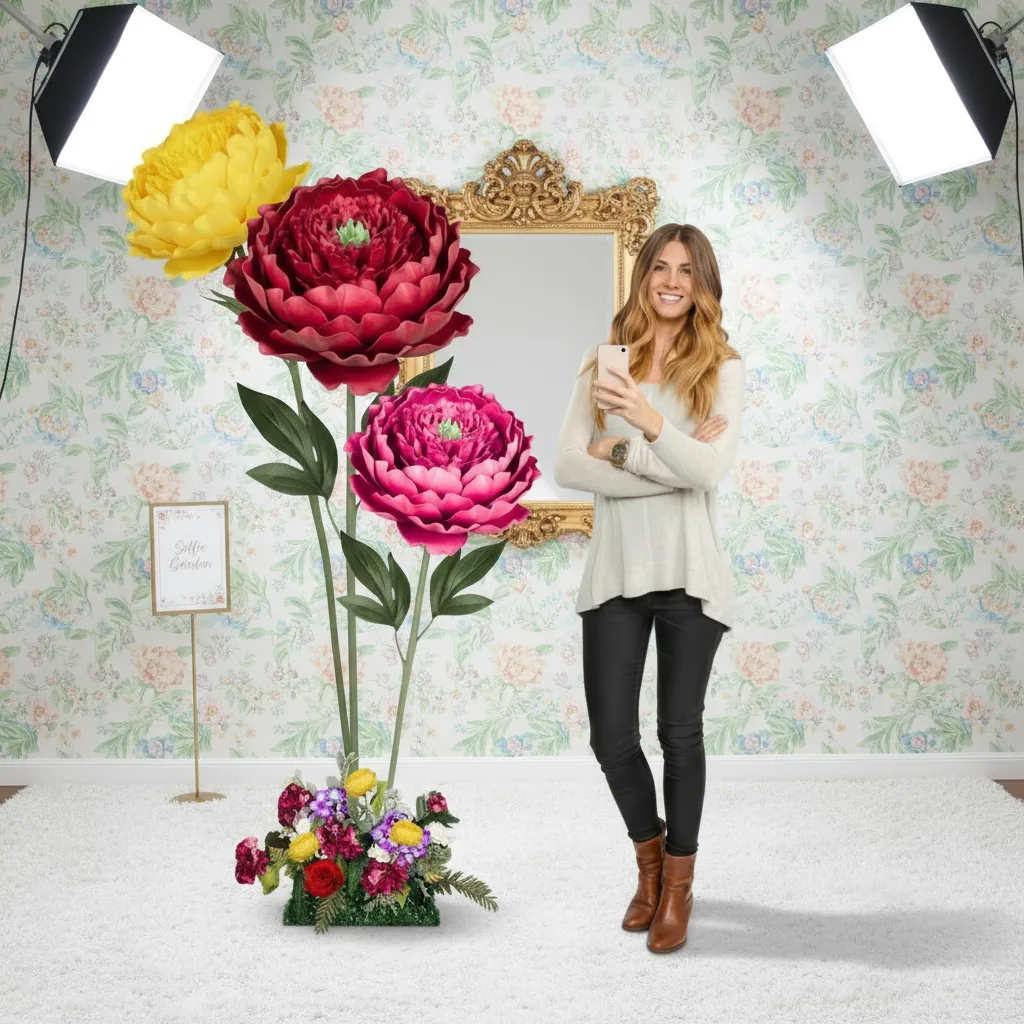
A true selfie station needs:
If the event needs a more intentional branded photo area, flower-enhanced step and repeat wall options show how a floral backdrop can support logos without becoming stiff.
Run this last-minute review:
The best-staged arch doesn’t ask people to admire craftsmanship. It invites them in.
The event isn’t finished when the last photo is taken. A large floral install can become a stressful mess at strike if no one planned the takedown.
A calm teardown protects the flowers, the frame, the venue, and the crew’s energy at the end of a long day.
Don’t rip the piece apart from the nearest reachable side. Reverse the logic of the build.
A simple order works best:
Photograph the final install first Take a few clean reference shots before touching anything. Those images help with repacks and future rebuilds.
Remove delicate outer detailing Pull lightweight finishing pieces first so they don’t snag or crush under heavier sections.
Detach floral clusters by section If pieces were built modularly, keep them grouped. Mixed bins create damage and confusion later.
Strip secondary attachments Ties, clips, tape, and foam inserts should be removed methodically so they don’t catch during frame breakdown.
Disassemble the frame last Keep the structure stable until most of the decorative weight is gone.
The fastest teardown crews still lose money later if they pack carelessly.
Use this packing checklist:
Don’t pack by speed alone. Pack by how quickly the piece can be rebuilt next time.
Reusable oversized florals hold up best when they’re stored clean, dry, and with shape support. Crowded storage is one of the most common ways teams damage otherwise durable pieces.
For longer-term care:
Good post-event handling is what turns one arch into a repeatable asset instead of a one-night expense.
Transport starts in the design phase. The safest builds break into manageable sections, with the frame separated from major floral clusters whenever possible. Trying to move a fully dressed oversized arch in one piece sounds efficient, but it usually leads to crushed petals, bent mechanics, and awkward loading.
For larger projects, plan transport around these realities:
- Modular sections travel better than fully assembled forms
- Large focal blooms need protected spacing
- The vehicle opening matters as much as cargo length
- Load order affects setup speed on site
If you can’t explain how the arch gets from studio to venue and from vehicle to install point, the build isn’t fully solved.
Yes, if it was designed with adaptability in mind. Reusability depends less on the flower style and more on whether the mechanics allow sections to be swapped, refreshed, or rearranged.
A smart reusable system usually includes:
This is one reason many professionals prefer modular faux floral systems over highly perishable, one-time-only builds for recurring event work.
Go custom when the arch is the hero element, when the venue is logistically difficult, or when your team doesn’t have time to test and troubleshoot. DIY works best when you have prep time, fabrication confidence, and enough margin for revisions.
Custom is usually the better call if any of these are true:
Three things matter most. Scale, density, and editing discipline during the design stage.
The quickest ways to cheapen the look are sparse coverage in the wrong places, repetitive bloom sizing, and a background that competes with the florals. Strong arches usually mix bloom sizes, use greenery intentionally, and leave enough negative space to keep the silhouette readable.
Phone-test the design before the event opens. If the arch only looks good to the naked eye from one angle, it needs more refinement.
They prioritize the flower face before solving the mechanics. That causes sagging, leaning, awkward proportions, and stressful installs.
The second most common mistake is building too small for the room. A modest arch in a large venue often looks less polished than a simpler design that was scaled correctly.
How much maintenance does an arch need during an event?
That depends on placement and traffic. Outdoor arches and high-touch selfie stations need more attention than ceremony-only backdrops. Usually, a quick pre-event check and one mid-event refresh are enough if the build was solid.
Assign one person to watch for:
- Shifted stems
- Loose ties
- Crushed front-facing blooms
- Floor debris in the photo zone
- Guests leaning bags or drinks against the base
Small fixes done early keep the arch looking intentional all night.
If you want a custom oversized floral installation, a reusable DIY kit, or a photo-ready backdrop designed to fit your event exactly, Amazing Giant Flowers is a strong place to start. Their team creates handcrafted giant floral pieces for weddings, brand activations, retail displays, and selfie stations, and they also offer DIY kits and learning resources for makers who want to build with confidence.
Ready to Create Something Amazing?
Browse our collection of giant flower kits and start your next project today.