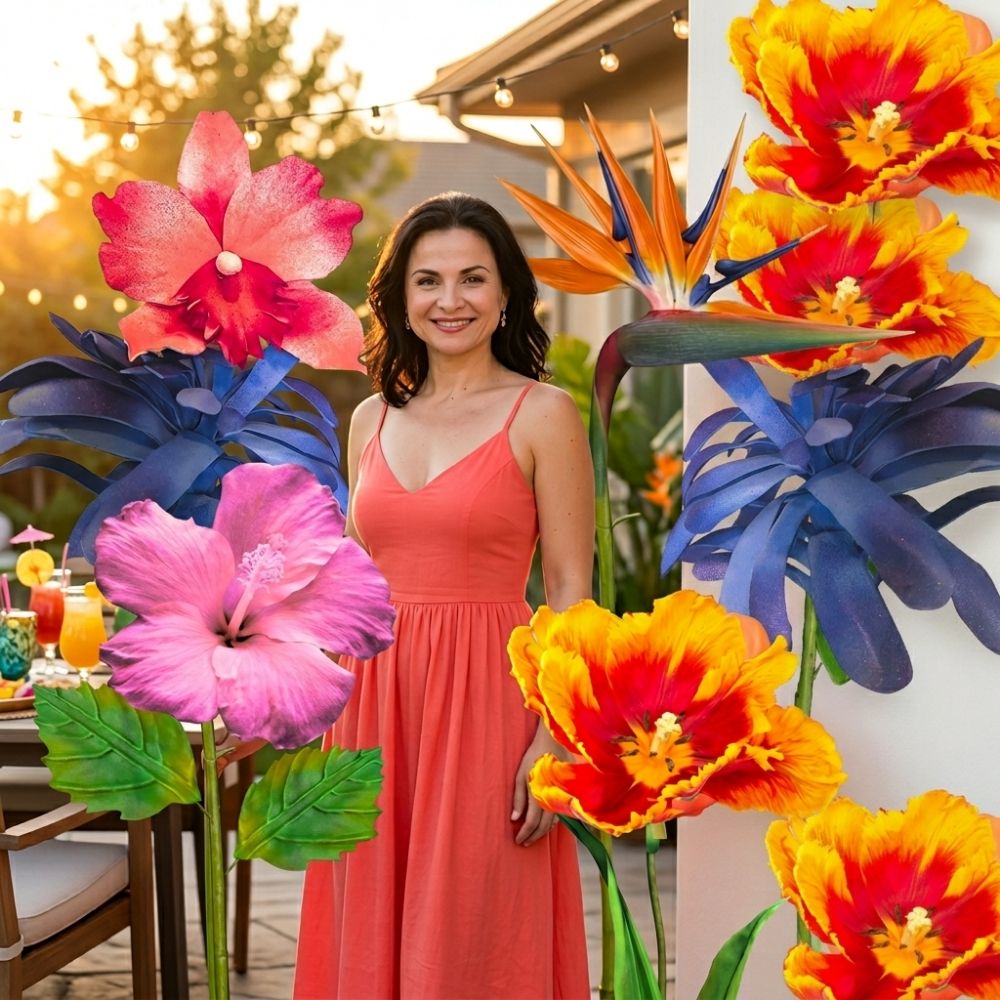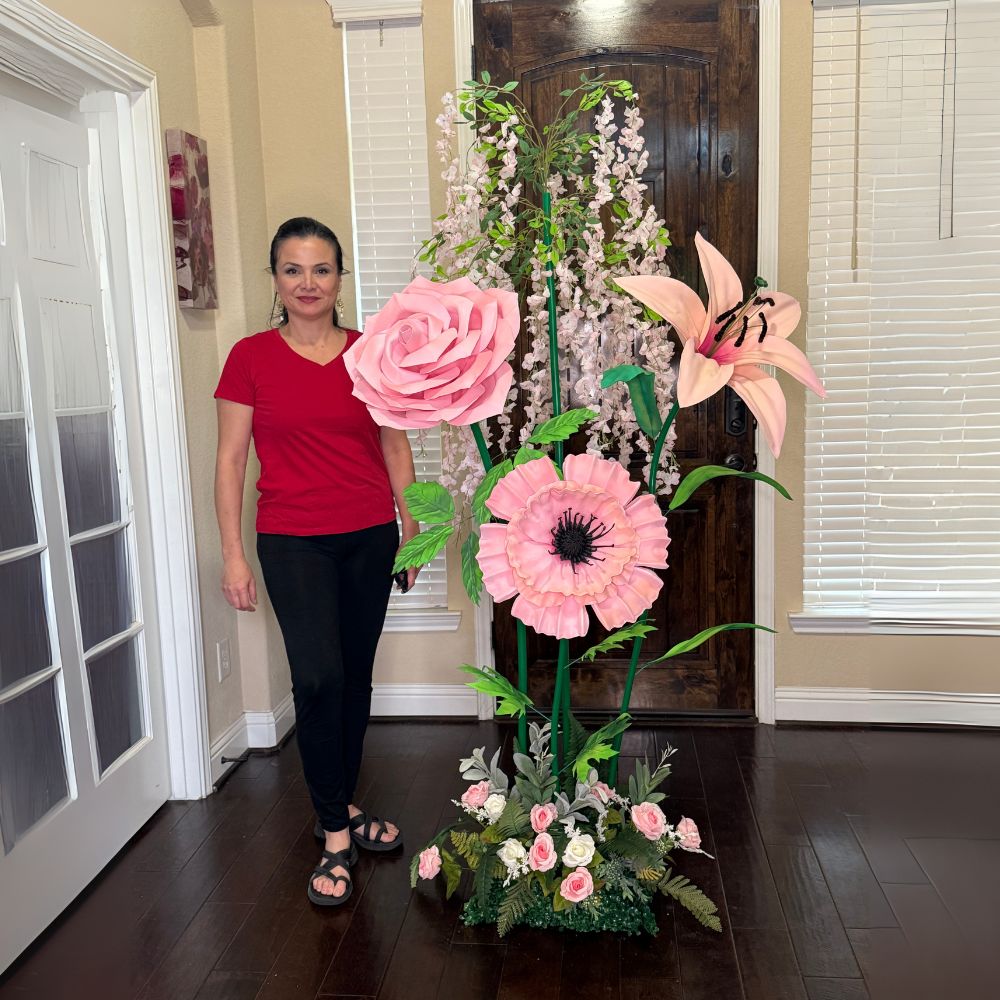
Amazing Giant Flowers by Adriana Wells

The Best Paper for Flower Arrangements: From Craft to Pro

Adriana Beaman April 12, 2026 14 min read
The Best Paper for Flower Arrangements: From Craft to Pro

You’re probably here because the flowers are the easy part in your head, but the paper isn’t.

You can already see the finished piece. A wedding backdrop. A retail display. A bouquet prop for photos. A giant bloom wall that turns a blank venue into something people stop and photograph. Then the practical questions hit. Which paper holds shape? Which tears during setup? Which looks refined under event lighting instead of flat and crafty?


That’s often where most guides fall short. They talk about petals, not performance. They show a small flower on a craft table, not a large installation that has to survive handling, transport, humidity, and long event days.

Paper for flower arrangements works best when you treat it like both an art material and a building material. The prettiest choice isn’t always the smartest one. The smartest one isn’t always the most realistic. Good results come from knowing what each paper does well, where it fails, and how scale changes everything.

From Blank Walls to Blooming Wonders

A planner walks into an empty venue at sunrise. One wall needs to become the focal point before guests arrive. The brand colors are set. The lighting team is already rigging overhead fixtures. The photographer wants texture, dimension, and depth. The install team wants something that won’t buckle halfway through setup.

That moment feels modern, but the instinct behind it is old. People have been shaping flowers into meaning for a very long time.


A person sitting on a wooden floor looking up at colorful paper flowers in a bright room.

The roots of floral design go back to ancient Egypt around 2,500 BCE, where wall carvings show the earliest known use of cut flowers in vases. Egyptians used stylized arrangements that emphasized fragrance and structure, and those early decisions still echo in floral design today, more than 4,500 years later, as noted in this history of flower arranging.

That historical thread matters because oversized paper florals aren’t a novelty project. They’re part of a long tradition of using flowers to transform space, signal mood, and direct attention.

Why the foundation matters

When readers get stuck, it’s usually because they choose paper by color first and structure second.

That works for a quick craft. It fails for event work.


A blank wall becomes a blooming wall only when the material supports the idea. If the petals droop, edges crush, or centers collapse, the design loses authority. If the paper suits the job, the same design suddenly looks polished and intentional.

A few common scenarios:

  • Wedding designers need softness, romance, and good photo texture.
  • Retail teams need repeatability, brand color control, and neat edges.
  • DIY makers often want drama without a complicated tool list.
  • Experiential producers need scale, stability, and fast install logic.

Practical rule: Start your design plan by asking what the paper has to endure, not just what you want it to look like.

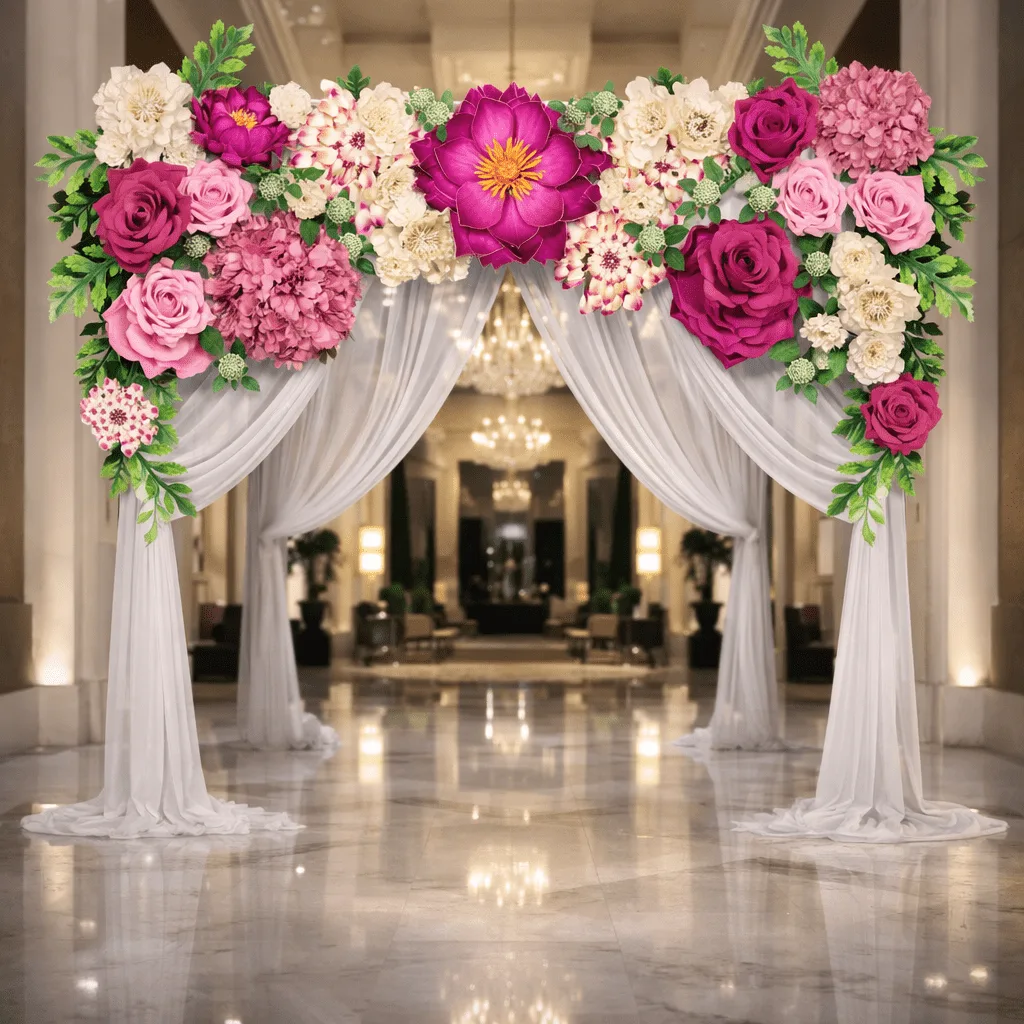
For wall pieces and event scenes, studying examples of paper flower backdrops can help you think in layers, spacing, and visual rhythm before you buy supplies.


The best paper for flower arrangements depends on the role each piece plays. Petals, wraps, leaves, backing layers, and support collars don’t all need the same material.

Think like a floral stylist and a fabricator at the same time. Some papers are for realism. Others are for strength. A few are mainly for visual effect.


A chart detailing different types of craft paper including crepe, cardstock, tissue, vellum, and metallic glitter paper.

Crepe is the expressive one. It stretches, curves, and gathers beautifully, so it’s ideal when you want petals to feel botanical rather than flat.

Use it when:

  • You want lifelike movement in roses, peonies, ranunculus, and ruffled petals.
  • You need shaping flexibility because crepe responds well to hand cupping and edge curling.
  • You’re building layered flowers where texture helps create depth in photos.

Watch for:

If you want to refine shaping technique, these tutorials on how to make paper flowers with crepe paper are useful because they show how stretch changes petal behavior.


Cardstock is your framework paper. It’s not always the most natural-looking petal material, but it solves a lot of structural problems.

For oversized paper flowers, cardstock in the 200-300 gsm range provides superior structural integrity and helps freestanding blooms resist gravity, handling, and humidity better than lighter papers, according to this guide on big paper flower construction.


That matters most when the flower has broad petals, a deep center, or has to hold shape over time.

Best uses:

  • Flower bases
  • Large outer petals
  • Leaves that need to stand away from the wall
  • Backdrop flowers with clean, graphic shapes

Trade-offs:

Tissue is excellent for softness, volume, and airiness. It’s weak on its own, but useful when you stop asking it to carry weight.


Tissue works well for:

Its limitations are simple:


I use tissue as an atmosphere paper, not a load-bearing paper.

Kraft has a grounded, matte character. It reads earthy, sculptural, and slightly architectural depending on finish.


You’ll see it used for:

It’s especially useful when your project includes transport and setup logistics, which many crafters underestimate.


These papers are the detail players. Vellum diffuses light softly. Metallic and glitter papers add drama. Printed and pearlescent sheets can become focal accents in brand or holiday work.

Use them carefully:

  • Vellum adds glow and elegant layering.
  • Metallic paper catches light and creates festive contrast.
  • Glitter paper can work for accents, but too much can cheapen a refined design.
  • Printed sheets help when a concept calls for pattern rather than botanical realism.

A quick decision table

Paper type Best quality Main risk Best use
Crepe Stretch and realism Can snag and soften Detailed petals
Cardstock Strength and shape retention Stiffer appearance Large flowers, bases, leaves
Tissue Lightness and softness Tearing and crushing Fillers, airy accents
Kraft Toughness and matte finish Limited delicacy Wrapping, rustic forms, support use
Vellum or metallic Light effect and finish Can feel decorative rather than natural Accents, layered effects, branded work

Use more than one paper in a single flower when the job demands it. Realism and structure rarely come from a single sheet.

If you also work across other craft formats, this guide on choosing the best paper for crafting is a helpful reminder that surface finish, stiffness, and intended use matter far more than color swatches alone.


A paper rose in your hand and a flower installation on a venue wall are not the same problem. They might use similar templates, but they ask very different things from the material.

That’s where many projects go sideways. Makers scale up the pattern, but they don’t scale up the engineering.


A hand holding a bouquet of handmade paper roses next to colorful layered paper craft decorations.

For bouquets, gift toppers, cake table accents, and handheld props, your priorities are usually detail and finish.

Crepe, tissue, and lighter decorative sheets often shine here because:

  • The flowers are viewed up close
  • They don’t have to fight as much gravity
  • The handling window is shorter

For this kind of work, visual delicacy matters more than brute strength. A bouquet built for styling can use papers that would never survive an outdoor install.

If you like bouquet-focused builds, a paper rose bouquet is a good example of where petal realism and hand feel matter more than structural stiffness.


Centerpieces, nursery décor, dessert table installs, and freestanding decorative clusters sit in the middle.

These projects usually need:


Mixed-material thinking pays off in such situations. A cardstock base petal with a softer top petal often gives you both control and beauty.

For oversized floral installations, especially those over 6 feet tall, material choice becomes a structural engineering decision. Standard craft tutorials usually skip load-bearing stress and wind resistance, but those factors are critical in large-format event work, as noted in this discussion of oversized floral installation challenges.


That single point changes everything.

A giant flower has to deal with:

  • Weight pulling downward
  • Petals acting like sails in airflow
  • Attachment stress at the center
  • Transport compression
  • Longer display windows

Large paper flowers fail at the joints first. The petals usually get blamed, but the center connection and support logic are often the primary issue.

When I plan event-grade work, I sort projects into three questions:


Is this touched or untouchable If guests will brush past it or pose near it, I choose stronger paper and simpler petal geometry.

Is this indoors or exposed Even gentle outdoor airflow changes what paper can do.


Is this single-use or stored A one-day photo moment and a reusable prop deserve different material decisions.

Beautiful paper work can fail in the van before it ever reaches the venue.


That’s why protection isn’t an afterthought. It’s part of the design process. If you know a flower will travel, hang, sit near an entrance, or live under event lighting, build for that reality from day one.

For wrapping arrangements and protecting pieces in transit, wax or polymer-coated kraft paper in the 90-120 gsm range can increase tear resistance by up to 5x compared with tissue paper. The same coated kraft can also reduce transit damage by 75% versus cellophane by repelling water and limiting moisture absorption, according to this guide on paper for bouquets and protective wrapping.


That’s a useful benchmark because many designers still reach for cellophane when they really need breathability and tear resistance.

What I recommend during transport:

  • Wrap vulnerable edges first so outer petals don’t take the first hit.
  • Use coated kraft for outer protection when moisture or abrasion is possible.
  • Separate layered blooms with light inner buffering so centers don’t crush.
  • Stabilize stems and bases before loading, because movement causes repeated stress.

Seal the surface when the setting calls for it

Some projects need a protective finish. Not every flower does.

Sealing helps most when:


A practical reference for this step is using Mod Podge clear acrylic sealer, especially when you want a simple workflow for paper pieces that need more resilience.

Studio note: Test sealers on scraps first. Some papers deepen in color, lose softness, or become shinier than expected.


Storage mistakes ruin more paper flowers than design mistakes.

Use these habits:


For professional work, your flowers should leave the studio looking camera-ready and come back in a condition that still respects the labor that went into them.

Buying paper well isn’t just about finding the cheapest roll or prettiest sheet. It’s about matching your source to your project, your schedule, and your values.

A last-minute craft store run can save a small job. It can also create color mismatch, uneven weight, and inconsistency across a larger installation.

Where to buy with intention

Different suppliers serve different needs.

If you're planning a collection rather than a one-off piece, order samples before you commit to bulk.


A few sourcing habits make a real difference:

Standardize your core papers Keep a small set of go-to materials for petals, bases, and wrapping. That reduces waste and decision fatigue.


Use premium paper only where it shows Internal support layers don’t always need the prettiest stock.

Buy by project family If you build roses, peonies, and backdrop florals regularly, choose papers that can cross over between them.


Track what failed Cheap paper that cracks, fades, or buckles isn’t cheap.

For eco-conscious makers, the challenge isn’t just finding a paper labeled natural. It’s understanding what happens before and after the event.


As one example, masking paper can cost $3-5 per roll, but its environmental lifecycle and recyclability are rarely compared clearly with compostable kraft options, which leaves a real knowledge gap for sustainability-minded crafters and clients, as discussed in this piece on budget wrapping options and eco concerns.

Ask suppliers:


Better sourcing starts when you treat sustainability as a design requirement, not a label on the packaging.

For many studios, the most sustainable move is often simple. Buy less novelty paper. Use more versatile stock. Reuse transport materials. Design with disassembly in mind.


Paper can do a lot. It can be elegant, sculptural, soft, crisp, rustic, polished, and highly photogenic. But there comes a point where paper is working too hard.

That point usually appears when a client wants one or more of the following:

  • Repeated use
  • Outdoor exposure
  • Frequent transport
  • Large freestanding scale
  • Higher-touch guest interaction

At that stage, the question isn’t whether paper is beautiful. It’s whether paper is still the right material.

A large, multi-colored crepe paper flower next to soft pink paper flowers against a black background.


Paper struggles most when the design needs to resist bending, moisture, rough handling, or repeated setup cycles.

Typical pain points:


For event pros, that means extra repair time and more fragile logistics.

EVA foam solves a different set of problems than paper. It isn’t a replacement for every flower. It’s a better fit for specific use cases.

Foam tends to make sense when you need:

  • Greater resilience during transport
  • More tolerance for touch and movement
  • Stronger freestanding forms
  • Reusable pieces for multiple activations
  • A material that can hold shape with less worry

This is especially helpful for statement flowers, selfie stations, stage decor, and repeat-install branded assets.

A simple decision guide

Choose paper when:

  • You want delicate texture
  • The piece is mostly visual, not physical
  • The event window is short
  • You want botanical softness

Choose foam when:

  • You need durability
  • The flowers will travel often
  • The installation has to work hard
  • You want to reuse the build

If you're comparing material behavior before building a large project, this overview of type of foam is useful because it helps clarify why some flowers are better built as event props than paper sculptures.

The most professional choice isn’t always the most traditional one. It’s the material that serves the job with the least friction.

Your Blueprint for Floral Art Success

Good floral work starts before the first petal is cut. It starts with choosing a material that matches the scale, setting, and lifespan of the design.

When you think this way, paper for flower arrangements becomes easier to evaluate. Crepe brings realism. Cardstock brings structure. Tissue brings softness. Kraft protects and supports. Foam steps in when the job asks for more durability than paper can reasonably give.

Keep experimenting, keep testing scraps before full builds, and keep learning from strong maker resources, including practical DIY and how-to guides that can sharpen your process and material judgment.


If you're ready to create statement florals that go beyond small craft projects, Amazing Giant Flowers offers handcrafted oversized floral installations, DIY kits, and supplies designed for weddings, brand activations, retail displays, festivals, and photo backdrops. Explore their custom giant flowers and maker tools to build polished, event-ready designs with confidence.

Ready to Create Something Amazing?

Browse our collection of giant flower kits and start your next project.

Shop All Flowers