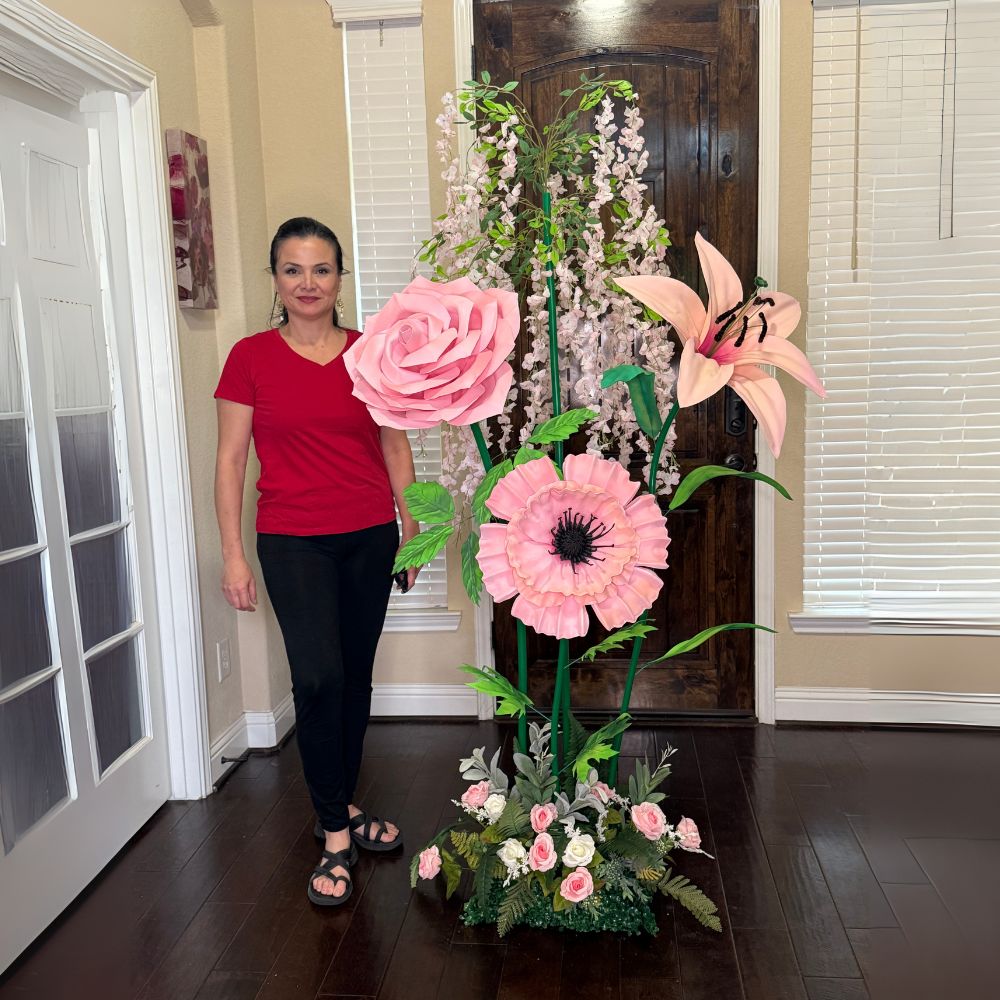
Amazing Giant Flowers by Adriana Wells

Priming EVA Foam: Stop Paint Cracking & Boost Durability

Adriana Beaman April 11, 2026 23 min read
Priming EVA Foam: Stop Paint Cracking & Boost Durability

A giant EVA foam flower can look flawless on the worktable and still fail the moment it reaches the venue. That’s the part many makers learn the hard way.

The weak point usually isn’t the sculpting. It isn’t even the paint color. It’s the layer underneath. If the primer can’t move with the foam, grip the surface, and survive transport, the finish starts cracking at the edges, flaking on curves, or peeling where hands touch it most.


That problem gets bigger with oversized blooms. Cosplay tutorials help, but a freestanding flower for a wedding aisle or retail display deals with different stress. Petals flex during packing. Bases vibrate in transit. Outdoor installs face humidity, wind, and long event days. Guidance for that kind of build is still thin, even though makers keep asking for it and recent discussion around weatherproof EVA priming for large installs has grown, while most tutorials still stay focused on armor and props (reference).

Priming EVA foam is what turns a decorative piece into a working event asset. Done well, it gives you smoother paint, cleaner edges, stronger adhesion, and far less panic on setup day. Done poorly, it creates a brittle skin that fails exactly where the flower needs to flex.

The Unsung Hero of Giant Flower Making

A large flower doesn't fail all at once. It starts with one stress point.

A petal rubs another petal in a van. A corner gets nudged through a loading dock door. A guest touches the edge for a photo. The painted surface opens up and raw foam shows through. On small props, that’s annoying. On a six-foot installation at a paid event, it can ruin the finish.


Most advice around priming EVA foam comes from cosplay, and that makes sense. Armor bends on the body, props get handled, and makers want a smooth paint base. But giant floral work adds a different kind of abuse.

Instead of repeated body movement, large petals deal with:


That’s why the best primer choice for a breastplate isn’t always the best one for a freestanding bloom wall or rental flower.

Primer isn’t just there to help paint stick. On EVA foam, it has three jobs:


Practical rule: If your primer forms a hard shell but your flower still needs to flex during packing or setup, the primer is now the weak link.

For event work, I care less about what looks perfect for five minutes under workshop lighting and more about what still looks polished after load-in, styling, guest traffic, and load-out.


A good priming job should do three things at once:

That’s the standard professionals need. Pretty isn’t enough. Durable pretty is the goal.

When people say their paint cracked, what they usually mean is their prep and primer system didn’t match the job. The fix isn’t more paint. The fix is choosing a sealing method that suits the scale of the piece and applying it with discipline.

Preparing Your Foam for a Flawless Foundation

You finish a giant flower at 1 a.m., it looks perfect in the studio, and by load-in the petal edges are showing every cut mark and glue ridge you missed. That usually traces back to prep, not paint.

On large EVA foam flowers, surface prep decides whether the final finish looks polished from three feet away or homemade from across the room. Big petals have more square footage, more glued joins, and more opportunities for small flaws to turn visible once primer hits.


Set the petal under angled light and inspect it before you open any coating. I do this on a worktable or against a wall with side light because flat overhead lighting hides defects.

Look for the problems that always show up later:


If your cuts need cleanup, this guide on the best way to cut foam will help you fix edge quality before finishing.

Raw EVA foam can grab primer unevenly, especially on large petals where one area may be denser or more handled than another. Heat sealing tightens the surface so your first coats behave more predictably.


Use a heat gun with motion and restraint. Keep it moving across the petal until the surface just begins to look slightly richer and less chalky. Stop there. On giant flowers, overheating causes a different set of problems than people expect. Edges can pull in, curved petals can lose symmetry, and glued areas may start telegraphing through the face.

I care more about consistency than speed here. A lightly sealed petal is easy to correct. A warped petal usually means rework.

A person wearing protective work gloves sands a piece of white EVA foam on a table.

Clean for adhesion and finish quality

Dust, sanding residue, and workshop grime interfere with primer adhesion and make the surface feel gritty under paint. Event pieces pick up more contamination than small props because they sit on larger tables, get carried by hand, and often wait in production longer between steps.

Wipe each petal down after sanding. Wipe it again after heat shaping or storage if needed. Use a clean, dry cloth or another residue-free cleaning method that fits your process. The goal is simple. No dust, no loose particles, no oily fingerprints near the edge where hands grab the piece during install.


For crews building rental inventory, this step saves a lot of touch-up time later.

Sanding helps, but only where the foam needs correction. Heavy sanding on soft EVA creates more texture, rounds crisp edges, and can leave low spots that show once paint catches the light.

Use light sanding to flatten:

  • Blade chatter on cut edges
  • Small glue ridges
  • Rough transitions at seams
  • Surface scratches that would print through primer

Leave smooth factory surfaces alone. On giant petals, preserving clean foam is usually better than trying to sand the whole face into perfection.

Seams on large flowers need extra attention because they sit in high-visibility areas. A seam down the center of a petal might disappear in a workshop, then jump out under venue uplighting.


Run your hand across every join. If you can feel a ridge, primer will usually show it. If you can see a gap, paint will not hide it. Refine the seam before priming with trimming, light sanding, or a thin filler approach that stays flexible with the foam.

For pieces that need a budget-friendly sealer system, some makers test a PVA Primer on sample scraps first to see how the surface lays down and whether the finish stays flexible enough for the intended use.


A giant petal does not behave like a small armor panel. The edge flexes. The center shows surface texture. The base carries glue, wire, or structural stress.

Prep each area accordingly:

  1. Edge zone: Refine cuts and remove fuzz. Here, cracking and visual sloppiness show first.
  2. Face zone: Keep the texture even so paint reads clean under event lighting and photography.
  3. Base zone: Check for glue buildup, shaping marks, and any stress points caused by mounting.

This zoning habit is one of the biggest differences between cosplay-scale advice and event-scale floral work. On giant flowers, the problem is rarely one obvious defect. It is uneven prep across a very visible surface.

Use a repeatable sequence, especially if several people are building at once:


That order prevents a common studio mistake. People fix edges, then handle the petal, then set it on a dusty table, then wonder why the first coat looks dirty or patchy.

Good primer starts with disciplined prep. On event flowers, that discipline is what keeps the finish looking clean through transport, installation, guest traffic, and pack-down.


A giant flower can look perfect on the worktable and still fail at the venue. The usual problem is not color. It is the primer system underneath. On event pieces, that layer has to survive packing, installation, guest contact, humidity, and the bend that happens when a six-foot petal gets carried through a doorway.

A comparison guide for EVA foam primers showing Liquid Rubber, Spray Acrylic, and Brush-on Resin characteristics.

For giant floral work, I sort primers into two categories. One group gives a cleaner, more controlled surface for display pieces. The other gives better insurance for rentals and outdoor jobs. That distinction matters more on oversized petals than it does on cosplay armor, because the surface area is larger, the edges flex more, and any failure shows up fast under event lighting.

EVA Foam Primer Comparison for Giant Flowers

Primer Best For Flexibility Durability Cost Pro Tip
White glue multi-coat method Indoor flowers, detailed petals, beginners who want brush control Good if coats stay thin Good for pieces with limited flex Budget-friendly Use it where you want a smoother face and slower, more controlled build.
Plasti Dip Rental flowers, outdoor installs, transport-heavy work Excellent Excellent Higher than glue-only methods Better for petals, edges, and large forms that get handled repeatedly.
PVA wall-style primer products Testing on rigid support elements or mixed-material parts Product-dependent Situational Varies If you are comparing architectural coatings, check the technical sheet on a product such as PVA Primer before putting it on flexible foam.
Craft sealers and hobby primers Small accents, low-stress pieces, samples Varies Varies Varies Keep them for test pieces unless you have already proven them on full-scale builds.

White glue multi-coat method

White glue still earns a place in the studio. I use it on indoor flowers, styled shoots, stage pieces with limited handling, and jobs where I want control over every inch of the surface.

Its strength is the finish. Thin brush coats can level broad petal faces, soften minor texture, and help detailed centers read better in photos. It is also approachable for newer makers because it does not force you to work at spray speed.


Its weakness is stress tolerance. A glue-built skin can look beautiful and still struggle once the petal starts flexing during transport or repeated installs. That trade-off becomes obvious on large outer petals, wrapped edges, and any bloom that lives in rental stock.

Use white glue when these conditions apply:

  • The flower is primarily for indoor use
  • The petal shape is stable and not expected to bend much
  • You want a hand-applied system with more control
  • Surface refinement matters more than maximum flexibility

I avoid relying on it for pieces that will be folded into vans, loaded in stacks, or refreshed for booking after booking.

Plasti Dip is usually the safer choice for commercial event work. If a flower needs to survive setup crews, loading, touch-ups, and another install next weekend, I would rather start with a flexible coating than try to protect a brittle one.


The finish is not identical to a glue-built surface. It tends to leave more texture unless it is applied carefully. But it moves with the foam, and that matters more on giant flowers than many tutorials admit. Large petals act like springs. They catch air. They bump into carts. Their edges rub during pack-down.

That is why this system stays in heavy rotation for:


There is a cost trade-off. Aerosol systems are more expensive per finished piece, especially at event scale. They also require better ventilation and more disciplined spraying. In return, you get a finish that is more forgiving once the job leaves the studio.

PVA-style wall primers can be useful on rigid supports, bases, or hybrid builds that combine foam with harder substrates. I treat them cautiously on flexible petals.


The issue is not whether the product sticks on day one. The issue is whether it stays intact after shaping, transport, and venue handling. Many architectural primers are designed for porous construction surfaces, not for foam that bends at the edges and compresses under hand pressure. On giant flowers, that mismatch shows up as hairline cracking, chalkiness, or a finish that looks fine in storage and tired by the end of the event.

For that reason, I reserve these products for controlled tests and mixed-material parts rather than defaulting to them across a full bloom.

A practical way to choose

Pick the primer based on stress, not convenience.

Choose white glue multi-coat if you need:


Choose Plasti Dip if you need:

If you are still unsure, build one test petal with each system and bend them the way the finished piece will be handled. That quick test saves a lot of repainting later.


Primer and paint need to behave like one system. A flexible primer under a rigid topcoat can still fail at the surface. If you want help choosing finishes after priming, this guide to painting EVA foam for large floral builds covers the next step well.

The best primer for giant flowers is the one that matches the job. For a showcase bloom that stays indoors, smoothness may win. For event inventory that travels and gets handled hard, flexibility usually wins.


A giant flower can look perfect on the worktable and still fail on site. The weak point is often the primer application, not the foam, not the paint. Petals get flexed during loading, rubbed by drape, bumped by guests, and compressed in transport bins. The application process has to account for that kind of abuse.

For large floral builds, consistency matters more than chasing a clever shortcut. Pick one primer system, test it on scrap from the same foam batch, and apply it the same way across the full bloom. Mixed methods on one flower often telegraph through the paint once the piece is under event lighting.

A person using a spray gun to apply a primer coating to a wavy EVA foam piece.

Method one with white glue multi-coat sealing

I use this method on oversized petals that need a smoother face for close-up photos, especially indoor installs where the flower will not be bent repeatedly all day.

Start with heat sealing if the foam surface is open and thirsty. Use moderate heat, keep the tool moving, and stop as soon as the surface tightens slightly. Too much heat can warp thin petal edges, which creates more repair work than the sealing step saves.


Then build the surface in light coats.

Mix for flow, not thickness
Use white glue straight from the bottle or thin it slightly with water until it brushes without dragging. For giant petals, a small amount of dilution usually helps the coat level out better.


Brush on a thin first coat
Use a soft synthetic brush or foam brush. Pull the glue in one direction, then leave it alone. Reworking half-dry glue is what creates ridges.

Let the coat turn fully clear
Dry time depends on humidity, coat thickness, and room airflow. In a busy event studio, I would rather wait longer than trap moisture under the next coat.


Repeat with patience
Several thin coats outperform one heavy coat. On large flowers, that usually means building coverage gradually until the foam stops drinking in product and the face looks more uniform.

Sand only where the surface asks for it
Light sanding helps with brush marks, drips, and rough transitions on layered centers. Leave flexible edges alone unless they need correction.


Let it cure before paint
A glue-based primer can feel dry on top and still be soft underneath. Give it real cure time before stacking petals, masking details, or spraying color.

This method rewards control. It also punishes rushing. Thick glue skins can crack at petal edges, gum up fine texture, and print onto adjacent petals if they are packed too soon.


A practical shop rule helps here. If the surface still feels cool or slightly tacky, it is not ready.

For rental inventory, traveling backdrops, and flowers that need to survive repeated installs, this is usually the safer route.


Prep matters more than people expect. Dust left from sanding, oils from your hands, and loose foam crumbs will all show up after spraying. Clean the surface first, then stage the petals so you can hit curves and edges without stopping mid-pass.

Apply it in controlled passes.

  1. Set the piece for access
    Hang the petal, prop it upright, or lay it so you can reach the full curve cleanly. Awkward angles produce heavy spots.

    Warm and shake the product if needed
    A can that sprays evenly gives a more predictable skin. Follow the product label and work within safe temperature limits.


    Spray light coats from a consistent distance
    Start off the edge, pass across the petal, and release off the far edge. Keep the can moving the whole time.

    Let each coat flash off before the next
    The first pass should look modest. The second and third passes build the usable surface.


    Check edges and valleys between coats
    Giant flowers have more contour than armor plates. Primer often misses the inner curl near the base and overloads the outer rim if you spray too fast.

    Cure before flexing or painting
    A sprayed skin needs time to settle. Handle it too early and fingerprints or flat spots can telegraph through the finish.


    The main trade-off is texture control. Plasti Dip holds flexibility better, but it can leave a pebbled look if the coat is too dry or the spray pattern is inconsistent. On giant blooms for luxury weddings, that matters. On event pieces that travel every weekend, flexibility usually wins.

    For shops using pressure-fed spray setups or custom delivery systems, reliable control hardware matters. If you’re troubleshooting spray consistency on equipment-driven setups, a prime spray valve kit can be a relevant reference point for the mechanics side of fluid handling.


    Here’s a visual walkthrough that helps if you prefer seeing the motion of the process.

    Check the flower the way an event crew will experience it, not the way it looked fresh on the table.


    Flex a scrap piece from the same batch. Run a hand along the petal edge. Stand the flower under strong light and look for dry spots, heavy spray bands, or brush texture that will show through color. On large installations, edge failure usually shows up first.

    Then prep for paint with intention:

    • Correct starved edges before adding color
    • Recoat missed low spots instead of burying them under paint
    • Keep fresh primed petals separated during cure
    • Match the topcoat to the flexibility of the primer

    If you’re planning the color stage next, this guide to painting foam board for smooth display finishes includes crossover techniques that work well on large floral surfaces too.

    Use white glue multi-coat when you need:


    Use Plasti Dip when you need:

    Thin coats, full cure time, and realistic handling tests make the difference between a flower that photographs well for an hour and one that still looks polished at strike.


    Primer is only half the finish. The top layers decide whether the flower looks polished or merely coated.

    Once the primer has fully cured, I check the surface with two questions. Does it feel uniform? Does it still move the way the piece needs to move?


    A final ultra-light sanding can help on brush-applied systems, especially if you’re chasing a cleaner petal face for close photography.

    Don’t sand just because sanding feels productive. Sand if you can see or feel a defect that will show through paint.

    Useful finishing checks:

    • Feather raised drips
    • Smooth obvious brush ridges
    • Refine transitions on layered centers
    • Leave flexible skins alone if they’re already even

    Match paint to the primer

    Many people undo their own good work at this stage.

    Plasti Dip performs best with flexible acrylics. The verified process specifically points to flexible acrylic like Createx Wicked after priming. White glue systems are more forgiving and can take a broader range of acrylic finishes, as long as the paint layer itself isn’t applied like a thick shell.


    A custom crafted, multi-colored EVA foam sculpture featuring layered textures and glossy circular inserts on a surface.

    Event flowers get touched, packed, wiped down, and restyled. A clear protective layer helps preserve the finish and makes maintenance easier.

    Your final sheen depends on the look you want:

    • Matte: Best for soft botanical realism
    • Satin: Good all-purpose choice for most installations
    • Gloss: Better for stylized or high-drama floral art than natural petals

    If you’re comparing clear finishing options, this guide on Mod Podge clear acrylic sealer is useful for understanding finish behavior and protective top layers.

    A flower built for events isn’t finished when the color looks right. It’s finished when the surface can survive handling without losing that look.


    Before a piece leaves the studio, I’d want these boxes checked:

    The best finish isn’t the one that photographs well for one hour. It’s the one that still photographs well after setup and strike.


    The failure usually shows up the night before load-in. A petal sticks to packing paper. A curved edge flashes raw foam under the uplights. A primer film that looked fine in the studio starts lifting at the corners after setup. On giant flowers, priming problems are rarely random. They come from surface prep, coat thickness, dry time, or using a finish that cannot handle bending and transport.

    Treat the symptom you can see, then fix the step that caused it.


    Start with contamination or poor bond between layers. On large floral builds, that often means hand oils near the petal base, dust caught in carved texture, or a previous coat that never fully cured before the next one went on.

    What to do


    Mixed-material installations can make this worse because foam, foam core, and rigid display parts all accept paint differently. If your build includes more than one substrate, this guide to painting on foam core and related display surfaces helps you adjust prep so one section does not fail before the others.

    Uneven texture usually comes from application habits. The can is too cold, the spray passes are too short, or the coat is being forced to cover in one go.


    I see this a lot on oversized petals because makers focus on the center and forget the edge sweep. That leaves dry spray on the outer curve and heavier buildup near the hand position.

    What to do

    • Warm the can to a safe room-temp range before spraying
    • Increase your distance slightly and keep it consistent
    • Spray past the edge of the petal instead of stopping on it
    • Build coverage with light passes, then judge it after it flashes off

    If the surface cracks when the petal bends

    The coating is too rigid, too thick, or both. Giant flowers flex at the base, at wired edges, and at the points where installers grab them during styling. A finish that survives on a flat cosplay panel can still fail on a five-foot petal that gets packed, unpacked, and reshaped three times in one weekend.

    What to do

    • Reduce coat thickness across the whole system, not just the primer
    • Test the exact primer-and-paint combo on a bent scrap
    • Use more flexible products for flowers that travel often
    • Keep heavy detail paint away from high-flex zones when possible

    If brush marks will not level out

    That is usually a product-control problem. The coat is going on too thick, the brush is too stiff, or the next pass is dragging through a layer that has already started to set.

    What to do

    • Switch to a softer synthetic brush or foam brush for broad petals
    • Thin only within the product’s safe working range
    • Work in one direction, then leave it alone
    • Sand lightly after full cure, not between tacky coats

    If the foam still looks porous after multiple coats

    <...

Ready to Create Something Amazing?

Browse our collection of giant flower kits and start your next project.

Shop All Flowers