Amazing Giant Flowers by Adriana Wells

Wall Decor Paper Flowers: A Guide for Events & Retail

Adriana Beaman April 29, 2026 20 min read
Wall Decor Paper Flowers: A Guide for Events & Retail

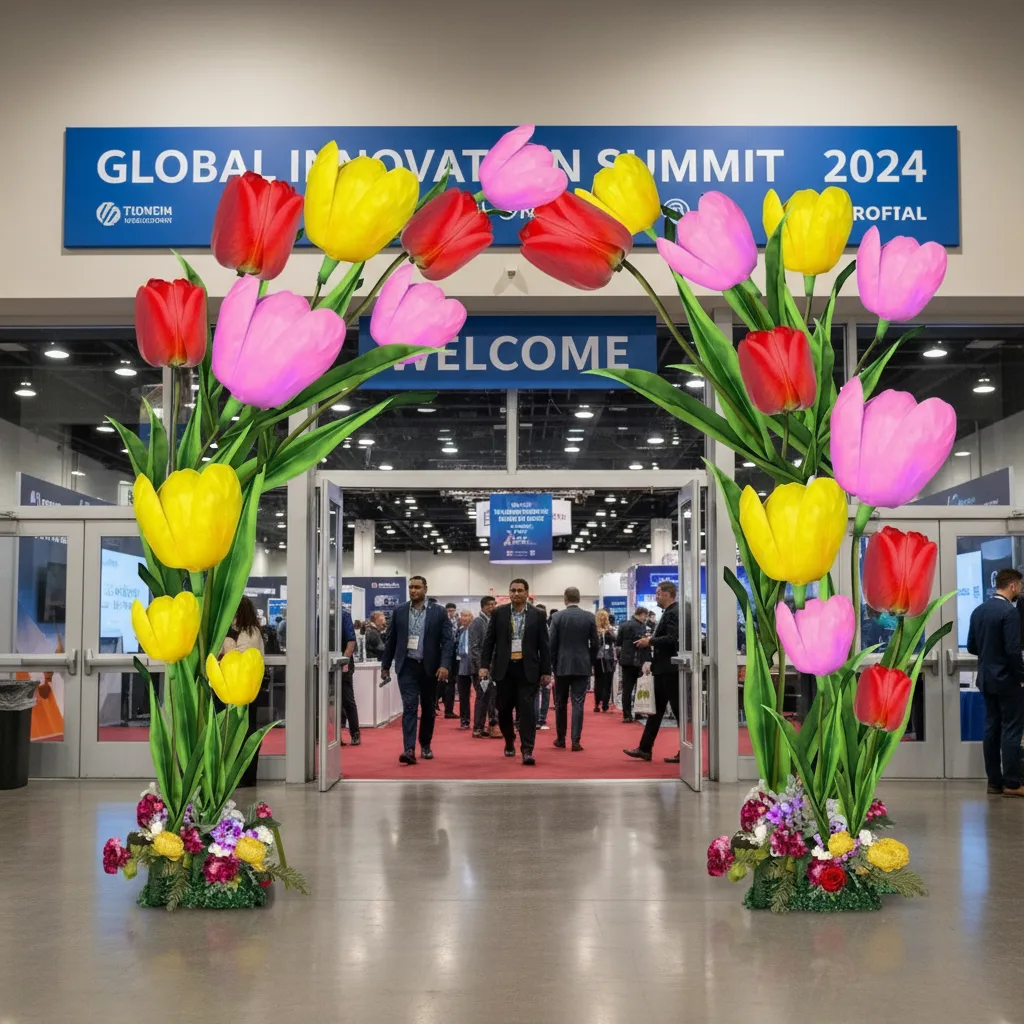
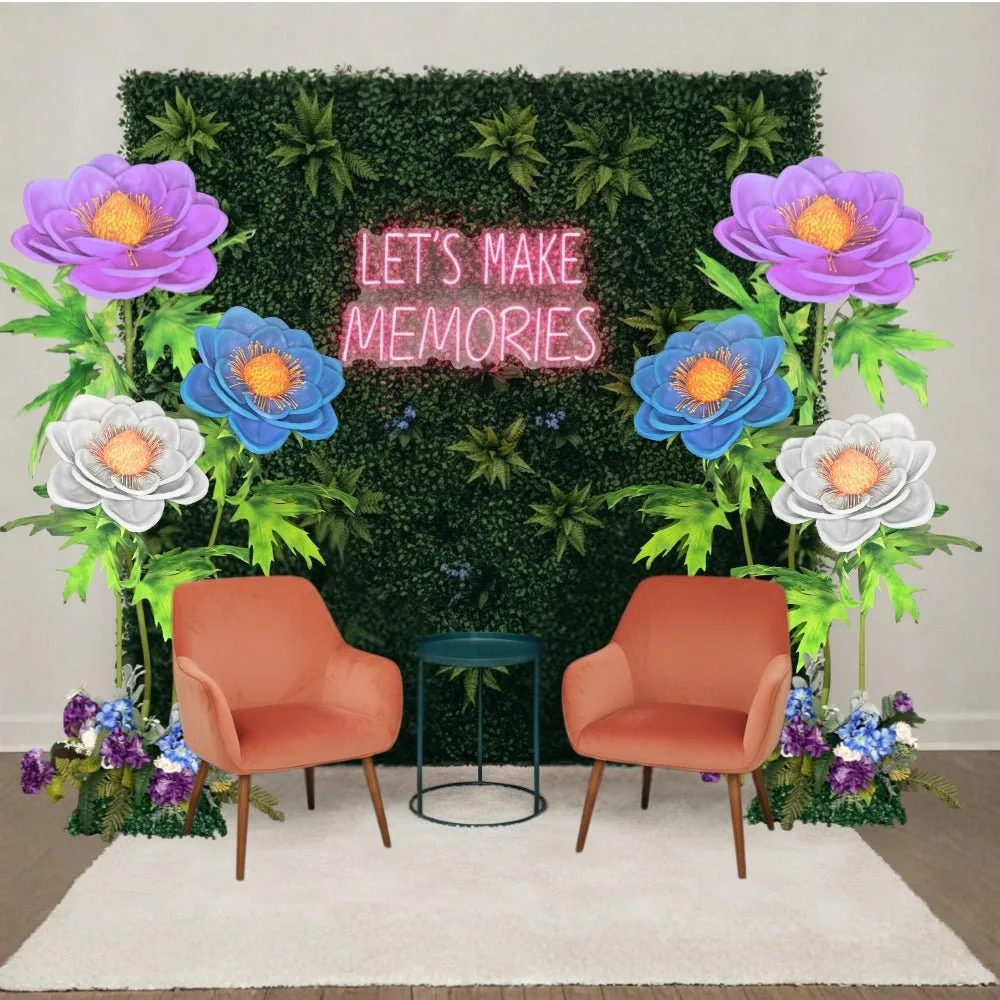
You’ve got a blank wall, a load-in window that feels too short, and a client who wants something guests will photograph the second they walk in. Or you’re staring at a retail display that needs to stop people in their tracks without turning into a maintenance headache by week two. That’s where wall decor paper flowers earn their place.

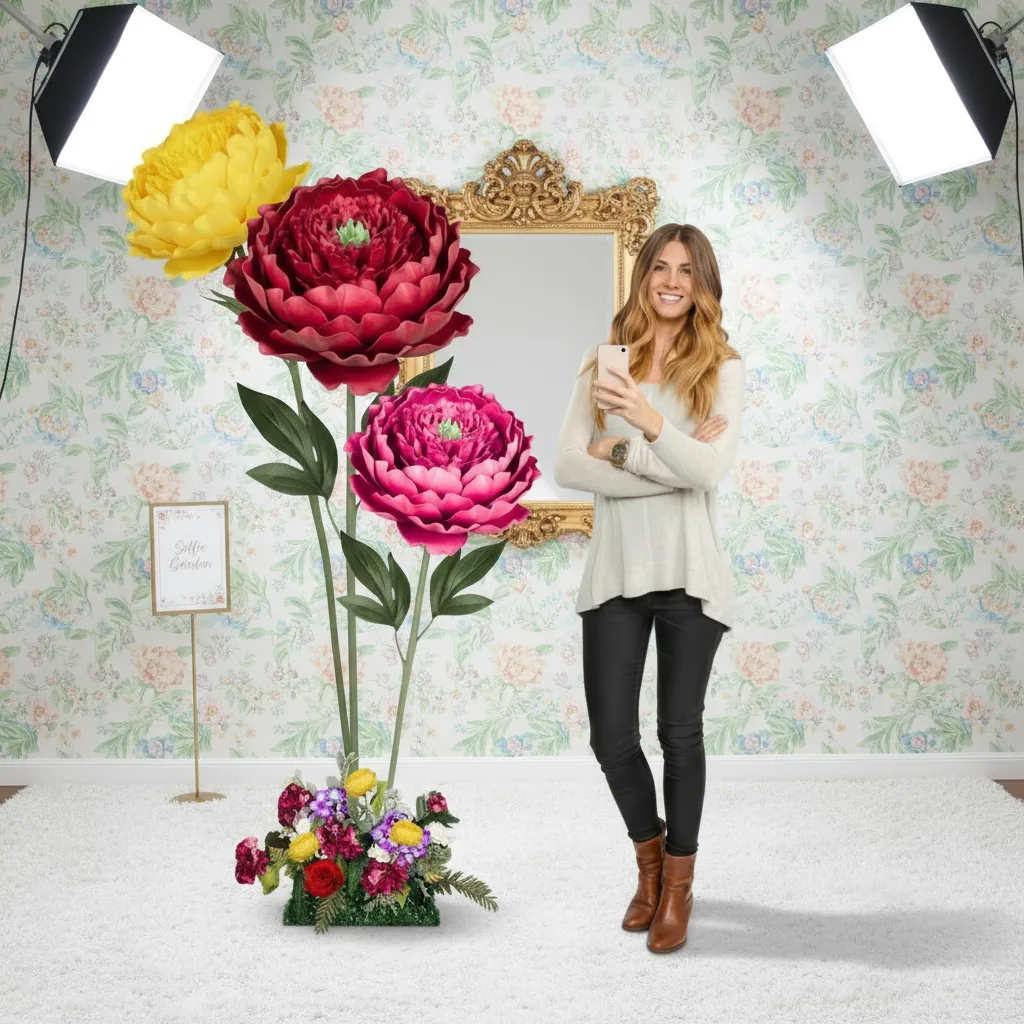
Used well, they’re not “crafty.” They’re architectural. They soften hard venues, fill vertical space fast, carry brand color beautifully, and give planners and merchandisers a way to create depth without relying on fresh florals that bruise, wilt, or demand constant replacement. They also scale surprisingly well, from a small selfie corner to a full statement wall.


The gap between a Pinterest idea and a successful installation is operational discipline. Material choice, sizing, mounting, transport, and reuse matter as much as color palette. The planners who get the best results treat paper florals like scenic elements, not tabletop accessories.

Paper flowers have moved far beyond nursery corners and home craft boards. In events and retail, they solve a real design problem. You need visual impact, repeatable results, and something that can be designed for a brand launch, gala, wedding, or seasonal installation without the fragility of fresh product.

That demand shows up in the market. The global artificial flower market, which includes paper flowers for decor, was valued at $2.1 billion in 2024 and is projected to reach $3.5 billion by 2033, with events and retail accounting for over 40% of demand, according to Accio’s paper flowers market analysis.

Why planners and marketers keep coming back to them

A strong paper flower wall does several jobs at once:

Paper flowers work best when you stop treating them like a substitute for fresh blooms and start treating them like a design system.


Some of the strongest use cases are practical, not sentimental:

The enduring appeal is simple. Wall decor paper flowers deliver presence. They can feel romantic, theatrical, polished, playful, or branded, depending on how you build them. That flexibility is why professionals keep them in the toolkit.


The material decides whether your flowers look polished at install time and still look polished after guests brush past them, lights warm up the room, and your crew has to strike the setup fast. Most failures start here. The wrong paper sags, tears, loses curl, or photographs flatter than expected.

Examples of paper flowers crafted from heavyweight cardstock, crepe paper, and vellum for wall decor projects.


Think of each option as serving a different job.

For professional-grade work, paper weight matters. Maison de Pax’s paper flower material guide notes that 118lb cardstock and above is needed to hold the curl and shape definition used in realistic rose and ranunculus petals, while 180 gsm Italian crepe paper offers superior durability and texture for high-end work.


If you’re comparing wall treatments more broadly, not every floral concept has to be fully dimensional. For flatter, faster decorative approaches, Quote My Wall's guide on wall stickers is useful because it helps clarify when decals make more sense than sculptural flowers.

Cardstock is the workhorse. It’s usually the safest choice when you need clean edges, dependable curling, and a consistent look across many flowers. If you’re building volume fast, it gives your team fewer surprises.


Crepe paper is the artist’s material. It’s excellent when the brief calls for softness and realism, but it needs a gentler environment and better handling discipline. I’d use it selectively on hero flowers or in lower-contact zones instead of making an entire high-traffic wall from delicate crepe.

EVA foam earns its keep when logistics are rough. If the flowers will travel, be rented, or installed by crews who need forgiving materials, foam reduces breakage and reshaping time.

  • Choose cardstock when: You need crisp, repeatable flowers for walls, stages, and retail.
  • Choose crepe when: The brief depends on nuance, texture, and close-up beauty.
  • Choose foam when: Reuse, resilience, and speed of reset matter most.

For a deeper look at matching materials to specific builds, this paper for flower arrangements guide is a practical companion.

Not every flower wall should try to look botanically exact.


Use layered petal forms, hand-shaped edges, and tonal color variation. Crepe paper and heavyweight cardstock both work, depending on how much realism versus durability you need.

In such designs, oversized petals, bold symmetry, and cleaner shapes win. Cardstock shines here because it behaves predictably and reads well from across the room.


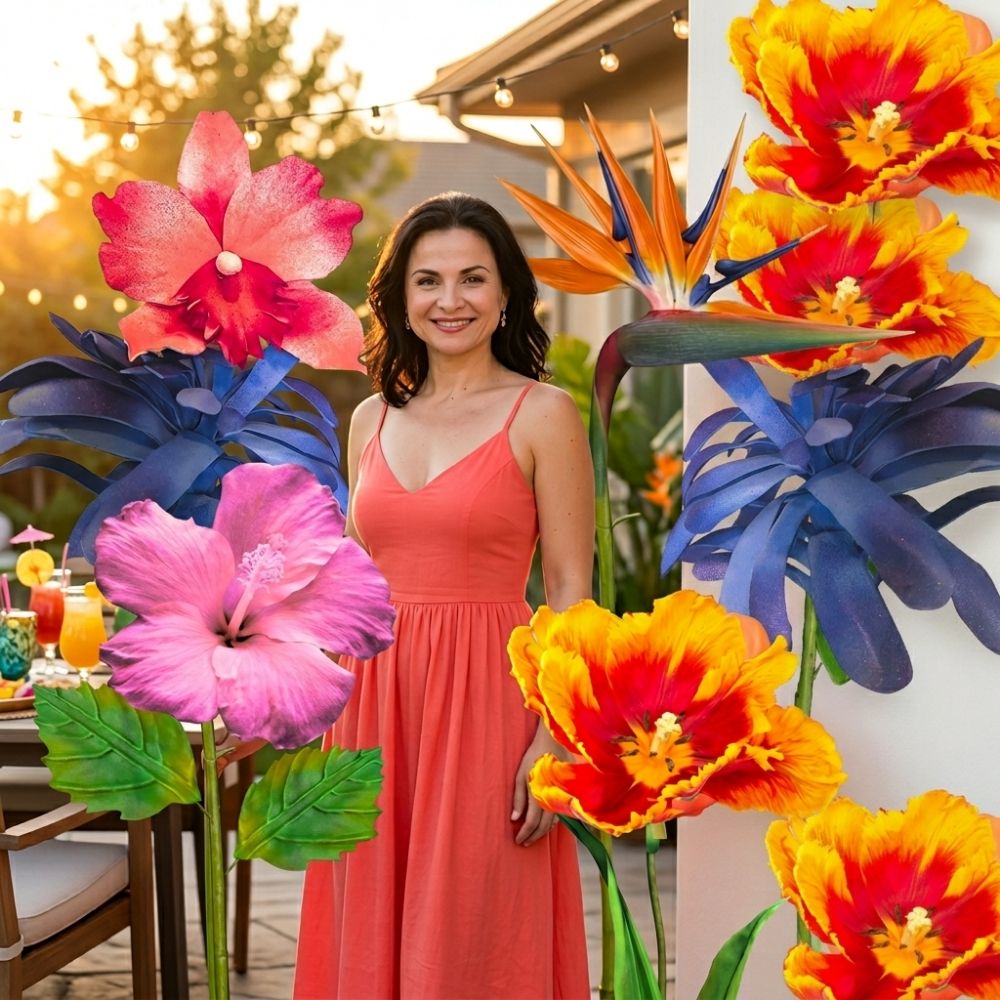
Think oversized blooms, unexpected palettes, metallics, iridescent finishes, or mixed fan rosettes. This style is forgiving and highly photogenic. It’s also excellent for events where the mood matters more than botanical accuracy.

Practical rule: Pick the style first, then the material. Teams often reverse that decision and end up forcing one material to do a job it wasn’t chosen for.


There are three realistic ways to bring wall decor paper flowers into a project. You can build from scratch, start with a kit, or commission a custom install. None of those paths is automatically better. The right one depends on timeline, skill, brand requirements, and how much uncertainty your team can absorb.

An infographic comparing DIY paper flower kits with custom ordered professional paper floral designs for decoration.


This path suits the person who enjoys prototyping, doesn’t mind trial and error, and has enough lead time to remake pieces that don’t work. It offers the most creative control, but it also creates the most hidden labor.

You’re sourcing paper, testing petal templates, deciding adhesives, working out bases, and figuring out installation mechanics yourself. That’s manageable for a passion project. It’s tougher when your event has fixed load-in, client approvals, and multiple vendors competing for setup space.

Best fit

  • Hands-on crafters: You like building and have patience for repetition.
  • Small events: The install size is modest and timelines are flexible.
  • Experimental concepts: You want to invent your own look.

Trade-offs

This is often the sweet spot for event pros who need stronger predictability without giving up the satisfaction of assembling it themselves. A good kit removes a huge amount of guesswork. The proportions are more reliable, the templates are already resolved, and you’re not spending your schedule hunting for compatible components.


A kit is especially useful when the result has to look polished but the budget or geography doesn’t support a full custom build. It also helps when multiple team members need to produce matching flowers without each interpreting the design differently.

A curated DIY giant foam flower kit collection is a helpful reference point for what this middle ground looks like in practice.


Event planners with lean teams You need a dependable decorative element that can be assembled in-house.

Balloon artists and stylists You want flowers that integrate cleanly into an existing backdrop or install package.


Marketing teams You need repeatable branded decor for activations, pop-ups, or internal events.

Custom is for projects where the flowers need to answer a bigger design brief. Brand color matching, exact dimensions, venue-specific engineering, travel planning, and professional installation all become part of the scope.

This path makes sense when the wall isn’t just decor. It’s a campaign asset, a hero photo moment, or a scenic piece tied to approvals and stakeholder expectations. In those cases, trying to save money by forcing DIY usually costs more in stress, revisions, and on-site fixes.

If the install has to satisfy legal, venue, branding, and timeline constraints at the same time, custom isn’t indulgent. It’s risk management.

Use this if you’re stuck between options:


No matter which route you choose, the same planning questions come up:

The mistake I see most is choosing based only on material cost. That ignores labor, rework, freight coordination, and install risk. For planners and retail teams, the best path is the one that gets the wall up cleanly, on schedule, and without last-minute improvisation.


A successful flower wall doesn’t start with making pretty blooms. It starts with composition. If scale is wrong, even well-made flowers feel amateur. If the layout is wrong, the wall looks scattered, heavy in one corner, or flat on camera.

A creative display of vibrant, colorful paper flowers and fan decorations arranged against a white background.


For a standard 8' x 8' backdrop, a professional composition uses 50 to 70 large flowers at 12 to 18 inches, 100 to 150 medium flowers at 8 to 10 inches, plus smaller filler blooms for cohesion and depth, according to Amazing Giant Flowers’ backdrop planning guide.

People should know where to look first. That’s what large flowers do. They anchor the eye. Medium flowers support that structure, and the smaller blooms stop the wall from feeling gappy or unfinished.

If every flower is roughly the same size, the whole installation reads as texture rather than design. Texture has its place, but most event backdrops need stronger visual leadership than that.

A simple composition framework

  1. Place your hero flowers first
    Use the largest blooms to establish direction and focal weight.

    Bridge with medium flowers
    These connect the large flowers and smooth out transitions.


    Fill deliberately
    Small flowers and accent pieces should close visual gaps, not crowd every inch.

    Not every wall should be symmetrical. In fact, many of the strongest installations use movement.


    A helpful visual reference for larger scenic builds is this oversized foam flower wall art guide, especially if you’re translating floral ideas into something more theatrical.

    Leave breathing room where the camera needs it. A flower wall packed edge to edge can look rich in person but busy in photos if there’s no visual pause.


    A wall can fail even with correct flower counts if the color placement is random. Professionals group tones intentionally. They either blend them gradually or block them clearly. What doesn’t work is accidental striping or spotty contrast with no rhythm.

    Monochrome layering
    Use one hue in multiple values for a refined, editorial look.


    Two-tone contrast
    Great for brand activations and retail moments where clarity matters.

    Ombre transitions
    Effective for weddings, spring launches, and soft immersive sets.


    Pair broad-petal flowers with tighter blooms. Add occasional fan elements or leaf shapes if the wall needs directional flow. If every outline is round and full, the composition can become visually muddy.

    These show up repeatedly in rushed installs:


    A good flower wall feels intentional before the first petal goes up. That’s why experienced teams sketch zones, mark hero placements, and work from distance as often as they work from close-up.

    Most paper flower disasters aren’t design failures. They’re mounting failures. The flowers looked good on the worktable, then started leaning, peeling, twisting, or dropping once they hit the wall. That’s not bad luck. It’s usually a mismatch between substrate, weight, and fastening method.


    A close-up view of a person securing a handmade paper flower decoration onto a wall.

    A temporary venue wall and a retail buildout wall are not the same problem. Treat them differently.


    Use removable, weight-rated adhesive options and spread the load rather than relying on one point of contact. Large flowers need stable bases so the petal face doesn’t torque forward.

    You can be more structural. If the display is staying up, use hardware that prioritizes security first and patching later.


    Build flowers onto lightweight backers where needed, then fasten those backers to the structure. This makes load distribution easier and strike faster.

    Before any flower goes up, handle these basics:


    For removable installs, the giant flower photo booth backdrop guide is useful because it frames the wall as a photo environment, not just a decoration.

    Some mounting systems are better for speed. Others are better for peace of mind.


    Weight-rated adhesive strips Best when the venue prohibits wall damage and the flower base is flat and stable.

    Wire and zip ties Strong choice for grids, frames, and pipe structures.


    Mounted foam or panel sections Good for modular builds that need to travel and reinstall efficiently.

    Wall anchors and mechanical supports Best for longer-term installs where absolute security matters more than quick removal.


    After you understand the mounting logic, seeing the sequence helps. This walkthrough is a solid reference for how crews handle build and placement in real time:

    The install should never be the moment you discover whether your flower bases are structurally sound. Test one full-size unit on the intended surface before production day.


    Three habits create most on-site trouble:

    Good crews think like stagehands. Every flower needs a secure attachment point, a known orientation, and a predictable way to remove or reset if the layout shifts.


    If a flower wall is built for one night and then crushed into random bins, it was never really designed as a reusable asset. That’s fine for some personal projects. It’s a poor habit for event planners, venues, and retail teams who need decor to keep earning value.

    The strongest business case for wall decor paper flowers is reuse. Trendir’s paper flower wall decor coverage cites event rental study data showing that sealed paper installations can last for 3 to 5 events, while unsealed flowers may last only 1 to 2. That difference changes how you budget, price rentals, and justify labor.


    A reusable install begins with decisions made before the flowers are ever mounted:

    If an installation is headed into repeated use, a protective finish can make sense. This Mod Podge and clear acrylic sealer guide is a practical reference for understanding when added protection is worth it.


    The enemy is compression. The second enemy is careless stacking.

    Use labeled bins by flower size Don’t mix giant focal flowers with small fillers.


    Add dividers or custom supports Cardboard spacers, shallow trays, and panel-based storage reduce crushing.

    Store upright when possible Some large flowers hold shape better when not laid face-down under weight.


    Keep them dry and out of direct light Moisture and prolonged sun exposure shorten the life of paper finishes.

    Reusability isn’t a bonus feature. It’s part of the return on the original labor.


    You don’t need an elaborate restoration process, but you do need routine handling standards.

    The difference between a wall that still looks premium on its next outing and one that looks tired usually comes down to post-event discipline. Strike slowly. Pack by category. Repair while the original layout is still fresh in your team’s mind.


    Planners, venue teams, and visual merchandisers usually ask better questions than hobby crafters because the risk is different. A flower wall at home can be imperfect. A flower wall at a gala, launch, or public-facing display has to survive traffic, schedule pressure, and scrutiny.

    Paper is flammable, so you should never assume a venue will allow untreated pieces. Mio Gallery’s wall paper flower overview notes that flame-retardant sprays can be applied for venues with strict fire-code requirements.

    The practical move is to ask the venue early what documentation or treatment standards they expect. Don’t wait until load-in. If your venue team or brand partnership manager is also coordinating gifted decor collaborations, a simple intake process like this gifted partnership opportunity can be a useful model for collecting requirements upfront, even though it’s from a different industry.

    How do you stop flowers from falling during the event

    Most failures come from insecure mounting, not from the flowers themselves. The fix is boring but reliable. Use proper wall anchors where permanent fastening is allowed, choose weight-rated adhesives for temporary installs, and test your largest units on the actual surface before event day.

    Don’t judge a mount by whether it holds for five minutes in the studio. Judge it by whether it still holds after transport, setup handling, heat, and room vibration.


    They underestimate scale. Flowers that looked huge on a table can disappear on a ballroom wall or retail facade. The second mistake is overfilling every inch and leaving no room for signage, products, or people.

    The wall has to work with the event or display, not swallow it.


    Use paper when the finish and hand-crafted look are central to the concept. Use foam when repeat use, transport resilience, and speed of reset matter more. Many professionals mix materials, using more delicate flowers in protected visual zones and tougher pieces where crews or guests are likely to make contact.

    That hybrid mindset usually produces better operational results than insisting on one material for everything.

    Can wall decor paper flowers work outdoors

    They can, but only with caution. Wind, humidity, uneven surfaces, and temperature swings all create problems. If the brief includes outdoor exposure, simplify the design, reduce delicate detailing, and use more durable materials and stronger structural support than you would indoors.

    A wall that’s perfect for a ballroom may be completely wrong for a festival entryway.


    Earlier than commonly assumed. The flowers themselves take time, but approvals, mockups, color decisions, packing logic, and install planning often take just as long. The larger the wall, the more important it is to lock the concept before production begins.

    Rushed flower walls usually show their stress in inconsistent sizing and weak installation prep.


    Focus your effort where the eye lands first.

    Invest in hero flowers Large focal blooms do the heavy lifting.


    Use color restraint Fewer tones often look more refined than too many.

    Build depth, not clutter Layer sizes and shapes instead of adding endless filler.


    Keep edges intentional Clean composition reads as premium.

    A prepared crew saves a shaky project. At minimum, bring:


    Layout reference Printed placement map or marked-up digital version

    Fastening backups Extra adhesive, wire, ties, and mounting components


    Repair kit Glue, cutters, spare petals, and touch-up materials

    Surface prep supplies Cloths and anything needed to make adhesive contact more reliable


    Step access Ladders or lifts matched to the wall height and venue rules

    Translate inspiration into production language. Ask what they love most about the image: color, density, size, shape, or mood. Then explain what’s feasible in their venue, under their timing, with their installation constraints.

    Clients usually respond well when you replace vague “that won’t work” language with practical alternatives that preserve the effect they want.

    The best flower wall presentations don’t just show beauty. They show how the beauty will be built, mounted, and managed.

    Are reusable installs worth it for one brand campaign

    Often, yes. Even if the original use is a single event, reusable construction gives you options. The wall can be repurposed for a showroom, internal content day, regional activation, or future launch with refreshed color accents or signage.

    That flexibility is one of the smartest reasons to choose wall decor paper flowers over more disposable scenic elements.


    If you want statement-scale floral decor that’s built for events, retail, and high-visibility photo moments, Amazing Giant Flowers offers handcrafted oversized installations and DIY kits designed to help planners, brands, and makers create polished results without the usual trial and error.

Ready to Create Something Amazing?

Browse our collection of giant flower kits and start your next project.

Shop All Flowers