Top 10 Wedding Backdrop Ideas for Reception in 2026
Key Takeaways
The reception opens, dinner wraps, and one area starts pulling people in without any signage. Guests line up for photos, your photographer keeps using the same angle, and the room suddenly feels polished or underwhelming based on that single setup. That area is the backdrop.
A reception backdrop has real work to do. It needs to finish the room, frame portraits cleanly, and hold attention after the first ten minutes. If it only looks good from one angle, or only works in bright daylight, it will disappoint in service.
Florals usually carry that visual weight, but scale, structure, and lighting decide whether the result reads custom or rental-grade. I have seen beautiful concepts fall flat because the flowers were too small for the ceiling height, the frame looked exposed in side shots, or the install took too long for a tight venue flip.
That is why this guide goes past inspiration photos. Each idea is built as a plan, with the real trade-offs, likely budget range, DIY versus hire considerations, and places where oversized paper florals from Amazing Giant Flowers can solve problems that fresh florals, drape, or standard props cannot. Couples who want a starting point before choosing a direction can also review these DIY wedding backdrop ideas.
Some backdrops photograph beautifully but eat half the decor budget. Others are affordable and portable, yet need stronger lighting or better placement to avoid looking sparse. The strongest choice is rarely the trendiest one. It is the one that fits your venue, setup window, guest flow, and photo priorities.
1. Giant Floral Wall Installation & Archway Combo
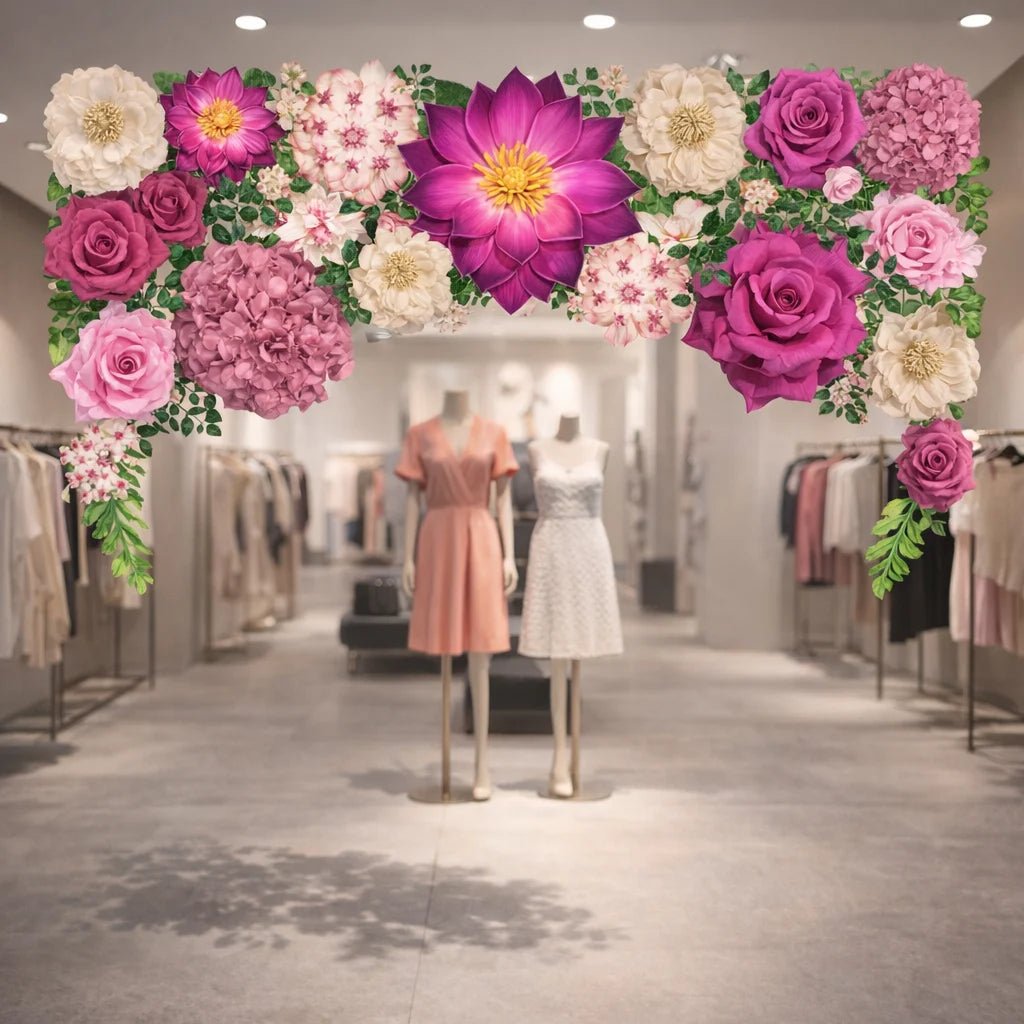
Guests walk from the ceremony into the reception, and the design either holds together or it doesn't. A giant floral wall with a coordinated archway solves that problem fast. It gives the day one visual language, so the ceremony entrance, cocktail photos, and reception focal point feel related instead of assembled from separate rental catalogs.
This format earns its budget when you need two high-visibility moments from one design concept. Ballrooms benefit because oversized florals fill vertical space that standard arrangements often miss. Outdoor venues benefit because an arch defines the ceremony area, then the wall takes over later in a spot with better lighting and cleaner photo angles.
Take a look at the scale this style can achieve:
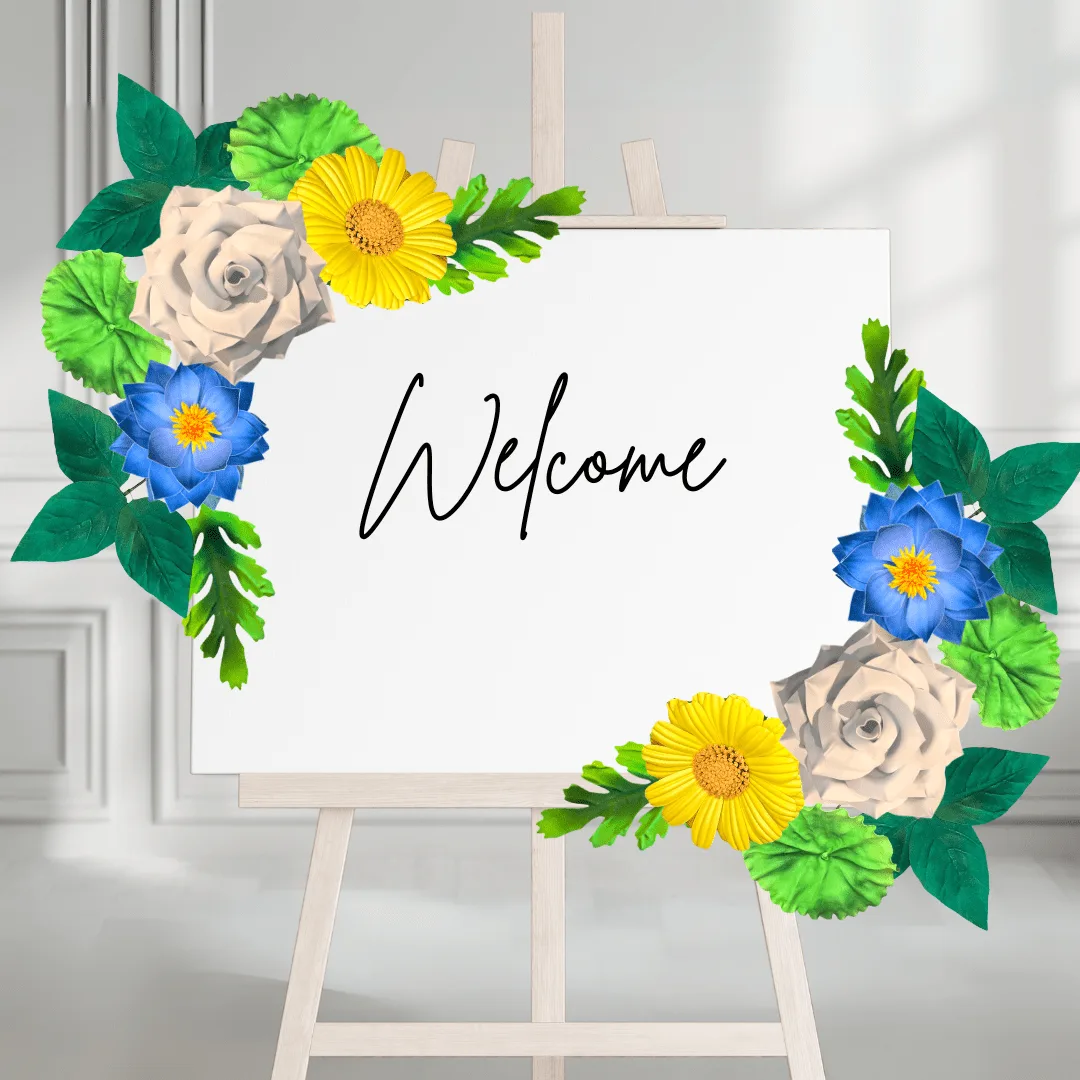
The strongest version is not a copy-and-paste match. It is a coordinated pair. The wall should carry the denser floral statement, while the arch stays more open so faces, vows, and aisle photos do not get visually crowded. If both pieces are equally packed, the room can start to feel heavy.
Design Rules That Actually Hold Up on the Day
I always tell couples: if the arch and wall do not share at least one flower shape, one color family, and one foliage style, they will read like two different events. That single rule eliminates most of the coordination problems I see in venue photos after the fact.
A modest paper-flower wall and arch combo can stay in the lower four-figure range — think $800 to $1,500 — if the palette is tight and the frame system is simple. Custom builds with layered florals, premium drape, lighting, and on-site installation climb quickly into the $3,000 to $6,000+ range. The biggest cost drivers are labor, coverage density, delivery distance, and whether the structures need to be freestanding in multiple locations.
DIY works best when the wall is the hero piece and the arch is kept structurally simple. Hiring out makes more sense when ceiling height, venue rules, or same-day room flips add pressure. I rarely recommend full DIY for a large combo if setup time is under two hours. Assembly always takes longer on site than it does in a garage test run.
Couples who want a clearer sense of scale and product mix can review this guide to a giant flower photo booth backdrop for weddings and compare it against their ceremony needs.
For couples comparing DIY and custom builds, DIY wedding backdrop ideas can help you gauge whether you want to make the wall yourself and hire out only the structural install.
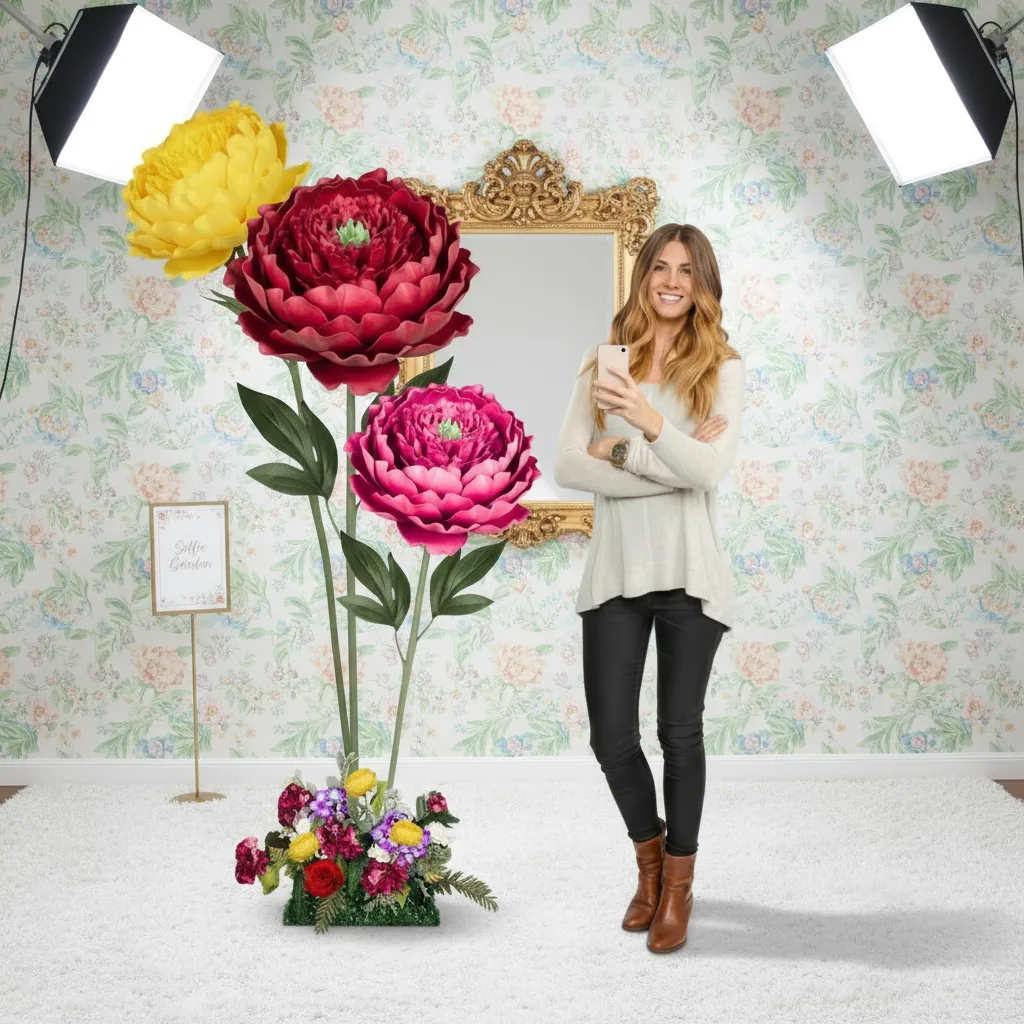
Some backdrops are meant to be admired from a distance. A selfie station is meant to be used. That difference matters enormously in how you plan the space, the lighting, and the prop selection. If you want guests to interact with the design instead of just glancing at it between speeches, build a dedicated photo area with that intention baked in from the start.
Giant flowers are especially strong here because they read immediately in photos. They don't need guests to understand floral design. People just know where to stand, where to smile, and what to post.
The broader market supports that instinct. The global photo booth market was projected to hit $1.2 billion by 2024, and floral backdrops are identified as the top choice for weddings in this photo booth industry roundup. That's useful because reception backdrops now do double duty as décor and guest entertainment.
How to Make It Feel Polished
A good selfie station needs more than flowers on a frame. It needs lighting, enough floor space for small groups of four to six people, and a clean camera angle that doesn't catch service doors, exit signs, or half-cleared dinner tables.
Mixed-height blooms help. Large roses or peonies at eye level — roughly 60 to 66 inches from the floor — with smaller clusters around the sides create depth and make both close-up selfies and full-body shots work. Add a simple sign, monogram, or custom phrase only if it supports the design. Too much text turns a wedding moment into a trade show booth.
For planners handling weddings with brand-style aesthetics or sponsored details, studying event backdrops for branding can help clarify where signage adds value and where it starts to dominate the floral design.
A selfie station should feel like part of the wedding, not a side activation someone rolled in after dessert. If you want a floral-first version instead of a generic photo booth shell, giant flower photo booth backdrop ideas show how oversized blooms can frame the station without making it feel cluttered.
This is the backdrop I recommend when a couple wants the room to feel expensive, not just pretty. Giant flowers alone create impact. Add draping and controlled lighting, and the backdrop starts shaping the mood of the whole reception.
Fabric softens edges and fills negative space. Lighting gives dimension. Florals provide the sculptural statement. When all three work together, photos look finished straight out of camera.
This style is strongest in venues with hard architecture. Think hotel ballrooms, industrial spaces, country clubs, and converted warehouses. Those rooms often need softness and depth. A single floral panel can get visually swallowed. Layered draping pushes the design forward into the room.
In the United States wedding decorations market, floral decorations held the largest product share in 2025, according to this wedding decorations market analysis. That matches what planners already know in practice. Flowers lead the visual language, but they look even better when fabric and light support them instead of competing with them.
Execution Details That Decide the Outcome
- Fabric choice: Chiffon and silk charmeuse catch light and move beautifully. Polyester satin can look flat and cheap under warm uplighting — test a swatch before committing.
- Drape depth: A minimum of two fabric layers creates the richness that reads on camera. One layer almost always looks thin.
- Lighting temperature: Warm white (2700K to 3000K) flatters skin tones and enhances blush, ivory, and gold palettes. Cool white (4000K+) works for modern, monochromatic, or jewel-toned designs.
- Flower placement: Cluster the largest blooms at the visual center and upper third of the backdrop — this is where the camera naturally frames couples during first dances and toasts.
If you're refining the lighting side, warm wedding lighting tips can help you avoid the common mistake of over-lighting the backdrop and under-lighting the people standing in front of it.
The most common failure here is treating lighting as the last step. It isn't. If the floral designer, drape installer, and lighting team aren't working from the same plan, the backdrop will look disconnected in person and on camera. Coordinate all three vendors from a single layout diagram before anyone arrives on site.
Some couples want symmetry. Others want movement. A tiered or cascading giant flower backdrop is for the second group. Instead of reading like a flat wall, it spills downward or sweeps across the frame, which creates motion even when nobody is standing in front of it.
This style suits romantic receptions, tented weddings, and garden-inspired spaces where the goal is softness with drama. It also works in modern venues if you keep the palette controlled and let the silhouette do the heavy lifting.
A cascade naturally guides the eye. That helps in photos because the arrangement leads attention toward the couple instead of sitting behind them like wallpaper. Done well, it feels editorial. Done poorly, it looks top-heavy and random.
Building a Cascade That Reads Intentionally
- Anchor point: Start the cascade from one upper corner or the center top — the eye needs a clear origin to follow the flow downward.
- Bloom sizing: Use your largest flowers (18 to 24 inches) at the top and transition to smaller blooms (8 to 12 inches) as the cascade descends — this mimics how natural growth reads.
- Negative space: Leave deliberate gaps in the lower third of the cascade so the design doesn't read as a solid wall that happens to slope.
- Ceiling clearance: You need at least 10 feet of ceiling height for a true cascade to read correctly — anything lower compresses the silhouette.
This approach also fits a larger shift toward distinctive floral moments. Many couples are embracing more unique wedding backdrop ideas for reception, including ombré and minimalist floral concepts. A cascading form gives you room to be expressive without requiring a full wall budget.
For makers exploring softer petal textures and draped floral forms, this large fabric flower tutorial is useful for understanding how material choice affects movement and drape.
What usually doesn't work is trying to force a cascade into a venue with low ceilings and no visual breathing room. If guests can't step back far enough to read the whole silhouette, the design loses its point entirely.
Ombré can look elegant or gimmicky. The difference is almost always restraint. When the gradient is smooth and the flower types support the transition, it feels custom. When the colors jump too abruptly, it feels like a craft project that didn't quite land.
This is one of the most effective wedding backdrop ideas for reception if the couple cares deeply about palette. It turns color itself into the design statement instead of using color as a supporting detail.
How to Keep Ombré Elegant
The cleanest gradients move through neighboring tones, not unrelated ones. Blush to rose to berry works. Ivory to sage to deeper green works. White to navy can work in a modern venue if the transition is carefully stepped and the lighting doesn't flatten the lighter shades.
This style also connects well with the documented appetite for custom backdrops that tell a personal story. If your wedding party attire, invitation suite, or florals already use a clear color progression, the backdrop can become the visual thread that ties everything together across the entire event.
For couples making EVA foam flowers, EVA foam painting guidance is one of the most useful resources because finish and shading determine whether the gradient looks luxe or flat. The biggest mistake is forgetting venue light — always test before you commit to a full build.
A backdrop should reflect the couple, not just the algorithm. Theme-specific floral builds work best when they pull from place, heritage, or family meaning in a way that feels integrated into the celebration rather than applied on top of it.
That might mean Texas bluebonnets for a ranch wedding, magnolia-inspired forms for a Southern venue, or a cherry-blossom influence for a spring celebration with Japanese design references. The strongest versions don't rely on stereotypes. They translate familiar motifs into a cohesive event design that guests recognize without it feeling like a costume.
The best cultural or regional backdrops use recognizable cues without becoming prop-heavy. A bluebonnet palette can shape the floral selection and color story without turning the entire backdrop into a themed display. Likewise, Mediterranean references might come through olive tones, airy structure, and a restrained floral mix rather than obvious icons.
This approach also suits current preferences for backdrops that tell a personal story through natural motifs and custom design. If the couple has roots in a region or wants to honor family tradition, the backdrop can carry that reference with more subtlety and permanence than table decor often can.
- Destination-style weddings at home: Useful when you want the setting to evoke a place without flying everyone there.
- Heritage-forward celebrations: Great when family tradition is part of the event narrative and the couple wants that story told visually.
- Venue-specific design: Helps connect the backdrop to local surroundings or the architecture of a meaningful location.
If you go this route, collect reference images from art, textiles, natural scenery, and family history — not just other weddings. That gives the designer far more to work with than "make it feel cultural," and it almost always produces something more original and personal.
This idea works because it gives guests something to do. A static backdrop can be beautiful, but handheld and wearable giant flower props turn the photo area into an activity. People loosen up faster when they have a prop to interact with — and the photos that result are almost always more joyful and varied than posed shots in front of a wall.
That makes this setup especially good for mixed-age guest lists, family-heavy receptions, and celebrations where not everyone wants to pose in the same formal way. It also helps if you know your crowd likes playful group photos but you still want the design to look elevated and intentional.
A giant bloom held at shoulder height, worn as a statement piece, or used by kids and grandparents alike creates movement in photos. It's less stiff than a line of people standing in front of a wall. The backdrop remains the anchor, but the props create variation shot after shot across the entire evening.
This concept is also one of the easiest ways to stretch a backdrop's use across the night. Early on, the setup reads as decor. Later, once the dance floor opens, the props make it genuinely interactive and keep guests returning to the area.
The downside is maintenance. Props walk away, get dropped, and drift onto dinner tables if nobody manages the station. If you love the concept but want to minimize operational fuss, keep the prop count tight and let the backdrop itself do most of the visual heavy lifting.
This is one of the richest looks you can build, but it's also one of the easiest to get wrong. Mixing living plants with oversized crafted flowers creates lush texture and realism, yet the line between "immersive garden" and "too much happening at once" is genuinely thin.
When it works, it feels layered and atmospheric. The live greenery gives freshness and organic depth. The giant flowers provide scale and theatricality that living plants alone often can't achieve at a reasonable cost.
Start with structure. Use living plants as the base texture, then place giant flowers where you want the eye to land. If every inch has equal intensity, the design becomes visual noise rather than a composed backdrop. The giant flowers need to earn their placement by sitting at natural focal points — eye level center, upper corners, and the zone directly behind where the couple will stand.
This approach aligns with the preference for natural motifs, greenery installations, and sustainable-feeling backdrop design that has grown steadily in the wedding market. It's particularly strong at conservatories, outdoor tents, resort lawns, and venues with built-in scenic views where the backdrop can feel like an extension of the surroundings.
For couples interested in mixing hand-built oversized blooms into a botanical setting, giant paper flower DIY guidance can help you understand scale and assembly before you commit to a full build.
If you want to broaden the planted side of the design, explore unique succulent aesthetics for ideas on adding textural greenery that doesn't overwhelm the floral statement.
This isn't the easiest DIY option, but it can be one of the most memorable if you keep the plant palette edited and let the giant flowers serve as focal punctuation rather than constant repetition across the entire surface.
9. Modular and Multi-Use Giant Flower Backdrop
This is the planner's backdrop — and honestly, one of my personal favorites to recommend. If your reception involves a room flip, a cocktail-hour move, an after-party shift, or more than one photo zone, modular design saves stress and increases value per dollar spent.
Instead of building one fixed installation, you create sections that can stand alone or combine into a larger composition. One cluster might frame the escort card display earlier in the evening. Later, those same pieces can regroup behind the band or near the dance floor for late-night photos.
A lot of reception décor gets locked into one location by weight, rigging, or drape attachments. Modular backdrops don't have that limitation. That makes them especially useful in venues where the event moves from one area to another, or where you want multiple guest photo moments without paying for completely separate installs.
- Panel sizing: Design each module to be no wider than 4 feet and no taller than 7 feet so two people can move and reposition a section without additional equipment.
- Connection system: Use zip ties, S-hooks, or clamp connectors that can be released and reattached in under five minutes per joint.
- Base stability: Each freestanding section needs a weighted base — sandbags work well outdoors, and weighted pipe-and-drape feet work indoors.
- Labeling: Mark each panel so the team moving pieces knows the intended configuration without guessing under time pressure.
The most successful modular systems are designed from the start to break apart cleanly. Trying to cut a fixed backdrop into movable sections at the last minute never looks intentional and almost always creates visible gaps or mismatched coverage in the final photos.
10. Monumental Sculptural Centerpiece Backdrop
Guests walk into the reception, stop for a beat, and immediately know where the visual center of the room is. That is the job of a monumental centerpiece backdrop. It acts like event architecture — not accessory décor — and it changes how every other element in the room is perceived.
This approach works best when the room can support real scale. Large ballrooms, resort spaces, museums, tented receptions with generous ceiling height, and modern industrial venues usually have the breathing room for it. In a smaller room, the same installation can crowd the floor plan, block service paths, and make guest tables feel secondary rather than intentional.
A single sculptural backdrop gives the budget a clear priority. Instead of spreading flowers, drape, and specialty builds across five average moments, the design creates one dominant focal point that anchors the head table, stage, dance floor, or cake display. I recommend this route when the couple wants a strong photo identity and the venue already has enough baseline character that every corner does not need decoration.
That trade-off matters. Monumental pieces photograph beautifully and help the room feel intentional, but they can absorb a meaningful share of the floral and fabrication
Ready to Create Something Amazing?
Browse our collection of giant flower kits and start your next project today.