White Flowers on Wall A Pro's How-To Guide for 2026

A white flower wall usually starts the same way. A planner needs a ceremony backdrop that won’t disappear in photos. A retailer wants a clean statement piece that feels premium without fighting the merchandise. A DIY crafter has a pinned inspiration board full of white blooms and no clear idea how many flowers, panels, or glue sticks the project takes.
The appeal is obvious. White flowers on wall installations brighten a space, read beautifully on camera, and fit almost any event style, from formal weddings to launch parties to branded selfie stations. The hard part is getting from “I want that look” to a finished wall that feels full, polished, and stable.
The difference between a backdrop that looks expensive and one that looks homemade usually comes down to a few practical decisions. Size. Density. Material. Assembly method. Install logistics. Storage after the event. Those trade-offs matter whether you’re ordering a custom installation or building your first kit on a worktable at home.
A strong white floral wall does more than fill blank space. It gives people a reason to stop, gather, and take photos. At weddings, it can anchor the ceremony and then double as the reception photo moment. At a retail launch, it softens hard architectural lines and gives the room a focal point that customers naturally gravitate toward. At festivals and brand activations, it becomes part set design and part social content engine.

White works because it’s flexible. It can feel romantic, editorial, modern, or classic depending on flower choice, density, and lighting. White flowers also carry strong symbolic weight. Thursd’s white flower trend coverage notes that in 2024, “Bright White” was named an official Thursd Floral Trend Color, reflecting a 25% surge in demand for pristine white blooms in commercial installations, which can increase retail dwell time by up to 30%.
Where white walls perform best
Some of the best uses are straightforward:
A lot of readers come to this project feeling stuck between inspiration and execution. That’s normal. A wall can look effortless in the finished photos and still require serious planning behind the scenes.
Practical rule: If the wall needs to look good from six feet away and in tight portrait shots, treat it like a build project, not a craft project.
For planners who need examples of how floral installations work in commercial settings, this commercial floral portfolio is useful for seeing how white walls shift across retail, events, and branded environments without losing that clean visual impact.
The intimidation usually comes from one false assumption. People think the challenge is making flowers. It isn’t. The challenge is building coverage. Once you understand scale, panel structure, and bloom density, the process gets much easier to manage.
That’s why the best approach is to make the wall decisions in the same order professionals do. Start with purpose. Then size. Then medium. Then assembly. Then install.
Planning saves money, time, and rework. Most flower wall mistakes happen before a single bloom is attached. The wall is either too small for the space, too sparse for photography, or too ambitious for the install window.
Ask one question first. Is this wall for the room or for the camera?
If it’s for the room, think about visual balance. A ceremony backdrop behind a sweetheart table needs enough width and height to feel intentional from across the venue. If it’s for the camera, the priority changes. You want enough coverage for head-to-toe guest photos, plus edge coverage so nobody crops into unfinished corners.
A simple way to decide:
- Define the use case: Ceremony, step-and-repeat, retail display, stage backdrop, or content corner.
- Measure the footprint: Record wall width, available height, and any obstacles like outlets, molding, or signage.
- Decide orientation: Vertical walls feel formal. Wider walls feel more immersive.
- Account for surroundings: White walls need contrast. Dark drape, greenery, flooring, or signage all affect the final look.
Use the math early
For a standard photo-ready wall, Mayesh’s flower wall planning guide states that a 5x8-foot wall needs approximately 1,800 to 1,900 standard-sized 2-inch white roses to achieve a dense, professional look suitable for photography. That same source notes that the quantity scales with area and changes with bloom size.
That’s the planning number that removes guesswork.
Here’s the practical takeaway in a quick reference table:
Problems often arise in DIY builds. People count flowers but don’t plan how tightly those flowers have to sit. White is unforgiving. Gaps show fast. A mixed white palette can help hide seams, but only if the overall density is there.
Use a planning sheet with:
- Finished dimensions
- Panel breakdown
- Flower type by zone
- Edge treatment
- Mounting method
- Transport plan
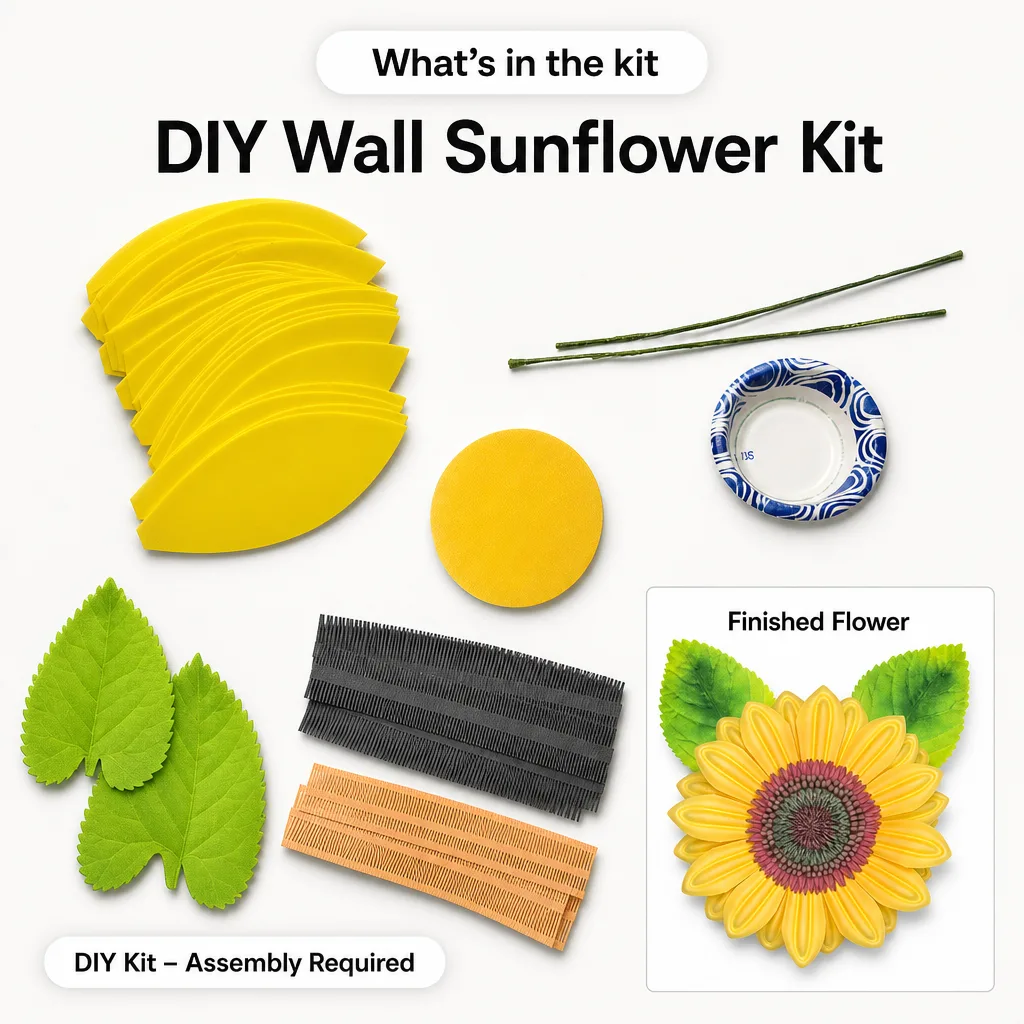
If you’re buying a kit instead of sourcing every part separately, these wall flower kits can shorten the planning phase because the flower type, format, and structure are already more controlled.
Draw the wall to scale before you buy supplies. A rough sketch catches proportion problems that measurements alone won’t.
Tape the wall dimensions out on the floor or use a digital mockup. Then test your focal area. If the logo, couple, or product feature sits dead center, don’t crowd that space with oversized blooms. If the wall is meant for shoulder-up portraits, concentrate the richest texture in the upper middle rather than spreading premium flowers evenly everywhere.
Professionals don’t plan by flower count alone. They plan by what the camera will see first.
The biggest decision isn’t white rose versus hydrangea. It’s fresh flowers versus EVA foam. Both can produce a beautiful white flowers on wall installation, but they solve very different problems.

Fresh walls have a specific appeal that’s hard to fake. The texture is naturally irregular, the petal variation looks rich up close, and if scent matters to the event, fresh flowers bring that extra sensory layer.
Fresh usually makes sense when:
- The event is short and premium-focused
- The client wants natural fragrance
- The install is same-day
- The budget allows for one-time use
- The design team can hydrate and manage the wall onsite
The trade-off is control. Fresh flowers are more vulnerable to heat, handling, timing, and venue conditions. White blooms especially can bruise, brown, or lose their crisp look faster than people expect.
EVA foam is the workhorse option for repeated use, shipping, and controlled styling. It’s the better fit when the wall needs to travel, install quickly, or survive more than one event. It also gives you consistency. If you need a certain white tone, petal shape, or brand-led look across several activations, foam is easier to standardize.
EVA foam usually fits best when:
For crafters and production teams exploring materials, EVA foam floral supplies are useful because they let you control flower shape and wall style without relying on fresh product availability.
If the wall has to survive transport, setup, guest traffic, breakdown, and storage, foam usually wins on logistics even when fresh wins on romance.
For a luxury wedding with one appearance window, fresh can be the right call. For a retail display, content studio, branded tour, or repeat rental inventory, EVA foam is often the smarter build. The mistake is choosing material for the mood board instead of the operating conditions.
That’s the decision professionals make first. Not what looks good in a close-up. What will still look good after delivery, handling, and lights are on.
A polished wall comes from a repeatable process. The flowers matter, but the backing, spacing, and glue technique matter just as much. If you’re building with EVA foam or another artificial flower format, treat the wall like scenic fabrication.

What to gather before you start
You want all tools in reach before the first flower goes down. Stopping halfway to solve a supply problem usually creates uneven density and rushed decisions.
Keep this setup list tight:
If you want guided instruction instead of figuring out the sequence alone, the Flower Craft Academy is a practical learning resource for makers who want more structure around floral builds and foam techniques.
Don’t begin with flowers. Begin with structure.
Cut and prepare the panel to your final dimensions, or work in modular sections if the wall needs to move through doors, elevators, or loading docks. Mark the center line and outer edges. On white walls, edge planning is critical because unfinished borders stand out immediately in photos.
Then decide your focal zone. Most successful walls have a visual center where the flower pattern is richest or slightly larger in scale.
Start in the middle and build outward. That keeps the texture balanced and prevents all the best flowers from ending up on one side.
According to this white flower wall assembly guide, a lush, photogenic wall should aim for 30 to 50+ blooms per square foot. The same source warns that a common DIY pitfall is using too little hot glue or overheating it, which can melt petals and leads to a 15 to 20% failure rate in first-time projects.
That density range is the difference between a professional wall and a flat one.
Try this sequence:
Place the hero flowers first
Set your largest or most detailed blooms in the center and upper third.Fill secondary spacing
Add medium blooms around those anchors to establish rhythm.
Close visible holes
Use smaller flowers and filler to break up backing visibility.Step back often
Look at the wall from straight on and from an angle. White can look full up close and still photograph thin.
Use enough adhesive to secure the bloom, but don’t flood the base. Overgluing creates mess, visible strings, and pressure points that can distort petals. Heat is another issue. If the glue is too hot or applied too heavily, delicate artificial petals can warp.
A short visual walkthrough helps if you’re a hands-on learner:
Finishing details that change the result
These are the small choices that improve the final wall fast:
A beautiful build is usually less about artistic genius and more about patience. Dense coverage, balanced placement, and careful glue work are what get you there.
A flower wall can be built perfectly and still fail onsite if the install plan is weak. This stage is where timing, safety, and styling all meet. The wall has to go up cleanly, stay secure, and photograph the way you intended.
The best mounting option depends on the venue, not your personal preference. Hotels, ballrooms, retail spaces, and outdoor setups all have different rules.
Common methods include:
Flexco’s wallflower installation information notes that using pre-made modular floral panels, such as 23.6 x 15.7 inch panels, can lead to a 95% success rate for installations under two hours. The same source warns that uneven gluing leads to a 30% rework rate for DIYers.
That tracks with what installers see in practice. The wall itself might be beautiful, but uneven panel surfaces, loose flowers, and rushed edge repairs can slow an install more than the actual mounting.
Do a venue reality check
Before load-in, confirm these points:
A short preflight checklist prevents frantic fixes in formalwear.
A stable wall that installs cleanly is more valuable than a larger wall that needs emergency repairs on the floor.
White flowers need intentional lighting. Without it, they can flatten out or blow out in photos. The goal is soft dimension, not harsh brightness.
Three styling moves work consistently well:
Once the base wall is installed, a few additions can tailor it to the event:
Keep add-ons selective. If everything competes for attention, the flowers lose their visual authority. White walls look strongest when the styling gives them one clear role.
The event ends. The practical questions start. Where does the wall go, how do you store it, and was the build method worth it in the first place?
That part gets skipped in most flower wall content, but it matters. Once Upon a Blossom’s flower wall collection page identifies a key pain point for event planners: there’s very little accessible information about the durability and maintenance of flower walls in high-traffic commercial spaces, even though that’s a critical factor when calculating ROI for multi-week installations.
A wall is rarely just a decor decision. It’s an operations decision.
For planners and brands, the core value question usually looks like this:
- Is this a one-time showpiece or a reusable asset
- Does it need to travel
- Will it live in storage between uses
- Can your team clean and pack it properly
- Will you use the same structure again with new signage or styling
Fresh walls usually end their story at breakdown. Foam walls keep going, but only if they’re packed and maintained properly.
Storage and maintenance habits that help
For reusable white walls, cleanliness is everything. White shows dust, scuffs, and crushed petals faster than darker palettes.
Keep these habits in place:
- Bag panels after each use: Protect from dust and rubbing during transit.
- Store upright when possible: Pressure from stacking can flatten flowers.
- Clean lightly before repacking: Don’t leave venue residue sitting on white petals.
- Label panel order: Faster reinstall, less guesswork, less handling.
Protective storage matters enough that dedicated clear plastic storage bags for giant flowers are worth considering if you plan to reuse floral panels or oversized blooms repeatedly.
Budget decisions that age well
The cheapest option on event day isn’t always the cheapest over the life of the piece. If the wall is likely to be used again for a showroom, pop-up, festival, content set, or another wedding season, build decisions should reflect that from the start.
Good logistics remove pain points people usually accept as normal:
- flowers shedding during load-out
- panels arriving scuffed
- uncertain repacking
- no storage plan
- walls that looked good once and never again
The smartest white flowers on wall projects are the ones that look strong in the room and still make sense after breakdown.
If you want a white flower wall that looks polished from the first mockup to final install, Amazing Giant Flowers offers custom statement floral builds and DIY supplies designed for weddings, retail displays, activations, festivals, and creative makers. You can request a custom quote for a made-to-measure installation or shop kits and materials for your own build.
Ready to Create Something Amazing?
Browse our collection of giant flower kits and start your next project.
Shop All Flowers