Bendable Pipe for Fall Garland & Harvest Displays
If you've ever tried to do a fall garland DIY and ended up with something that looked flat, stiff, or just… sad — I have been there. Like, fully there. Droopy garland taped to a mantel, leaves falling off, the whole disaster. It wasn't until I started using bendable pipes as the structural backbone of my seasonal displays that everything changed. Suddenly my garlands had shape. They curved. They swooped. They looked intentional.
If you're a seasonal decorator — whether you're doing fall harvest tablescapes, Halloween installations, Thanksgiving centerpieces, or full-on autumn event styling — this post is specifically for you. Because the secret to a display that stops people in their tracks isn't just the flowers or the foliage. It's the structure underneath.
I'm going to walk you through exactly how bendable pipes work, why they're a game-changer for curved seasonal runs, and how to use them in ways that'll make your fall setups look seriously professional. Let's get into it.
Key Takeaways
Ok, let me ask you something. Have you ever walked into a space and immediately felt like the decor was alive? Like it had movement and energy? Nine times out of ten, that feeling comes from curves.
Straight lines are fine. But a swooping garland that follows the arc of a doorway, or a harvest display that cascades down a staircase in a gentle S-curve — that's what makes people pull out their phones and take photos.
The Problem With Traditional Garland Supports
Most decorators are working with zip ties, floral wire, or rigid dowels. And those materials fight you every step of the way. They don't hold curves. They spring back. They require constant re-pinning.
I've watched so many talented decorators spend two hours fighting a garland that just. Won't. Stay. And it's not their fault — it's the materials.
Our bendable pipes are designed to bend to any angle and hold that position. You shape them once, and they stay. That means you can create a perfect crescent swoop for a mantel, a dramatic arch for a harvest ceremony backdrop, or a gentle wave for a long table runner — and it'll look exactly that way when guests arrive three hours later.
Fair question — especially if you're new to giant flower construction or structural event decor. Let me break this down.
Bendable pipes are flexible structural stems — think of them as the spine of your display. They're made to be manipulated by hand into whatever shape you need, and then they hold that shape firmly once positioned.
Floral wire is thin, springy, and has a memory — it wants to go back to straight. Bendable pipes are thicker, more substantial, and designed to stay where you put them. They support real weight. That means you can attach full EVA foam flower heads, clusters of faux foliage, pumpkins, gourds, whatever your fall heart desires.
You start by shaping the pipe into your desired curve or run. Then you layer your seasonal elements — flowers, leaves, berries, dried botanicals — directly onto the pipe structure. For freestanding setups, you can anchor the pipe into our freestanding flower kits for a completely self-supporting installation.
And here's the part I love most: when the season changes, you reshape the pipe. Same pipe, totally different display. Halloween becomes Thanksgiving becomes Christmas. Your investment multiplies.
Fall Garland DIY: 5 Curved Seasonal Runs You Can Build Right Now
This is where it gets really fun. I want to give you actual, specific display ideas so you can picture exactly how bendable pipes fit into your fall decor workflow.
Bend a single pipe into a gentle crescent — higher in the center, dipping toward each end. Anchor it to your mantel with Command strips or floral tape. Then layer on giant EVA foam dahlias in burnt orange and deep burgundy, interspersed with real or faux dried eucalyptus. Stunning. Takes about 45 minutes.
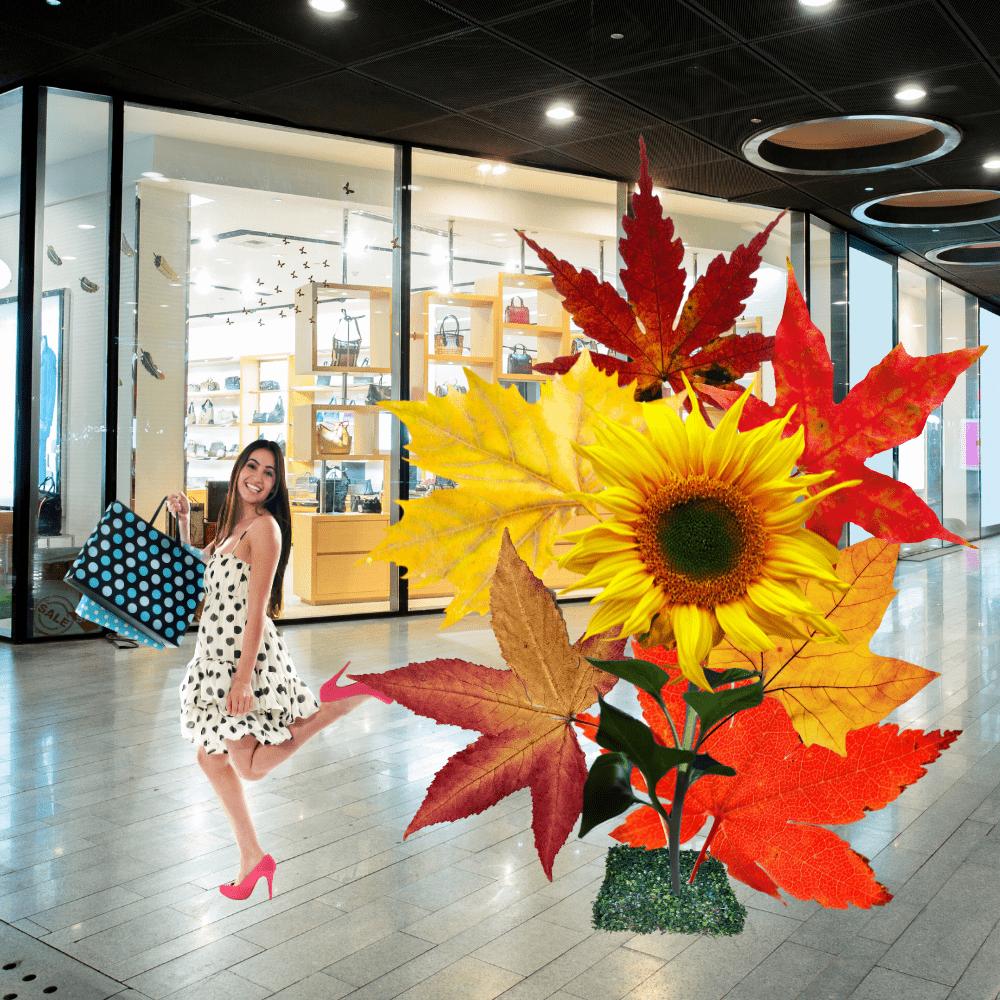
This one is my personal favorite for fall events. Use multiple pipe sections connected together to create a long, flowing run down a staircase banister. Bend each section slightly differently so the whole thing has a natural, organic wave. Add giant sunflowers, maple leaf clusters, and mini pumpkin accents.
Bend two pipes into matching arcs and connect them at the top to form a full arch. Anchor into freestanding bases. This is incredible for fall wedding ceremonies, harvest festivals, or farm-to-table dinner events. If you want more arch inspiration, check out our guide to Giant Flower Wedding Arch: A Complete Guide for 2026.
Lay a pipe along the center of a long banquet table, bending it into a gentle S-curve. Build your floral arrangement on top of the pipe structure — it keeps everything elevated and dimensional instead of flat. Way more interesting than a straight centerpiece line.
Bend a pipe into a half-moon shape and mount it above a doorframe. Let the ends hang down slightly on each side. Layer with fall foliage, giant blooms, and trailing vines. Every single person who walks through that door will comment on it. Guaranteed.
💡 Pro Tip
When planning a curved seasonal run longer than 4 feet, use two or more pipes connected end-to-end rather than trying to stretch one. This gives you more control over the curve at each section and makes the whole display easier to transport and set up on-site.
Real talk? The pipe is only as good as what you pair it with. So let me walk you through what I actually recommend for fall seasonal builds.
EVA foam is my absolute go-to for fall displays. It's lightweight, durable, and weather-resistant — which matters a lot when you're doing outdoor harvest festivals or events where things might get bumped around.
The best fall flower choices in EVA foam? Giant dahlias in rust and terracotta. Oversized sunflowers. Big, dramatic chrysanthemums. They attach beautifully to bendable pipes and hold up all day without wilting or drooping.
Want to see how to actually make these? Our Large Fabric Flower Tutorial walks through the whole process — it's a great companion read to this post.
Foliage, Botanicals, and Texture Layers
Bendable pipes work with more than just flowers. Here's what I love adding for fall:
- Dried pampas grass: adds that wispy, romantic fall texture
- Faux maple leaves: available in gorgeous fall color palettes
- Berry clusters: deep red or burgundy, incredible for depth
- Mini pumpkins and gourds: can be wired directly onto the pipe structure
- Dried cotton stems: beautiful neutral filler that photographs incredibly well
Anchoring Options by Display Type
- Mantel or wall: Command strips, floral wire, zip ties to existing structures
- Freestanding: Our freestanding flower kits — designed specifically for this
- Table: Floral foam blocks or weighted bases at each end of the pipe
- Arch: PVC base pipes sunk into buckets of sand or concrete for outdoor stability
Bendable Pipe vs. Other Structural Options: A Real Comparison
I know some of you are weighing your options. So let me just lay it all out in one place.
| Material | Holds Curves? | Reusable? | Supports Weight? | Reshapeable? | Best For |
|---|---|---|---|---|---|
| Bendable Pipes | ✅ Yes — holds firmly | ✅ Season after season | ✅ Heavy foam flowers | ✅ Bend and rebend | Arches, garlands, table runs, freestanding |
| Floral Wire | ⚠️ Springs back | ⚠️ Limited | ❌ Light items only | ⚠️ Weakens over time | Small fresh floral work |
| Rigid Dowels | ❌ No curves | ✅ Yes | ✅ Moderate weight | ❌ Fixed shape | Straight vertical stems only |
| Chicken Wire | ⚠️ Rough approximation | ⚠️ Gets damaged | ⚠️ Bulky | ❌ Hard to reshape cleanly | Rustic/loose filler structures |
| Zip Ties + PVC | ⚠️ Preset curves only | ✅ Yes | ✅ Heavy loads | ❌ Requires rebuilding | Large fixed arch structures |
Honestly? For seasonal decorators who need flexibility across multiple events and holidays, bendable pipes win every single time. The reusability alone pays for itself within your first two seasons.
🌸 Ready to build your fall display?
Browse our Bendable Pipes collection and grab the structural stems that'll make your harvest season unforgettable.
Planning Your Fall Garland DIY: A Step-by-Step Workflow
Let me walk you through how I actually plan and build a curved seasonal run from scratch. This is the process I use for client events, and it works just as well for home decorators.
Step 1: Measure Your Space
Before you buy anything, measure the run you're decorating. Mantel width. Staircase length. Doorway height. Write it down. You need to know how many pipe sections you'll need and how to connect them.
Step 2: Sketch Your Curve
Seriously — even a rough pencil sketch helps. Draw the silhouette of the curve you want. Is it a single swoop? An S-curve? A full arch? This sketch becomes your bending guide when you're working with the pipe.
Step 3: Bend and Test Before You Decorate
Bend your pipe into shape and hold it in position in the actual space before you attach a single flower. Adjust until the curve looks exactly right. This saves so much time — trust me on this one.
Step 4: Anchor First, Decorate Second
Get your pipe secured before you start layering. Whether that's into a freestanding base, mounted to a wall, or zip-tied to a railing — anchor first. Decorating a floating, unsecured pipe is a recipe for frustration.
Step 5: Build from Largest to Smallest
Attach your biggest flower heads first. Then medium foliage clusters. Then small filler elements like berries and dried grasses. This layering approach gives you that full, lush look without things feeling cluttered or chaotic.
💡 Pro Tip
For a cohesive fall color story, stick to a 3-color palette maximum: one dominant (like burnt orange), one secondary (like deep burgundy), and one neutral (like cream or
Ready to Create Something Amazing?
Browse our collection of giant flower kits and start your next project today.