One Bendable Stem, Infinite Shapes: Arches, Hanging Blooms & Beyond
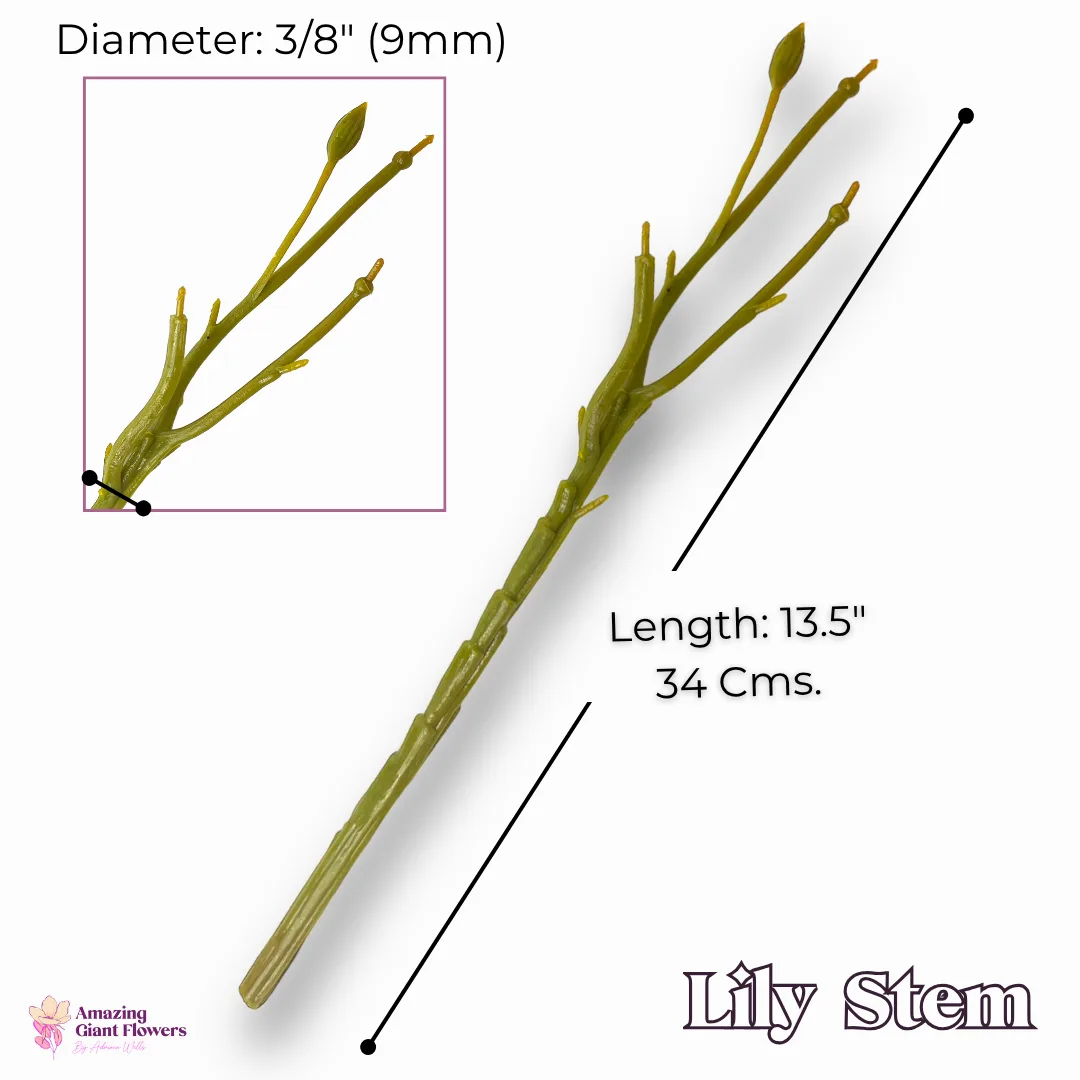
If you've ever wrestled a rigid wire stem into a shape it absolutely did not want to hold — only to watch it spring back the second you let go — then you already know why a quality bendable flower stem is basically a game-changer. I'm not exaggerating. The first time I used a properly flexible pipe for a giant flower installation, I stood back and thought, why did I waste so much time fighting with everything else?
Whether you're a florist building a dreamy ceremony arch or a DIY installer putting together a freestanding display for a corporate event, the stem is everything. It's the skeleton. It's what makes your blooms stand at exactly the right angle, cascade exactly the way you envisioned, or hang from a ceiling without a single wobble. Get the stem right, and the whole design clicks into place.
Key Takeaways
Most people obsess over petal color, bloom size, and finish — and those things absolutely matter. But I've seen stunning flowers completely ruined by a stem that couldn't hold its position through a four-hour reception. The stem is the unsung hero of every installation I build.
Think of it this way: your bloom is the performance, but the stem is the stage. If the stage wobbles, nobody's watching the performance anymore.
Let me be honest about what most crafters start with: floral wire, wooden dowels, PVC pipe, or whatever's at the hardware store. I've tried all of it. And for small arrangements? Some of that stuff works fine.
But the moment you scale up to giant flowers — we're talking blooms that are 18, 24, even 36 inches across — those materials fall apart fast. Floral wire buckles under the weight. Dowels snap. PVC doesn't hold a curve without heat. And none of them give you the on-the-spot adjustability you need when you're setting up in a venue you've never been in before.
The Core Difference: Shape Memory + Structural Strength
A true bendable pipe has shape memory. You bend it, it holds. You re-bend it, it holds that too. It's not fighting you. The internal structure is designed to flex without kinking, which means you get smooth, intentional curves instead of sharp, awkward angles.
That's the part that changes how you design. When your stem actually cooperates, you stop working around your materials and start designing freely.
A giant EVA foam flower can weigh anywhere from a few ounces to over a pound depending on size and petal layers. Your stem needs to carry that weight at an angle — sometimes nearly horizontal — without drooping over the course of a 6-hour event. Bendable pipes designed for this application are built differently than craft wire or cheap flexible tubing.
If you're curious about the foam flowers themselves, I've written a full breakdown in A Crafter's Guide to Every Type of Foam for Giant Flowers — it'll help you understand why the stem-to-flower relationship matters so much.
Bendable Flower Stem vs. Everything Else: An Honest Comparison
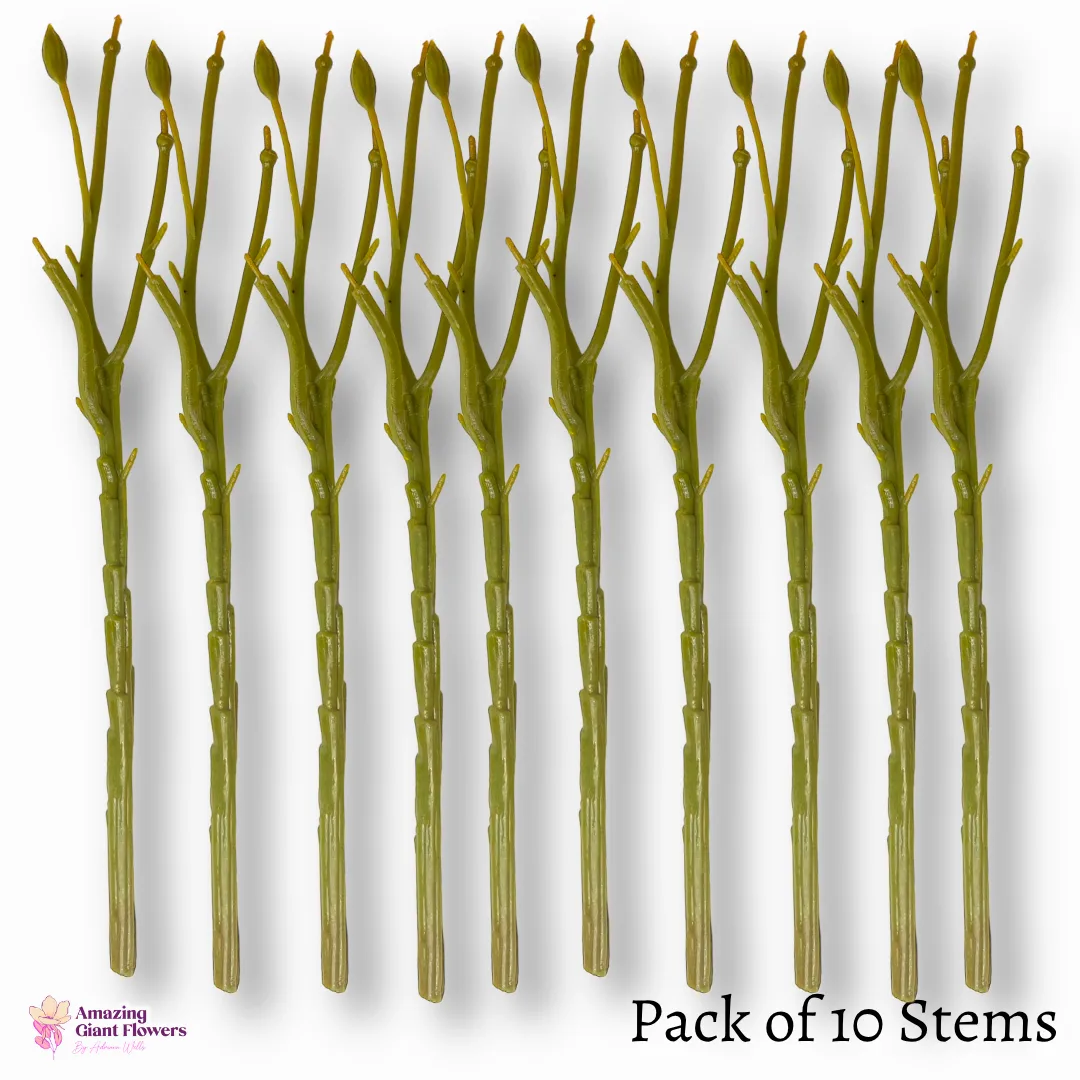
I want to give you an honest look at how bendable pipes stack up against the alternatives I've actually used. No fluff, just what I've experienced firsthand.
The pattern is pretty clear. If you're building giant flower installations that need to travel, transform between events, and hold their shape under real-world conditions, bendable pipe is in a category of its own.
Ok, this is where it gets really fun. Let me walk you through the main configurations I use — and how the bendable flower stem makes each one possible.
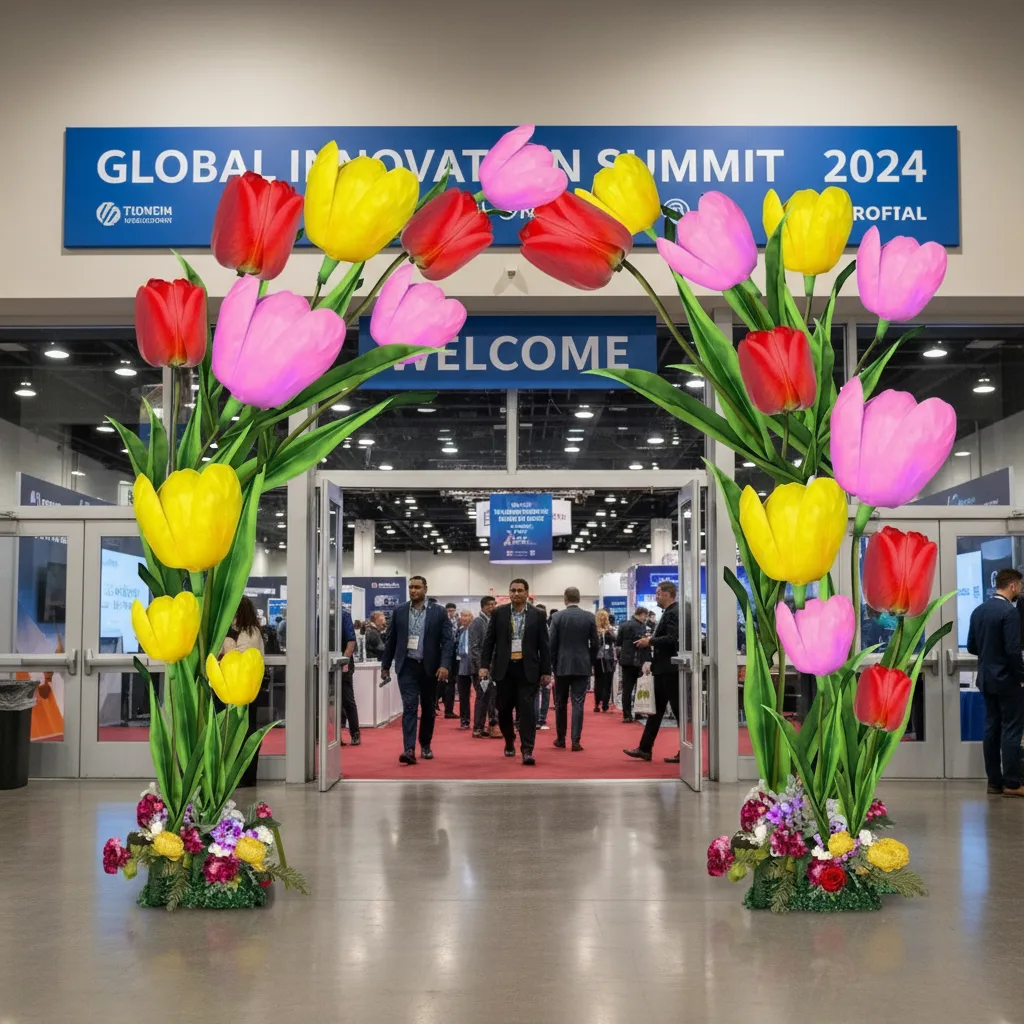
The arch is probably the most-requested structure I build. Ceremony arches, balloon-style flower arches for photo ops, entrance arches for quinceañeras — they're everywhere. And honestly, they look incredible when the flowers are positioned with intention.
With a bendable pipe, each flower stem curves gently outward or inward along the arch frame. You're not just sticking a straight stem into a base and hoping it points the right direction. You're shaping the stem to follow the arc, so every bloom faces the camera, faces the guests, faces the light.
For full arch builds, check out my guide on Giant Flower Wedding Arch: A Complete Guide for 2026 — I go deep on structure, flower placement, and making it travel-ready.
Ceiling installs are having a major moment. Hanging blooms over a sweetheart table, a dessert display, a stage — they create this magical overhead canopy that photos absolutely love.
The challenge with hanging flowers is that the stem needs to curve downward gracefully, not just dangle straight. A bendable pipe lets you shape a gentle hook or S-curve at the top so the flower hangs at the right angle and faces forward, not straight down at the floor.
For hanging installs, I pre-shape each pipe into a J-hook the night before the event. The bloom ends up tilted about 30–45 degrees forward — exactly the angle that reads best in photos and looks most intentional to guests walking underneath.
Cascading Backdrop and Staircase Displays
A cascade is when flowers flow downward in a waterfall effect — off a table edge, down a staircase railing, along a backdrop frame. The key to making this look intentional (not accidental) is varied stem angles. Some flowers point slightly out, some drop lower, some tuck back.
You literally cannot achieve that with rigid stems. You'd need seventeen different stem lengths and angles, all pre-cut. With a bendable pipe, you shape each one on the spot — in minutes, not hours.
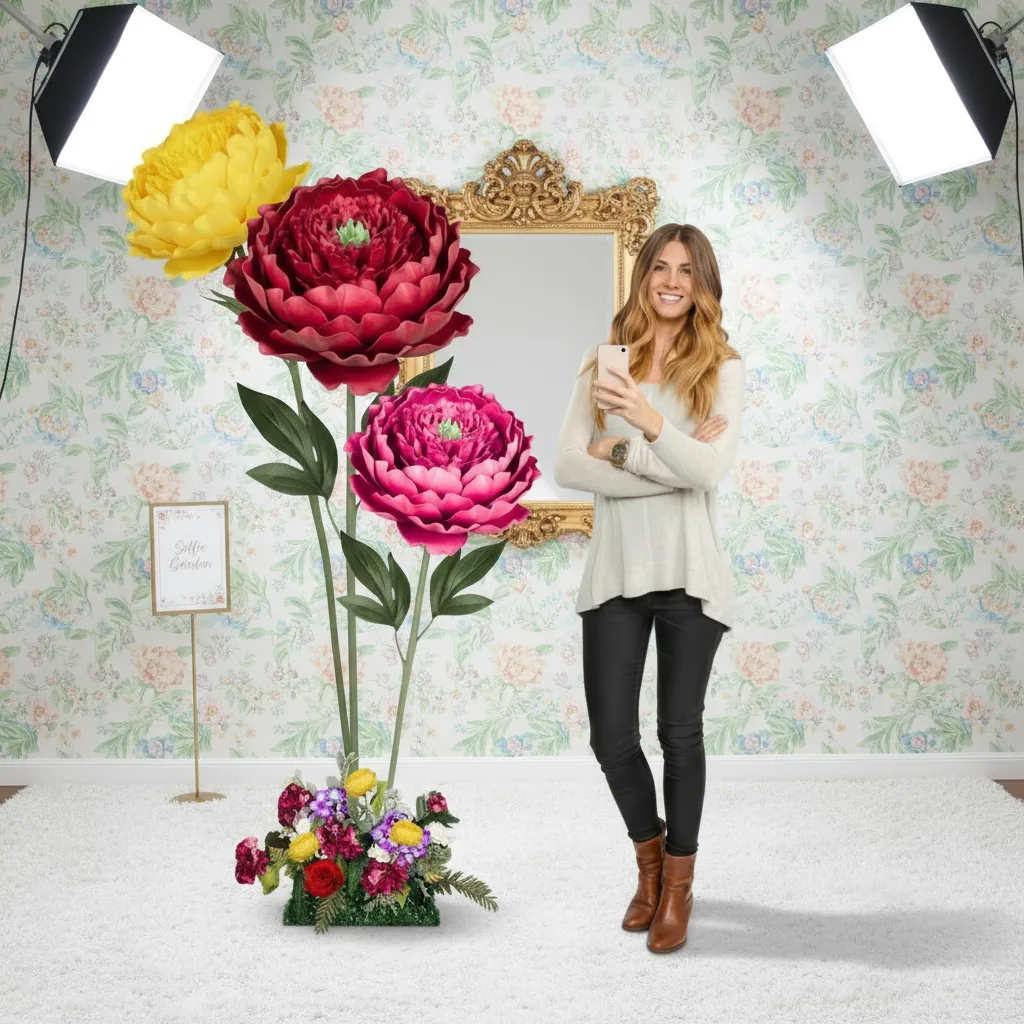
Freestanding flower displays — the kind that sit on a base and hold their shape without a wall or frame — are my personal favorite. They work for everything from wedding reception entrances to retail pop-ups to photo booth setups.
Our freestanding flower kits are designed to work hand-in-hand with bendable pipes. The base handles stability; the pipes handle creative positioning. Together, you get a display that looks like it took a professional team three hours to build — even if it was just you and a good playlist.
I get this question constantly: "Is it hard to bend?" Nope. Genuinely not. But there's a technique that gives you cleaner results, and I want to share it.
Don't try to get your full curve in one motion. Work the pipe in sections — start at one end, bend a little, move your hands a few inches down, bend a little more. This gives you a smooth, even arc instead of one sharp kink in the middle.
Attach your flower loosely to the stem, then hold the whole thing in position before you commit to the final bend. It's so much easier to adjust the stem angle before everything is assembled than after. This is the step most beginners skip — don't be that person.
I also like to step back a full 6 feet and look at the overall composition before I finalize any single stem. What looks perfect up close can read as slightly off from the distance your guests will actually be standing.
💡 Pro Tip
For hanging installs, shape your stem into a gentle J-hook at the top before attaching the flower. This lets the bloom face slightly outward instead of straight down — it photographs beautifully and looks far more intentional than a straight drop.
Real talk? This is the part that made me switch completely and never look back.
When I was starting out, I'd buy materials event by event. Rigid stems for this wedding, different hardware for that corporate activation. It added up fast — and half of it ended up in a trash bag at the end of the night.
A quality bendable flower stem doesn't degrade when you reshape it. You can bend it, straighten it, bend it again — event after event — and it holds its integrity. That's not a small thing when you're running a flower rental business or building installations on a budget.
I have pipes in my kit that have been to over 30 events. Thirty. The cost-per-use on those things is basically nothing at this point. Compare that to floral wire at $8 a spool that you burn through in a single build — the math is not close.
Storage Is Simple Too
Straighten them out, bundle them together, store flat. They take up almost no space compared to a pile of pre-shaped rigid stems in fifteen different configurations. If you're working out of a van or a small studio (been there), that matters enormously.
I store mine in a flat plastic bin that slides under a shelving unit. The entire stem collection for a 12-flower arch fits in a bundle about the size of a yoga mat roll. That kind of portability changes how you work.
The stem is only as good as what you attach to it. So let me tell you what I've found works best — and what to watch out for.
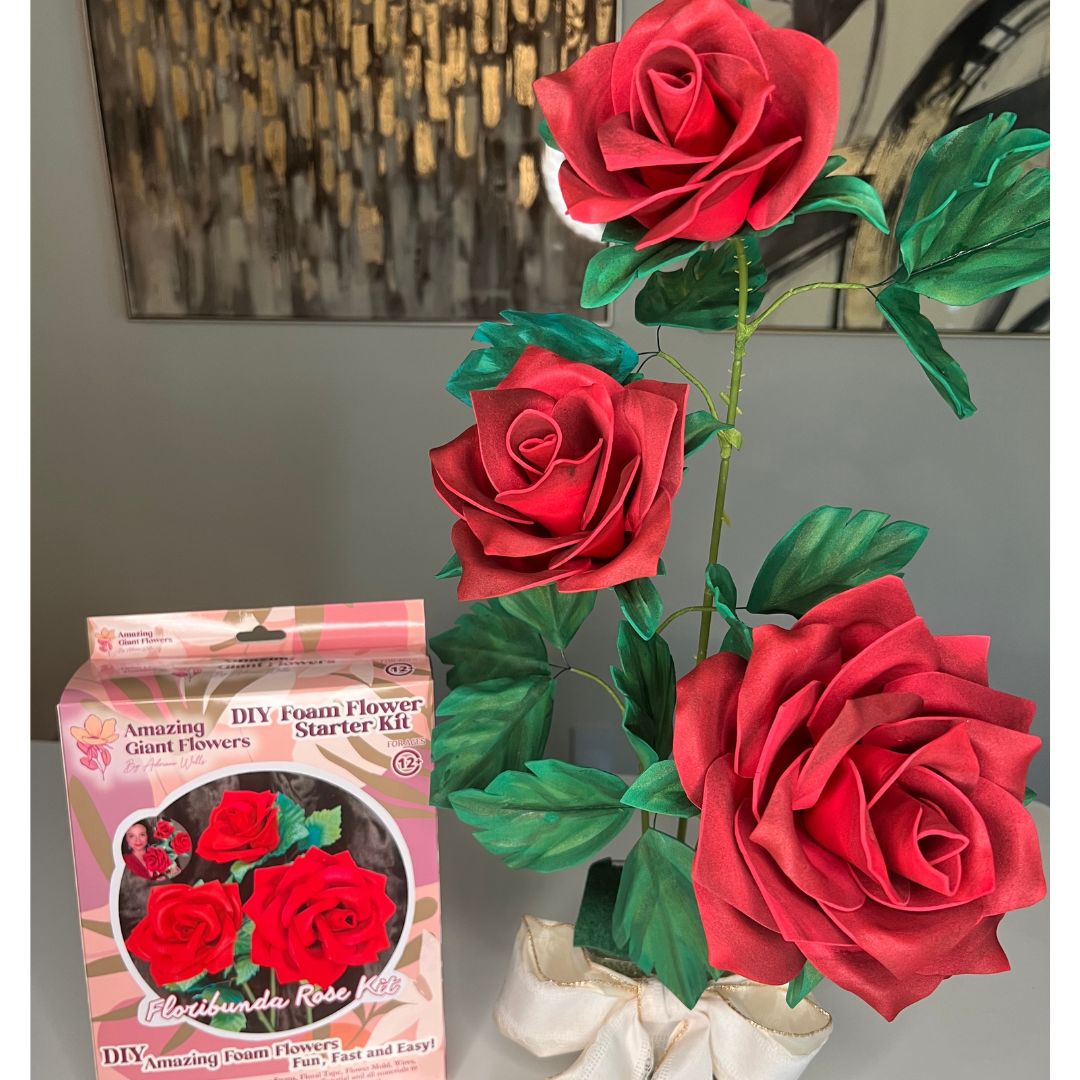
EVA foam is my go-to material for giant flowers, and it pairs beautifully with bendable pipes. It's lightweight enough that even a gently curved stem holds the position without drooping, but substantial enough to look full and lush. Our EVA foam sheets are specifically sized for giant flower crafting — they cut cleanly and take paint and finish really well.
If you want to go deep on material choices, I covered everything in Foam Flowers vs Paper Flowers: Which Is Better for Events? — it's one of my most-read posts for a reason.
Giant paper flowers are lighter than foam, which means the bendable stem has an even easier time holding position. The main thing to watch: paper flowers can be more fragile at the attachment point, so reinforce the base of the bloom before sliding it onto the pipe. I use a small disc of thick cardstock and a generous ring of hot glue — it takes 90 seconds and saves you from a drooping bloom mid-event.
Fabric blooms are heavier and more drapey, which actually makes the bendable stem even more valuable. You need that adjustability to get a fabric flower to face exactly right — they don't have the same stiffness as foam or paper to compensate for a slightly off angle.
For fabric flowers over 20 inches, I always use the longest, most robust pipe I have and check the angle twice before finalizing the attachment. When a fabric bloom pushes past 1.5 lbs, I run two pipes side by side and bind them with floral tape before inserting into the base — instant extra support.
🌸 Ready to build something beautiful?
Browse our full selection of bendable pipes and find the right size for your next installation.
I want to share a few real scenarios because I think it helps to see this in context, not just in theory.
One of my clients needed a 10-foot arch covered in giant blush and gold flowers. The venue had a curved doorway — not a standard rectangular frame. With rigid stems, every single flower would have pointed in a slightly wrong direction. With bendable pipes, I shaped each stem on-site to follow the curve of the arch. The whole thing took about 90 minutes to assemble. She cried when she saw it. That's the goal.
A brand activation client wanted a hanging flower cloud above their product display — about 20 blooms suspended at different heights from a ceiling grid. Every single one needed to face forward for photography. I shaped each pipe into a custom drop length and angle the night before, then clipped them to the grid in under an hour the next morning. Zero wobble. Perfect photos. Happy client.
For a garden-party bridal shower, I built a cascading flower backdrop where blooms tumbled down from a 7-foot frame in varying depths. Some flowers jutted forward 8 inches, some sat flat, some angled downward. Every single one of those positions was set with a bendable pipe — and when the event was over, I straightened them all out, bundled them up, and drove home. Ready for the next one.
If you're planning something like this, my post on Freestanding Giant Flower Arrangements for Events walks through the full process from base to bloom.
Frequently Asked Questions
How many times can I reshape a bendable flower stem before it loses integrity?
In my experience, a quality bendable pipe holds up through 30 or more reshape cycles without any meaningful loss of strength or memory. The key is to avoid bending the same spot repeatedly in opposite directions — that concentrated stress point is the only thing that can eventually weaken the internal structure.
If you're working the pipe in smooth, gradual curves rather than sharp folds, you'll extend the life dramatically. I have stems that have been reshaped for over three years of regular event use and still perform perfectly.
For most freestanding and arch applications, an 18-inch to 24-inch pipe gives you enough length to anchor into a base or frame while still having room to shape the upper portion. For hanging installations, 12-inch pipes are often sufficient for a single-bloom drop, while cascading cloud installations may use pipes ranging from 8 inches to 36 inches for varied heights.
My general rule: buy longer than you think you need. You can always leave extra length inside the base, but you can't add length back once you've cut it.
Most quality bendable pipes are rated for blooms up to about 1.5 pounds when the stem is inserted at least 4–6 inches into a stable base. Beyond that weight, I recommend using two pipes side by side — one on each side of the flower's center hub — and binding them together with floral tape before inserting into the base.
For very large fabric blooms that push past 2 pounds, I'll sometimes run a thin wooden dowel inside the pipe for the lower half to add rigidity at the base while keeping the upper portion flexible for positioning.
Do I need any special tools to bend and shape the pipe?
No special tools required — your hands are genuinely all you need for most applications. The pipe is designed to flex under hand pressure, so no heat guns, pipe benders, or clamps are necessary. That said, using a round form (a jar, a coffee can, a balloon base) as a guide helps you achieve consistent radius curves, especially when you're building multiple matching stems for an arch.
For very tight curves — like a J-hook for a hanging installation — grip the pipe close to the bend point with both hands and apply slow, even pressure. Rushing a tight bend is the one thing that can cause an unwanted kink, so take your time on those.
The most reliable method I've found is a combination of a pre-drilled center hole in the flower's base disc and a generous ring of hot glue around the pipe before insertion. Push the pipe through the hole until it's snug, apply hot glue around the entry point, and hold for 30 seconds. For extra security on large or heavy blooms, wrap the joint with floral tape once the glue has cooled.
Avoid relying on glue alone without a physical connection — the weight of the bloom over a long event will eventually work the bond loose. The pipe-through-hole method gives you mechanical attachment that hot glue reinforces, rather than glue doing all the work on its own.
Yes, with a few caveats. The pipes themselves handle outdoor conditions well — they're not affected by humidity or moderate heat the way wooden dowels are. The bigger concern outdoors is wind: a curved stem that holds beautifully in a still indoor venue can act like a sail in a breeze, putting lateral stress on your base.
For outdoor installs, I always weight my bases more heavily than I think I need to (sandbags inside a decorative base cover are my go-to), and I keep stem angles closer to vertical than I might indoors. Save the dramatic horizontal reaches for interior setups where wind isn't a factor.
Ready to Create Something Amazing?
Browse our collection of giant flower kits and start your next project today.