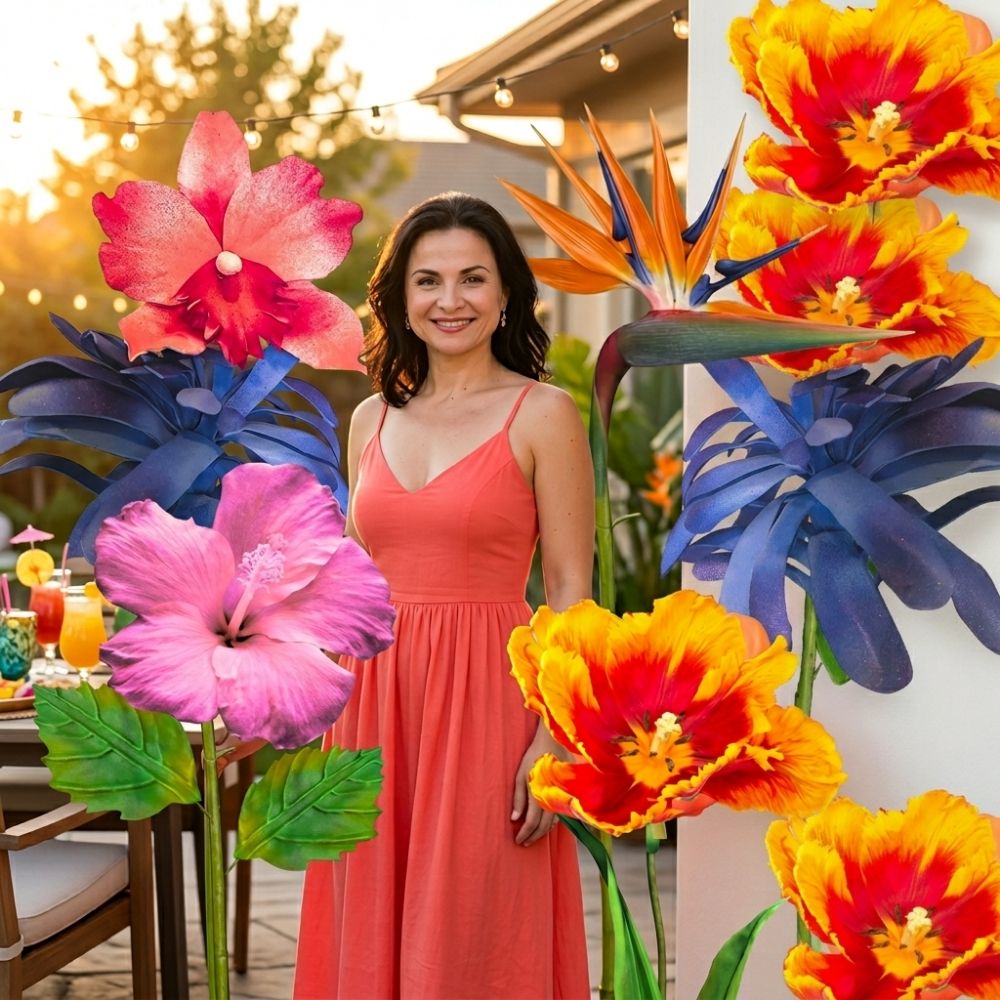
Bulk EVA Foam for Makerspaces & Craft Groups

If you run a makerspace, lead a craft club, or coordinate supplies for a school workshop program, you already know the struggle: you need bulk EVA foam that's actually good quality, priced so it makes sense to buy in volume, and available in the thicknesses your members actually use. Not one sheet here, one roll there — real quantity, real savings.
I started Amazing Giant Flowers right here in Houston, and one of the first things I learned was that buying foam in small amounts is basically throwing money away. Every time I needed to make a large flower installation — like the 8-foot backdrop I built for a quinceañera last spring — I was burning through foam fast. Buying in bulk changed everything for my workflow, and I've watched it change things for the craft groups and makerspaces that shop with us too.
So if you're stocking a makerspace, coordinating a theater department's prop budget, or organizing a semester's worth of classroom craft projects, this post is for you. Let me walk you through everything you need to know about buying bulk EVA foam the smart way.
Key Takeaways
Ok, real talk — I've worked with paper, fabric, cardboard, wire mesh, and a dozen other materials for giant flowers and props. EVA foam beats almost all of them for group settings. Here's why.
It's lightweight, forgiving, and easy to shape. A teenager picking it up for the first time can produce something that looks polished. A seasoned cosplay builder can take the exact same sheet and create something jaw-dropping. That range is rare in a single material.
What EVA Foam Actually Is
EVA stands for ethylene-vinyl acetate — it's a closed-cell foam that's flexible, slightly rubbery, and responds beautifully to heat. When you hit it with a heat gun, it becomes pliable enough to curl, dome, and shape into organic forms like flower petals. When it cools, it holds that shape permanently.
It's also paintable, cuttable with basic tools, and glue-friendly. Hot glue, contact cement, foam-safe spray adhesives — they all work well. That makes it accessible for groups where not everyone has the same skill level or tool kit.
If you want to go deep on how different foam types compare, I wrote a whole breakdown over in A Crafter's Guide to Every Type of Foam for Giant Flowers — worth a read before you stock up.
This is where I see groups go wrong most often. They buy one thickness and try to use it for everything. Then they wonder why their petals look stiff or their armor looks floppy. Thickness is everything.
My honest recommendation for a makerspace stocking up? Get at least two thicknesses in bulk — a thinner one (2–4mm) for petal and detail work, and a thicker one (6–8mm) for structural builds. That covers 90% of what your members will want to make.
Let me be direct about this because it matters to your budget. When you're running a makerspace or craft club, every dollar you spend on materials is a dollar that could go toward equipment, programming, or keeping membership fees accessible.
Buying individual sheets is expensive. When you add up what a group of 15–20 people needs for a single workshop — say, everyone's making a giant flower that's 18 inches across — you're talking about a lot of foam. Buying that piecemeal will cost you significantly more than buying rolls or bulk sheet sets upfront.
Here's a rough guide I use when helping groups plan orders:
Rolls are fantastic if you have storage space and your group does high-volume cutting. You can unroll exactly what you need, cut it, and roll the rest back up. Minimal waste, maximum flexibility.
Flat sheets are easier to manage in a workshop setting where multiple people are working at once. You can pre-cut them into project-sized pieces and hand them out. Great for organized classes and structured workshops.
💡 Pro Tip
Order a mixed bulk set when you're first stocking a makerspace — a roll or two of your most-used thickness, plus flat sheet packs in a thinner and thicker option. This gives you flexibility while still getting the volume discount. Once you know what your members reach for most, you can double down on that in your next order.
This is where it gets really fun. EVA foam is one of those materials that rewards imagination. I've seen groups use it for things I never would have thought of when I first started working with it.
This is obviously close to my heart. Giant EVA foam flowers are showstoppers at any event — weddings, quinceañeras, graduation parties, corporate activations, school dances. A makerspace that can teach members to make these is offering a genuinely marketable skill.
If you want to see what's possible with a structured approach, check out our freestanding flower kits — they're a great complement to raw foam for groups that want a guided starting point. And for shaping petals like a pro, I'd also point you to our post on Heat Gun Techniques: Shaping Foam Flower Petals Like a Pro.
The cosplay community has been using EVA foam for armor builds for years — and for good reason. It's lightweight, formable, and takes paint beautifully. Thicker sheets (8–10mm) carve into detailed shapes, while thinner sheets wrap around curves for smooth surface panels.
Theater departments love bulk EVA foam because it's budget-friendly, fast to work with, and durable enough to survive a full production run. Masks, crowns, oversized props, set decoration — foam handles all of it. And when the show's over, pieces can often be repurposed for the next production.
A makerspace that produces its own event decor can save clients thousands of dollars. Giant flower backdrops, decorative arches, branded installations — all buildable with bulk foam and a bit of creativity. I've written a whole guide on DIY Giant Flower Backdrops for Photos that's perfect for groups tackling this for the first time.
🌸 Ready to stock your makerspace?
Browse our full EVA foam collection — rolls and sheets in every thickness, ready to ship.
Tools and Supplies That Pair Perfectly with Bulk EVA Foam
Raw foam is just the beginning. The right tools make the difference between a frustrating workshop and one where everyone walks out proud of what they made.
Cutting Tools
- Sharp craft knives or box cutters: Essential for clean straight cuts. Change blades often — dull blades drag and tear.
- Scissors: Fine for thinner sheets (2–4mm). Harder work on thicker foam.
- Die cutting machines: Game-changer for groups that need to cut the same petal shape repeatedly. Cricut and similar machines handle thinner EVA foam beautifully.
- Hot wire foam cutter: Worth the investment for groups doing a lot of thick-foam structural work.
For a deep dive on cutting technique, my post on The Best Way to Cut Foam for Flawless DIY Crafts covers everything from blade angle to speed.
Shaping and Finishing
- Heat gun: Non-negotiable for petal shaping. A basic craft heat gun works fine for beginners.
- Flower molds: Our flower molds make it incredibly easy to get consistent petal shapes, especially when you're running a group workshop where consistency matters.
- Bendable pipes: For freestanding flower builds, our bendable pipes are the secret weapon. They let you position flowers at any angle without complicated armatures.
- Hot glue guns: Stock extras. They always run out of glue at the worst moment.
Paint and Finishing Supplies
EVA foam takes acrylic paint well, especially with a base coat of Plasti-Dip or a foam-safe primer. Avoid spray paints with acetone or harsh solvents — they'll dissolve the foam surface. For groups doing a lot of painted work, I'd point you to our post on Flawless Foam Board Paint Finishes — lots of practical tips in there.
How to Organize a Bulk EVA Foam Order for Your Group

A little planning upfront saves a lot of headache. Here's how I'd approach it if I were stocking a makerspace from scratch.
Step 1: Survey Your Members
Ask what projects people are most excited about. Are they mostly interested in flowers and event decor? Cosplay builds? Theater props? The answer shapes which thicknesses you prioritize.
Step 2: Calculate Your Starting Inventory
Think in terms of workshops, not individual projects. If you plan to run four workshops per semester with 15 people each, calculate what each workshop needs and multiply. Then add 20% buffer for mistakes, experimentation, and unexpected demand.
Step 3: Decide on Storage
Rolls need a horizontal rack or can stand vertically in a bin. Flat sheets store flat in large drawers or on shelves. Label everything by thickness — when you're mid-workshop, you don't want to be guessing which roll is which.
Step 4: Build a Reorder Rhythm
Track what you use. After your first semester, you'll have a clear picture of which thicknesses fly off the shelf and which ones sit. Reorder before you run out — nothing kills workshop momentum like running short on materials halfway through a session.
Frequently Asked Questions
What's the best thickness of bulk EVA foam for a beginner makerspace workshop?
I'd start with 4mm or 6mm as your primary thickness. It's forgiving enough for beginners to cut and shape without frustration, but substantial enough to produce results that look polished. Pair it with some 2mm for petal detail work and you're set for most flower and
Ready to Create Something Amazing?
Browse our collection of giant flower kits and start your next project today.