5 Craft Projects You Can Make with Leftover EVA Foam

If you've been doing eva foam craft projects for a while, you know the struggle: you finish a big build and you're left with a pile of scraps that feel too good to throw away. Rolls of offcuts, little wedges, strips from where you trimmed a petal — it all adds up fast. And honestly? That "leftover" pile is basically a treasure chest waiting to be opened.
I've been working with EVA foam for years through my business, Amazing Giant Flowers, and I can tell you that some of my favorite little projects have come from scraps I almost tossed. There's something so satisfying about turning a remnant into something beautiful. It scratches that crafter itch in the best possible way.
So today I'm sharing five genuinely fun projects you can make with your leftover EVA foam — whether you've got a few strips of 2mm or a chunky slab of 6mm sitting in the corner of your craft room. Let's dig in.
Key Takeaways
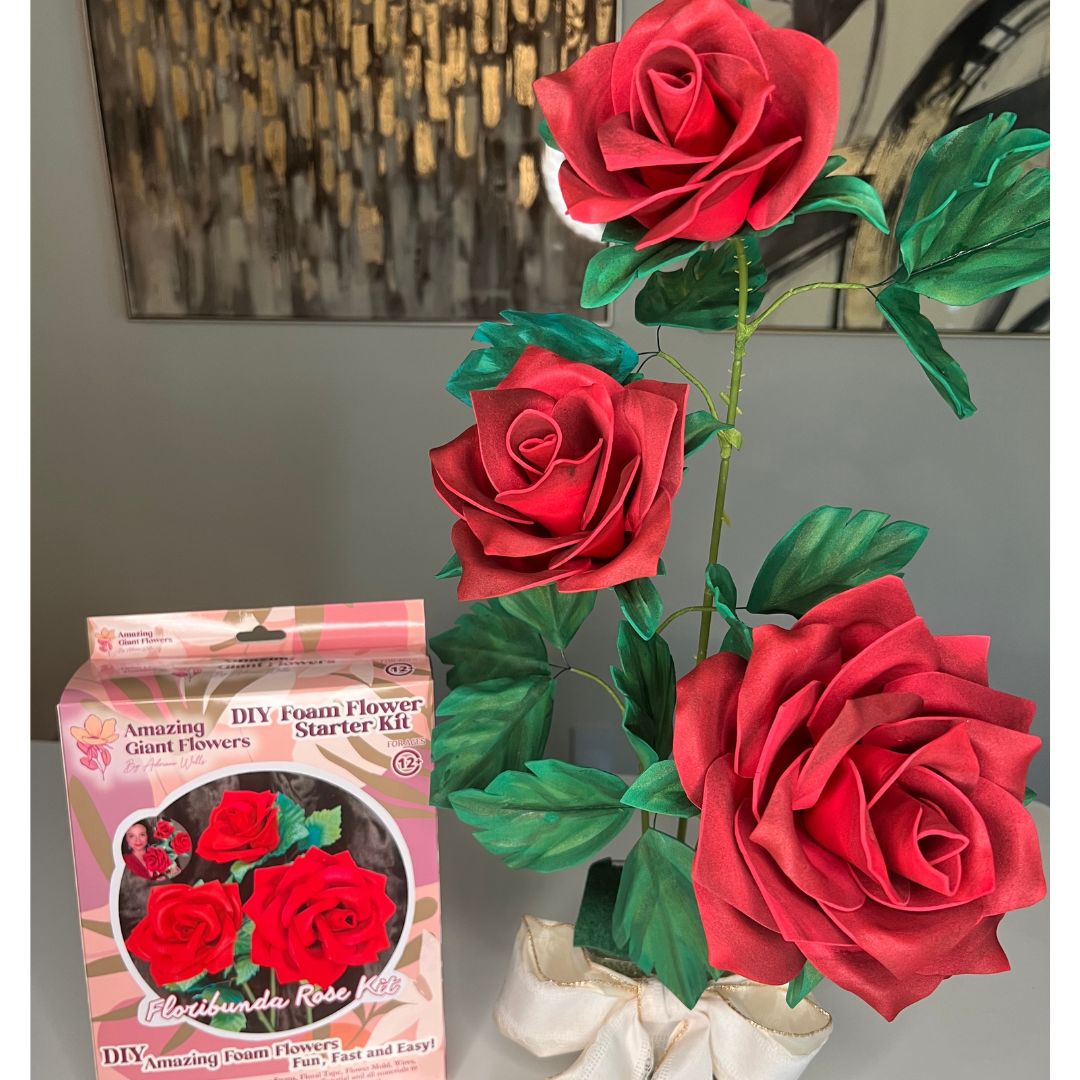
Ok, this one is close to my heart — obviously. If you've been following along with my giant flower work, you already know how much I love a foam petal. But here's the thing: the same techniques scale down beautifully.
Thin scraps of 2mm or 3mm EVA foam are ideal for small flowers. Cut out simple petal shapes freehand or use a template, then use your heat gun to curl and cup the edges. Layer them from large to small, glue them together with a hot glue gun, and add a foam or button center.
What to do with them
- Gift toppers: Way more impressive than a stick-on bow, and they last forever.
- Table scatter: Make a dozen in coordinating colors and spread them across a tablescape.
- Hair clips and corsages: Glue a clip to the back and you've got an accessory.
- Card embellishments: Flatten them slightly and adhere to handmade cards.
If you want to go deeper on petal shaping techniques, I wrote a whole post on heat gun techniques for shaping foam flower petals — it's a game changer even for small-scale work.
This is where thicker scraps — your 6mm, 8mm, and 10mm offcuts — really shine. The cosplay community has been using EVA foam for armor, shields, and props for years, and for good reason: it's lightweight, easy to shape with heat, and takes paint like a dream.
Even a small piece of 10mm foam can become a shoulder pauldron, a decorative belt buckle, or a dagger handle. You don't need a huge slab to make something impressive.
The secret to professional-looking foam armor is sealing before painting. I always recommend a coat of Plasti-Dip or a foam-safe sealant, then your acrylic paints on top. If you want the full breakdown on getting a flawless painted finish, check out my guide on flawless foam board paint finishes — a lot of those principles carry right over.
💡 Pro Tip
Use a heat gun on your scrap pieces to practice beveling edges before you commit to your main build. Scraps are the best practice material you'll ever have — no pressure, no waste.
The density of EVA foam also means it holds carved details really well. Score lines with a craft knife to create panel lines, scales, or texture — it reads as incredibly realistic once painted.
Honestly, this might be my favorite repurpose on the whole list. If you've got kids in your life — or you're a teacher, a homeschool parent, an art camp director — EVA foam scraps are absolute gold.
Foam is safe, easy to cut with scissors (even kid-safe ones for thinner sheets), and it doesn't splinter or leave sharp edges. It's also super forgiving with glue and paint, which means little hands can actually work with it without frustration.
Easy kids' projects with foam scraps
- Stamping blocks: Cut shapes from 6mm foam and glue to a wood block — instant custom stamps.
- Foam mosaic art: Punch or cut tiny pieces and have kids arrange them into pictures on cardboard.
- Bug and animal sculptures: Stack and glue pieces to build 3D creatures.
- Painted foam jewelry: Cut circles and stars from thin foam, punch a hole, paint, and string them.
Pre-cutting shapes for a class activity takes maybe 20 minutes and keeps a room full of kids busy for an hour. That's a win in anyone's book.
🌸 Need fresh foam to work with?
Browse our full EVA foam collection — we carry rolls and sheets from 2mm to 10mm so you always have the right thickness for any project.
Party props are one of those eva foam craft projects that look way harder than they actually are. And when you're working with scraps, the cost is basically zero — which makes them even better.
Think oversized lips, speech bubbles, mustaches on sticks, giant stars, or even small floral accents to dress up a photo booth frame. EVA foam cuts cleanly, paints easily, and is light enough to hold on a stick all night without anyone's arm falling off.
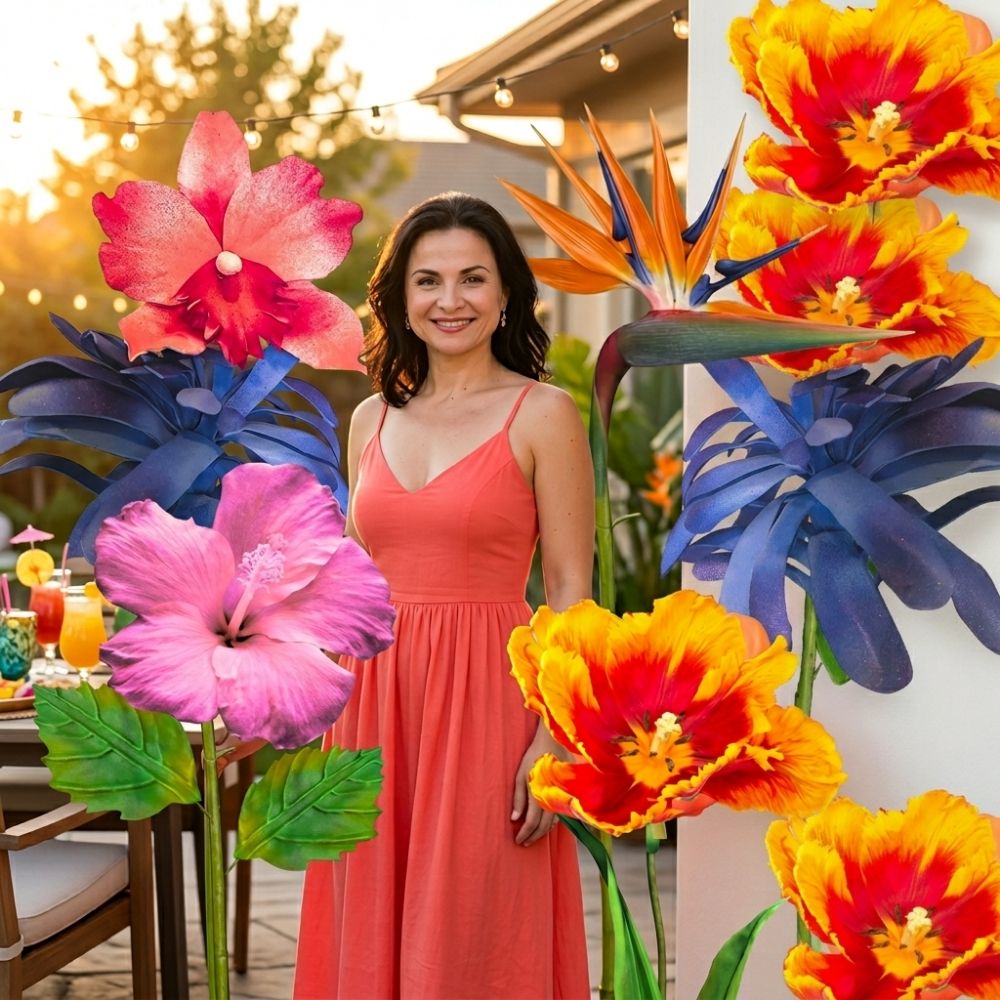
This is where it gets really fun. You can combine your foam scraps with our bendable pipes to create freestanding party prop stands, or use foam flowers as accents on a backdrop frame. A few foam blooms hot-glued to a wire frame can become a stunning photo booth corner piece in under an hour.
If you want inspiration for what a full foam flower backdrop can look like, I have a whole guide on DIY giant flower backdrops for photos that might spark some ideas even for smaller-scale builds.
Party decor ideas at a glance
- Balloon weights: Stack thick foam discs and paint them to match your party palette.
- Cake toppers: Cut letters or shapes from 6mm foam, paint, and insert a skewer.
- Garland accents: String small foam shapes between paper or fabric elements.
- Table number stands: Cut a base from thick foam and slot a number card into a slit on top.
5. Theater Set Pieces and Stage Props
Theater departments and drama teachers — this one's for you. EVA foam is one of the most underused materials in stage prop building, and I genuinely don't understand why it isn't everywhere.
It's lightweight, which matters enormously on stage. A foam "stone" wall panel weighs almost nothing compared to a painted plywood version. Actors can move set pieces between scenes without a full crew. And foam takes texture beautifully — you can make it look like wood, stone, metal, or brick with the right paint technique.
For theater specifically, I always recommend using contact cement rather than hot glue for anything structural — it creates a bond that won't give way under stage heat and handling. Hot glue is great for detail work and quick fixes.
💡 Pro Tip
For large theater pieces, laminate two or three layers of thinner foam together with contact cement instead of buying thicker stock. It's a great way to use up multiple thin scraps and the resulting panel is actually stronger and more flexible than a single thick sheet.
Not all scraps are created equal, and the thickness of what you've got on hand really does determine what you can make. Here's a quick reference so you can look at your pile and immediately know what it's good for:
Yes! Acrylic paint works great on EVA foam, especially if you seal the foam first. Without a sealant, the paint can sometimes peel or crack as the foam flexes. A light coat of Mod Podge, Plasti-Dip, or even watered-down white glue creates a surface the paint really grips onto. I've got more on this in my guide on painting on foam core — lots of those tips apply directly to EVA foam too.
Hot glue is the go-to for most crafters because it's fast and accessible. For anything structural or that will experience stress, contact cement (like Barge) creates a much stronger permanent bond. For thin decorative work — like layering flower petals — hot glue is totally fine. Just work quickly and keep your fingers away from the nozzle!
A sharp craft knife or box cutter gives the cleanest cuts on thicker foam. For thin sheets (2mm–3mm), good quality scissors work well. The key word is sharp — a dull blade drags and tears the foam instead of slicing it. I have a full breakdown on this in my post about the best way to cut foam if you want the complete rundown.
Generally yes — EVA foam itself is non-toxic and doesn't have sharp edges once cut. Thin sheets (2mm–3mm) can be cut with kid-safe scissors, making them great for classroom projects. The main thing to watch is the tools: craft knives and heat guns are adult-only territory. Keep those out of little hands and the foam itself is very safe to work with.
Absolutely — and this is one of my favorite ways to use up scraps efficiently. Our flower molds work beautifully with EVA foam sheets, and smaller scraps are perfect for pressing out individual petals without needing a full sheet. Just make sure your scrap is large enough to cover the mold surface, heat the foam gently, and press. You'll get a perfectly shaped petal every time.
Here's what I want you to take away from all of this: there is no such thing as EVA foam that's too small to use. I've made gift toppers from a strip the size of my hand. I've watched theater kids turn a grocery bag full of offcuts into an entire fairy-tale forest. The material is just that good.
If your scrap pile is running low and you need to restock, head over to our EVA foam shop — we carry everything from delicate 2mm sheets to chunky 10mm rolls, all ready to ship. And if you're ready to go bigger, check out our freestanding flower kits for a full project that'll put all your foam skills to work. Happy making, friends. 🌸
Ready to Create Something Amazing?
Browse our collection of giant flower kits and start your next project today.