
EVA Foam Cutting Tools Guide for Cleaner Craft Results
Key Takeaways
- The right cutting tool depends on your foam thickness — what works for 2mm craft foam won't work for 6mm or 8mm EVA sheets.
- A sharp craft knife or hot knife will give you the cleanest edges on thick EVA foam for giant flowers.
- Electric foam cutters and Cricut machines are game-changers for high-volume or intricate petal shapes.
- Blade sharpness matters more than blade type — a dull blade compresses foam instead of slicing it.
- Pairing the right tool with the right cutting mat and template system will dramatically speed up your workflow.
Why Your Cutting Tool Actually Matters for EVA Foam
I've seen people try to use scissors, box cutters, even kitchen knives on EVA foam. Some of these work okay for thin sheets. But when you're working with 6mm or 8mm thick EVA foam — which is what we use for our giant freestanding flowers — you need the right tool or you'll be fighting the material the whole time. According to Statista, the DIY craft market in the US has grown significantly in recent years, with millions of Americans taking on creative projects at home. That means more people are picking up foam for the first time — and more people are making the same tool mistakes I made years ago.
The EVA Foam Cutting Tools Guide: Every Tool Explained
1. Standard Craft Knife (X-Acto Style)
This is where most people start. A craft knife with a #11 blade is affordable, easy to find, and works reasonably well for thinner EVA foam sheets — we're talking 2mm to 4mm. The key is keeping that blade fresh. I swap blades out constantly. The moment a blade starts dragging instead of gliding, it's done. Dull blades tear foam rather than cut it, and you'll feel the difference immediately.For straight cuts, a craft knife with a metal ruler is your best friend. For curves and petal shapes? It takes practice. You need to use light, pulling strokes and let the blade do the work — never force it. Best for: Thin foam (2mm-4mm), detail work, scoring fold lines, small petal shapes. Not great for: Thick foam (6mm+), long curved cuts, high-volume production work.
2. Hot Knife / Thermal Cutter
Ok, this is where it gets really fun. A hot knife uses heat to melt through EVA foam rather than mechanically cutting it. The result? Incredibly smooth, sealed edges that don't fray or compress. I use a hot knife for a lot of our thicker petal work. It glides through 6mm and 8mm EVA foam like butter. The heat also slightly seals the edge, which is actually a bonus — it gives petals a slightly rounded, finished look.The trade-off is fumes. You must work in a well-ventilated space when using a hot knife on EVA foam. Open windows, a fan, maybe a respirator if you're doing this for hours. This isn't optional — EVA foam releases gases when heated. Hot knives typically run between $20 and $80 depending on the brand and temperature control. I'd recommend one with adjustable temperature settings so you can dial in the right heat for different foam thicknesses.
3. Electric Foam Cutter (Bow/Wire Style)
A wire foam cutter uses a heated nichrome wire to slice through foam. It's similar in principle to a hot knife but works differently — you move the foam through the wire rather than moving the tool through the foam. These are excellent for making straight cuts and gentle curves through thick foam blocks. If you're cutting foam down to size from large sheets, a wire cutter is incredibly efficient.For intricate petal shapes, though? Wire cutters are harder to maneuver. They work better for geometric shapes and simple curves than for the organic, flowing shapes of flower petals. Best for: Cutting large foam sheets down to workable sizes, straight lines, gentle curves, thick foam. Not great for: Tight curves, detailed petal shapes, small-scale work.
4. Cricut and Cutting Machines
Real talk? My Cricut changed everything for me when it comes to thinner foam. A Cricut Maker or Cricut Explore Air 2 can cut EVA foam up to about 2mm thick with precision that no hand-cutting tool can match. The beauty is repeatability. You design your petal shape once in Cricut Design Space, and you can cut it perfectly, identically, hundreds of times. For production work — like building a bundle of 10 flowers for a wedding — this is a massive time saver.According to Cricut's own material guides, EVA foam cuts best with a Fine-Point Blade or Knife Blade depending on thickness, and using a StrongGrip mat is essential to keep the foam from shifting mid-cut. The limitation is thickness. Cricut machines top out around 2mm for foam. For our giant flowers, which use thicker material, you'll still need a knife or hot knife for the heavy lifting.
5. Die Cutting Machines
A die cutting machine (like a Sizzix Big Shot) uses metal dies to press-cut shapes from foam. These are popular in the scrapbooking world and work surprisingly well for thin EVA foam. If you're making lots of identical small flowers or decorative elements, a die cutter is incredibly fast. But for large-scale petal shapes — anything over about 6 inches — you'll struggle to find dies that fit, and the machines themselves have size limitations.6. Heavy-Duty Scissors and Fabric Shears
Don't underestimate a great pair of scissors. For 2mm to 3mm EVA foam, sharp fabric shears can make surprisingly clean cuts, especially on curves where a knife can be tricky to control. I keep a dedicated pair of 8-inch fabric shears on my worktable at all times. They're fantastic for trimming, cleaning up edges, and cutting thinner accent petals. Just never use them on anything else — foam dulls blades fast.EVA Foam Cutting Tools Comparison Table
| Tool | Best Foam Thickness | Best For | Approx. Cost | Skill Level |
|---|---|---|---|---|
| Craft Knife (X-Acto) | 2mm – 4mm | Detail work, scoring | $5 – $20 | Beginner |
| Hot Knife | 4mm – 10mm | Thick foam, smooth edges | $20 – $80 | Intermediate |
| Wire Foam Cutter | 6mm – 20mm+ | Straight cuts, large sheets | $25 – $100 | Beginner – Intermediate |
| Cricut Maker | Up to 2mm | Precision, repeatability | $300 – $450 | Beginner (once set up) |
| Die Cutting Machine | Up to 3mm | Identical small shapes | $50 – $200 | Beginner |
| Fabric Shears | 2mm – 3mm | Curves, trimming, cleanup | $15 – $50 | Beginner |
Choosing the Right Tool for Giant Flower Projects Specifically
- Start with a sharp craft knife: Get comfortable with your template and learn the feel of the foam before investing in more equipment.
- Upgrade to a hot knife for 6mm+ foam: The edge quality is noticeably better and your flowers will look more polished.
- Add a Cricut for thin accent layers: If your flower design has delicate inner petals or stamen details, a Cricut handles those beautifully.
- Keep fabric shears on hand always: They're your cleanup crew for trimming and refining shapes after the main cut.
- Use a self-healing cutting mat: This protects your work surface and helps your blades last longer. A 24x36 inch mat is ideal for large petal templates.
If you're curious about which foam types work best with each of these tools, I wrote a whole breakdown over in A Crafter's Guide to Every Type of Foam for Giant Flowers. It pairs really well with this guide.
Common Cutting Mistakes (And How to Fix Them)
Mistake #1: Using a Dull Blade
This is the number one culprit for ugly foam cuts. A dull blade compresses the foam before it cuts, leaving a crushed, uneven edge. Replace craft knife blades after every 2-3 large petal cuts. Seriously. They're cheap. Don't be stingy with blades.Mistake #2: Cutting Too Fast
Slow and steady wins here. When you rush a cut — especially on a curve — the blade skips or drags and you get a jagged edge. Pull the blade slowly and consistently, letting it glide through the foam rather than forcing it.Mistake #3: Not Securing the Template
Your template moves, your cut is ruined. Use low-tack tape or pattern weights to hold your template firmly against the foam before you start cutting. I learned this the hard way after ruining an entire sheet of foam because my paper template shifted mid-cut.Mistake #4: Wrong Tool for the Thickness
Trying to cut 8mm EVA foam with a standard craft knife in one pass is a recipe for frustration. Either use a hot knife, or make multiple light passes with a craft knife — never try to force a single deep cut through thick foam.Mistake #5: Skipping Ventilation with Heat Tools
I cannot stress this enough. Hot knives and wire cutters produce fumes when cutting EVA foam. Always work near an open window or with a fan directing air away from your face. According to OSHA guidelines on foam materials, proper ventilation is essential when working with heated foam products.Setting Up Your Cutting Workspace for Success
The Essential Cutting Surface
A self-healing cutting mat is non-negotiable. I use a large one — at least 24 x 36 inches — so I can lay out full petal templates without them hanging off the edge. The grid lines also help keep cuts straight and templates aligned.Good Lighting Is a Game-Changer
Cutting foam accurately requires you to see exactly where your blade is going. Bright, direct task lighting positioned to eliminate shadows on your cutting line makes a huge difference. I use an adjustable LED desk lamp angled right at my work surface.Template Organization
If you're cutting multiple flower types, label and store your templates in a flat file folder or large zip-lock bags. Cardstock or thin cardboard templates hold their shape better than paper and can be reused dozens of times. For our kits, we provide pre-printed templates — but if you're designing your own, invest a few minutes in making durable templates. It pays off every single time.You can also check out our post on Your Guide to Flawless Foam Board Paint Finishes for tips on what to do with your petals once they're cut — because finishing matters just as much as cutting.
How EVA Foam Cutting Fits Into the Giant Flower Process
According to The Knot, flower wall backdrops are among the most requested wedding décor elements right now. And a huge reason DIY giant foam flowers have taken off is that they're reusable, weather-resistant, and dramatically less expensive than fresh floral installations — which can run $1,500 to $5,000+ for a single backdrop according to Brides.com.
Getting your cutting technique right is what makes the DIY version look professional rather than homemade. And once you've got clean petals, the rest of the process — shaping, layering, assembling — becomes genuinely enjoyable. If you're ready to see what a finished giant flower project looks like, browse our Giant Flower Wedding Arch: A Complete Guide for 2026 or check out DIY Giant Flower Backdrop for Photos: Easy Guide for inspiration.
What to Look for When Buying EVA Foam for Cutting
- Density matters: Higher-density EVA foam cuts more cleanly and holds its shape better after cutting. Look for foam labeled 60-70 kg/m³ or higher for giant flower work.
- Smooth surface vs. textured: Smooth-surfaced EVA foam cuts more cleanly with a knife. Textured foam can cause the blade to catch and skip.
- Consistent thickness: Cheap foam sheets often vary in thickness across the sheet. This causes uneven cuts and inconsistent petal shapes. Buy from a reliable supplier.
- Color-through vs. painted: Color-through foam (where the color goes all the way through) looks better on cut edges. Surface-painted foam shows white foam on the cut edge, which can look unfinished.
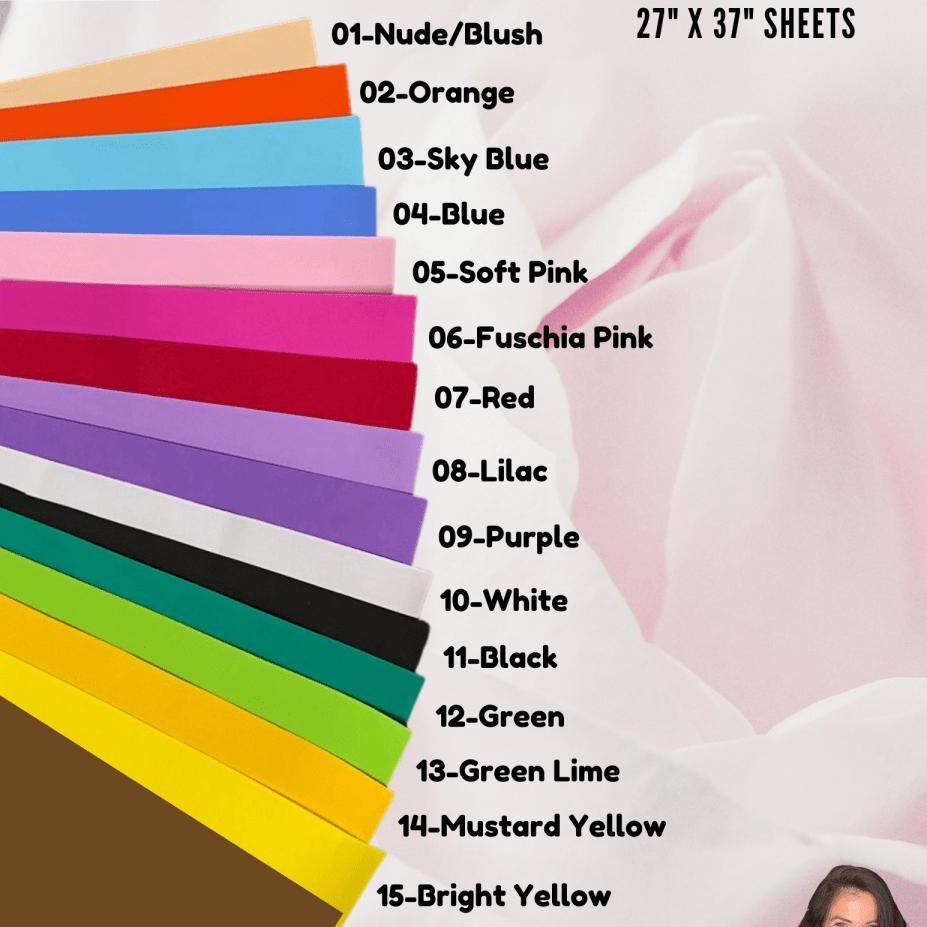
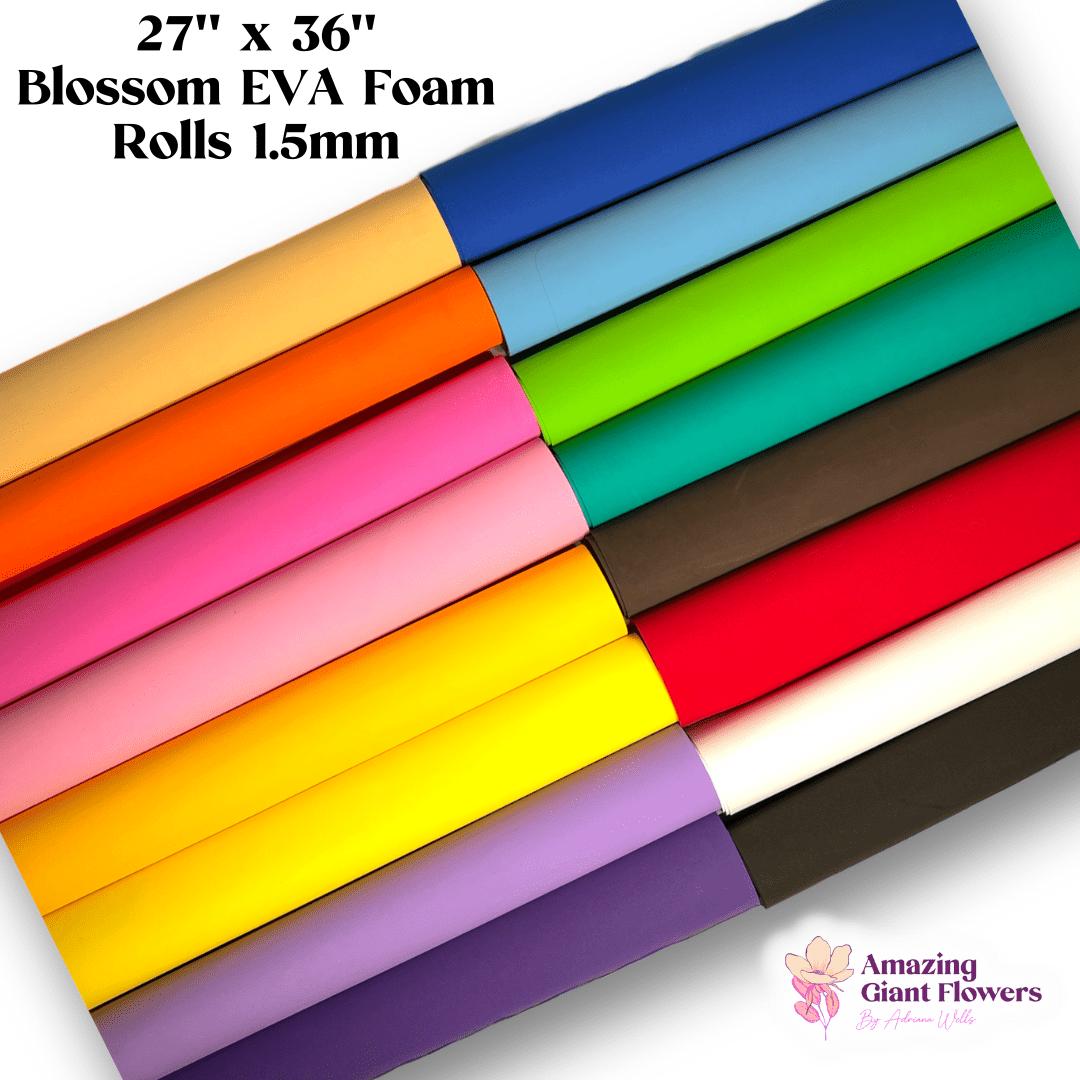
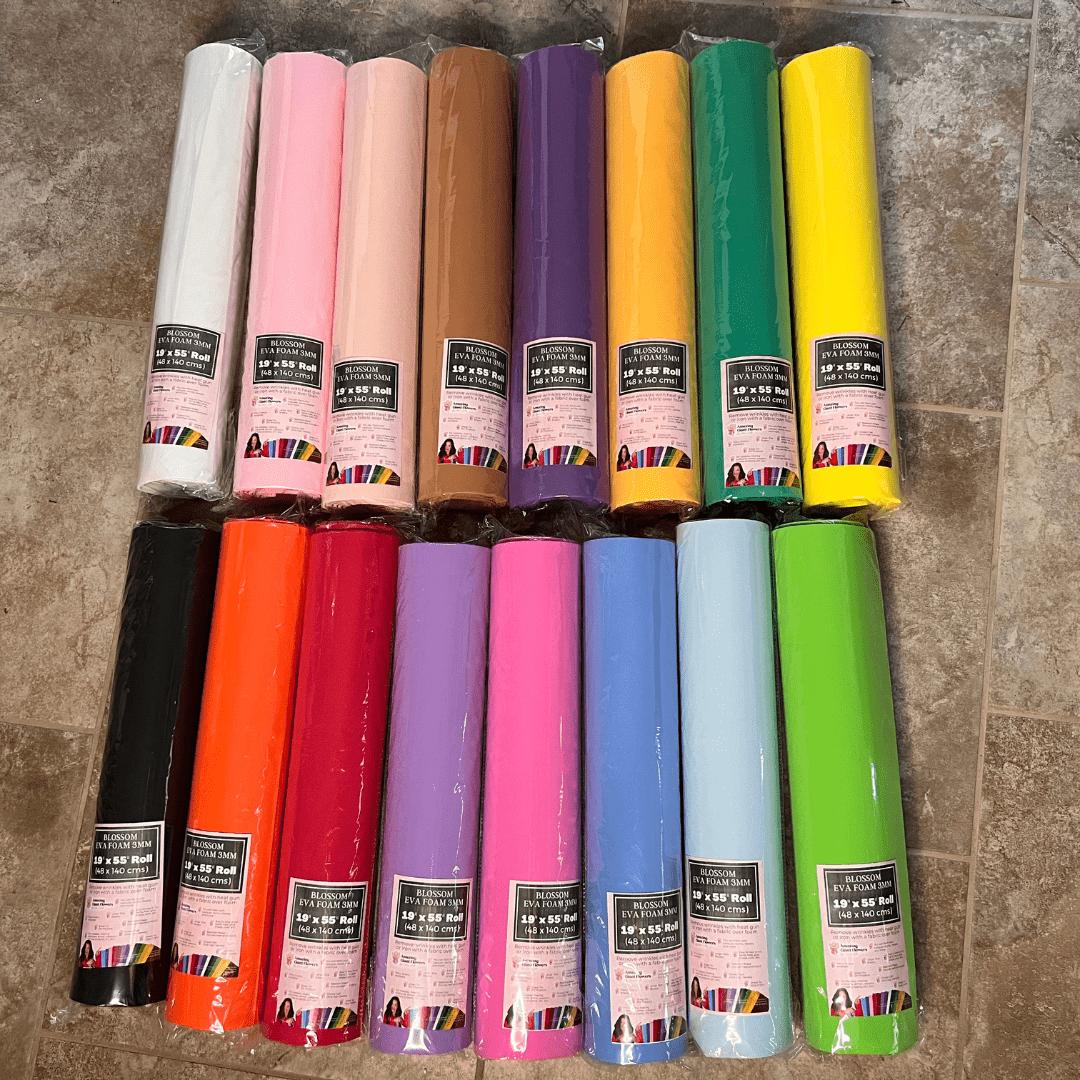
- Sheet size: For giant flower petals, you need sheets that are at least 12 x 18 inches — larger is better. We sell EVA foam sheets in sizes designed specifically for giant flower work in our shop.
Frequently Asked Questions
What is the best tool for cutting EVA foam for giant flowers?
For thick EVA foam (6mm and above), a hot knife gives the cleanest results — smooth, sealed edges that look professional. For thinner foam (2mm-4mm), a sharp craft knife with fresh blades works well. If you need precision and repeatability for thin foam, a Cricut Maker is hard to beat.
The honest answer is that most experienced makers use a combination of tools depending on the project. Start with a craft knife, and upgrade to a hot knife once you're ready to work with thicker foam.
Can I use a Cricut to cut EVA foam for giant flowers?
Yes, but with limitations. A Cricut Maker can cut EVA foam up to about 2mm thick with excellent precision. It's perfect for thin accent petals, stamen layers, and small decorative elements. For the main structural petals of a giant flower — which typically use 6mm to 8mm foam — you'll need a knife or hot knife instead.
How do I get smooth edges when cutting EVA foam?
Three things: a sharp blade, slow and steady movement, and the right tool for your foam thickness. For the absolute smoothest edges on thick foam, use a hot knife — the heat seals the edge as it cuts. For knife cuts, use multiple light passes rather than forcing a single deep cut, and always cut against a firm template or ruler for straight lines.
Is it safe to use a hot knife on EVA foam?
Hot knives are safe to use on EVA foam as long as you work in a well-ventilated space. EVA foam releases fumes when heated, so always work near an open window or use a fan to direct air away from your face. A basic respirator rated for organic vapors adds an extra layer of protection if you're cutting for extended periods.
How often should I replace craft knife blades when cutting foam?
More often than you think. I replace blades after every 2-3 large petal cuts — sometimes more frequently if I notice any dragging or resistance. Foam dulls blades much faster than paper. Fresh blades are cheap; ruined foam sheets are not. Keep a big pack of replacement blades on your worktable and swap them without hesitation.
Can I cut EVA foam with regular scissors?
For 2mm to 3mm foam, sharp fabric shears work surprisingly well — especially for curves where a knife can be tricky. For anything thicker, scissors will compress and crush the foam edge rather than cutting cleanly. Dedicate a pair of shears exclusively to foam (never use them on fabric or paper after), and they'll stay sharp longer.
Getting your EVA foam cutting technique dialed in is genuinely one of the most satisfying parts of this craft. Once you feel that clean, smooth cut gliding through a perfectly shaped petal, you'll understand why I'm still obsessed with this stuff after all these years. If you're ready to skip the trial and error and start with foam that's already pre-cut to perfection, come check out our kits over at the Amazing Giant Flowers shop. And if you're going the full DIY route — I love that for you. You've got everything you need right here to get started.
Ready to Create Something Amazing?
Browse our collection of giant flower kits and start your next project today.