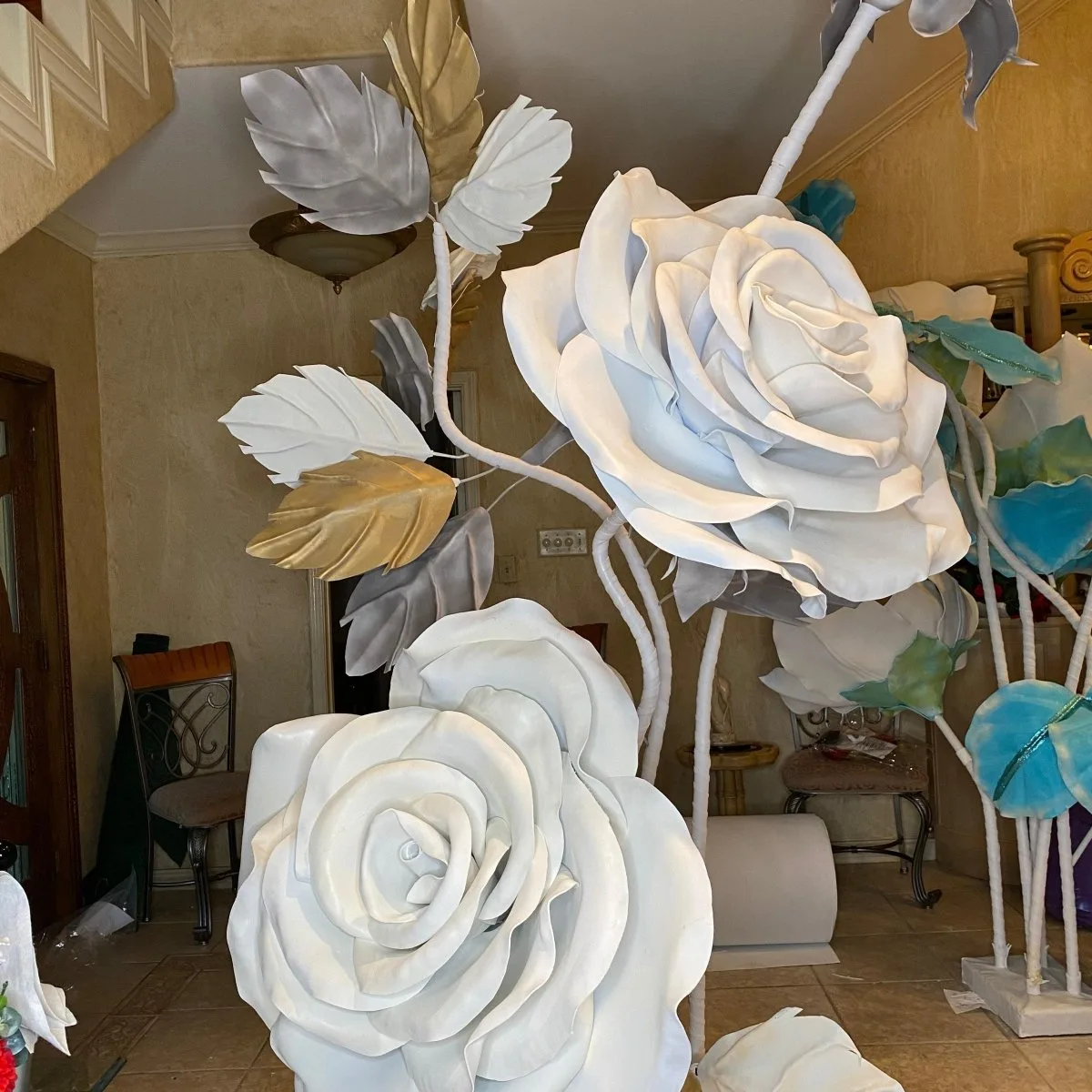
EVA Foam for School Mascots & Spirit Props

If you've ever watched a student haul a papier-mâché mascot head across a parking lot in the rain — only to watch it slowly dissolve — you already know why mascot foam props are a total game-changer for schools. EVA foam is the material that changes everything. It's lightweight, it's tough, and honestly? It survives things that would destroy pretty much any other craft material.
I'm Adriana, and I've been working with EVA foam for years — making giant flowers, props, costumes, you name it. But some of my favorite conversations are with PTA volunteers and drama teachers who are trying to stretch a $200 budget across an entire school year of spirit events. That's exactly who I built this guide for.
Whether you're building a giant foam bulldog for homecoming, crafting spirit props for the pep rally, or trying to create something the cheerleaders can actually reuse next year — this is your deep dive into why EVA foam is the smartest material your school craft budget has never tried.
Key Takeaways
Real talk? Most school spirit props are built to survive exactly one event. Cardboard gets wet. Paper flowers shred. Foam board cracks when you look at it wrong. And then someone has to rebuild everything from scratch for the next pep rally, and the next, and the next.
EVA foam — ethylene-vinyl acetate, if you want the full name — is the material that actually lasts. It's what cosplay builders use for armor that gets worn to convention after convention. It's what theater departments use for props that go through hundreds of performances. And it's what I use for giant flowers that get shipped across the country and set up by people who've never crafted a day in their life.
The Durability Factor
EVA foam is water-resistant, flexible, and impact-absorbent. That means your homecoming float decoration isn't going to crumble if it rains. Your mascot prop won't crack if a student bumps into it. And your cheerleading squad's giant spirit signs will look just as good in October as they did in August.
I've had customers tell me their foam props have survived three, four, even five school years. That's not an accident — that's the material doing exactly what it's designed to do.
Here's the math that PTAs love: if you spend $40 on EVA foam rolls and build a set of spirit props that last five years, you've spent $8 per year. Compare that to buying disposable decorations every single season. The reusability of foam is where the real savings live.
Ok, this is where it gets really fun. Not all EVA foam is the same, and picking the right thickness is honestly the difference between a prop that looks amazing and one that flops — literally.
We carry foam in 2mm, 4mm, 6mm, 8mm, and 10mm thicknesses, and each one has a sweet spot for different parts of a mascot or spirit prop build.
My honest recommendation for most school mascot builds? Start with 6mm for the main structure and 2mm for the detail layers. That combo gives you strength where you need it and flexibility where you want it.
💡 Pro Tip
Always use a heat gun to shape your EVA foam before it cools — you have about 10–15 seconds of working time after heating to curve, bend, or mold it into shape. Want to learn more about this technique? Check out our guide on Heat Gun Techniques: Shaping Foam Flower Petals Like a Pro.
What You Can Actually Build: Spirit Prop Ideas for Every School Event
So here's the thing — EVA foam isn't just for mascot heads. Once your school's craft committee gets their hands on it, the ideas start flying. I've seen PTAs use it for everything from pep rally tunnel decorations to graduation photo backdrops.
🌸 Ready to get started?
Browse our full EVA Foam collection — rolls and sheets in every thickness your school spirit build needs.
This is the question I get more than almost any other. People assume foam is hard to paint. It's not — you just have to know the right prep steps, and then you're golden.
Acrylic paint is your best friend. It's flexible when dry, which means it won't crack when your foam bends. Avoid oil-based paints — they can degrade the foam over time and they take forever to dry, which nobody has time for when the pep rally is tomorrow.
For a really smooth, professional finish, seal the foam with Plasti-Dip or a flexible gesso primer first. This fills in the tiny pores on the foam surface and gives your paint something solid to grip. The difference in the final look is dramatic — we're talking craft-fair quality versus theatrical prop quality.
If your props are going outside — on a float, at a stadium, in the parking lot — finish everything with a flexible sealant or mod podge. This protects against moisture and UV fading. Your school colors will stay vibrant even after multiple seasons. For more detailed painting guidance, our post Your Guide to Flawless Foam Board Paint Finishes has everything you need.
One of the things I love about EVA foam is that you don't need a fancy workshop to work with it. A folding table in the school cafeteria is genuinely all the space you need.
Want to go deeper on cutting technique? Our guide The Best Way to Cut Foam for Flawless DIY Crafts walks through everything step by step.
💡 Pro Tip
Print your mascot design at full scale and use it as a cutting template directly on the foam sheet. Tape it down, trace around the edges with a marker, then cut. This saves so much time compared to freehand cutting and keeps every piece consistent — which matters a lot when students are building in teams.
Storing and Reusing Your Foam Spirit Props Year After Year

This is honestly where the real value of EVA foam shows up. Because the whole point of investing in quality materials is that you don't have to start from scratch every single year.
Storage Best Practices
Keep foam props flat or loosely rolled — never fold them sharply, because a hard crease can become permanent. Store them in a cool, dry place away from direct sunlight. A labeled bin in the storage room works perfectly.
For 3D mascot builds, stuff the hollow sections with crumpled paper or bubble wrap to help them hold their shape during storage. And take a photo of everything before you pack it away — future PTA volunteers will thank you when they're trying to figure out what goes where.
Touch-Up Between Seasons
The beauty of painted EVA foam is that touch-ups are easy. A little acrylic paint and a brush, and your props look brand new. No rebuilding, no rebuying — just a quick refresh and you're ready for another year of spirit season.
"When a PTA volunteer told me their foam mascot props had survived four homecomings and two gym renovations, I wasn't even surprised. That's just what this material does."
Frequently Asked Questions

Is EVA foam safe for students to work with?
Yes — EVA foam itself is non-toxic and safe to handle. The main precautions are around the tools: heat guns and craft knives should always be used with adult supervision. For younger students, pre-cut foam pieces work great so they can focus on assembly and painting without the cutting step.
How much EVA foam do I need for a mascot head prop?
It really depends on the size of your build, but for a typical mascot head (roughly 18–24 inches across), you're looking at one to two rolls of 6mm foam for the main structure, plus a half roll of 2mm for detail layers. I always recommend buying a little extra — it's better to have foam left over than to run short mid-project.
Can EVA foam props survive outdoor events and rain?
EVA foam is naturally water-resistant, so a little rain won't ruin it. The paint is the more vulnerable part — which is why sealing with a flexible waterproof topcoat before
Ready to Create Something Amazing?
Browse our collection of giant flower kits and start your next project today.