How Many Giant Flowers Do You Need? A Room-by-Room Guide

So you've decided to go big — literally — and you're planning your first giant flower display. Amazing! But now you're staring at the screen wondering: how many flowers for backdrop coverage do I actually need? Too few and it looks sparse. Too many and you've blown your budget on foam you'll never use. I've been there, and I want to save you from that exact headache.
When I first started Amazing Giant Flowers, I was obsessed with this question. I'd get DMs every single day from first-timers saying "Adriana, I ordered 12 flowers and now I have 6 leftover" or the opposite — "I thought 8 would be enough and my backdrop looks like it's missing teeth." Neither is fun. So I finally sat down and mapped it all out, room by room, event by event.
This guide is specifically for you — the first-time DIYer who wants to get it right the first time, spend smart, and end up with a backdrop that makes everyone's jaw drop. Let's do this.
Key Takeaways
Here's the thing — giant flowers aren't like balloons where you can just grab a few more at the dollar store if you run short. These are pre-cut EVA foam kits that you build, shape, and style. They take time. And if you're working toward a wedding, a quinceañera, or a baby shower with a hard deadline, running out mid-build is a nightmare.
One of my customers — a first-time mom throwing her daughter's quinceañera — ordered 8 flowers for a 10-foot wall and called me two days before the party in a panic. We rushed her an extra order, but the shipping stress was totally avoidable.
Buying the right amount from the start means less waste, less stress, and more money left over for the other gorgeous details that make your event special.
The Two Big Mistakes First-Timers Make
- Underestimating coverage: Assuming one big flower fills more space than it actually does on a wide wall.
- Ignoring negative space: Thinking every inch needs a flower — it doesn't, but you still need enough blooms to anchor the design.
Understanding Flower Sizes Before You Count
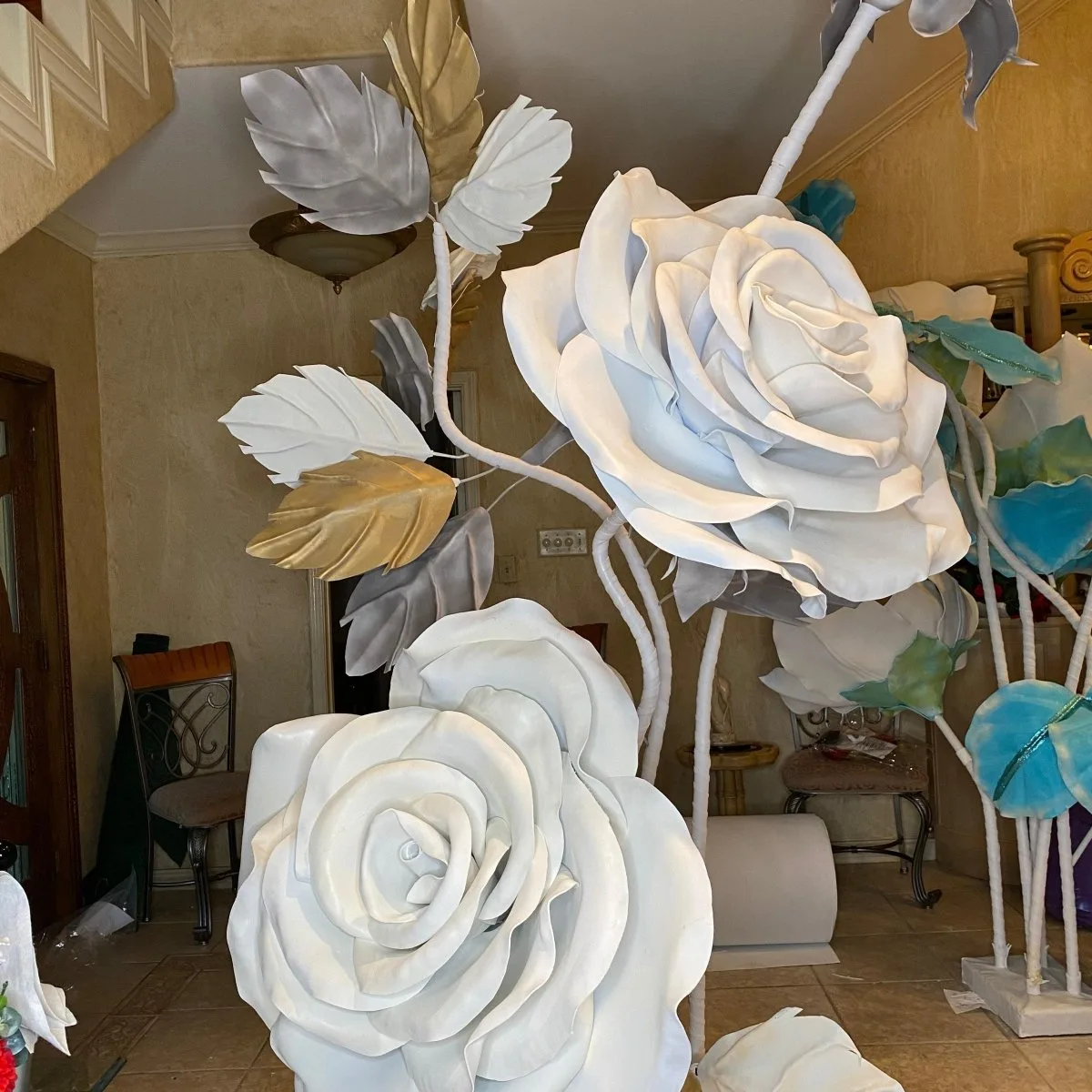
Before we get into room-by-room numbers, let's talk sizes. Our freestanding giant flower kits are designed to stand 5 feet tall, but the bloom head itself is what determines how much wall or backdrop space each flower covers.
Here's a quick cheat sheet on how much visual space each bloom diameter takes up:
The magic happens when you mix sizes. A 30-inch bloom surrounded by 18-inch accent flowers creates that lush, layered look you see at high-end events — and it actually costs less than filling the whole space with large blooms.
💡 Pro Tip
Plan your layout on paper first. Sketch your backdrop dimensions on a piece of graph paper and draw circles representing each bloom size. This takes 10 minutes and saves you from a very expensive guessing game.
Ok, this is where it gets really fun. Let me walk you through the most common spaces and event types I hear about every week. These counts are based on using a mix of 24-inch and 30-inch blooms as your primary flowers, with 18-inch fillers where noted.
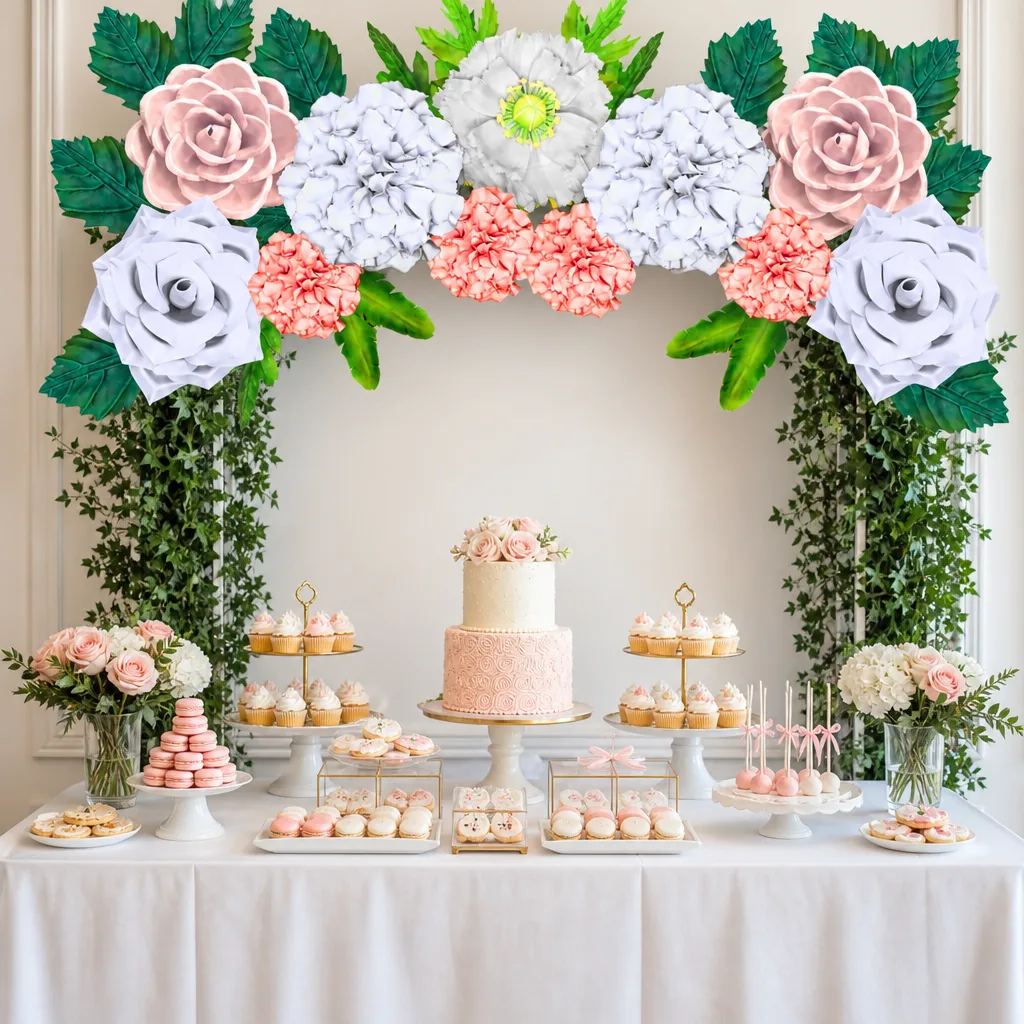
This is the most popular setup — think birthday parties, bridal showers, baby showers. An 8×8 backdrop has 64 square feet of space, but you're not trying to wallpaper every inch.
My personal recommendation for first-timers? Start with 12 flowers in mixed sizes. It's enough to look intentional and full without going overboard.
Wedding backdrops get a little more serious. You've got more width to fill, and the photos are going to live forever. Check out our full guide on Giant Flower Wedding Arches for detailed styling ideas, but here's the quick count:
Smaller, more intimate. This is a great starter project for first-timers because the scale is manageable and forgiving.
This is where you make a statement the second guests walk in. I love these for baby showers, graduation parties, and corporate events.
🌸 Ready to get started?
Browse our Freestanding Giant Flower Kits — pre-cut EVA foam, video tutorials included, and priced from $80. No experience needed.
Freestanding vs. Wall-Mounted: Does It Change the Count?
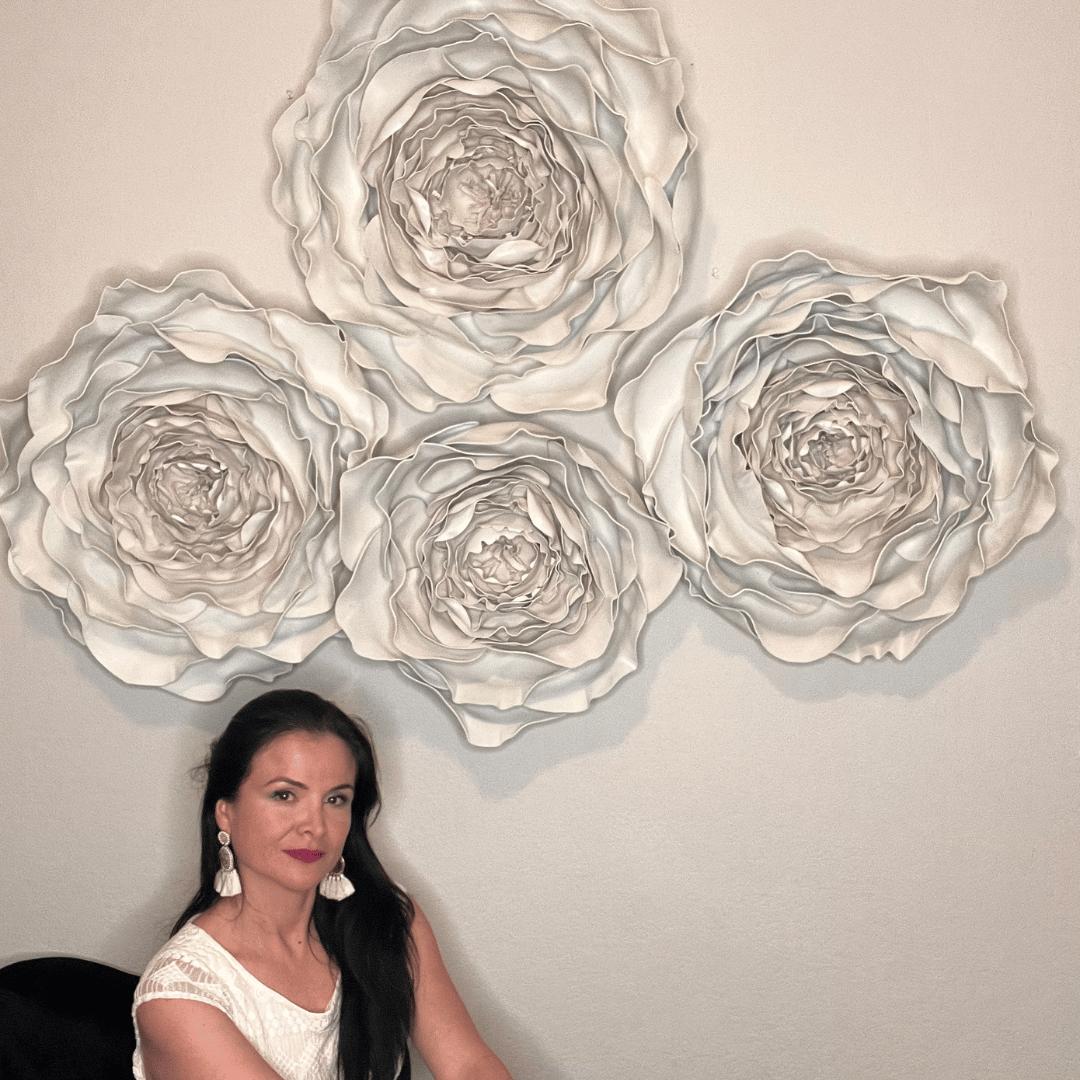
Yes — and this trips up a lot of first-timers. Freestanding flowers are three-dimensional. They have presence from every angle, which means you actually need fewer of them to create visual impact compared to flat wall arrangements.
Our freestanding giant flower kits use bendable pipes to create that natural, organic stem curve. A single 5-foot freestanding flower placed at the corner of a dessert table does the work of 3 wall-mounted blooms in terms of visual drama.
Freestanding Flower Count by Setup Type
| Setup | Recommended Count | Notes |
|---|---|---|
| Flanking a doorway or arch | 2–4 flowers | 1–2 per side, vary heights |
| Dessert table or cake table accent | 2–3 flowers | Cluster behind the table |
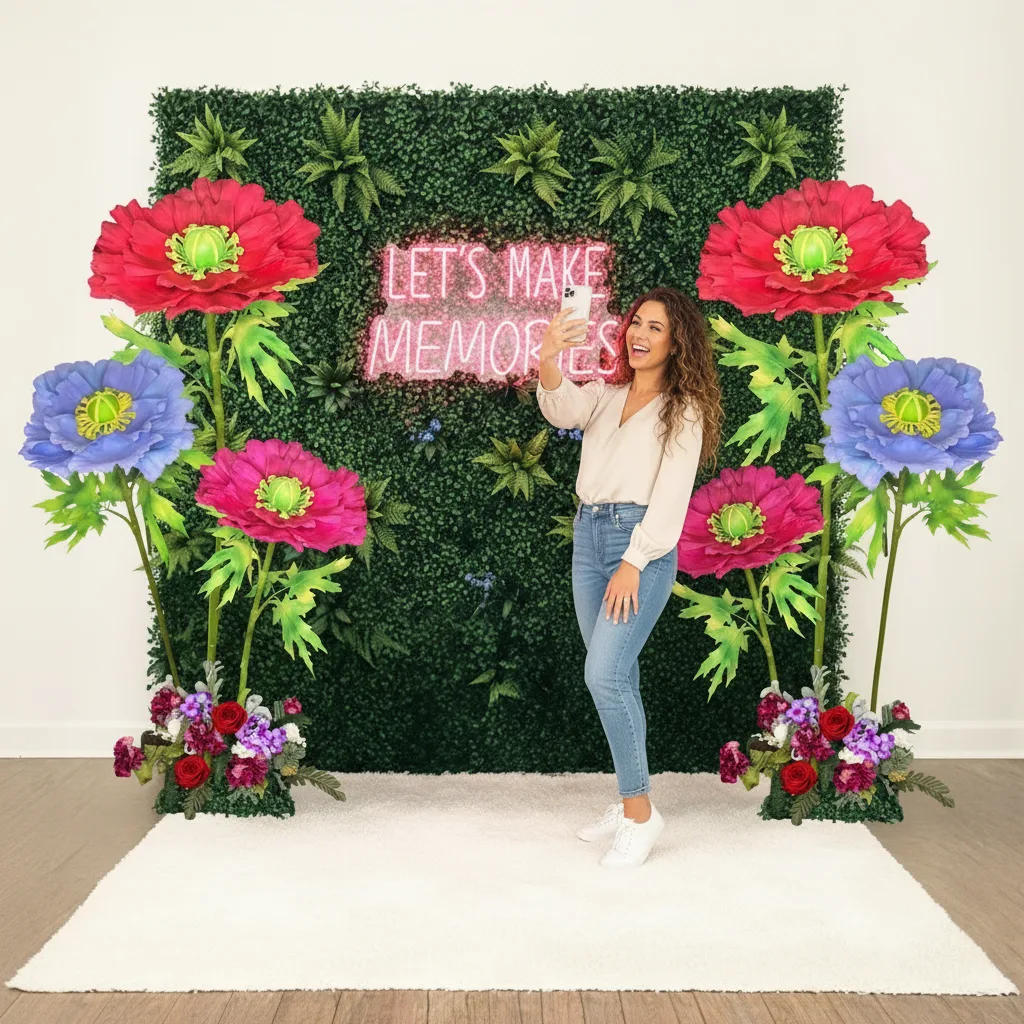
| Photo booth backdrop (freestanding only) | 6–10 flowers | Arrange in a tight cluster or arch shape |
| Ceremony aisle markers | 8–16 flowers | 1 per pew row on each side |
| Full room corner accents | 3–5 per corner | Mix heights for a natural garden feel |
If you're curious about combining freestanding and wall flowers in the same design, I've got a whole deep-dive on freestanding giant flower arrangements for events that walks through the planning process step by step.
The "No Waste" Formula: How to Calculate Your Exact Number
Real talk? There's a simple formula I use with every customer who asks me this question. It's not perfect science — design never is — but it gets you really close.
Step 1: Measure Your Space
Write down your backdrop width × height in feet. Example: 8 ft wide × 7 ft tall = 56 sq ft total area.
Step 2: Decide on Your Coverage Style
- Light coverage (20–30% of area filled): Multiply total sq ft by 0.25, then divide by your average bloom coverage (use 3.5 sq ft for 24-inch blooms)
- Medium coverage (40–50%): Multiply by 0.45, divide by bloom coverage
- Full, lush coverage (60–70%): Multiply by 0.65, divide by bloom coverage
Example: 56 sq ft backdrop, medium coverage → 56 × 0.45 = 25.2 sq ft of blooms needed → 25.2 ÷ 3.5 = about 7 large blooms. Add 3–4 smaller 18-inch fillers and you're at a beautiful 10–11 flower arrangement.
Step 3: Add Your Buffer
Always, always add 10–15% to your final count. Round up to the nearest whole number. If your math says 10, order 11 or 12. The extra flowers cost far less than the stress of running short.
💡 Pro Tip
Leftover EVA foam flowers don't go to waste! Extra blooms make gorgeous centerpieces, aisle markers, or accent pieces for your dessert table. Check out our giant flower centerpiece ideas for inspiration on using every single bloom you build.
Color and Style: How Your Design Choices Affect the Count
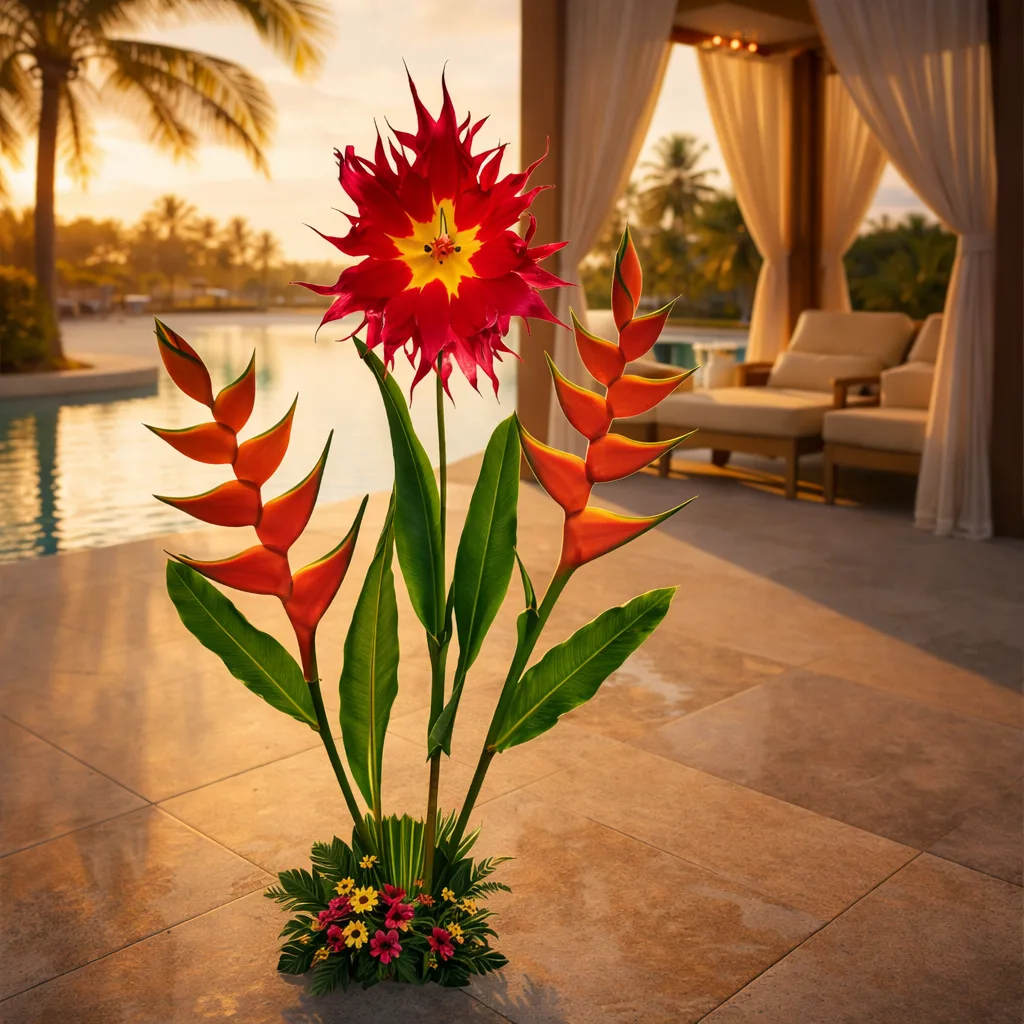
This is something nobody talks about enough. Your color palette and arrangement style directly impact how many flowers you need.
Monochromatic Arrangements Need More Flowers
When everything is the same color (say, all white), your eye needs more density to register the texture and depth. You'll want to go toward the higher end of any count range I've given you. For white flower walls specifically, I've got a full styling guide over at White Flowers on Wall: A Pro's How-To Guide.
Multi-Color Arrangements Can Use Fewer Flowers
Contrast between colors creates visual interest and makes the arrangement feel fuller than it is. A mix of coral, blush, and cream can look lush with 20% fewer flowers than an all-
Ready to Create Something Amazing?
Browse our collection of giant flower kits and start your next project today.