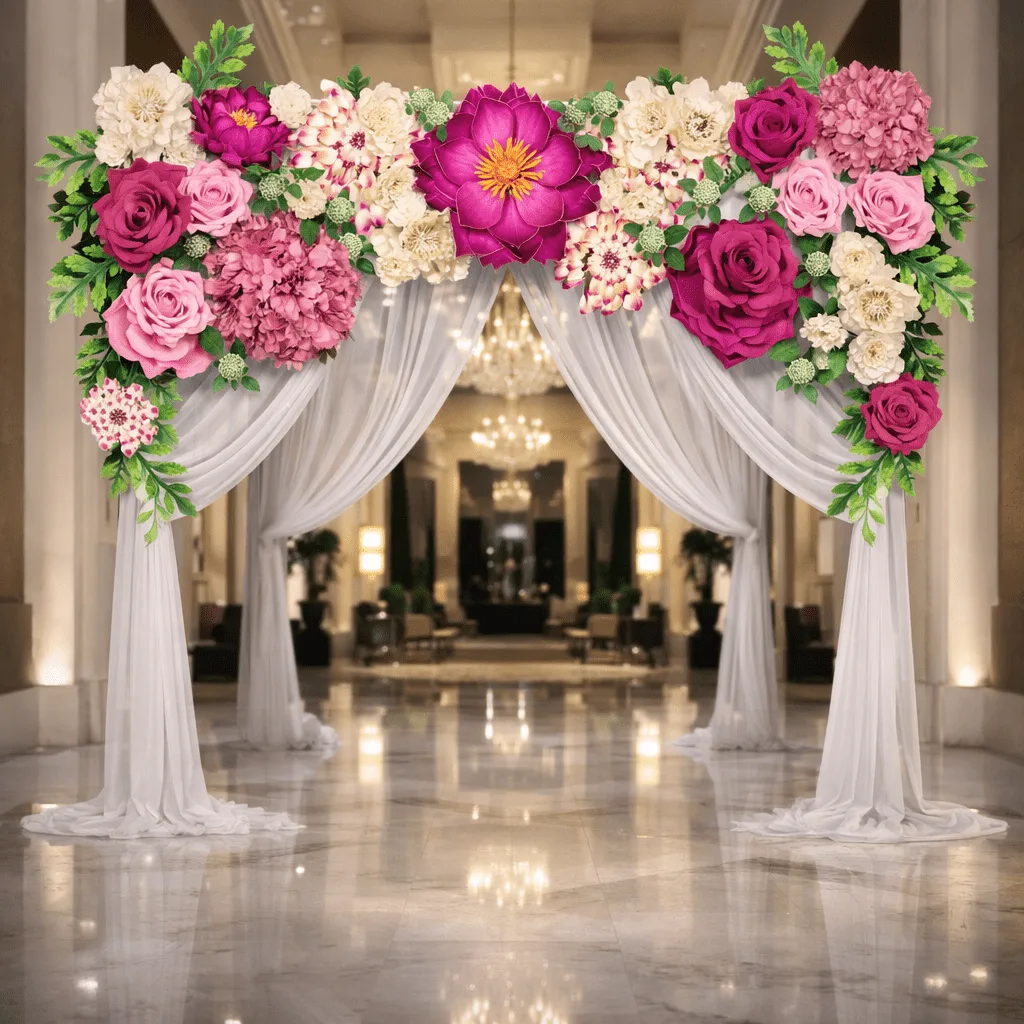
Wedding Ceremony Flower Wall as Altar Backdrop

There's a moment during every wedding ceremony that I absolutely live for — when the couple walks in and sees their altar for the first time, completely finished and glowing. And if there's a ceremony flower wall behind that altar? Oh friend, the gasps are real. I've seen it happen over and over, and it never gets old.
Here's the thing about a flower wall backdrop at the altar: it's not just decoration. It's the thing everyone's eyes go to the entire ceremony. Every photo, every video, every memory — all framed by this tall, lush, romantic focal point that you actually made yourself. That's the part that gets me every time.
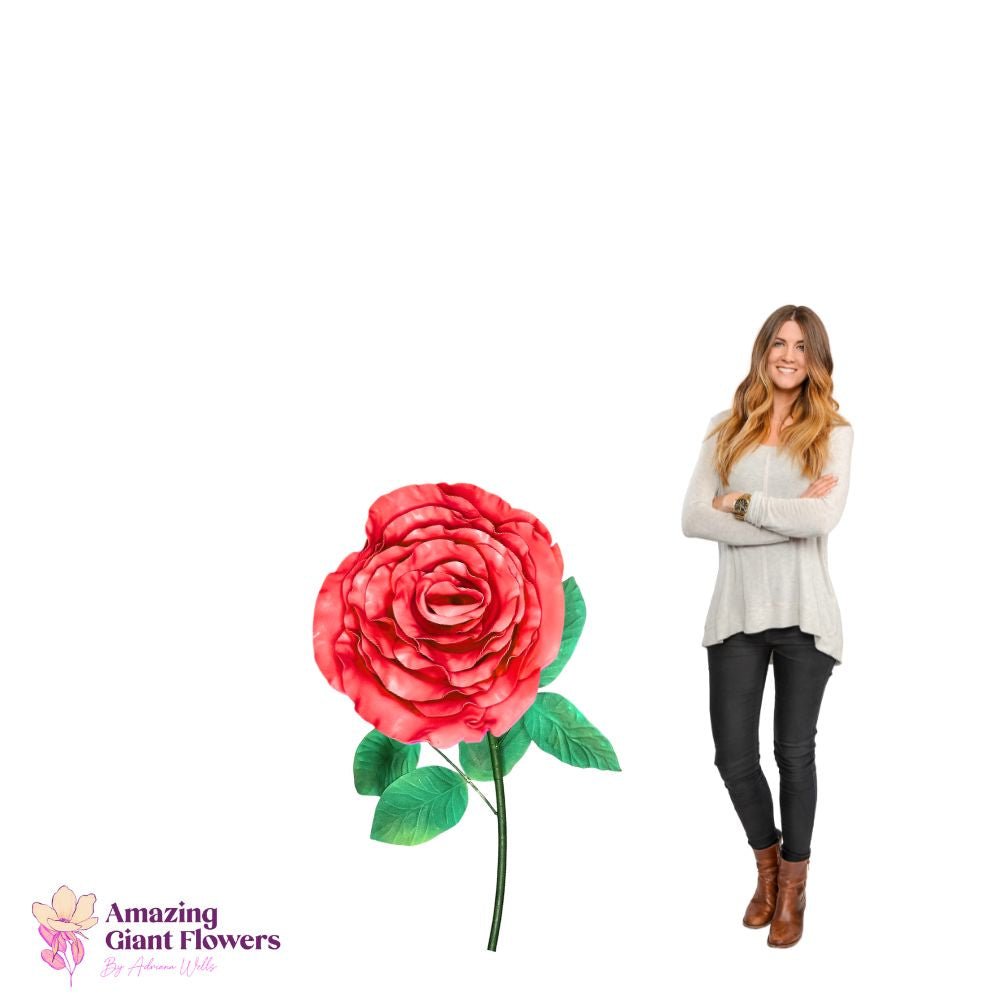
I started Amazing Giant Flowers because I believed couples deserved stunning, professional-looking décor without the insane price tag. And our Wall Flower Kits — starting at just $37.99 — are honestly one of my favorite ways to help couples pull that off. Let me walk you through everything you need to know.
Key Takeaways
Let me be direct with you: the altar is the most photographed spot at your entire wedding. It's where you'll stand for 20–45 minutes while every single guest stares at you. It's the backdrop for your first kiss photos, your vow exchange, your ring shots. Whatever is behind you matters enormously.
A ceremony flower wall solves a problem that a lot of couples don't even realize they have until they're looking at their photos. Plain walls look flat. Fabric draping looks dated. But a wall of giant blooms? That's texture, dimension, color, and romance all at once.
The Height Factor Is Everything
This is where giant flowers really shine. When you're building a backdrop with 24" and 30" blooms, you're creating something that fills the frame vertically. It doesn't just sit at eye level — it towers. It commands the room. And for ceremony photography especially, that tall romantic focal point makes your altar look like something out of a magazine spread.
I always tell couples: go bigger than you think you need to. A 30" flower looks massive in your living room. At a ceremony venue with 14-foot ceilings? It's exactly right.
Your photographer is going to shoot wide, medium, and tight. They're going to shoot from the back of the room, from the side aisle, from right up close. A full flower wall backdrop looks stunning in every single one of those shots. There's no bad angle when you're surrounded by blooms.
Videographers love them too — a lush backdrop gives footage that cinematic quality that's almost impossible to achieve with a plain or fabric-draped wall. When you watch your wedding video back years from now, you'll be so glad you went for it.
This is where it gets really fun. Our Wall Flower Kits come in 18", 24", and 30" — and the magic is in how you mix them. A backdrop that uses only one size looks a little flat. But when you layer different scales? That's when it starts looking truly lush and professional.
For a standard 8-foot wide altar backdrop, I'd typically recommend starting with 4–6 large (30") anchor flowers, then filling in with 24" and 18" blooms until you've got the density you're going for.
💡 Pro Tip
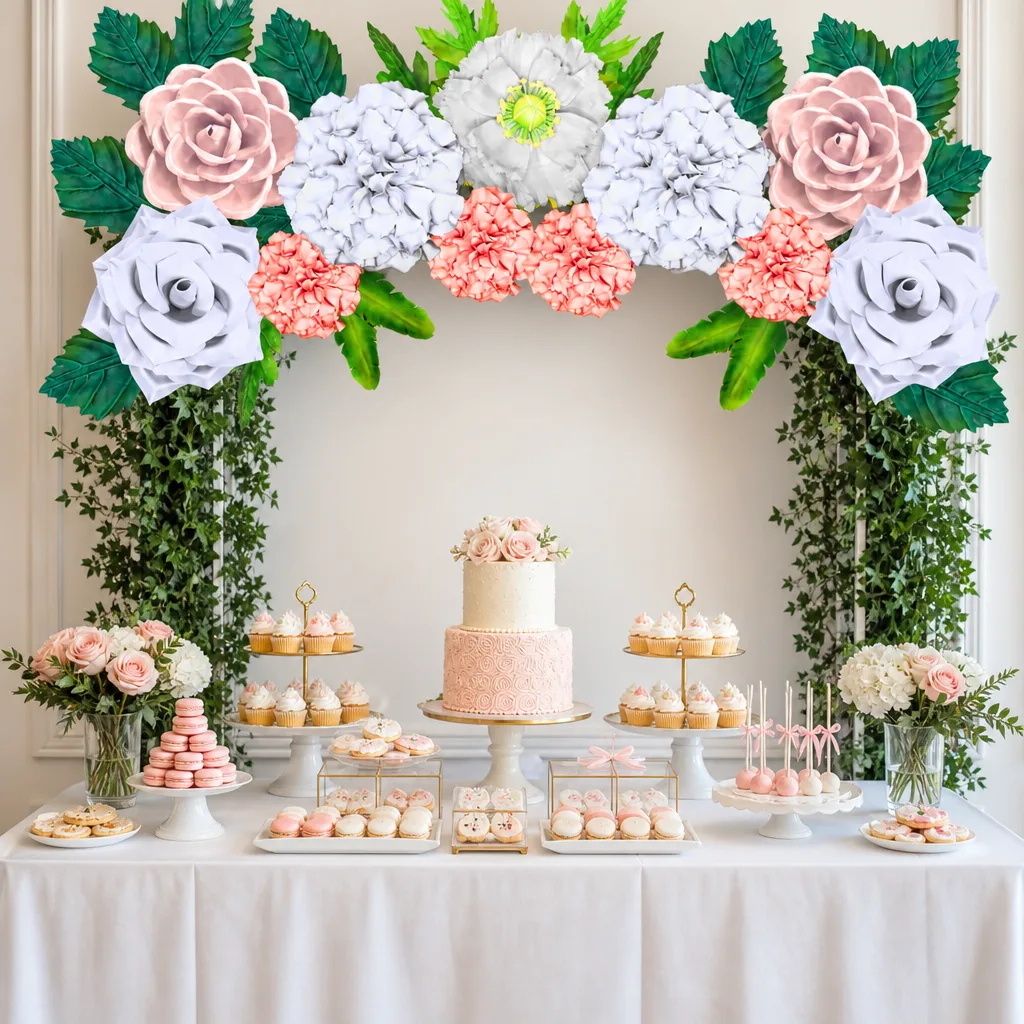
Order a few extra flowers in your smallest size. They're incredibly useful for filling gaps and creating that seamless, overflowing look. You can always use leftover 18" blooms at your reception tables or cocktail hour — nothing goes to waste!
How Many Flowers Do You Actually Need?
Real talk? This is the question I get most. And the honest answer depends on how full you want your backdrop to look. Here's a rough guide for a typical 8' wide x 8' tall ceremony backdrop:
I always say: if you're on the fence, go one step fuller than you think. Sparse backdrops can look unfinished in photos, especially once you're standing in front of them and your dress is taking up visual space.
This is the part that makes people nervous, but I promise — it's so much more straightforward than it sounds. You've got a few different options depending on your venue.
If your venue allows it (always ask!), mounting directly to the wall gives you the most stable, seamless result. Each flower in our Wall Flower Kits comes with a center mounting point. You can use Command strips for lighter arrangements or small nails/screws for permanent or semi-permanent installs.
This works beautifully for venues that have exposed brick, painted drywall, or wood-paneled walls. The flowers sit flush and look completely intentional.
This is my favorite option for venues that don't allow wall mounting. A standard pipe-and-drape setup — the kind event rental companies carry — gives you a freestanding frame that you can attach flowers to using zip ties, floral wire, or heavy-duty adhesive strips. Super sturdy, completely venue-friendly.
You can rent pipe-and-drape for $50–$150 depending on your area, or buy a basic backdrop stand for around $40–$80. Either way, it's a fraction of what a florist would charge just for setup.
This is a great option if you want a really clean, polished look. Mount your flowers onto foam board panels first, then attach the panels to a backdrop stand. Our EVA foam is perfect for this — it's lightweight but holds its shape beautifully. You can even paint the foam to match your color palette before adding flowers. (Check out our guide on flawless foam board paint finishes for tips on getting that color exactly right.)
Okay, let's talk design — because this is genuinely one of my favorite conversations to have. Your ceremony flower wall should feel intentional, not random. Here's how I think about it.
My honest advice? Stick to 3 colors max. One dominant, one secondary, one accent. More than that and it starts to look chaotic rather than curated. And always, always consider what you're wearing — your dress (or suit) needs to read clearly against the backdrop, not disappear into it.
Some of my favorite ceremony combos:
- Classic romance: Ivory + blush + dusty rose — timeless, soft, and flattering in every lighting condition.
- Garden party: White + sage green + pale lavender — fresh, airy, and gorgeous for outdoor or greenhouse venues.
- Bold and dramatic: Deep burgundy + cream + gold — stunning for evening ceremonies and candlelit venues.
- Tropical modern: White + coral + tropical green — perfect for destination weddings or couples who want something unexpected.
Layout Patterns That Actually Work
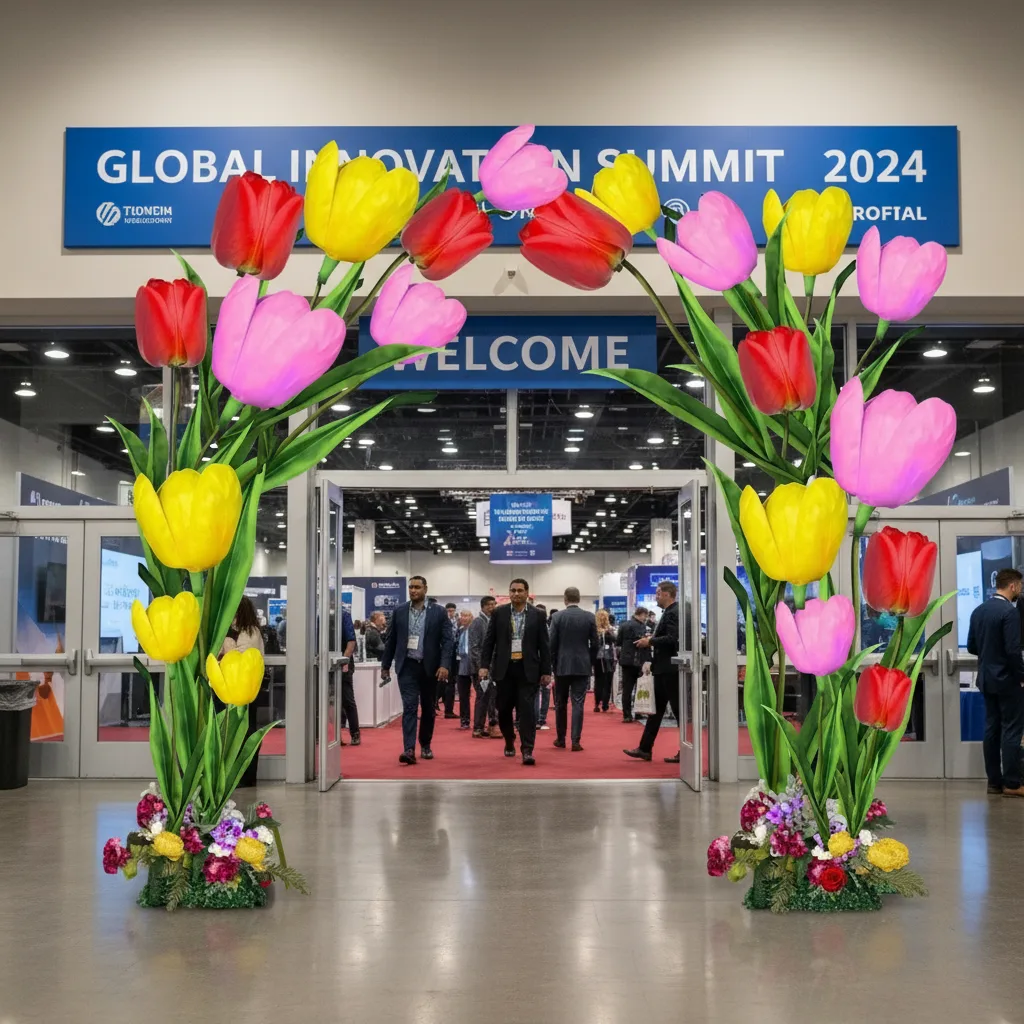
Don't just place flowers randomly — think in clusters and layers. Start by placing your largest blooms in a loose diagonal or triangular pattern across the backdrop. Then build outward from those anchor points with your medium and small flowers.
For a more complete look at how these layouts translate to arches specifically, I wrote a whole guide on giant flower wedding arches that's worth a read.
One of my absolute favorite things to recommend to couples is combining a wall flower backdrop with freestanding flower kits on either side of the altar. Here's why this works so well: the wall gives you height and drama, and the freestanding pieces give you depth and dimension. Together, they create a full floral environment — not just a backdrop, but an immersive moment.
Think of it like a stage set. The backdrop is your scenery. The freestanding pieces are your props. When you combine them, you're not standing in front of flowers — you're standing inside them. That's the kind of thing guests talk about for years.
Keep your color palette consistent across both. Let the wall be your densest element, and use the freestanding pieces more sparingly — maybe 2–3 tall arrangements flanking the couple. This creates visual balance without overwhelming the space.
I recommend building and assembling your backdrop 1–2 weeks before your wedding so you have plenty of time to adjust the layout, add more flowers if needed, and store it safely. Our EVA foam flowers are incredibly durable — they won't wilt, fade, or fall apart. You can store a fully assembled panel in a cool, dry space without any issues.
If you're painting your foam before assembly, give yourself a few extra days for drying time. Our post on painting on foam core has all the details you need to get a flawless finish.
Day-Of Setup: What to Expect
Budget about 2–3 hours for setup on the day of or the evening before, depending on your venue's access schedule. Bring a step stool for reaching the top of your frame, and have zip ties, floral wire, and Command strips on hand for any last-minute adjustments.
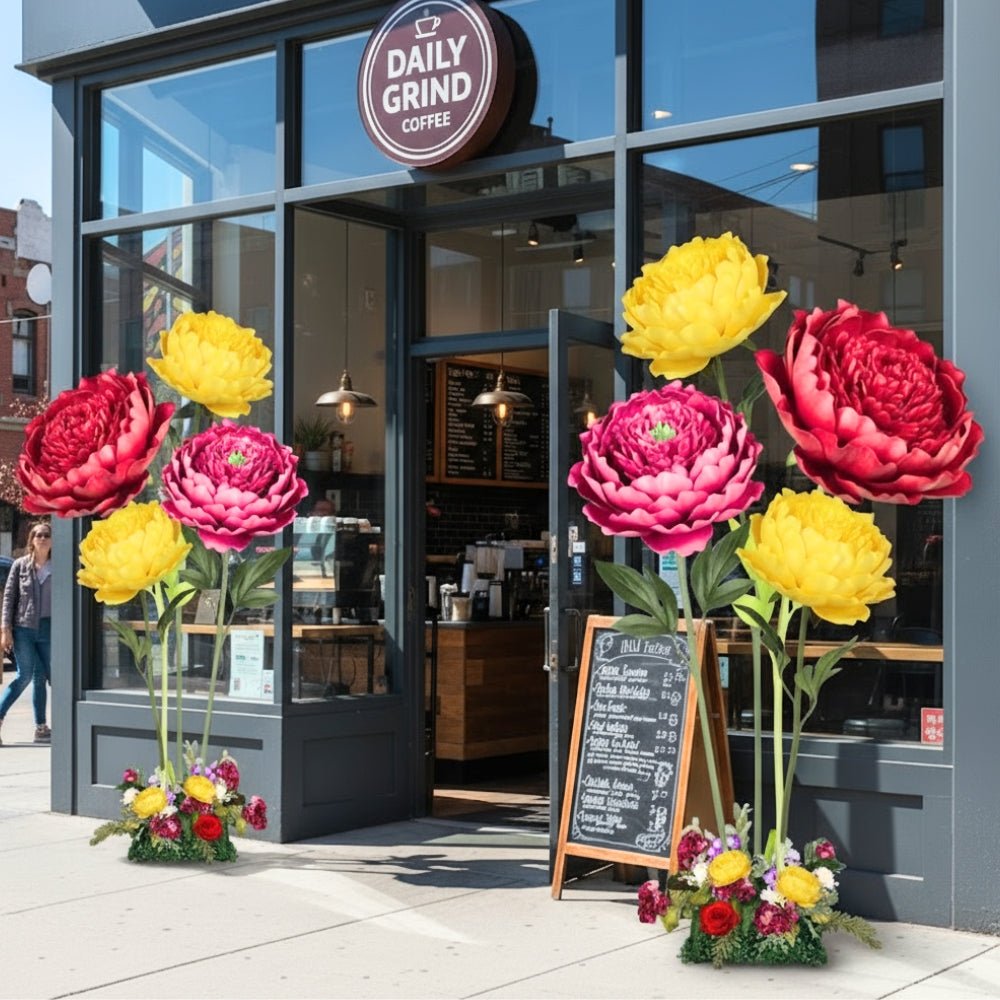
Absolutely — and this is one of my favorite things about DIY foam flowers. After your ceremony, your backdrop can move to the reception as a photo booth backdrop, hang in your home as art, or get repurposed for a bridal shower, anniversary party, or any future event. These flowers last for years with basic care.
I've had customers tell me they've used their ceremony flower wall at their baby shower, their first home housewarming, and their 5th anniversary party. That's incredible value for a one-time investment.
🌸 Ready to start planning your altar backdrop?
Browse our Wall Flower Kits — starting at $37.99 — and find the sizes and colors that match your vision perfectly.
For outdoor ceremonies, I always recommend a pipe-and-drape frame or a weighted backdrop stand rather than relying on a single wall mount. On a calm day, a well-secured wall flower backdrop is perfectly stable. But if there's any chance of wind, you want that frame anchored with sandbags or weights at the base.
Our EVA foam flowers are actually lighter than fresh or silk flowers, which helps — less weight means less stress on your mounting system. Just make sure everything is secured the night before so you're not scrambling on the morning of.
What's the difference between wall flower kits and freestanding kits for a ceremony backdrop?
Great question. Wall Flower Kits are designed to mount flat against a surface — a wall, a frame, a foam board panel. They're your backdrop. Freestanding kits are built to stand independently on the floor, usually on a stake or base. They create dimension in front of or beside your backdrop.
For a ceremony altar, I love using both: wall flowers for the backdrop itself, and freestanding arrangements flanking the couple on either side. It creates that full, immersive floral environment that looks absolutely incredible in photos. Check out our guide to freestanding giant flower arrangements for more inspiration.
This is honestly one of the most eye-opening comparisons I share with couples. A professional florist-made ceremony flower wall typically runs $800 on the very low end and $3,000+ for a full, lush backdrop — and that's before delivery, setup fees, or breakdown charges. With our Wall Flower Kits, most couples build a gorgeous full backdrop for $150–$400 in materials total, including the frame.
And remember — your foam flowers don't die after the wedding. That $300 investment gives you years of use across multiple events, which means the cost-per-use keeps dropping every time you bring them out again.
Most couples spend 4–8 hours total on their flower wall, spread across 1–2 sessions in the week or two before the wedding. That includes painting (if applicable), assembling individual flowers, and mounting them to your backdrop surface. It goes faster than you think — especially if you have a friend or partner helping.
Day-of or evening-before setup at the venue typically takes 1–3 hours depending on whether you're transporting pre-assembled panels or building on-site. Pre-assembled panels are always my recommendation — they make venue setup incredibly fast and stress-free.
Can I use a ceremony flower wall for a small or intimate wedding?
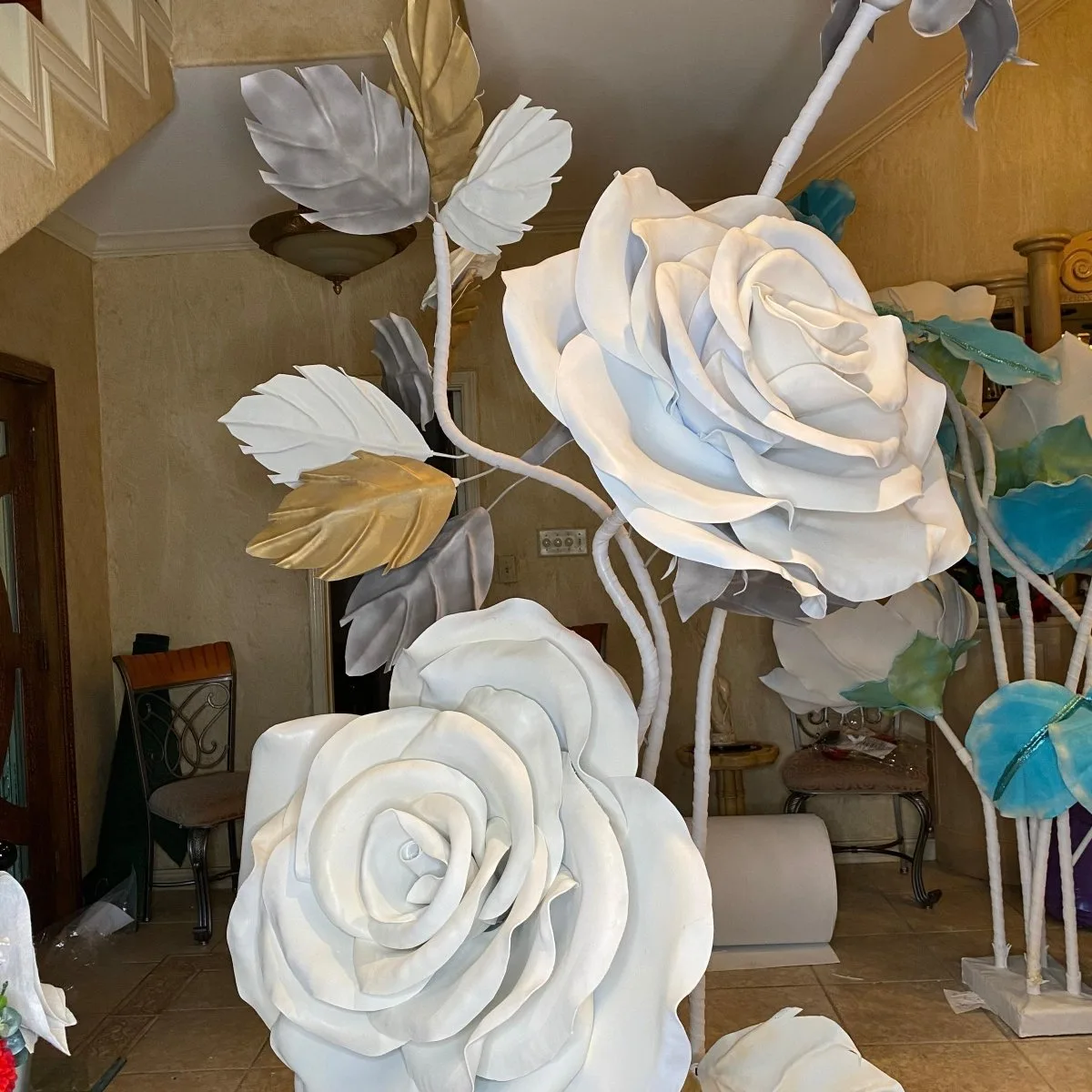
One hundred percent yes — and honestly, smaller weddings sometimes benefit even more from a stunning backdrop because the intimacy of the space makes it even more impactful. For a micro-wedding or elopement, you might scale down to a 4' wide x 6' tall backdrop with fewer flowers, which brings your total material cost down to $80–$150.
Even a simple cluster of 3–5 giant blooms mounted behind the couple creates an unforgettable focal point. It doesn't have to be floor-to-ceiling to be breathtaking — it just has to be intentional.
What flower styles work best for a ceremony flower wall?
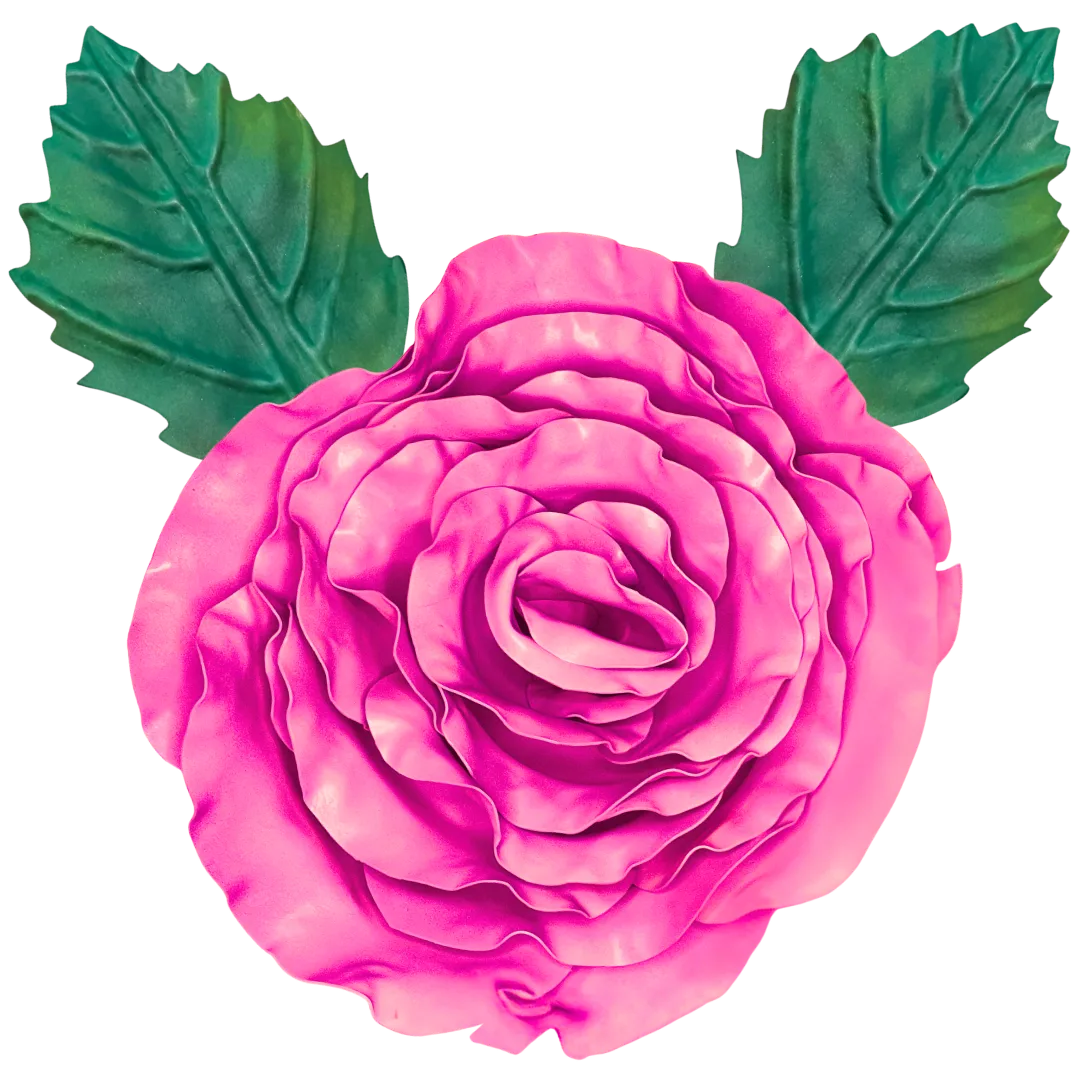
My personal favorites for ceremony backdrops are blooms with big, open faces that read clearly from a distance — think camellias, anemones, and tropical blooms for bold statements, or Star of Bethlehem styles for something more delicate and romantic.
Mixing flower styles — not just sizes — adds another layer of visual richness to your backdrop. Try combining a round, full bloom with a more star-shaped or layered bloom for contrast. That variety is what makes a backdrop look like it was designed by a professional rather than assembled from a single template.
Shop the supplies
Everything You Need for This Project

Written by
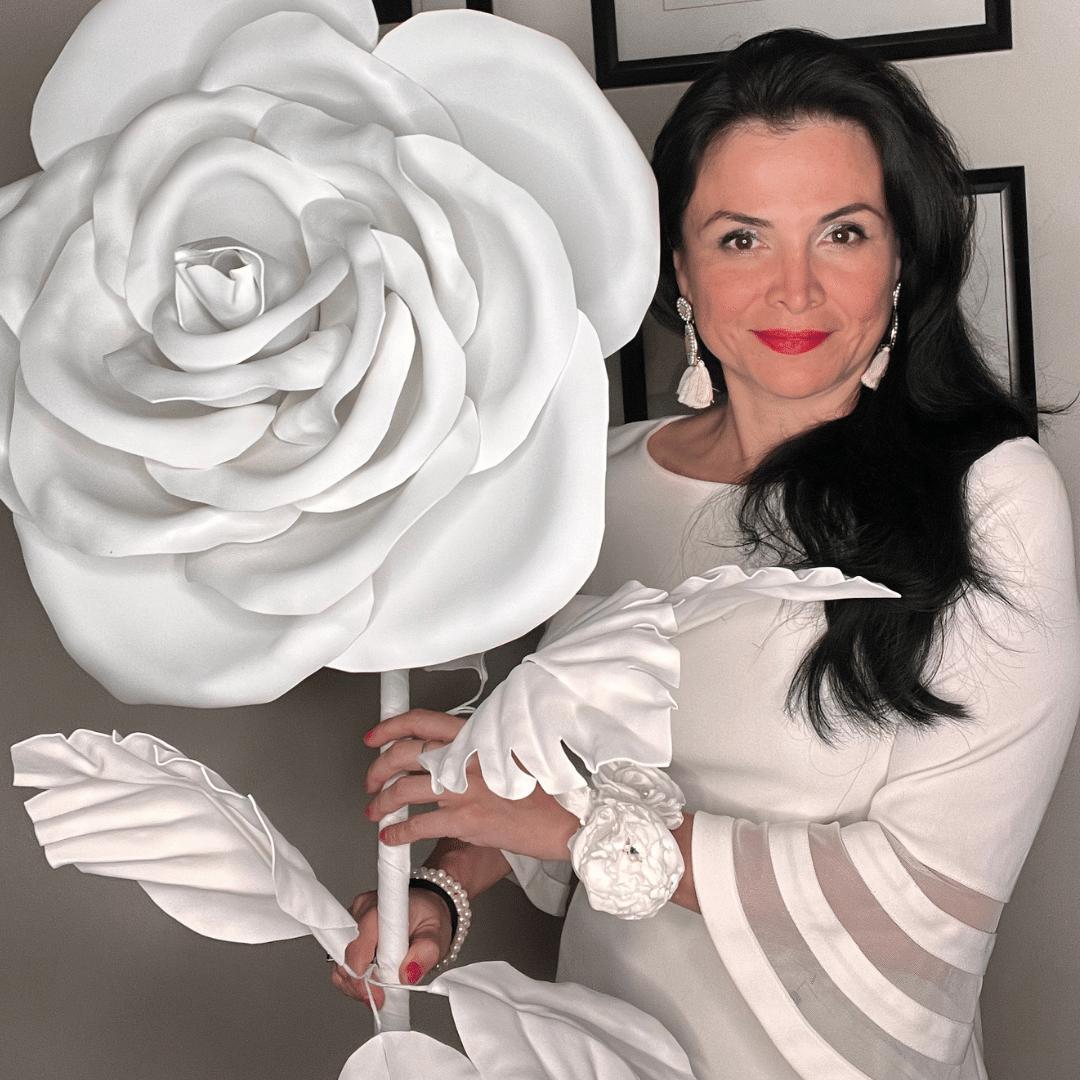
Adriana WellsFounder & CEO of Amazing Giant Flowers
Adriana Wells is the founder and creative force behind Amazing Giant Flowers, a Texas-based company specializing in handcrafted giant foam flowers, luxury floral installations, and DIY flower-making supplies.
More about Adriana →Ready to Create Something Amazing?
Browse our collection of giant flower kits and start your next project today.