Best Glue for EVA Foam Flowers: Hot Glue vs Contact Cement
Key Takeaways
- Hot glue is fast, beginner-friendly, and great for layering petals and quick assembly — but it can pull apart under heat or stress.
- Contact cement creates a permanent, flexible bond that's ideal for structural joins and professional-grade installations.
- For most DIY giant flower projects, hot glue wins on convenience; for long-term event installs or commercial work, contact cement is worth the extra steps.
- Glue temperature matters — low-temp hot glue guns are safer for thin EVA foam (2mm-4mm) and won't melt your petals.
- The best results often come from using both — contact cement for structural bonds, hot glue for decorative layering.
Why Glue Choice Actually Matters for EVA Foam
The good news is that once you understand *why* EVA foam behaves the way it does, choosing the right adhesive gets a lot easier. The foam is flexible, which means your glue needs to be flexible too. A rigid adhesive will crack and pop off as the foam bends. According to ScienceDirect, EVA (ethylene-vinyl acetate) has a Shore A hardness typically between 25-75, meaning it's genuinely soft and pliable. Your adhesive has to move with it.
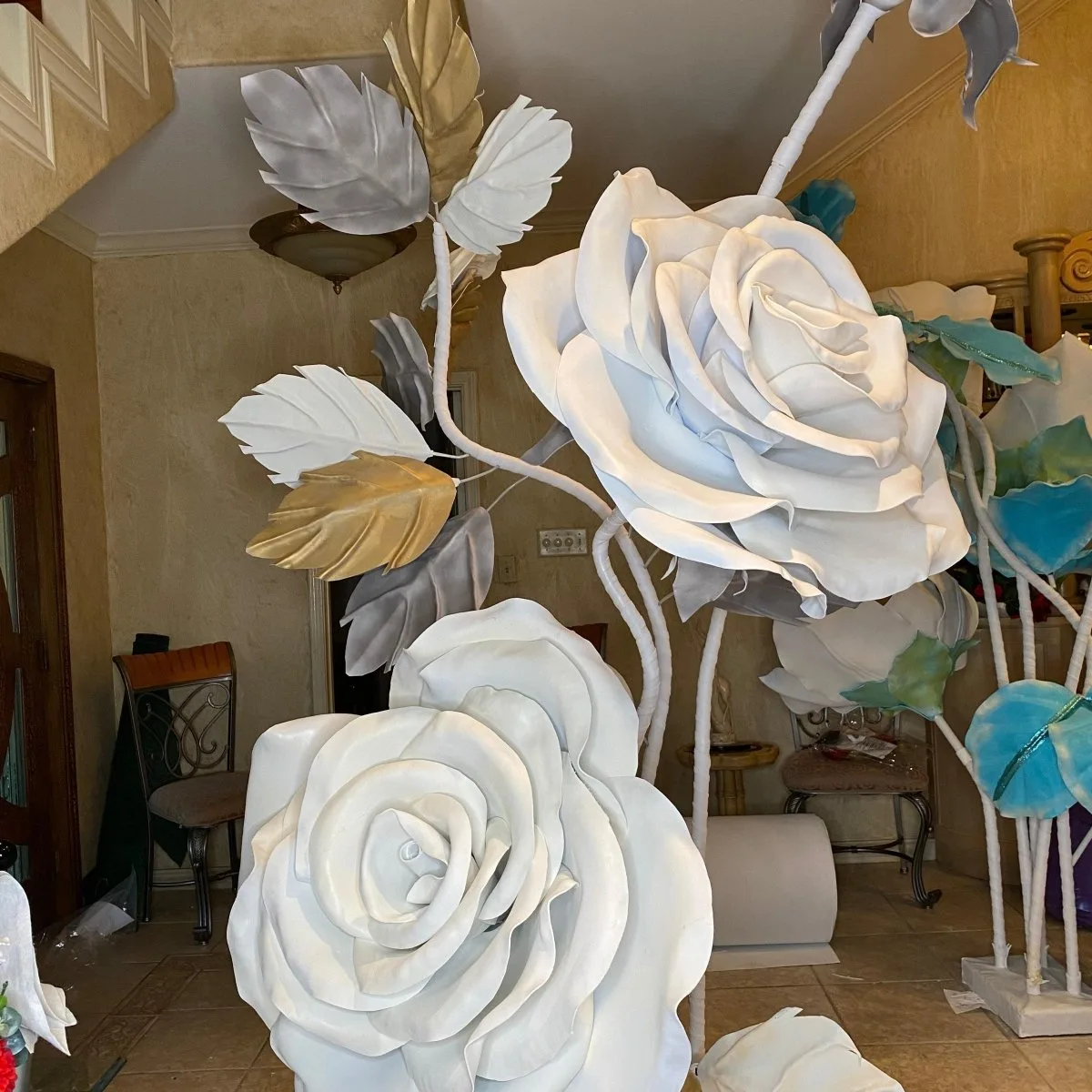
Giant flowers — especially the 2-5 foot blooms we specialize in here at Amazing Giant Flowers — put real stress on adhesive joints. Petals shift during transport. Stems flex. Wall-mounted pieces get bumped. The glue isn't just decorative. It's structural.
Hot Glue for EVA Foam Flowers: The Full Picture
How Hot Glue Bonds to EVA Foam
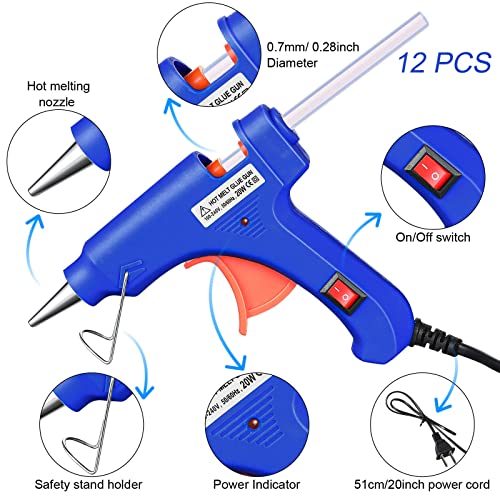
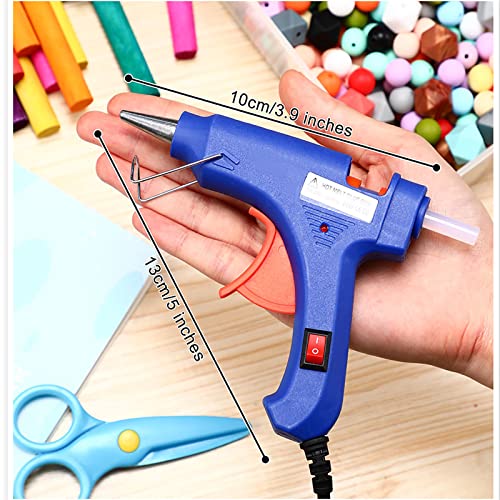
Hot glue works by melting a thermoplastic adhesive stick and depositing it in a molten state. When it cools, it solidifies and grips the surface. With EVA foam, it actually bonds reasonably well because the heat slightly softens the foam surface, creating a bit of mechanical adhesion. The key word there is "slightly." It's not a chemical bond. It's more of a surface grip.This means hot glue joints can be peeled apart with enough force — or with heat. Leave your flowers in a hot car in Texas summer? Yeah, I've seen hot glue joints soften and release. Houston heat is no joke.
High-Temp vs Low-Temp Hot Glue Guns
This is something a lot of beginners don't know, and it makes a huge difference. There are two main types:- High-temperature guns (380°F / 193°C): Stronger bond, faster set, but they can melt thin EVA foam (2mm or less) and leave visible dents or warping in your petals.
- Low-temperature guns (250°F / 121°C): Safer for delicate foam, less likely to warp petals, but slightly weaker bond and slower working time.
- Dual-temp guns: My personal favorite for flower-making. Switch between modes depending on what you're gluing. Worth the extra $15-20.
For our pre-cut EVA foam kits (which range from 2mm to 8mm thickness depending on the flower style), I almost always recommend low-temp for the thin decorative layers and high-temp for attaching stems or heavier structural pieces.
Where Hot Glue Shines
Honestly? For a weekend DIY project, a bridal shower backdrop, or a birthday party installation that's up for a day or two, hot glue is absolutely your best friend. Here's why I love it:- Speed: Sets in 30-60 seconds. You can assemble an entire giant flower in under 20 minutes once you're comfortable.
- Repositionability: Made a mistake? You can often peel it apart and re-glue. This is huge when you're learning.
- Availability: Every craft store, dollar store, and Amazon carries it. No special ordering required.
- Cost: A quality dual-temp gun runs $20-35, and glue sticks are pennies each. You can glue an entire bundle kit for under $5 in materials.
- No fumes: You can use it indoors without ventilation concerns, which matters when you're working in a home studio like I did for years.
Where Hot Glue Falls Short
Real talk? Hot glue has some genuine limitations that matter for professional or long-term work. The biggest one: heat sensitivity. Any installation in direct sunlight, near lighting rigs, or in warm outdoor spaces risks joint failure. I've had clients set up gorgeous flower walls at outdoor summer events only to find petals drooping by noon.The second issue is bond strength on large surface areas. When you're attaching a petal that's 18-24 inches long to a center cone, you need adhesion across a big area. Hot glue tends to be applied in beads or dots, which means you have gaps — and those gaps are where peeling starts.
Contact Cement for EVA Foam Flowers: The Professional's Choice

How Contact Cement Bonds to EVA Foam
Contact cement — brands like Barge All-Purpose Cement or DAP Weldwood — works by creating a chemical bond with the foam surface. When you apply it to both pieces and let it become tacky (usually 5-15 minutes depending on temperature and humidity), the two surfaces essentially fuse when pressed together.The result is a bond that's flexible, permanent, and heat-resistant. It moves with the foam instead of fighting it. For large petal-to-cone attachments, this is genuinely superior to hot glue.
The Contact Cement Process for Giant Flowers
Here's the workflow — because the process is different enough that it trips people up the first time:- Apply to both surfaces: Brush or spread a thin, even coat on both pieces you're joining. Don't glob it on.
- Wait for tack: Let both surfaces dry until they're tacky but not wet — usually 5-10 minutes at room temperature. This is the step most beginners rush, and it ruins the bond.
- Align carefully before touching: Once the two tacky surfaces touch, they bond immediately. You get very little repositioning time. This is the biggest learning curve.
- Press firmly: Use a roller or your fingers to press firmly across the entire joint for 30-60 seconds.
- Full cure time: The bond reaches full strength in 24-72 hours, though it's workable within minutes.
Contact Cement Pros and Cons
The pros are significant for professional work. The bond is waterproof, heat-resistant up to around 200°F, and incredibly strong across large surface areas. For a flower installation that's going to be up for weeks or used repeatedly — like a rental piece or a commercial display — contact cement is the right call.The cons are real too. Solvent-based contact cement has strong fumes — you need ventilation, ideally outdoors or with a respirator. According to OSHA's chemical database, many contact cement formulas contain n-hexane or toluene, which require proper ventilation during use. Always check your product's SDS sheet.
There are also water-based contact cements (like Aleene's or some craft-specific formulas) that have much lower fume levels. They're not quite as strong as solvent-based, but they're a solid middle ground for indoor crafters.
Best Glue for EVA Foam Flowers: Hot Glue vs Contact — Head-to-Head Comparison
| Factor | Hot Glue | Contact Cement |
|---|---|---|
| Bond Strength | Good for light layers; moderate overall | Excellent; permanent on large surfaces |
| Flexibility | Moderate — can crack under stress | High — moves with the foam |
| Heat Resistance | Low — softens above ~120°F | High — stable up to ~200°F |
| Working Time | 30-60 seconds set time | 5-15 min open time; instant bond on contact |
| Repositionability | Yes — peel and re-glue | No — align before touching |
| Fumes / Safety | Minimal; safe indoors | Significant (solvent-based); needs ventilation |
| Cost | $20-35 gun + pennies/stick | $8-20 per can; brushes needed |
| Best For | DIY, short-term, beginners | Professional, long-term, structural |
| Skill Level | Beginner-friendly | Intermediate — requires patience |
Specific Products I Actually Recommend

Best Hot Glue Guns for EVA Foam
- Surebonder PRO2-220 Dual Temp: My go-to for flower making. Switches between 250°F and 380°F. Consistent flow, minimal stringing. Around $28-35.
- Gorilla Dual Temp Mini Glue Gun: Great for detail work and smaller petals. The mini tip gives you more control. About $10-15.
- AdTech Ultra Low Temp Glue Gun: If you're working exclusively with thin 2mm EVA foam, this ultra-low temp option at 220°F is a lifesaver for preventing melt damage.
Best Contact Cements for EVA Foam
- Barge All-Purpose Cement: The gold standard in the cosplay and foam crafting world. Strong, flexible, heat-resistant. $12-18 for a quart. Use outdoors or with ventilation.
- DAP Weldwood Contact Cement: Widely available at hardware stores. Excellent bond strength. Similar price point to Barge. Good for large surface area applications.
- Aleene's Flexible Stretchable Fabric Glue: A water-based option with lower fumes. Not as strong as solvent-based, but works well for lighter applications and is much more beginner-friendly. About $6-10.
Honorable Mentions: Other Adhesives Worth Knowing
While hot glue and contact cement are the main contenders, a couple of others deserve a mention. E6000 craft adhesive is a flexible, permanent adhesive that works surprisingly well on EVA foam for smaller joints. It's slower (24-hour cure) but creates a really strong, waterproof bond. I use it sometimes for attaching hardware like hanging loops or wire stems.Double-sided foam tape (specifically the 3M VHB tape) is underrated for certain applications — like attaching finished flowers to walls or flat backdrops. It's clean, fast, and surprisingly strong. Not for structural petal joints, but great for the final installation step.
When to Use Hot Glue vs Contact Cement: Real Project Scenarios
Scenario 1: DIY Wedding Backdrop (1-2 Day Install)
You're making a giant flower wall for your own wedding. It goes up the day before, looks gorgeous for the ceremony and reception, then comes down. Hot glue is completely fine here. Work fast, use a dual-temp gun, and you'll be great. If you want extra peace of mind for the structural base — like where stems attach to a PVC frame — add a few contact cement joints there. But honestly? Hot glue will hold for a weekend event.Scenario 2: Commercial Retail Display (Weeks or Months)
A boutique wants giant flowers as a permanent fixture. They're near a window. There might be heat from lighting. Customers might brush against them. This is a contact cement job. Every structural joint. No question. For ideas on how these installations come together visually, check out our guide on visual merchandising ideas for boutiques — it covers the whole design picture.Scenario 3: Outdoor Event in Summer
Outdoor wedding, baby shower, or quinceañera in June or July? Contact cement for everything structural. Hot glue and Texas summer heat are not friends. I've seen it get soft enough to fail in direct sun above 95°F. Speaking of quinceañeras, if you're planning one, our quinceañera backdrop ideas guide has gorgeous inspiration for giant flower displays.Scenario 4: Learning and Prototyping
You're new to giant flowers and just figuring out petal shapes and assembly. Hot glue, 100%. The ability to peel apart and redo is invaluable when you're learning. Save the contact cement for when you know exactly what you're building.Common Gluing Mistakes (And How to Avoid Them)
- Using too much hot glue: More is not better. Excess glue creates lumpy joints that show through painted surfaces and actually weaken the bond by preventing proper contact. Thin, even beads win every time.
- Rushing contact cement tack time: If the cement is still shiny and wet when you press the pieces together, the bond will be weak. Wait until both surfaces are matte and tacky. Patience here pays off enormously.
- Using high-temp glue on thin foam: A high-temp gun on 2mm EVA foam will melt and warp your petals. Always match your gun temperature to your foam thickness.
- Gluing over paint or sealant: If you've already painted your foam pieces, adhesion drops significantly for both glue types. Whenever possible, glue first, paint after.
- Not testing first: Every foam batch is slightly different. Before you commit to a full flower assembly, test your adhesive on a scrap piece of the same foam. Two minutes of testing saves hours of frustration.
The Hybrid Approach: Using Both Adhesives Together
This gives you the best of both worlds. The bones of the flower are rock solid. The decorative details go on fast. And the overall build time is actually shorter than doing everything with contact cement because you're not waiting for tack time on every single small piece.
According to a The Knot's annual wedding report, couples spent an average of $29,000 on their wedding in 2023, with decor being one of the top budget categories. Giant foam flowers are increasingly popular as a cost-effective alternative — and making sure your adhesive holds is what makes them look professional, not DIY.
For more on building full floral installations, our guide on giant flower wedding arches walks through the complete build process, including structural considerations that affect your adhesive choices.
Glue and Paint: Getting the Finish Right
For painted finishes, I always recommend gluing first, then priming, then painting. Our guide on flawless foam board paint finishes covers the priming and painting process in detail — it's worth reading alongside this one if you're doing a full build.
A Statista report on the US craft store industry shows the market at over $44 billion annually — which tells you just how many people are out there crafting, and why getting the details right (like adhesive choice) is what separates beautiful results from frustrating ones.
Frequently Asked Questions
What is the best glue for EVA foam flowers — hot glue or contact cement?
It depends on your project. Hot glue is best for DIY projects, short-term events, and beginners because it's fast, forgiving, and easy to use. Contact cement is better for professional installations, outdoor events, or anything that needs to last weeks or months, because it creates a stronger, heat-resistant, flexible bond.
For most people making giant flowers at home, a quality dual-temp hot glue gun handles the job beautifully. If you're doing commercial work or outdoor summer installs, reach for the contact cement.
Will hot glue melt EVA foam?
A standard high-temperature hot glue gun (380°F) can melt or warp thin EVA foam, especially sheets 2mm or thinner. For thin foam, always use a low-temp gun (250°F) or an ultra-low-temp gun (220°F). Thicker foam (6mm-8mm) handles high-temp glue fine.
Can I use Gorilla Glue on EVA foam flowers?
Standard Gorilla Glue (polyurethane-based) is not ideal for EVA foam — it expands as it cures, which can distort your foam shapes, and it doesn't flex well. Gorilla's hot glue sticks, however, work great in a compatible gun. If you want a Gorilla product for EVA foam, stick to their hot glue sticks or their clear contact adhesive.
How long does contact cement take to dry on EVA foam?
Contact cement needs to be applied to both surfaces and allowed to become tacky — this takes about 5-15 minutes depending on temperature, humidity, and how thick you applied it. Once both surfaces are pressed together, the bond is immediate and workable within minutes. Full cure strength is reached in 24-72 hours.
Is hot glue waterproof on EVA foam?
Hot glue is technically water-resistant but not truly waterproof. Brief exposure to moisture is fine, but prolonged water contact or humidity can weaken the bond over time. For outdoor installations or anything near water features, contact cement or E6000 is a more reliable choice.
What glue do professional cosplayers use for EVA foam?
The cosplay community has done extensive testing on EVA foam adhesives, and the consensus strongly favors Barge All-Purpose Contact Cement for structural bonds and hot glue for quick detail work. This mirrors exactly what I recommend for giant flower making — the materials and stress points are very similar. Many professional cosplayers also use E6000 for hardware attachments.
At the end of the day, the "best" glue is the one that matches your project, your timeline, and your comfort level. If you're just getting started with giant EVA foam flowers, grab a good dual-temp hot glue gun and don't overthink it. You'll build confidence fast, and you can always add contact cement to your toolkit as your projects get bigger and more ambitious. If you're ready to start building, head over to our shop at Amazing Giant Flowers — our pre-cut kits come with video tutorials that walk you through the entire assembly process, adhesive tips included. I want your flowers to look incredible, and I've packed everything I know into those tutorials. Let's build something beautiful.
Ready to Create Something Amazing?
Browse our collection of giant flower kits and start your next project today.