How to Choose the Best Molds for Foam Flowers
Key Takeaways
Here's the thing — when people search for the best molds for foam flowers, they're usually imagining something like a cookie cutter or a cake mold. But foam flower shaping is a little different.
With EVA foam, the magic happens through heat activation. You warm the foam up, shape it, and it holds that curve as it cools. So "molds" in this world covers a broader category of tools than you might expect.
Understanding Foam Flower Shaping Tools
There are essentially four categories of shaping tools people use for foam flowers:
Understanding which category you actually need is step one. Most beginners buy veining molds when what they really needed was a good ball tool and foam pad combo.
Veining molds are gorgeous. I won't pretend otherwise. When you press a silicone veining mold into a warm foam petal and lift it off, that detail is stunning — it looks like a real leaf or petal pulled straight from a garden.
But here's my honest take: for giant flowers specifically, veining molds have real limitations.
Most commercial veining molds max out at about 4–6 inches. That's great for small sugar flowers or miniature foam roses. But if you're making a 3-foot peony or a 5-foot dahlia, a 5-inch veining mold is only covering a fraction of your petal surface.
You'd have to press the mold repeatedly across the petal, and trust me — the seams show. It ends up looking patchy instead of polished.
That said, veining molds are absolutely worth having if you're making medium-scale foam flowers (under 18 inches) or if you want to add detail to the center petals of a large bloom where the texture will actually be visible up close.
According to Statista, the DIY and craft market in the US has grown significantly post-pandemic, with more people investing in quality tools. That means better veining molds are becoming more widely available — and the quality gap between cheap and mid-range molds has narrowed a lot.
When I do use veining molds, I look for a few specific things:
Ok, this is where it gets really fun. If there's one tool combination that has transformed my giant flower work more than anything else, it's a good ball tool paired with a thick foam pad.
Here's how it works: you heat your EVA foam petal with a heat gun until it's warm and pliable (usually 10–15 seconds of direct heat). Then you press the ball tool into the foam against the pad, and the foam stretches and cups around the ball. As it cools — which takes maybe 20–30 seconds — it holds that curved shape permanently.
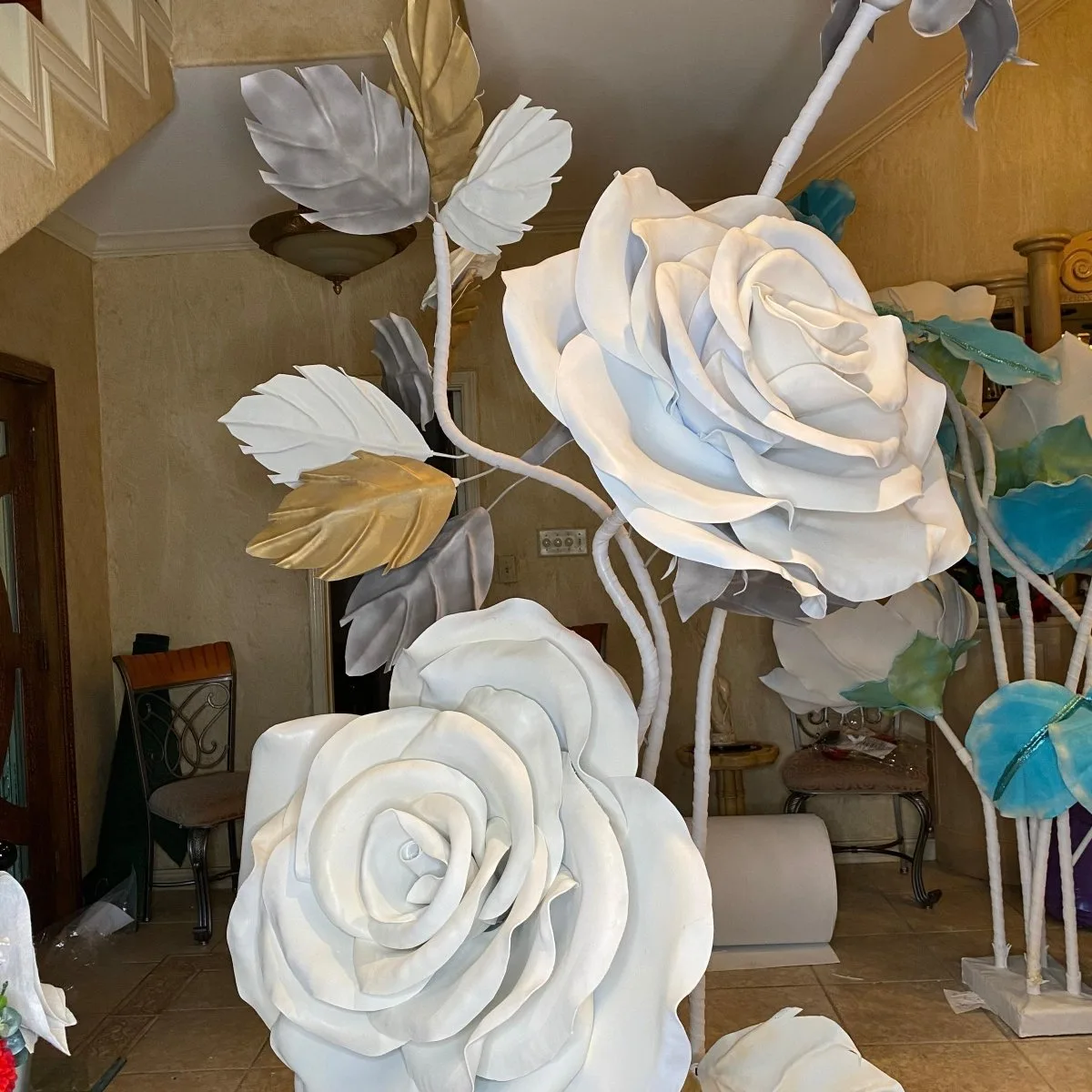
The result? Petals that look like they're actually opening. Petals with dimension and life. This is the technique behind the flowers you see in our shop — and it's the core shaping method I teach in every kit tutorial.
You can check out more about working with different foam types in my post A Crafter's Guide to Every Type of Foam for Giant Flowers — because the foam thickness you're using changes which ball tool size you need.
Choosing the Right Ball Tool Size
Ball tools come in different head diameters, and size matters more than most people realize.
Your foam pad needs to have enough give to let the ball tool press in without bottoming out on a hard surface. I recommend a pad that's at least 1.5 inches thick for giant flower work.
Thin pads — the kind that come in beginner sugar flower kits — don't have enough depth. You end up pressing hard, the tool hits the table underneath, and your petal gets a weird flat spot in the middle. Not cute.
Ball Tools And Foam Pad Basics
This is a question I get constantly. Do you need actual petal-shaped molds (cutters), or can you use paper templates and cut by hand?
Real talk? For giant flowers, paper templates almost always win.
Here's why: commercial petal cutters — even the large ones — top out around 5–6 inches. Our giant flower petals are often 12–24 inches long. There's no mass-market cutter for that size. It just doesn't exist.
This is exactly why our kits at Amazing Giant Flowers include pre-cut EVA foam pieces. We do the cutting for you so you can focus on the fun part — shaping and assembling your blooms.
That said, if you're making smaller foam flowers — think 6–12 inch blooms for table centerpieces or wall arrangements — petal cutters can be a real time-saver. Look for:
Petal Cutters Versus Paper Templates
One of my favorite things to tell new crafters is this: you probably already own some of the best shaping tools for foam flowers.
When I first started, I didn't have fancy ball tools. I used the back of a spoon. And honestly? It worked.
Here are some household items that genuinely work as molds and shapers for EVA foam flowers:
The key with all of these is the heat gun. Without heat activation, EVA foam won't hold any shape you press into it. The mold is only half the equation — the heat is the other half.
If you want to go deeper on working with foam surfaces, my post on Your Guide to Flawless Foam Board Paint Finishes covers a lot of the material science that applies here too.
Household Tools That Shape Foam
I've made most of these mistakes myself, so I'm sharing them with love.
Mistake #1: Buying molds designed for fondant or resin. These are made for soft, pourable materials. EVA foam is firm and requires pressure — many fondant molds crack or don't transfer detail properly to foam.
Mistake #2: Assuming bigger is always better for ball tools. If you use a 2-inch ball tool on a delicate 1mm foam petal, you'll tear right through it. Match your tool size to your foam thickness.
Mistake #3: Skipping the heat step. I see this in beginner tutorials all the time — people pressing molds into cold foam and wondering why nothing holds. Heat is non-negotiable. EVA foam has a memory — it returns to flat without heat activation.
Mistake #4: Using a foam pad that's too thin. As I mentioned earlier — if your pad doesn't have depth, your ball tool bottoms out and your petal gets distorted. Invest in a quality pad.
Mistake #5: Buying too many specialized molds before learning the basics. Start with a ball tool, a foam pad, and a heat gun. Master those three. Then add veining molds and specialty tools once you understand how the foam behaves.
According to the Hobby Industry Association, craft supply spending in the US has increased year over year, with beginners often over-purchasing tools before developing foundational skills. Don't fall into that trap.
Choosing Molds For EVA Foam
Not all foam is the same, and not all molds work with EVA foam the way they work with other materials. Here's my quick checklist for evaluating any mold before you buy:
A The Knot report on wedding trends noted that oversized floral installations have become one of the most requested wedding décor elements. That demand is driving more crafters to DIY giant foam flowers — and more demand means more products on the market, but also more low-quality tools flooding in. Be selective.
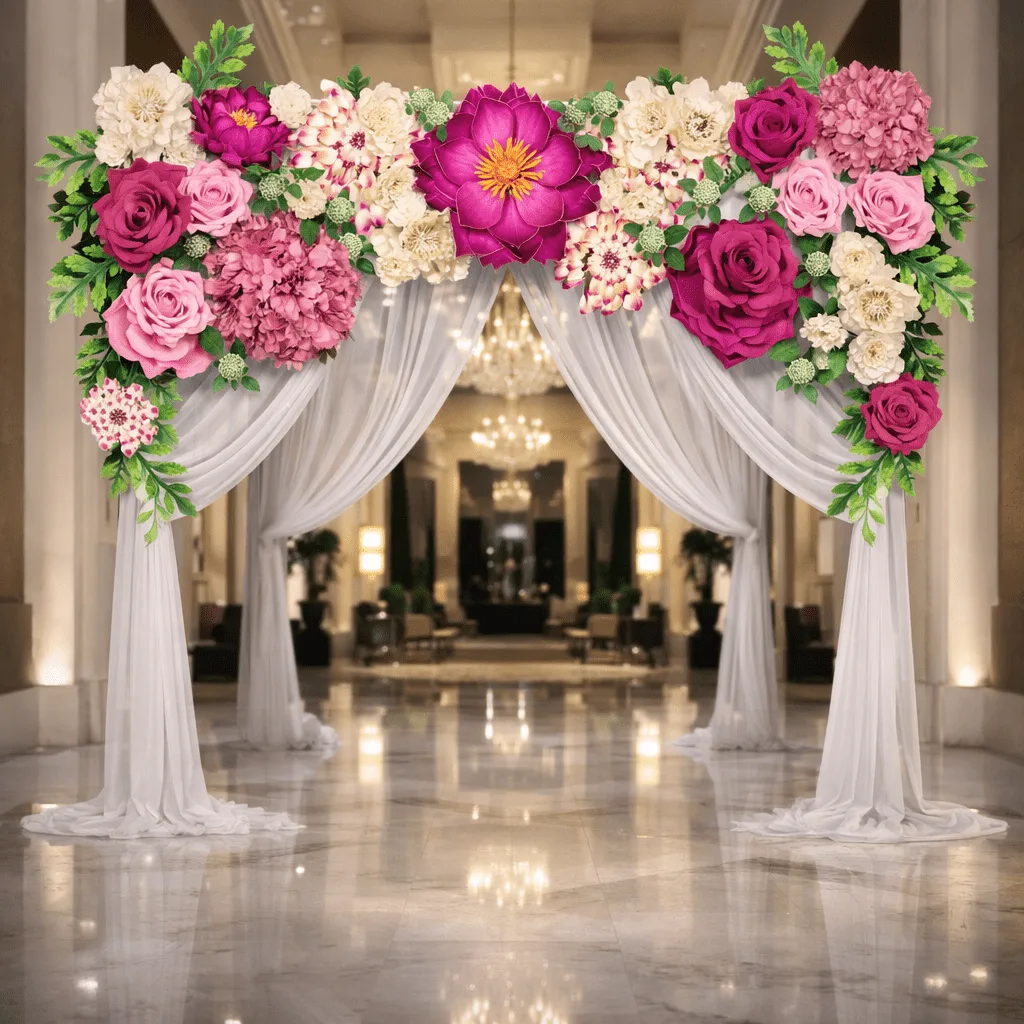
If you're making flowers for a wedding arch specifically, my guide on Giant Foam Flowers for Wedding Arch goes into exactly which tools I use for arch-scale blooms.
Start with a ball tool and foam pad combo — this is genuinely the most important shaping tool for foam flowers and it's beginner-friendly. Add a heat gun, and you have everything you need to make beautiful, dimensional petals. Save veining molds and specialty cutters for after you've got the basics down.
Most beginner sets run $15–$30 and include multiple ball tool sizes, which gives you flexibility as you try different flower types.
Can I use silicone molds designed for soap or candles on EVA foam?
Sometimes, but with caution. Soap and candle molds are designed for liquid pours, so the interior shapes are often smooth and don't transfer interesting texture to foam. They can work for creating uniform curved shapes — like pressing a petal into a dome-shaped mold — but they won't add the vein detail you'd get from a proper veining mold.

Also check the heat tolerance rating. Most silicone molds handle up to 400°F, which is fine for contact with warm EVA foam. Just don't press a freshly heat-gunned piece directly against plastic molds.
Not necessarily. A good ball tool works for almost every flower type — roses, peonies, dahlias, ranunculus, sunflowers. The variation comes in how you use it: the pressure, angle, and placement on the petal change depending on the flower you're making.
Where flower-specific tools become helpful is with veining molds — a rose veining mold looks very different from a magnolia leaf mold. But for general shaping, one quality ball tool set covers a lot of ground.
Heat your EVA foam petal with a heat gun for 10–15 seconds until it's warm and flexible. Then drape it over a large mixing bowl, press it with your palm, or curl the edges around a PVC pipe or wooden dowel. Hold the shape for 20–30 seconds while it cools, and it will hold that form permanently.
This is actually how I shaped my very first giant flowers, and the results were beautiful. Don't let a lack of fancy tools stop you from starting. Check out my post on Large Fabric Flower Tutorial: How to Make Giant Blooms for more shaping techniques that translate to foam too.
Are pre-cut kits better than buying molds and cutting my own foam?
For most people — especially beginners and event planners on a deadline — yes, pre-cut kits are the better choice. Cutting giant foam petals accurately by hand takes practice, and a single bad cut can waste a whole foam sheet. Pre-cut kits eliminate that variable entirely.
Our kits at Amazing Giant Flowers come with pre-cut EVA foam pieces, video tutorials, and everything you need to assemble and shape your blooms. You still get the full creative experience of shaping and assembling — just without the frustration of cutting. Kits start at around $80 for single freestanding flowers.
For veining molds, 1–2mm EVA foam gives the best detail transfer. Thinner foam picks up texture more readily because it has less resistance when pressed into the mold. Thicker foam (4mm and above) requires much more pressure to pick up vein detail, and often the result is subtle at best.
This is another reason veining molds are more practical for smaller-scale flowers — those typically use thinner foam. Giant flowers use 4–8mm foam for structural integrity, which is why ball tools and heat shaping are more effective at that scale.
Choosing the right molds and shaping tools honestly changed everything for me — not just the quality of my flowers, but how much I enjoyed making them. When you have the right tool for the job, the process feels intuitive instead of frustrating.
If you're ready to start making your own giant foam flowers, come browse our shop at Amazing Giant Flowers. Everything is designed to make your first (or fiftieth) bloom a success. And if you have questions about which tools are right for your project, drop them in the comments — I read every single one.
Shop the supplies
Everything You Need for This Project
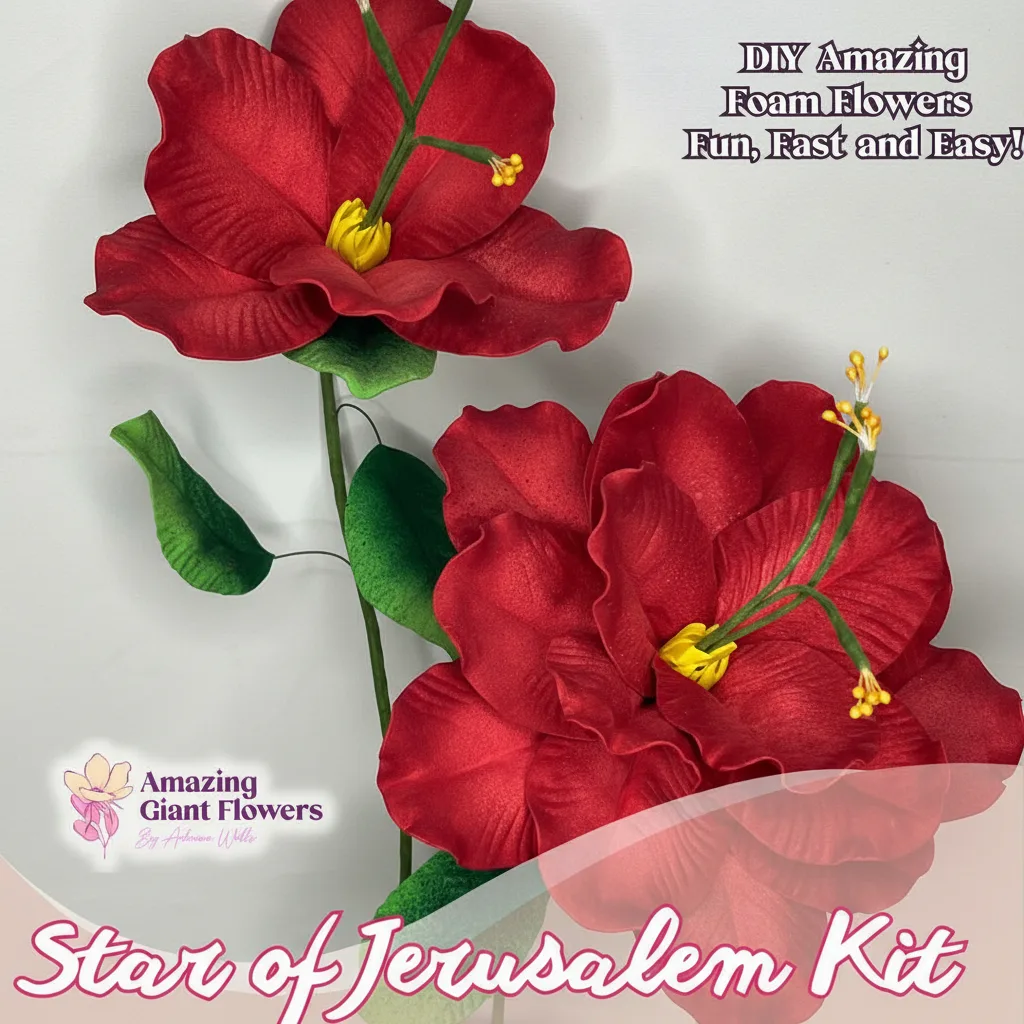
Real Touch Star of Bethlehem Foam Flower Kit — Large Tropical DIY Blooms (Star of Jerusalem) with Golden Pistils, Reusable Mold & Pre-Cut Petals
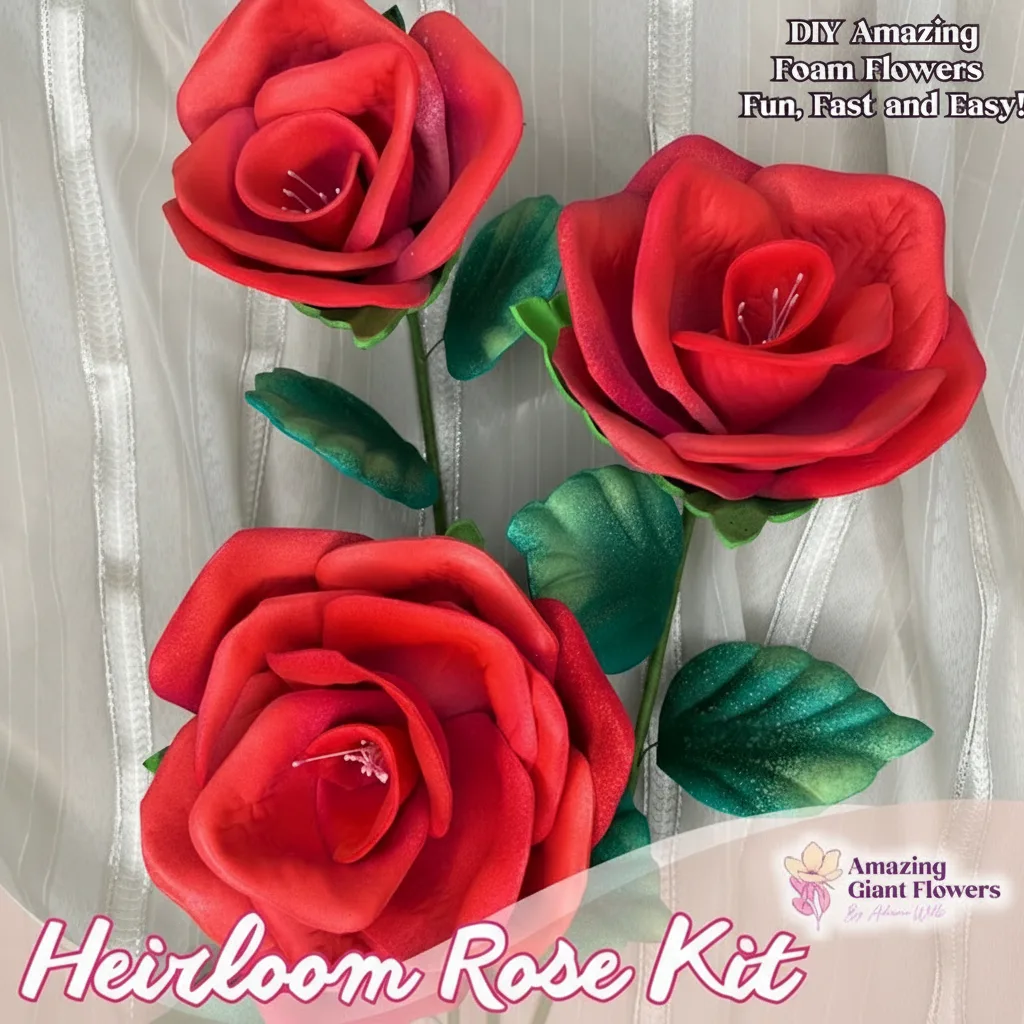
Real Touch Heirloom Rose Foam Flower Kit — 3 DIY Roses (6", 5" & 4") with 2 Reusable Molds, Pre-Cut Petals & Leaves
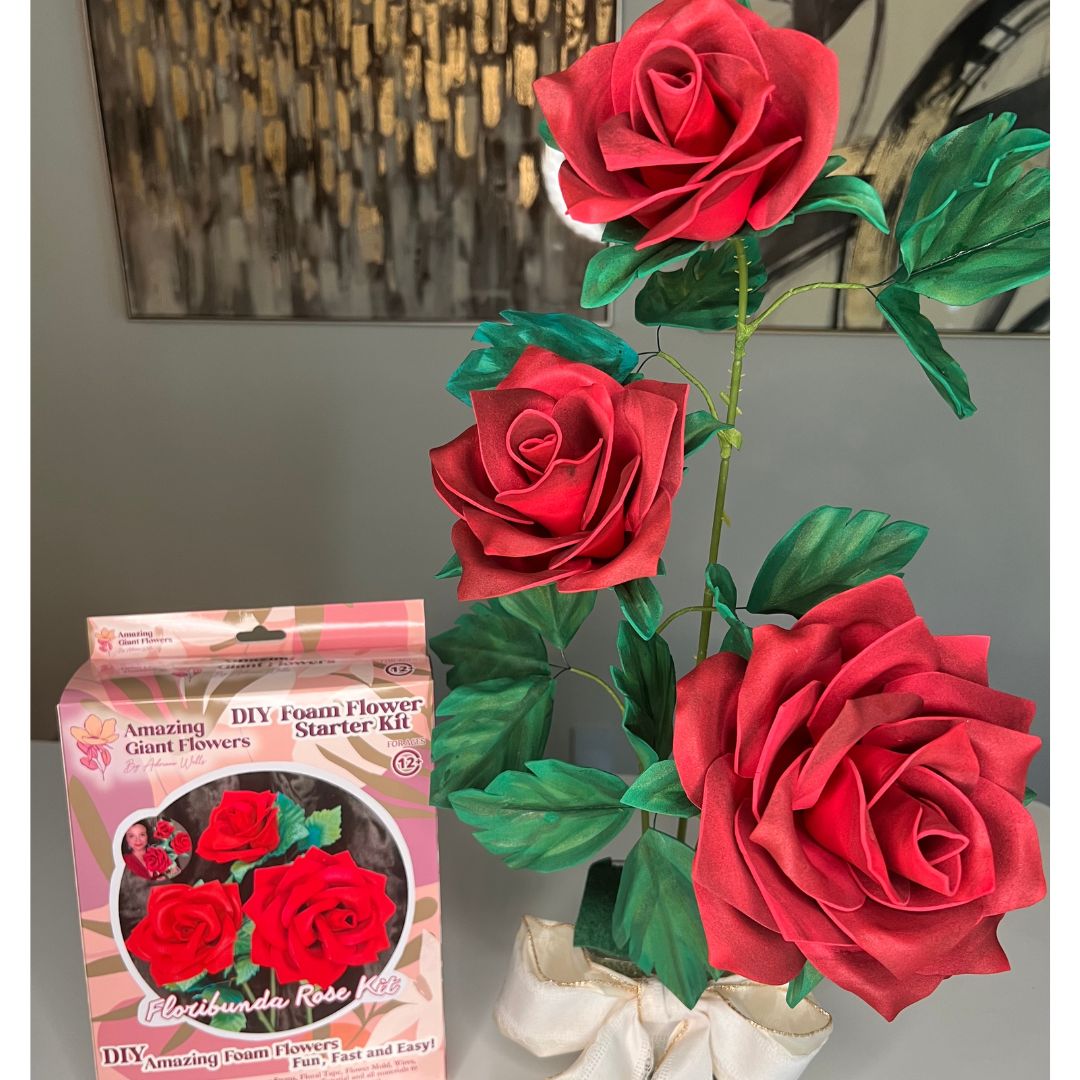
Real Touch Rose Foam Flower Kit — Realistic DIY Roses with 6" Double-Sided Mold & Pre-Cut Petals
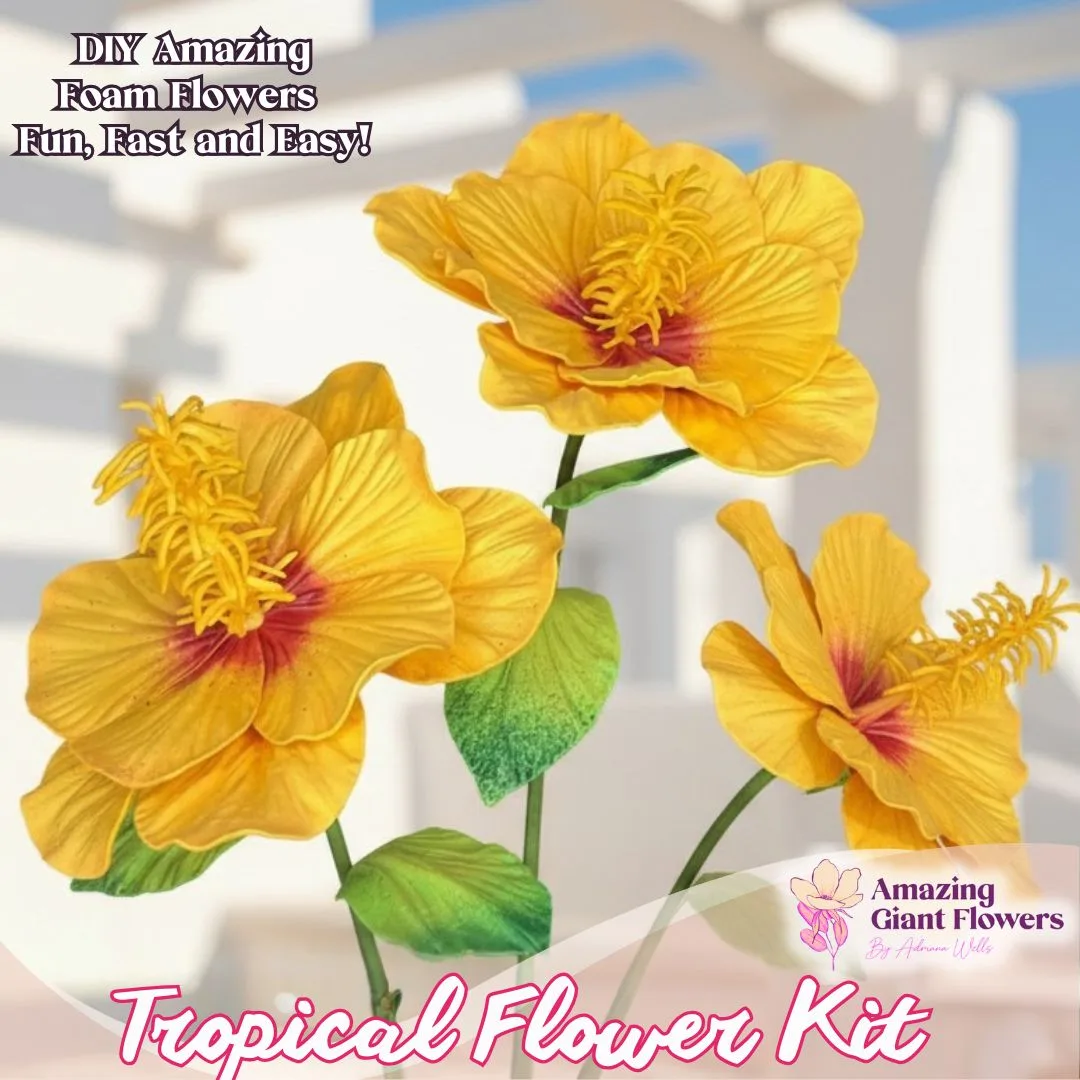
Real Touch Tropical Flower Foam Kit — Large DIY Hibiscus Blooms with Reusable Double-Sided Mold, Pre-Cut Petals, Bud & Leaves

Written by
Adriana WellsFounder & CEO of Amazing Giant Flowers
Adriana Wells is the founder and creative force behind Amazing Giant Flowers, a Texas-based company specializing in handcrafted giant foam flowers, luxury floral installations, and DIY flower-making supplies.
More about Adriana →Ready to Create Something Amazing?
Browse our collection of giant flower kits and start your next project today.