Church Stage Design: Giant Flowers for Worship Spaces

If you've ever walked into a church and felt genuinely stopped in your tracks by the stage design, you already know what I'm talking about. There's something that happens when a worship space is transformed — people sit up straighter, phones come out, conversations quiet down. And right now, church stage design giant flowers are one of the most powerful tools I've seen churches use to create that exact moment. I've shipped kits to churches all over the country, and the photos they send back? Honestly, they make me tear up sometimes.
This guide is for the worship leader who's been handed a decorating budget and zero instructions. It's for the volunteer who said "yes" before fully understanding the scope. And it's for the creative director who has a vision but isn't sure how to make it real without spending thousands of dollars on fresh florals that wilt by Sunday afternoon service.
We're going to walk through everything — placement strategy, flower sizing, color palettes, seasonal themes, and how to pull it all together without losing your mind or your budget. Let's go.
Here's the thing about church stages — they have a unique visual challenge that most event spaces don't.
The ceiling is usually high. The stage is often wide. And the congregation is looking at that same backdrop week after week. Scale matters in a way it just doesn't at a wedding or a birthday party.
Fresh flowers? Beautiful, but they're gone in three days. Fabric backdrops? They wrinkle, they look flat under stage lighting. But giant EVA foam flowers — 2 to 5 feet tall — they photograph brilliantly, they hold their shape under heat and stage lights, and they last for years with proper storage.
I remember getting an email from a church volunteer coordinator in Tennessee. She said their congregation of about 400 people had been using the same black curtain backdrop for six years. They ordered one of our Bundle Kits — twelve flowers in ivory, blush, and sage — and set it up for Easter weekend.
She told me the senior pastor walked in Saturday morning during setup and just stood there for a full minute without saying anything. That's the moment I live for.
According to a Barna Group study, visual environment ranks among the top factors that influence whether first-time church visitors return. People are making subconscious judgments about a community based on how the space feels. A thoughtfully designed stage communicates care, creativity, and intention.
That's not shallow. That's just how humans work.
Giant flowers also work beautifully because they photograph well from a distance. In a sanctuary where the back row might be 60 or 80 feet from the stage, you need visual elements that read clearly. A 4-foot foam peony reads. A cluster of 12-inch paper flowers does not.
And if your church live-streams — which, according to Pew Research Center, nearly 1 in 3 Americans now watches religious services online — your stage backdrop is literally being broadcast into people's living rooms. It deserves the same attention you'd give a TV set.
Planning Your Church Stage Design with Giant Flowers
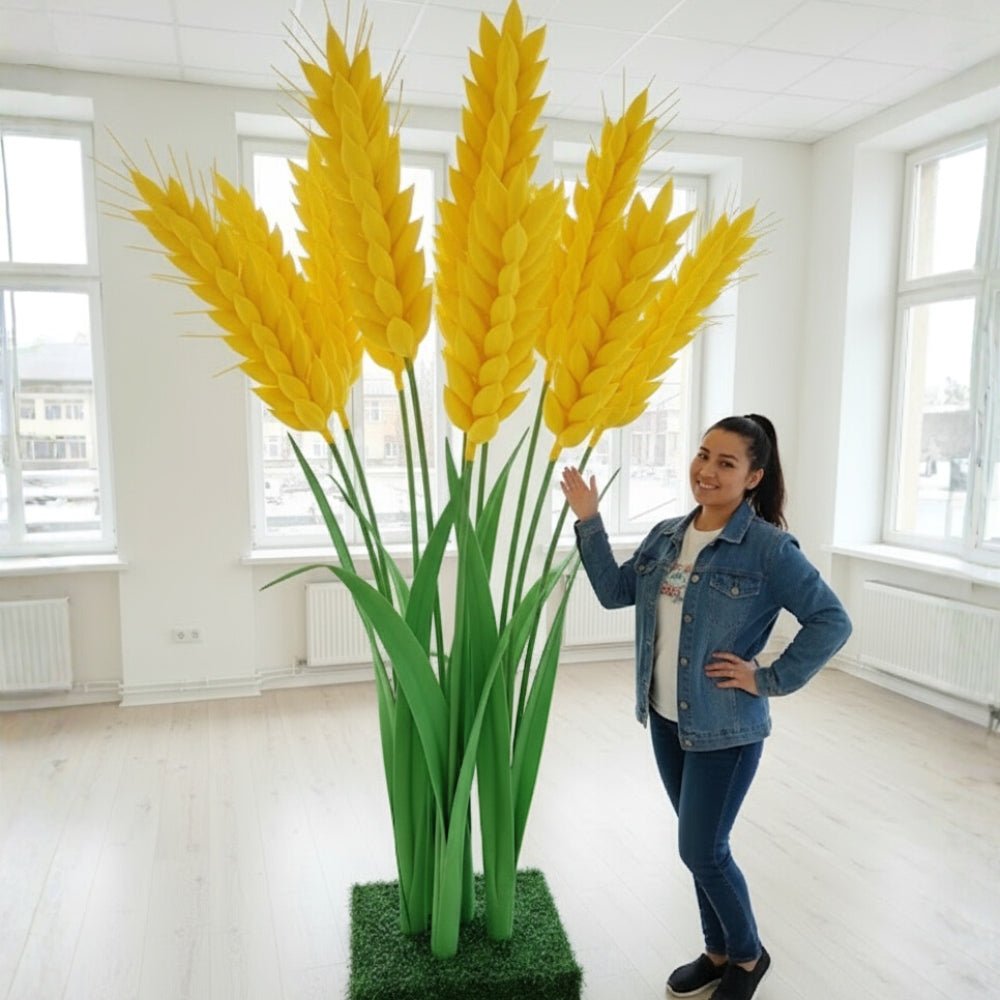
Before you order a single kit, let's talk strategy. Because I've seen people buy flowers without a plan and end up with a stage that looks more like a yard sale than a worship experience.
Start with your stage dimensions. Measure the width and height of your backdrop area. Write it down. Most church stages run anywhere from 20 to 40 feet wide, with backdrops ranging from 8 to 16 feet tall. Those numbers will determine everything.
Here's how I think about flower sizing for stage work:
One of the most common mistakes I see? People buy all the same size. It creates a flat, repetitive look that doesn't have any visual movement.
Mix your sizes intentionally. Think of it like a real garden — there's variation in height, depth, and scale. That's what makes it feel lush instead of manufactured.
For a standard 30-foot wide church stage, here's a starting framework I recommend:
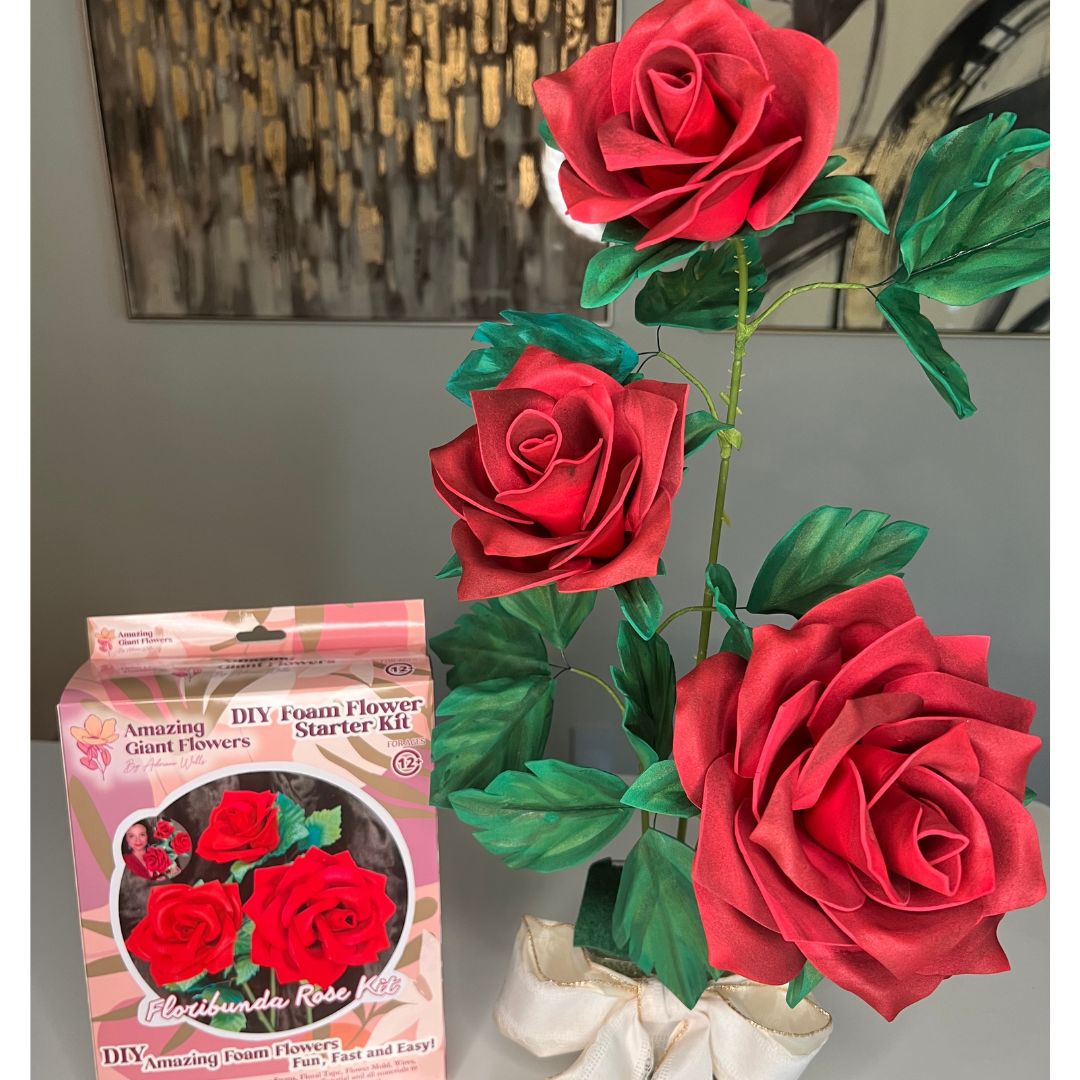
Our Bundle Kits — which include 8 to 12 flowers and run $350 to $600 — are honestly the most popular option for churches because they give you that mix of sizes without having to piece it together yourself. I designed them specifically for people decorating large spaces who don't want to guess at quantities.
This is the question I get asked constantly, and the answer depends on your stage setup.
Wall-mounted flowers (our kits start at around $50 to $120) are perfect if you have a solid backdrop — a painted wall, a pipe-and-drape system, or a fabric panel. They sit flush, they're stable, and they're easy to rearrange between services.
Freestanding flower kits (starting around $80 to $180) are the move when your stage has open sides, when you want flowers flanking a podium or baptistery, or when you need arrangements that can be moved between a main sanctuary and a smaller overflow room.
Many churches actually use both. A wall-mounted cluster as the central backdrop, with freestanding arrangements on either side of the stage at floor level. That layered approach creates incredible depth, especially under stage lighting.
If you want to see how freestanding arrangements work for large event spaces, I wrote a whole guide on freestanding giant flower arrangements for events that goes deep on structure and stability — worth a read before you commit to a setup.
Ok, this is where it gets really fun. Because church stages have something that most event spaces don't — a liturgical calendar. Built-in seasonal themes, ready to go.
Let me break down how I think about color for each major season:
Real talk? The churches that get the most impact from their stage design are the ones that coordinate their flowers with their sermon series graphics. When the slide deck, the printed bulletin, and the stage backdrop all speak the same visual language, it creates an experience that feels intentional and cohesive.
That's not just good design. That's good communication.
One thing I always tell people: don't be afraid of color. I know some churches default to neutral everything because they're worried about being too bold. But a 4-foot deep coral peony under a warm spotlight? That's not distracting. That's worship-space art.
According to Color Matters research, color affects mood, focus, and emotional response within seconds of visual exposure. The colors on your stage are literally shaping how your congregation feels before the first note is played or the first word is spoken. That's worth taking seriously.
I want to be honest with you about something. Most church stage decorating is done by volunteers with limited time, limited tools, and zero professional training. And that's completely fine. Our kits are designed exactly for that reality.
Every kit we ship comes with pre-cut EVA foam pieces and video tutorials that walk you through assembly step by step. You don't need a glue gun arsenal or a crafting background. You need a Saturday morning, a few helpers, and some patience.
Here are the things I wish someone had told me when I first started making giant flowers for large spaces:
Speaking of storage — EVA foam flowers store beautifully. Unlike fresh flowers or paper flowers, they don't crush, fade, or deteriorate in a storage closet. Wrap them loosely in tissue paper, stack them flat, and they'll look just as good next Easter as they do this one.
That's a huge part of the value equation here. You're not buying decorations. You're building an inventory of reusable stage assets.
The Event Marketer industry report notes that reusable décor elements have become a priority for organizations managing recurring events on fixed budgets. Churches are no different — every dollar saved on disposable decorations is a dollar that goes back into ministry.
If you're new to working with EVA foam and want to really understand how to shape and customize petals, I put together a detailed post on heat gun techniques for shaping foam flower petals. It's a game-changer for getting that organic, realistic curve that makes giant flowers look truly stunning.
And if your church is thinking about a full floral arch — maybe for a baptism backdrop, a wedding held in the sanctuary, or a special event — check out our guide on giant flower wedding arches. The same principles apply beautifully to church settings.
One more thing I want to address: budget concerns. I know church budgets are real and they're tight. Here's how I'd think about it — a Bundle Kit at $350 to $600 used for Easter, Mother's Day, Christmas, and a few sermon series throughout the year? That's potentially six or more uses per year, for multiple years. The per-use cost becomes genuinely tiny.
Compare that to renting fresh floral arrangements, which can run $500 to $2,000 per weekend for a large stage, according to The Knot's floral cost data. The math really does work in your favor.
You can browse everything we have — kits, individual flowers, foam sheets, stems, and supplies — over at the Amazing Giant Flowers shop. And if you're not sure where to start, honestly just reach out. I answer my own messages. Tell me your stage dimensions, your color palette, and your budget, and I'll help you figure out exactly what you need.
Your congregation deserves a worship space that feels alive and intentional. And you don't have to be a professional designer or spend a fortune to make that happen. You just need the right tools and a little bit of courage to try something beautiful.
What season or series are you designing for? I'd genuinely love to know — drop it in the comments or send me a message. Let's make something amazing together.
Ready to Create Something Amazing?
Browse our collection of giant flower kits and start your next project today.