Flower Wall Sizing 101: How Big Should Your Backdrop Be?
If you've never built a flower wall before, the sizing question is the one that trips almost everyone up. I get messages about it constantly — "Adriana, I ordered flowers but now I'm not sure they'll cover my wall" or "I bought too many and have a ton left over." That's exactly why I wanted to write this flower wall size guide — so you go into your first purchase feeling confident, not guessing.
Here's the thing: coverage is everything. A backdrop that's too small looks awkward in photos. Too sparse and the whole effect falls flat. But when you nail the sizing? It's absolutely stunning. I've seen a well-planned 24" flower wall stop people in their tracks at a quinceañera, a corporate event, a wedding — you name it.
So let me walk you through exactly how to figure out what you need before you spend a single dollar. This is the guide I wish I had when I was first starting out.
Key Takeaways
I'll be real with you. When I first started making giant flowers, I thought "bigger is always better." And while I still love a dramatic oversized bloom, the right size is actually about proportion — to the wall, to the room, and to the people standing in front of it.
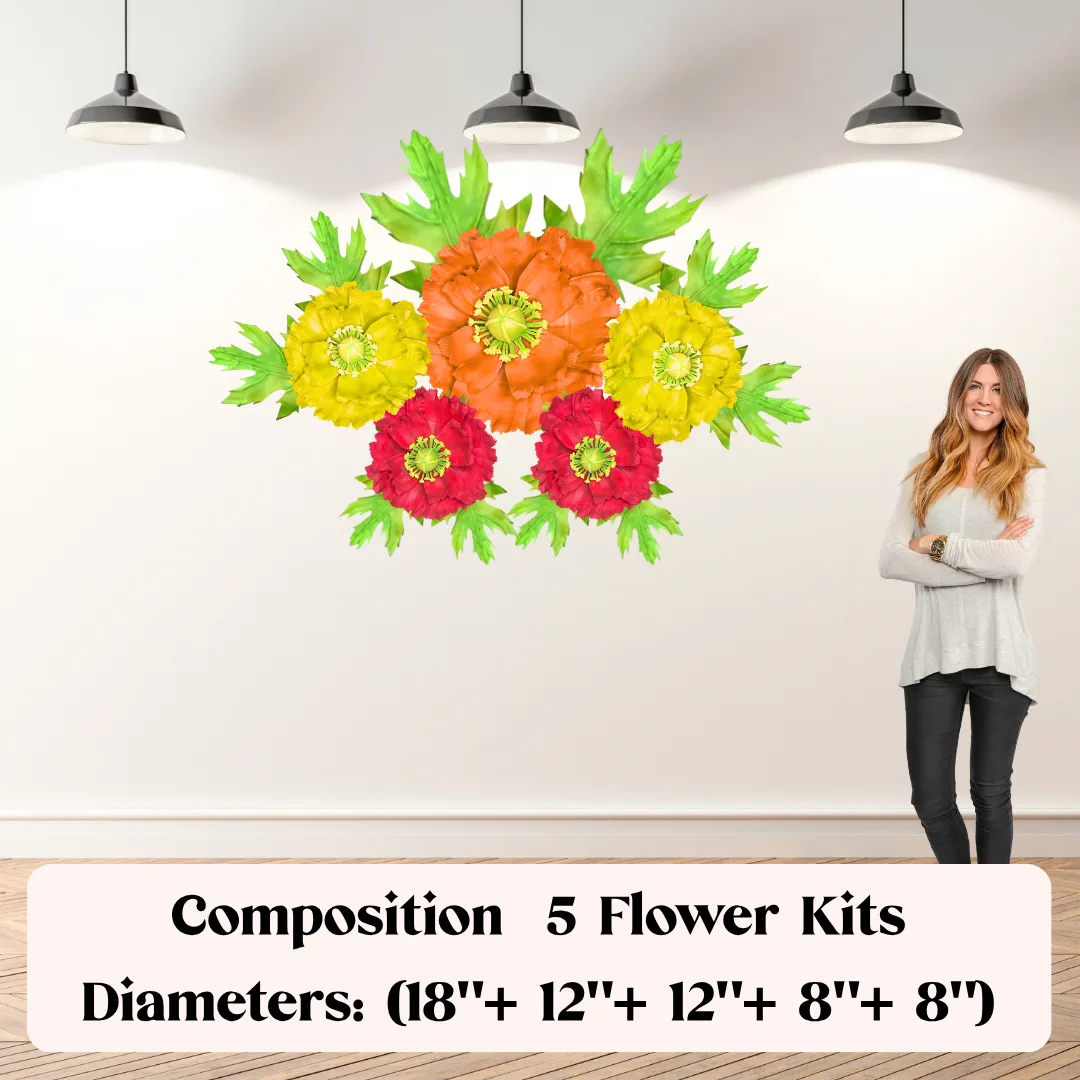
A single 30" flower on a 10-foot wall looks lonely. But cluster five of them with a few 18" accents? Now you've got something.
The other thing first-time buyers don't always consider: photos compress everything. What looks full in person can look thin and sparse in a photograph. And since most people are building these backdrops specifically for photos — weddings, parties, brand activations — you need to plan for how the camera sees it, not just how your eye does.
The "Full Coverage" vs. "Accent Wall" Decision
Before you even think about flower size, you need to decide what kind of backdrop you're going for. Are you covering an entire wall edge to edge? Or are you creating a beautiful cluster arrangement with some wall showing through?
Full coverage means you want zero wall visible — lush, packed, magazine-worthy. This takes more flowers and more planning. Accent arrangements are more artistic, with intentional negative space. Both are gorgeous. They just require very different quantities.
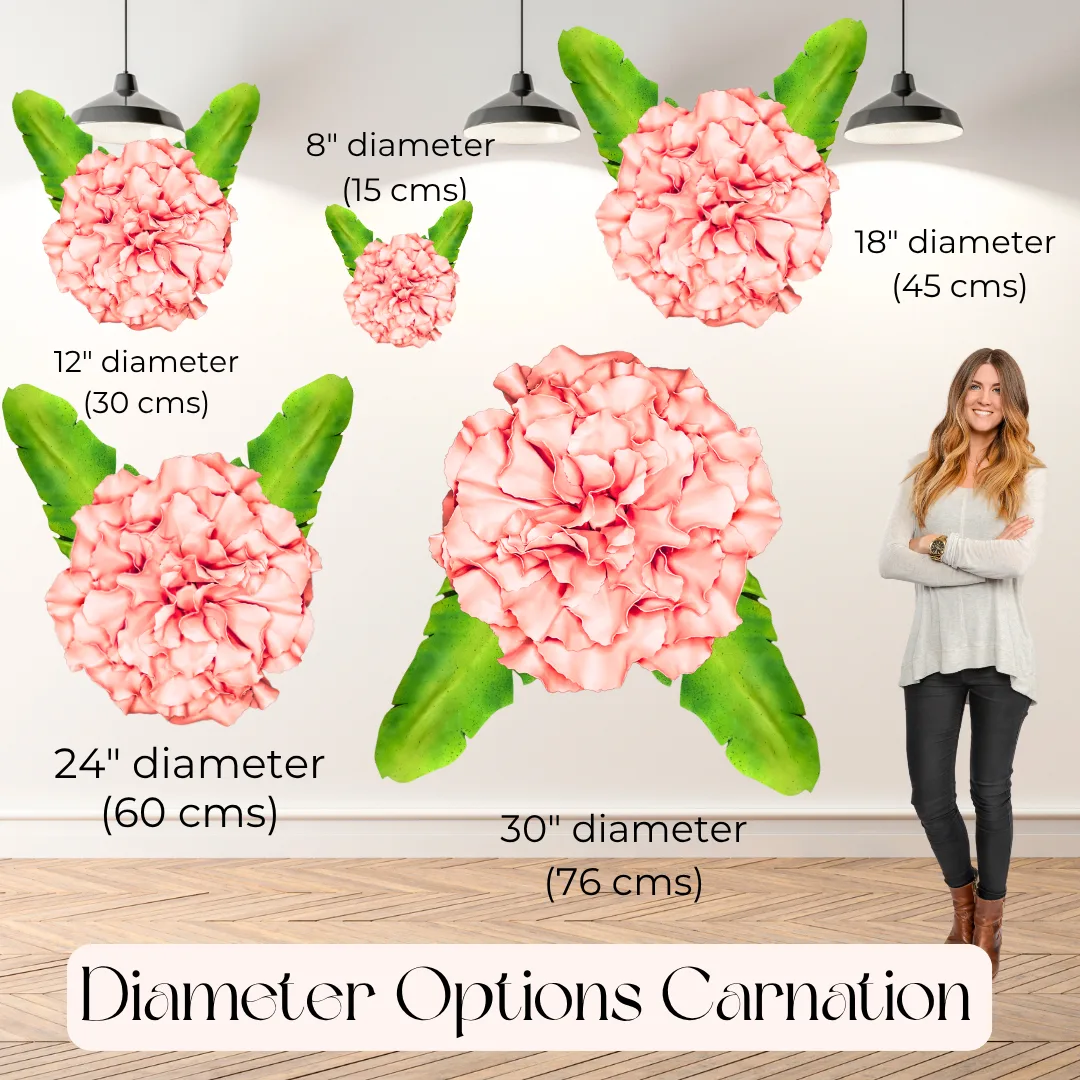
Our Wall Flower Kits come in three sizes that are available for individual purchase: 18", 24", and 30". These are diameter measurements — so an 18" flower spans a foot and a half across when it's fully assembled and mounted.
Each size has its sweet spot. Let me break it down.
Starting at $37.99, the 18" is our most flexible size. It's the minimum I recommend for any public-facing backdrop — it reads clearly in photos, it's easy to arrange in clusters, and it gives you the most control over your layout.
I love using 18" flowers to fill in gaps, frame edges, and add detail around larger blooms. They're also great if you're working with a smaller wall section — like a 4' × 4' photo moment area.
24" Flowers — The Sweet Spot for Most Events
Honestly? The 24" is where most of my customers land, and for good reason. It's big enough to make a statement, small enough to arrange with variety, and it photographs beautifully from 5–15 feet away — which is exactly where most event guests will be standing.
For a standard 8' × 8' backdrop, a mix of 24" statement flowers and 18" accents is my go-to recommendation.
The 30" flowers are showstoppers. Full stop. I've seen them used at experiential marketing activations where brands needed something that would stop foot traffic cold — and they absolutely deliver.
The trade-off? You need fewer of them (which sounds great), but that also means less flexibility in your arrangement. Each flower takes up a lot of real estate, so if your wall has an odd shape or interruptions, 30" can get tricky.
Ok, this is where it gets really fun — and a little bit math-y. Don't worry, I'll keep it simple.
Grab a tape measure. Write down the width and height of the area you want to cover. Multiply them together to get your square footage.
That number is your starting point for everything.
Each flower size covers a rough circular area. Here's the practical coverage you can expect per flower when arranged in a natural, slightly overlapping cluster pattern:
💡 Pro Tip
Always add 10–15% to your flower count before you finalize your order. Real walls have light switches, outlet covers, awkward corners, and uneven surfaces that eat into your usable coverage area. It's way less stressful to have a few extras than to be two flowers short the night before your event.
Step 3: Mix Sizes for the Most Natural Look
Here's a secret from someone who's built hundreds of these: mixed-size arrangements always look better than same-size grids. Nature doesn't grow flowers in uniform rows, and your backdrop shouldn't either.
My favorite formula for a full 8' × 8' backdrop:
This approach gives you that lush, layered look that makes people stop and say "wait, did you make that?"
I want to make this as practical as possible. So here are the most common backdrop dimensions I see customers working with, and my real-talk recommendations for each.
This is perfect for a welcome sign backdrop, a dessert table accent, or a small photo op at a bridal shower or baby shower. You're working with 16 square feet, so you don't need a ton of flowers — but you do need them arranged thoughtfully.
I'd suggest 6–8 flowers in a mix of 18" and 24". Check out our baby shower backdrop ideas for some gorgeous examples of what's possible in a smaller footprint.
36 square feet of wall space. This is where I see a lot of quinceañera and bridal shower backdrops land. It's big enough to look impressive in photos but manageable for a first-time builder.
Plan for 12–18 flowers total, mixing 18" and 24" sizes. If you want one dramatic focal point, anchor it with a single 30" center bloom.
8' × 8' — The Event Standard
This is the most common size I see for weddings, corporate events, and graduation parties. 64 square feet. It photographs beautifully, it fits most standard event spaces, and it's the size that really lets you go all-out with your arrangement.
Plan for 20–35 flowers depending on your size mix. This is also where mixing all three sizes — 18", 24", and 30" — really shines.
80+ square feet. This is your wedding arch backdrop, your brand activation wall, your "I want people to gasp when they walk in" moment. At this scale, you'll likely want to lean heavily on 30" and 24" flowers with 18" as detail pieces only.
Budget for 30–50+ flowers and consider whether a freestanding kit might work better for your space alongside your wall flowers.
🌸 Ready to get started?
Browse our Wall Flower Kits collection and find your perfect match. Sizes start at $37.99 and ship ready to assemble.
The Flower Wall Size Guide for Specific Event Types
Different events have different needs. Here's how I think about sizing depending on what you're creating for.
For a wedding ceremony backdrop, you want height. Couples are standing, guests are seated — the backdrop needs to be visible from 20–30 feet away. Go big. 30" flowers as your primary size, 24" as secondary. Don't go smaller than 24" as your main flower for a ceremony wall.
If you're building an arch rather than a flat wall, check out our guide on giant foam flowers for wedding arches — the sizing logic is a little different when you're working in three dimensions.
Photo booth backdrops need to be camera-ready from 4–8 feet away. That's actually closer than you think, which means even 18" flowers read really well here. You have more flexibility with size, but you need more coverage density — because cameras are unforgiving about gaps.
For brand activations and corporate events, I always recommend going bigger than you think you need. Check out our corporate event engagement ideas — the brands that get the most social media traction are the ones that go bold.
If you're decorating a boutique or retail space, your wall flowers need to work from multiple viewing distances and angles. 24" is usually the perfect size for retail — big enough to draw the eye, small enough to arrange in interesting ways without overwhelming the product you're selling.
Our visual merchandising guide for boutiques goes deep on this if you want more inspiration.
Mistakes First-Time Buyers Make (And How to Avoid Them)
I've been doing this long enough to see the same mistakes come up over and over. I'm not judging — I made some of these myself. But I want you to avoid them.
- Buying all the same size: It creates a flat, grid-like look. Mix it up. Always.
- Underestimating wall space: Measure twice. The wall always looks smaller in your head than it is in real life.
- Skipping the 10–15% buffer: I cannot stress this enough. Order extra. You can always use leftover flowers somewhere else — a mantle, a table, a photo moment spot.
- Ignoring the foam quality: The flowers are only as good as the material they're made from. If you're cutting your own, read our guide on every type of foam for giant flowers before you buy anything.
- Not thinking about mounting: Wall flowers need to be secured properly. Plan your mounting method before your flowers arrive, not after.
💡 Pro Tip
Take a photo of your blank wall and use a free design app to sketch out your flower arrangement before you order. Even a rough sketch helps you visualize coverage and catch sizing issues before they become expensive surprises. I use this trick with every new client consultation.
Frequently Asked Questions
What is the minimum flower size I should buy for a backdrop?
For any public-facing backdrop — meaning guests, cameras, or social media will see it — I recommend 18" as your absolute minimum. Anything smaller tends to get lost in photos and doesn't create the visual impact you're going for. Our Wall Flower Kits start at 18"
Ready to Create Something Amazing?
Browse our collection of giant flower kits and start your next project today.