Photography Studio Props: Giant Flowers for Portrait Sessions
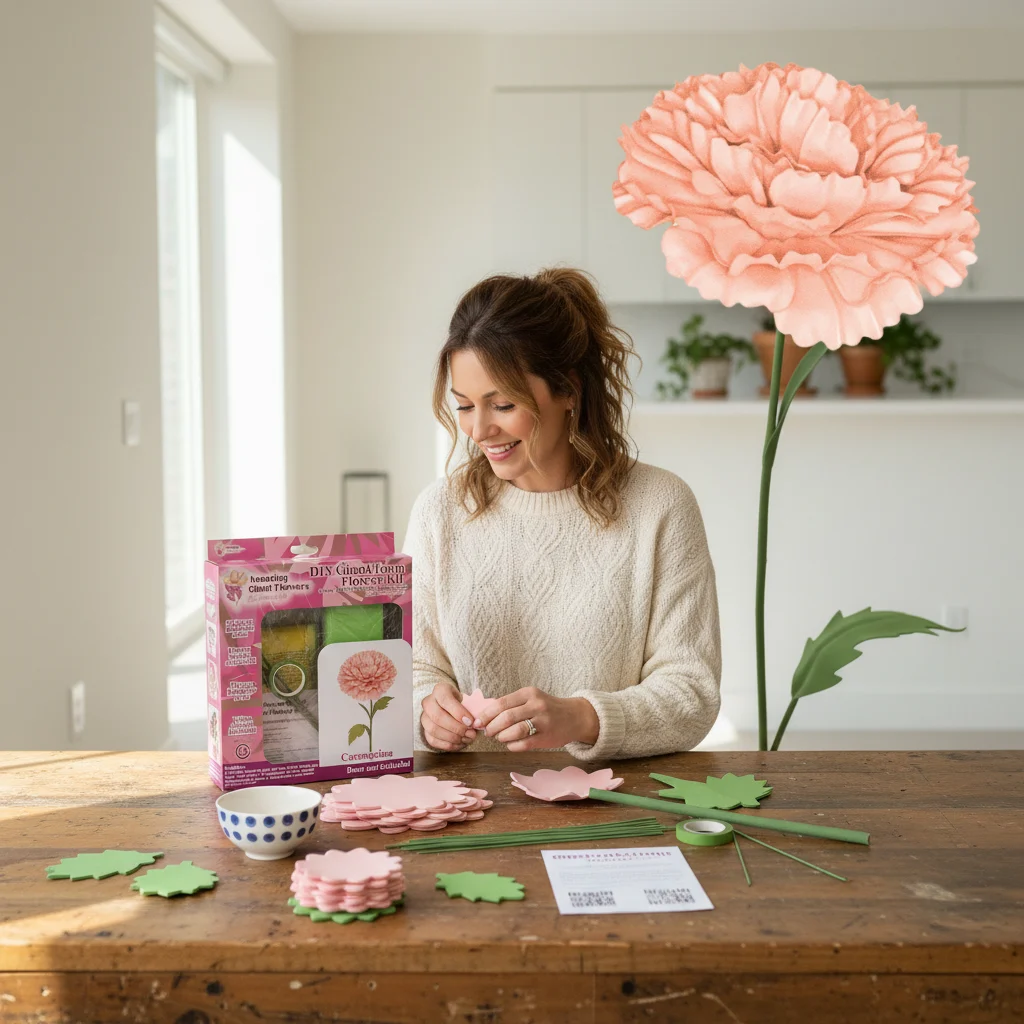
If you've been scrolling through portrait photography feeds lately, you've probably noticed something: the studios that stop your thumb mid-scroll almost always have one thing in common. Giant flower photography studio props are everywhere right now — and not just as a trend. They've become a genuine tool for photographers who want their work to feel lush, editorial, and completely unforgettable.
I started making giant EVA foam flowers years ago for weddings and events, but honestly? Some of my favorite messages come from photographers. They'll send me a photo of a newborn nestled inside a 3-foot peony, or a senior portrait where the subject is literally surrounded by a wall of blooms, and I just — I get emotional every time. Because I know exactly how much that image is going to mean to that family.
So let's talk about how to actually use giant flowers in your portrait studio. What sizes work, what colors photograph best, how to style them without it looking chaotic, and where to get props that are going to hold up through hundreds of sessions — not fall apart after two.
There's a reason photographers keep coming back to oversized florals. It's not just because they're pretty — it's because they solve real problems in the studio.
Fresh flowers wilt. Silk flowers look fake in high-resolution images. But a well-made EVA foam giant flower photographs like a dream. The texture is soft and dimensional. The colors stay consistent. And you can use it for literally thousands of sessions without it changing at all.
According to IBISWorld, the US photography industry generates over $12 billion annually — and portrait studios are one of the fastest-growing segments. Standing out in that market is genuinely hard.
Props are one of the most powerful ways photographers differentiate themselves. A signature prop becomes part of your brand identity. Clients book you specifically because they want that look.
And giant flowers are incredibly versatile. I've seen them used for:
Real talk — the investment pays off fast. A single freestanding giant flower kit from our shop starts around $80-$180, and photographers tell me they recoup that cost within the first two or three sessions where they use it as a featured prop.
Compare that to fresh florals, which can run $150-$400 per arrangement and last maybe a weekend. The math is pretty obvious.
Ok, this is where it gets really fun — but also where I see photographers make the most mistakes. Size matters enormously, and so does your studio's square footage.
Let me break this down by studio setup, because a home studio has very different needs than a commercial portrait studio.
Size and Scale: Getting It Right
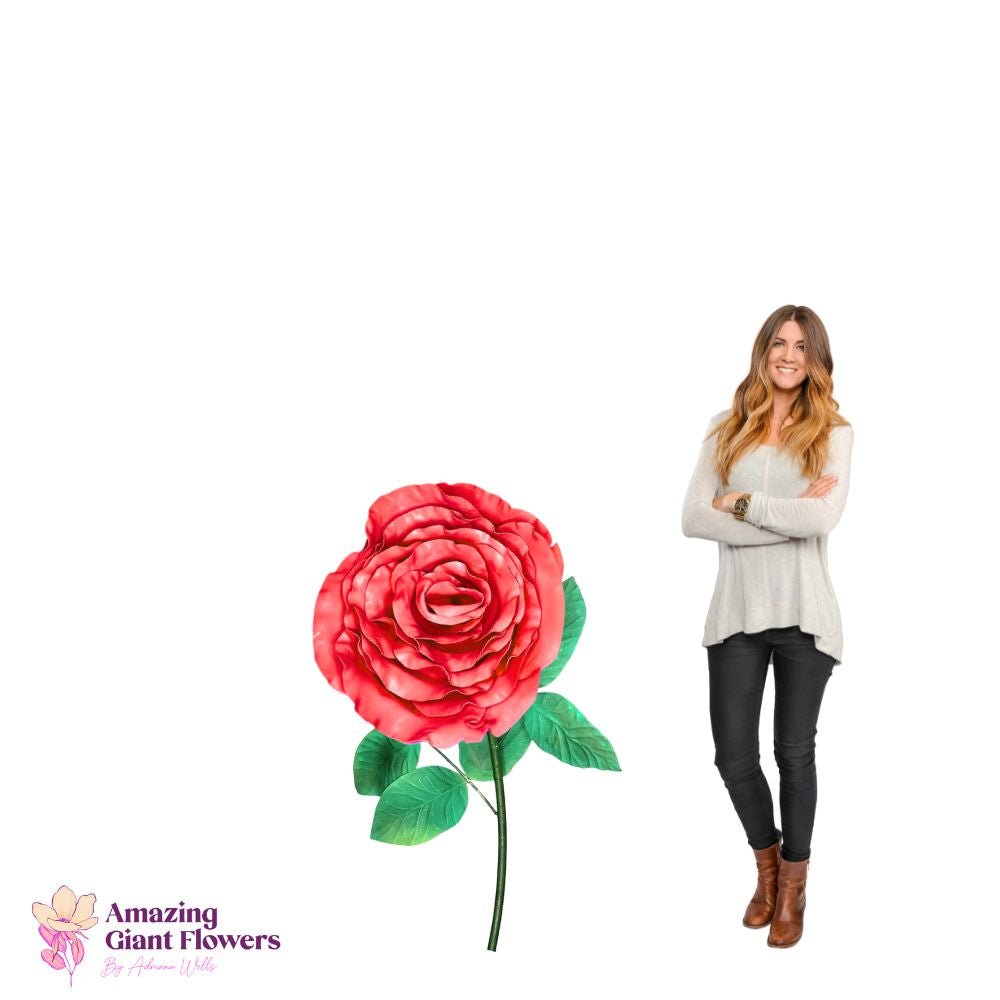
For a small home studio (under 300 square feet), I recommend starting with 2-3 foot flowers. They're impactful without overwhelming the space or your subjects.
For a mid-size studio (300-600 square feet), you can go bigger — 3-4 foot blooms create that wow factor without making the room feel claustrophobic on camera.
For large commercial spaces, go all in. A cluster of 4-5 foot freestanding flowers in varying heights creates an immersive scene that photographs like a fairy tale. Our freestanding giant flower arrangements guide goes deep on this if you want the full breakdown.
Here's something I wish someone had told me early on: odd numbers always look better. Three flowers. Five flowers. Seven. Even numbers feel stiff and symmetrical in a way that reads as artificial on camera.
Also — vary your heights. A 5-foot flower next to a 3-foot flower next to a 2-foot flower creates visual movement. Everything the same height looks like a parade float.
Freestanding vs. Wall-Mounted: Which Should You Choose?
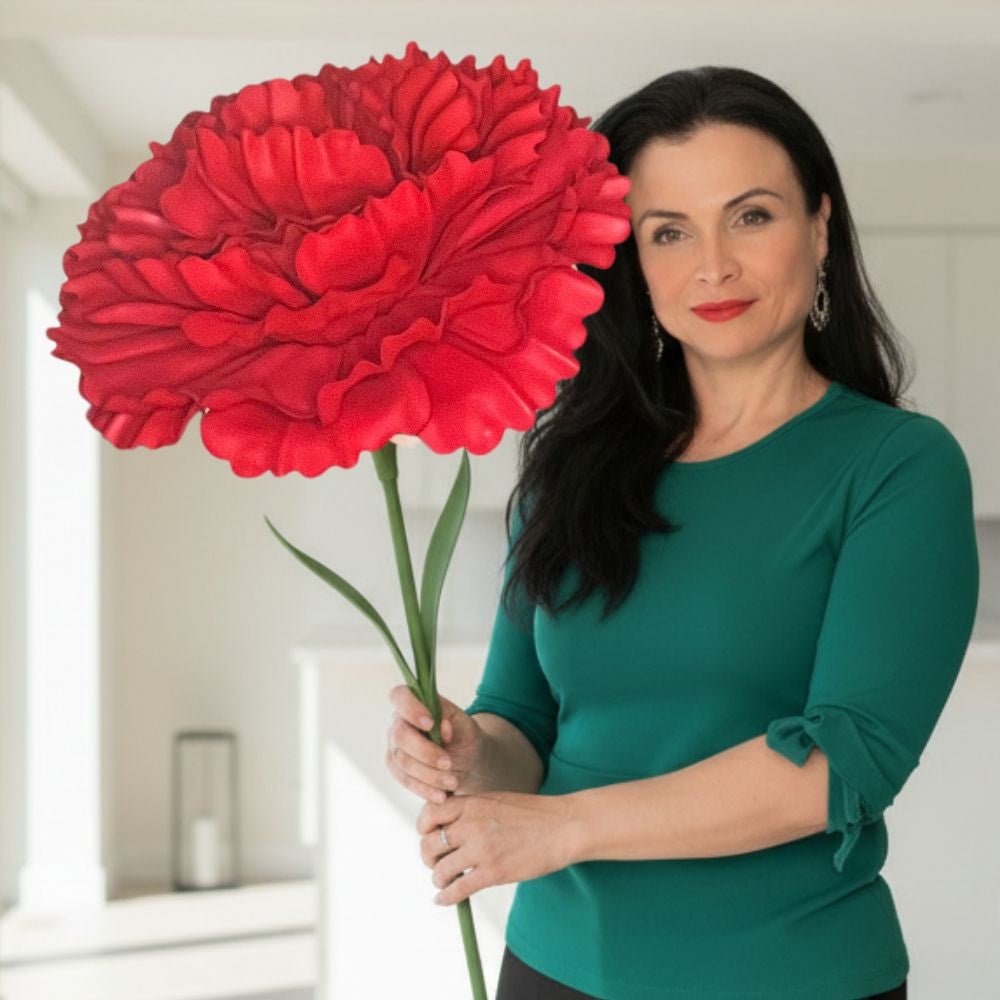
Both have a place in a portrait studio, but they serve different purposes.
Freestanding flowers are flexible. You can move them around, cluster them differently for each client, and create depth by placing them at different distances from your subject. Our Freestanding Giant Flower Kits (starting at $80) come with bendable pipe stems so you can angle the bloom exactly where you need it.
Wall-mounted flowers are your backdrop solution. They stay put, they're consistent, and they turn a plain wall into something magical. Our Wall-Mounted Kits start at $50 and are genuinely one of the most popular things we sell to photographers specifically.
A DIY giant flower backdrop can completely transform a plain wall — and if you're doing this yourself, I have a full tutorial that walks you through the whole process.
My honest recommendation for most portrait studios? Start with a wall-mounted cluster as your signature backdrop, then add 2-3 freestanding flowers for foreground interest and flexibility. That combination gives you the most variety for client sessions.
I've been doing this long enough to have strong opinions about color. Not every shade that looks beautiful in person translates well on camera — and some colors that seem boring in real life are absolute magic through a lens.
When Disney and Dolce & Gabbana have trusted us with their installations, color accuracy was everything. That experience taught me a lot about how EVA foam interacts with light and camera sensors.
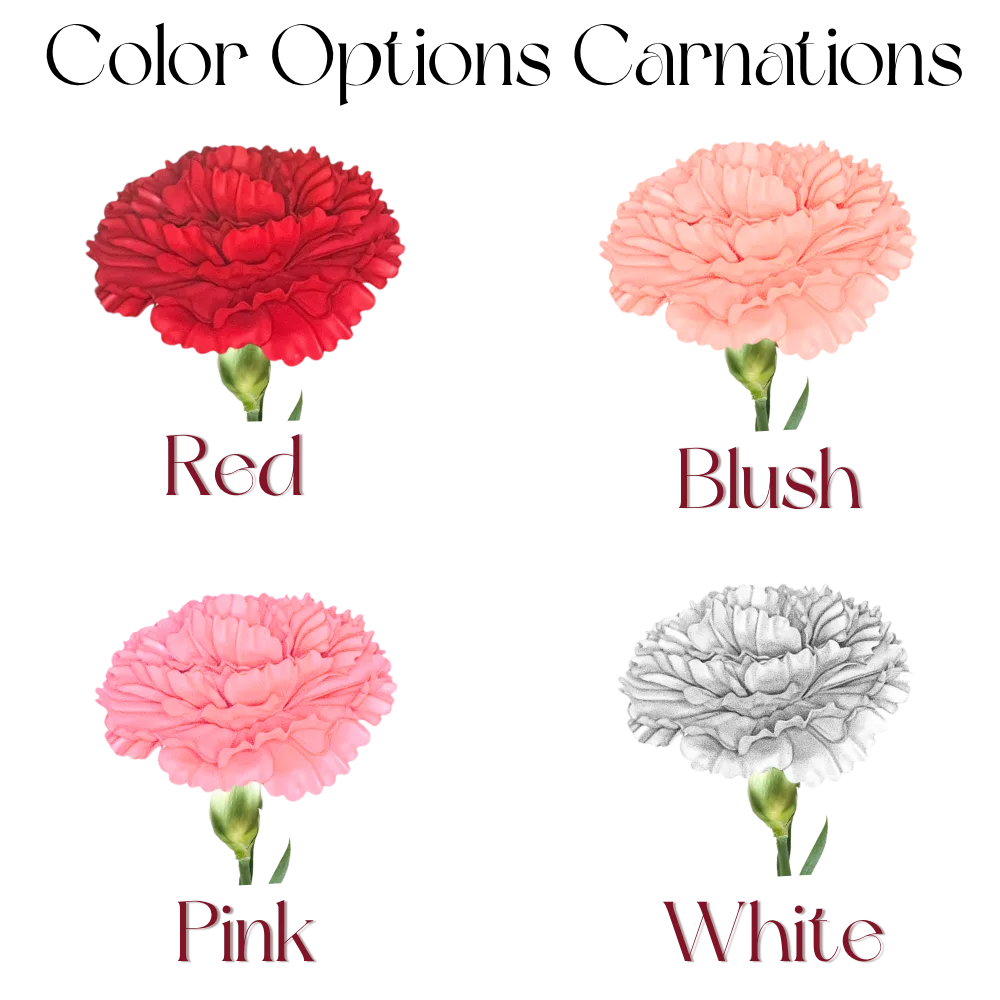
Here's what I've seen work consistently well for portrait photography:
Colors I'd be careful with? Neon or very saturated colors can cast color onto your subject's skin, especially in a small studio with reflective walls. That's not always bad — sometimes it's a creative choice — but go in knowing it'll happen.
Also, true red is notoriously tricky for cameras. It can oversaturate and lose detail. If you love red, lean toward a deeper berry or crimson instead.
As for flower types — peonies and ranunculus are the most popular for portrait photography because of their layered, full petals. They create incredible depth and texture on camera.
Dahlias are close behind. That geometric petal structure is absolutely mesmerizing in photos — especially in close-up portrait work where the flower is right behind or beside the subject's face.
Roses are classic for a reason, but I'd suggest going with a garden rose style (fuller, more open) rather than a tight bud shape. The fuller versions have so much more visual interest at giant scale.
And honestly — anemones with their dark centers are having a major moment in portrait photography right now. That contrast between the dark center and the soft petals is just stunning.
Setting Up Your Giant Flower Props for Maximum Impact
Having beautiful props is one thing. Styling them well is another. I've seen gorgeous flowers set up in ways that just don't work on camera, and it's usually because of a few fixable mistakes.
According to a Photography Talk survey, over 67% of portrait photographers say that props and backdrops are the single biggest factor in attracting new clients through social media. That number doesn't surprise me at all.
Here's how I'd approach setting up giant flower photography studio props for different session types:
For newborn sessions: Place a large freestanding bloom (3-4 feet) at your subject's level. Position it slightly behind and to the side so it frames the baby without competing. A cluster of 2-3 smaller blooms (18-24 inches) at different heights adds depth without clutter.
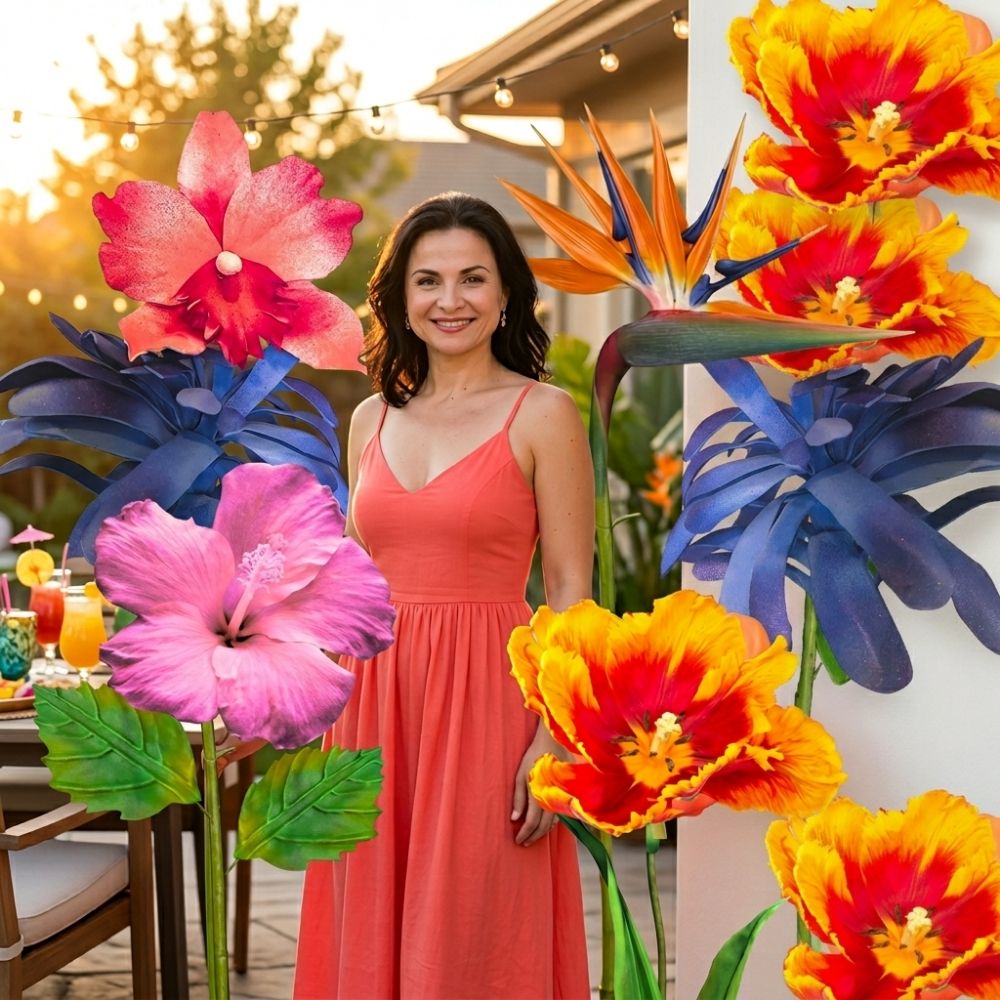
For senior portraits: Go big and go editorial. A flower wall backdrop combined with one or two oversized freestanding flowers in the foreground creates that layered, magazine-worthy look. Let your subject interact with the flowers — leaning against them, holding a stem, peeking through petals.
Our graduation party backdrop ideas post has some really specific styling tips that translate perfectly to senior portrait sessions too.
For family portraits: Create a scene, not just a backdrop. Scatter freestanding flowers at varying heights — some at adult level, some at child level. It gives everyone in the frame something to relate to spatially, and it makes the images feel like a story rather than a posed lineup.
A few technical tips that make a real difference:
According to Statista, there are over 226,000 photographers currently working in the United States. The studios that build a recognizable visual identity — a signature look clients can't get anywhere else — are the ones that thrive.
Giant flowers can absolutely be part of that signature. I've watched it happen for so many photographers who started with just one or two of our kits.
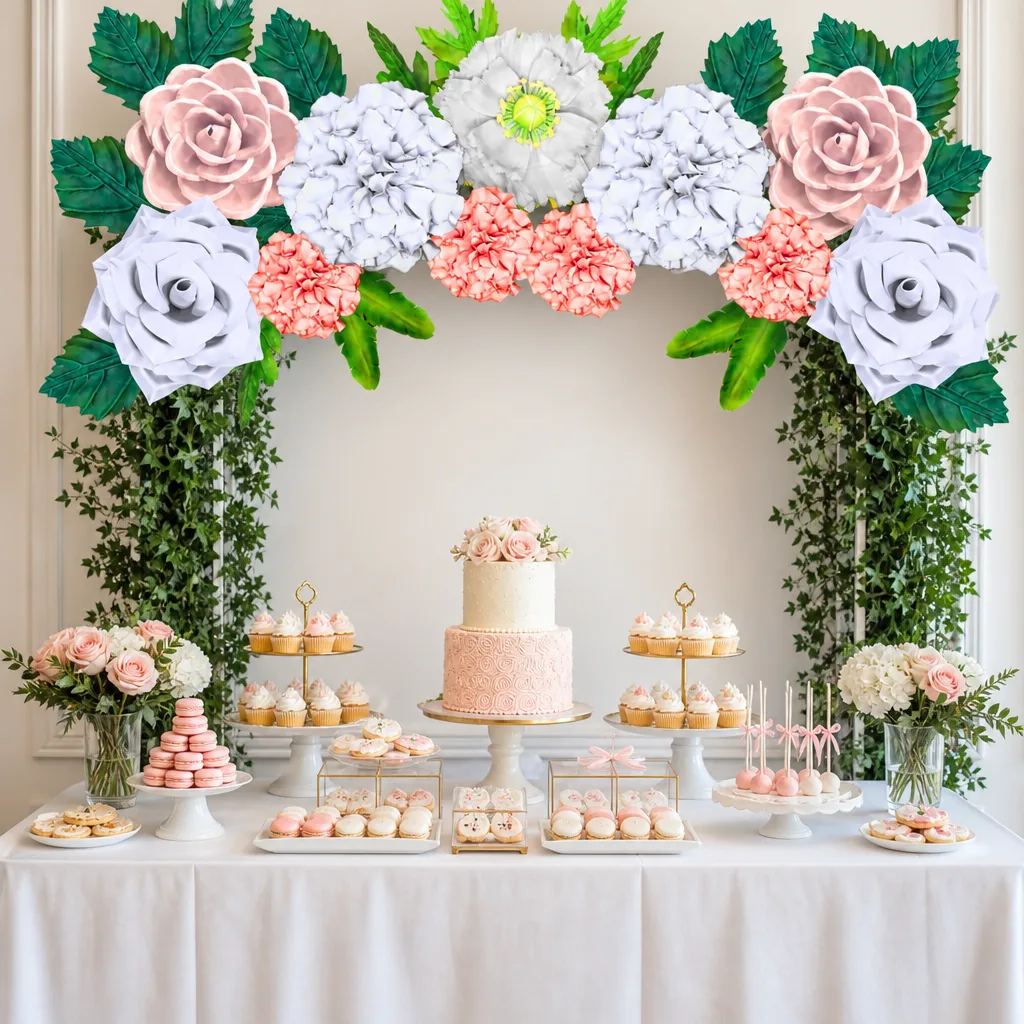
If you're thinking about building something more elaborate — like a full flower arch for a portrait studio corner — our guide on how to make an oversized flower arch backdrop is exactly what you need. It walks through the whole build process with measurements and material lists.
And if you want to go really big, our Bundle Kits (ranging from $350-$600 for 8-12 flowers) are the most cost-effective way to build out a full studio setup. You get a cohesive color story, multiple sizes, and everything you need to create several different configurations.
According to The Knot's Wedding Market Insights, 82% of couples research photographers on social media before booking — which means your studio images are your marketing. The more visually distinctive your work, the less you have to spend on ads.
That's not just a wedding stat. It applies to every portrait photographer trying to fill their calendar.
One more thing I want to mention: EVA foam is incredibly lightweight. A 4-foot flower might weigh less than 2 pounds. That means you can move your setup between sessions in minutes, store everything flat when you're not shooting, and even transport props to outdoor or on-location sessions without a truck.
When I first started making giant flowers, I ruined so many petals experimenting with different materials. Crepe paper tears. Cardstock warps. Fabric is heavy and collects dust. EVA foam just — works. It's the material I kept coming back to, and it's why everything we make at Amazing Giant Flowers is built around it.
If you want to see how shaping those petals actually works, we have a full breakdown on heat gun techniques for shaping foam flower petals — because the curve of a petal makes an enormous difference in how dimensional and realistic the finished flower looks on camera.
A Brides.com report found that couples spend an average of $2,000-$2,500 on wedding flowers alone — which tells you something about how much people value beautiful florals for important moments. Portrait sessions are those moments for families. They're investing in memories. Your props are part of what makes those memories feel special.
For photographers who also do commercial work or events, giant flower props pull double duty beautifully. The same flowers you use for senior portraits can anchor a corporate headshot day, a brand campaign shoot, or a product photography setup. Our corporate event engagement ideas post has some great examples of how this crosses over.
According to WeddingWire, photography is consistently ranked as the second most important wedding vendor by couples — right after the venue. That's the level of importance people place on having their moments beautifully captured. Your props are part of delivering on that expectation.
You can browse everything we have — kits, individual supplies, EVA foam sheets in every thickness — over at the Amazing Giant Flowers shop. Every kit ships with pre-cut pieces and video tutorials, so even if you've never made a giant flower in your life, you can have a stunning prop ready for sessions within an afternoon.
What kind of sessions do you shoot most? I'm genuinely curious — because the right flower setup looks so different for a newborn photographer versus a senior portrait specialist versus someone doing editorial work. Drop a comment or shoot me a message. I love helping photographers figure out exactly what's going to make their studio feel like somewhere clients can't wait to come back to.
Ready to Create Something Amazing?
Browse our collection of giant flower kits and start your next project today.