Stabilizing Tall Giant Flowers in Wind
If you've ever watched a gorgeous giant flower slowly tilt, wobble, and then dramatically face-plant in the middle of your backyard party, you know the exact panic I'm talking about. Outdoor flower stability is honestly the thing nobody warns you about when you first fall in love with giant flower décor — and it's the thing that can make or break your whole event.
I've been doing this for years, and I still remember my first outdoor setup. Beautiful day, gorgeous blooms, light breeze. Then the wind picked up. One flower went down, then another. My client was mortified. I was mortified. And I swore right then that I'd figure out how to do this properly so nobody else had to live through that moment.
So if you're planning an outdoor birthday, garden party, baby shower, graduation bash, or anything under the open sky — this one's for you. Let me walk you through everything I've learned about keeping tall giant flowers standing tall, confident, and beautiful no matter what the Houston weather (or any weather) decides to throw at you.
Key Takeaways
Here's the thing — giant flowers indoors are almost forgiving. There's no wind. The floor is flat. You set them up and they stay put. Done.
Outdoors? Completely different game. You've got wind gusts, uneven ground, humidity, and the physics of a large surface area catching air like a sail. A 24-inch flower head on a 5-foot stem is basically a flag on a pole. The wind doesn't care how beautiful it is.
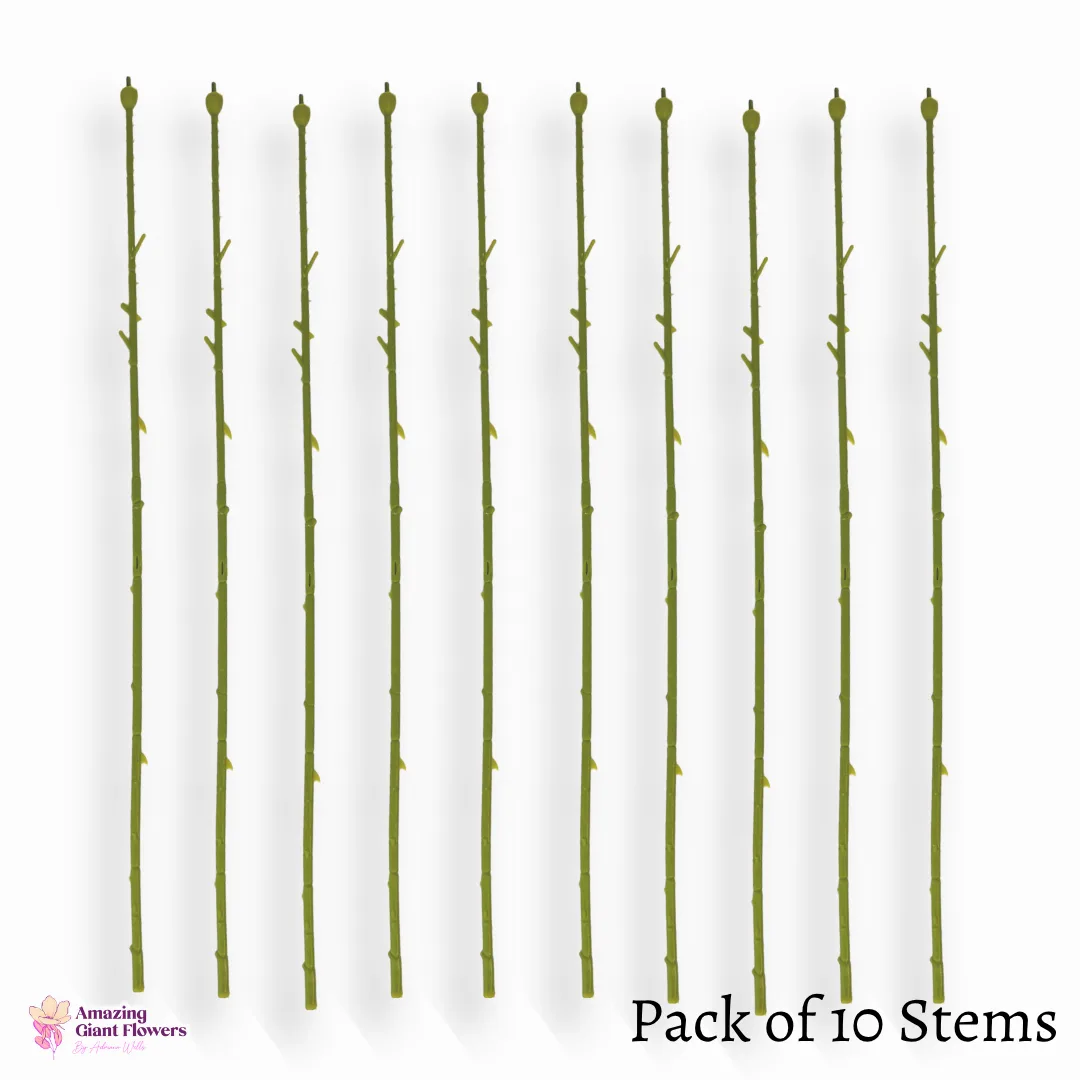
The good news is that with the right structure underneath, you can absolutely pull off stunning outdoor displays. I've done freestanding flower clusters at outdoor weddings in 20+ mph winds. The secret is always in the stem — specifically, in using quality bendable pipes that are rigid enough to hold position but smart enough to be adjusted.
A giant flower is only as stable as the stem holding it up — and outdoors, that stem is everything.
Understanding Wind Load on Giant Flowers
Wind load is just physics. A larger flower head = more surface area = more force from wind. A 30-inch bloom catches significantly more wind than a 12-inch one. And the taller your stem, the more leverage that wind force has at the base.
Think of it like a lever. The flower head is the force point, the base anchor is the fulcrum. A 6-foot stem gives the wind a 6-foot lever arm to work with. That's why both your pipe strength AND your anchoring system have to work together.
Ok, this is where it gets really fun. Because bendable pipes aren't just a convenience — they're genuinely the smartest structural choice for outdoor giant flowers, and here's why.
Our bendable pipes are designed to be shaped, hold that shape, and be reshaped again. That means you're not locked into one configuration. You can curve a stem slightly away from the prevailing wind direction, create a natural lean that actually looks intentional and beautiful, and dramatically reduce the wind resistance on your display.
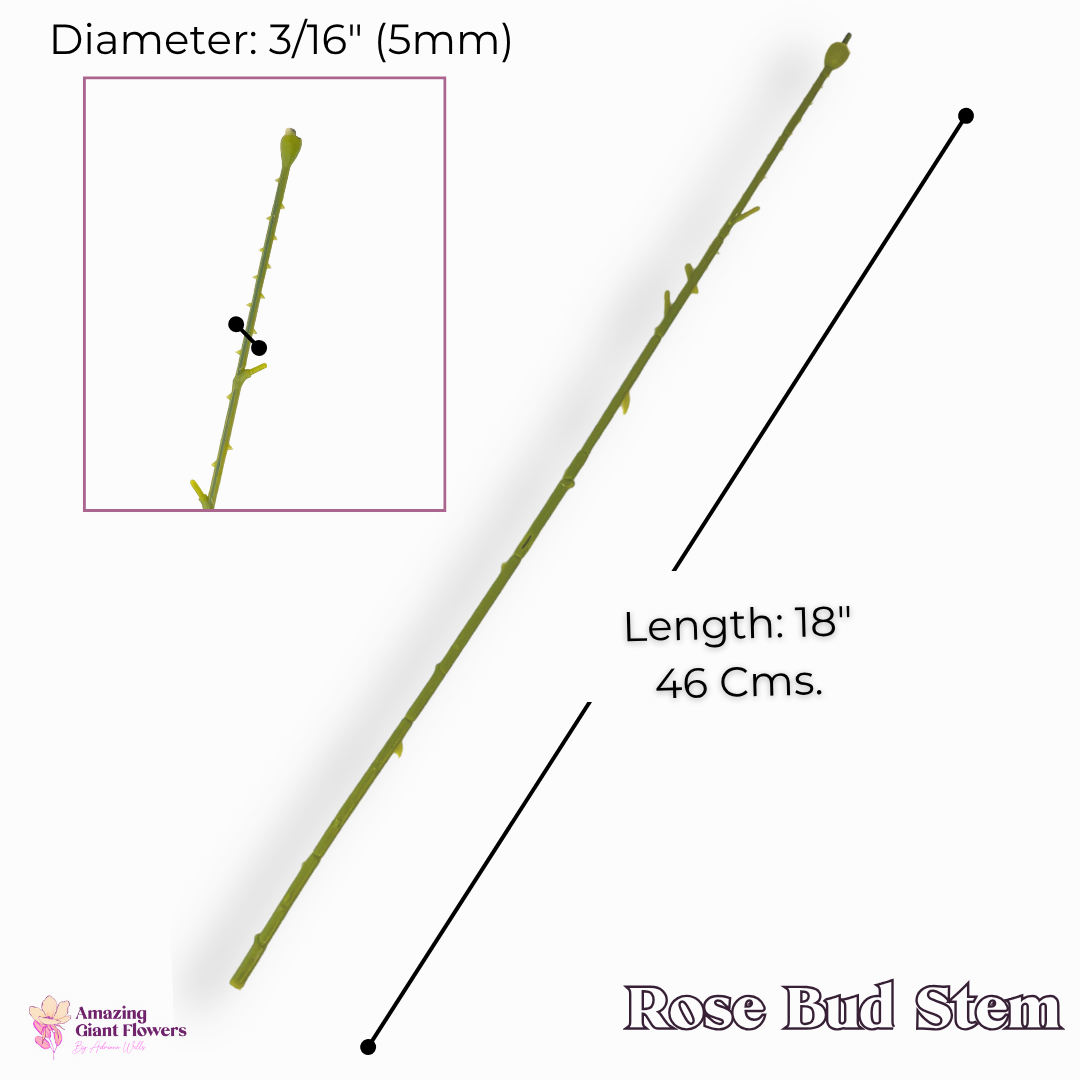
This is something I wish someone had spelled out for me early on. Not all pipes are created equal, and diameter is everything when you're going tall outdoors.
💡 Pro Tip
When in doubt, go one size up on pipe diameter for outdoor use. The slight extra cost is absolutely nothing compared to the cost — financially and emotionally — of a display that falls over mid-event. I always size up for anything going outside.
How to Shape Your Pipes for Wind Resistance
This is a technique I developed after that first outdoor disaster, and it genuinely works. Instead of setting your stems perfectly vertical, bend the top 12-18 inches of your pipe into a slight forward curve — angling the flower head slightly downward and away from the wind.
Two things happen: first, the flower head is no longer presenting its full face to the wind like a sail. Second, the curved shape of the pipe actually distributes stress more evenly than a rigid straight stem would. It looks gorgeous, too — very natural and garden-like.
Your pipe can be perfect and your flower can be stunning, but if the base isn't anchored correctly for your specific surface, you're still going to have problems. Let me break this down by surface type.
This is actually the most forgiving surface if you do it right. Drive a ground stake or rebar 12-18 inches into the ground, then slide your bendable pipe over it. The stake does the anchoring work; the pipe does the shaping work. For extra-tall displays or windy locations, use two stakes in a V-shape and connect them at the top.
Pair this with our freestanding flower kits if you want a complete solution — the kits are designed with exactly this kind of outdoor anchoring in mind.
Hard surfaces are trickier because you can't stake into them. Here's what works:
Beach parties and garden paths with gravel are gorgeous settings but challenging for stability. Go deeper with your stakes — at least 18-24 inches in sand — and use wider stakes or rebar for more surface contact. In loose gravel, a weighted bucket base is usually your best bet.
🌸 Ready to build your outdoor display with confidence?
Browse our full Bendable Pipes collection and find the right diameter and length for your event. Your flowers deserve a stem that can handle whatever the weather brings.
Pipe and Stem Comparison: What to Use When
I get this question a lot: "Adriana, do I really need bendable pipes or can I just use PVC from the hardware store?" Honestly? Let me just show you the difference.
| Feature | Bendable Pipes (Ours) | Rigid PVC | Wooden Dowels |
|---|---|---|---|
| Shapeable? | ✅ Yes — bends and holds | ❌ No | ❌ No |
| Wind resistance | ✅ Excellent — can angle away from wind | ⚠️ Fair — no adjustment possible | ❌ Poor — snaps under lateral force |
| Reusable? | ✅ Yes — reshape for each event | ✅ Yes — but only in straight form | ⚠️ Sometimes — prone to splitting |
| Works with EVA foam flowers? | ✅ Perfect pairing | ⚠️ Workable but awkward | ⚠️ Limited weight capacity |
| On-site adjustment | ✅ Yes — reshape in seconds | ❌ No | ❌ No |
| Best for outdoor use? | ✅ Absolutely | ⚠️ In calm conditions only | ❌ Not recommended |
Real talk? The hardware store pipe is tempting because it's cheap. But you're going to spend more time fighting it than decorating with it. The right tool makes everything easier, and for giant flower stems outdoors, bendable pipes are the right tool. Full stop.
Building Your Outdoor Display: A Step-by-Step Approach
Let me walk you through how I actually set up an outdoor giant flower display from start to finish. This is the process I use every single time.
Step 1 — Scout the Location the Day Before
Go stand in your event space. Note where the wind typically comes from. Look for natural windbreaks — fences, hedges, walls. Position your display so it has some protection, or plan your pipe angles accordingly.
Step 2 — Prepare Your Pipes and Blooms
Shape your bendable pipes at home before the event day. Test the shape, make sure it holds. Attach your EVA foam flower heads securely — I use a combination of hot glue and zip ties for outdoor displays because I don't trust just one attachment method when wind is involved.
Step 3 — Anchor First, Decorate Second
This is the order so many people get backwards. Set your anchoring system first. Drive your stakes, set your weighted bases, secure everything before a single flower goes on. Then build the display up from the ground.
Step 4 — Do a Wind Test
Once everything is up, give each stem a firm side push with your hand. If it wobbles more than about an inch at the base, it needs more anchoring. If it springs back quickly and feels solid, you're good. Don't skip this test. It takes 2 minutes and can save your whole event.
Step 5 — Monitor and Adjust
Check your display periodically during the event, especially if the wind picks up. One of the best things about bendable pipes is that you can make small adjustments on the fly — a quick re-angle takes seconds and can make a big difference. You can read more about planning large-scale outdoor displays in our guide to freestanding giant flower arrangements for events.
The best outdoor displays aren't just beautiful — they're engineered. And the engineering happens before the first guest arrives.
Design Tips That Improve Outdoor Flower Stability Naturally

Here's something I love about this — good structural decisions and good design decisions are often the same decision. When you design with stability in mind, it usually looks better too.
Cluster Your Flowers Instead of Spacing Them Far Apart
A cluster of 5-7 flowers grouped together is dramatically more stable than 5-7 individual stems spread across a lawn. The stems support each other. The display reads as one cohesive statement. And if one flower shifts slightly, the others hold it in place.
This is exactly the approach I recommend in my guide to large floral arrangement ideas for stunning displays — grouping creates both visual impact and structural integrity.
Vary Your Heights Intentionally
Stagger your stem heights — some at 3 feet, some at 4 feet, some at 5 feet. Taller flowers catch more wind, so having shorter flowers in the mix reduces the overall wind load on your display. It also looks incredibly natural and lush.
Choose the Right Bloom Size for the Location
In a very exposed, windy location, scale down your bloom size slightly. A 20-inch flower is going to behave much better in wind than a 30-inch one. You can compensate with more flowers and more clustering to still achieve that wow factor.
💡 Pro Tip
For outdoor wedding arches specifically, I always recommend anchoring the arch frame to the ground at four points minimum, then building the flower display on top. The arch structure itself needs to be rock solid before a single bloom goes on. Check out our complete guide to giant flower wedding arches for the full breakdown.
Ready to Create Something Amazing?
Browse our collection of giant flower kits and start your next project today.