Real-Touch Foam Flower Centerpieces for Home and Gifting
Key Takeaways
Let me clear something up right away. "Real touch" isn't just a buzzword — it refers to a specific quality of finish and texture that makes a foam flower feel and look remarkably close to a fresh petal.
When you touch a well-made EVA foam petal, it has a slight give. It's soft. It has veining, curvature, and layering that mimics how nature actually builds a flower.
That's very different from the stiff, flat foam flowers you might have seen at a craft store. Real-touch design is intentional. It's about shaping, layering, and finishing with care.
EVA foam (ethylene-vinyl acetate) is the material that makes all of this possible. It's flexible, heat-shapeable, lightweight, and takes paint beautifully.
When you apply heat — from a heat gun or even a hot spoon — EVA foam curls, cups, and contours just like a real petal would. That's the magic move that separates a flat foam cutout from a real-touch masterpiece.
If you want to go deeper on foam types and which thickness works best for different flower styles, I wrote a whole breakdown in A Crafter's Guide to Every Type of Foam for Giant Flowers.
Texture, Veining, and Finish
The texture comes from a few places: the foam itself, how you shape it, and how you paint or finish it. Dry brushing with two or three tones of acrylic paint adds incredible depth.
Veining can be added with a fine brush or even a toothpick dragged through wet paint. It sounds fussy, but once you get the hang of it, it goes fast.
For paint techniques that actually hold up on foam surfaces, check out my guide on Flawless Foam Board Paint Finishes — it covers everything from primer to sealant.
Real talk? Fresh flowers are gorgeous. I'm not anti-fresh-flower. But when you're designing a centerpiece for a dinner party, a wedding table, or a gift — foam has some serious advantages.
According to a Brides.com survey, couples spend an average of $2,000–$2,500 on wedding flowers alone. A set of foam centerpieces can replicate that look for a fraction of the cost — and you keep them forever.
| Feature | Fresh Flowers | Real Touch Foam Flowers |
|---|---|---|
| Lifespan | 5–10 days | Years (indefinite with care) |
| Average Cost (table centerpiece) | $75–$200 per arrangement | $30–$100 DIY kit |
| Color Customization | Limited by season/availability | Unlimited — paint any shade |
| Allergy-Friendly | No (pollen, fragrance) | Yes, completely |
| Reusable for Multiple Events | No | Yes |
| Shipping Friendly | Difficult, expensive | Easy — ships flat as a kit |
| DIY-Friendly | Requires floral training | Beginner-accessible with a kit |
According to Statista, the US cut flower market generates over $3.5 billion in annual sales — but that market is entirely driven by perishables. Foam flowers flip the model: you invest once and enjoy forever.
For event planners especially, the math is obvious. If you're decorating 20 tables and each fresh centerpiece costs $150, that's $3,000 gone after one night. Foam? You rent or resell them.
Size is everything in centerpiece design. Go too small and the arrangement disappears on a big table. Go too large and guests can't see each other across the dinner spread.
Here's how I think about it:
For a standard 60-inch round banquet table, I usually recommend a centerpiece in the 18–22 inch range. That gives you presence without overwhelming the place settings.
For a rectangular farmhouse table, consider running a series of 3–5 smaller flowers (12–16 inches each) down the center for a lush, garden-style runner effect. It's one of my favorite looks.
Best Flower Types for a Real-Touch Centerpiece Look
Not every flower shape translates equally well into foam. Some styles naturally lend themselves to that real-touch, layered, dimensional look. Here are my favorites:
I personally love mixing a large peony (22 inches) with a couple of smaller ranunculus (14 inches) and some foam greenery for a centerpiece that looks like it came straight from a florist's design table.
If you want to explore more arrangement styles, my post on Large Floral Arrangement Ideas for Stunning Displays has a ton of visual inspiration and styling tips.
Ok, this is where it gets really fun. Let's actually build this thing. I'll walk you through the process I use for a standard tabletop centerpiece.
This is the step that makes everything look real. Don't skip it. Lay your foam petals out and use your heat gun on a low-to-medium setting, hovering 2–3 inches from the surface.
As the foam warms, use your fingers (carefully!) or a rounded tool to cup, curl, and wave each petal. Work quickly — EVA foam holds its shape as it cools.
Vary the curl on each petal. Some should cup inward, some should flare outward. That variation is what creates the illusion of a living flower.
Step 2 — Paint for Depth
Start with a base coat in your main color. Let it dry fully — about 20 minutes with acrylic.
Then dry brush a slightly lighter shade over the raised areas and edges. This catches the light the way a real petal does.
For extra realism, add a deeper tone at the petal base where it would naturally be in shadow. Even just a few strokes makes a massive difference.
Hot glue your smallest, most tightly curled petals into the center first. Layer outward, getting progressively larger and more open with each ring.
For a peony-style flower, I typically use 5–7 petal layers. For a ranunculus, I'll use up to 9 or 10 layers of tiny petals.
Press each petal firmly as you glue and hold for 10–15 seconds. Hot glue sets fast, but foam needs a moment to bond properly.
Step 4 — Assemble Your Centerpiece
Once your flowers are built, it's time to arrange. If you're using a vase, insert your bendable pipe stems into the base of each flower and arrange them at varying heights — typically 8, 12, and 16 inches above the vase rim.
Fill gaps with foam leaves, filler flowers, or even dried botanicals. A little negative space is fine — you don't want it to look stuffed.
For a low, lush arrangement without stems, press flowers directly into a floral foam block inside a compote or decorative bowl. This gives you that tight, garden-style look.
Here's something I don't think enough people are talking about: foam flower centerpieces are incredible gifts. I mean it. They're personal, they're lasting, and they look like you spent way more than you did.
According to The Knot, the average wedding gift budget is $100–$150. A custom foam flower centerpiece fits right in that range — and it's something the couple will display for years, not something they'll return for store credit.
Gifting Ideas That Actually Wow
- Housewarming Gift: A custom centerpiece in the recipient's home colors is thoughtful, practical, and zero-maintenance. They'll think of you every time they look at it.
- Baby Shower Gift: Soft pinks, lavenders, and creams in a small arrangement — pair it with a welcome board for a full gift set. (Speaking of welcome boards, I have tons of ideas in my baby shower entrance guide.)
- Birthday Gift: Build it in their favorite color. Add a candle holder in the center for a centerpiece that doubles as a birthday table moment.
- Teacher Appreciation: A small foam flower arrangement in a cute pot is so much more memorable than another gift card. And it lasts all year on their desk.
- Corporate Client Gift: A branded color-coordinated centerpiece is a serious upgrade from a fruit basket. I've done these for brand activations and the response is always incredible.
The other thing I love about foam flowers as gifts? You can ship them as a kit. Send someone the pre-cut pieces, the tutorial, and a little note — and you've given them an experience, not just an object. That's something a fresh flower arrangement can never do.
A real touch foam flower centerpiece isn't just for events. These pieces live beautifully in everyday home spaces — and styling them right makes all the difference.
Keep the centerpiece under 20 inches tall so conversation flows easily. I love a trio arrangement — one larger flower flanked by two smaller ones — in a low ceramic bowl or wooden tray.
Earthy tones like terracotta, dusty rose, and sage green look gorgeous on a farmhouse or boho table. For a more modern aesthetic, go monochromatic: all white, all blush, or all deep burgundy.
This is where you can go bigger. A 24–30 inch statement flower in a tall vase creates an immediate wow moment when guests walk in.
Pair it with a mirror behind it to double the visual impact. Trust me on this one — it's a designer trick that costs nothing extra.
Smaller arrangements — think 10–14 inches — work beautifully on nightstands, dressers, and vanity tables. A single perfect bloom in a bud vase can be just as impactful as a full arrangement.
Blush, ivory, and lavender tones feel especially intimate and romantic in bedroom settings.
Seasonal Swaps
One of the best things about foam? You can repaint them for the season. A white peony centerpiece becomes a pumpkin-orange dahlia for fall with just a fresh coat of paint. Zero waste, infinite versatility.
According to HGTV, seasonal decorating is one of the top ways homeowners refresh their spaces without major renovation costs. Foam flowers are the perfect vehicle for that.
I've made all of these mistakes so you don't have to. Learn from my early disasters:
For more tips on cutting foam cleanly and avoiding jagged edges on your petals, my guide on The Best Way to Cut Foam for Flawless DIY Crafts is genuinely one of the most useful things I've written.
A real touch foam flower centerpiece is a decorative arrangement made from EVA foam petals that have been heat-shaped, layered, and painted to mimic the look and feel of fresh flowers. The "real touch" quality refers to the softness, dimensional texture, and realistic color depth achieved through careful shaping and finishing techniques.
Unlike flat or stiff foam flowers, real-touch designs use cupped petals, multi-tone paint, and natural-looking layering to create arrangements that genuinely fool people at first glance.
Essentially forever with basic care. EVA foam doesn't wilt, dry out, or lose color the way fresh or dried flowers do. Keep them out of prolonged direct sunlight (which can fade paint over time) and store them in a box or bag when not in use, and your centerpieces will look gorgeous for years.
Many of my customers reuse their foam flower centerpieces across multiple events — weddings, anniversaries, vow renewals — and they still look brand new.
How much does a real touch foam flower centerpiece cost to make?
DIY costs vary based on size and complexity. A single medium-sized centerpiece flower (16–20 inches) typically costs between $15–$40 in materials if you're cutting your own foam. Using a pre-cut kit from our shop runs $50–$120 depending on the style, and includes everything you need plus video tutorials.
Compare that to a fresh floral centerpiece at $75–$200 per table that lasts less than two weeks, and the value of foam becomes very clear — especially if you're decorating multiple tables.
Absolutely. I designed our kits specifically for people who have never crafted before. The foam comes pre-cut to exact petal shapes, the video tutorials walk you through every step, and the materials are forgiving — if you mess up a petal, you just reshape it with a little heat.
That said, the heat-shaping step does take a little practice. I always recommend making a few test petals before starting your final piece. Give yourself an afternoon and you'll be amazed at what you create.
For standard 60-inch round reception tables, I recommend a centerpiece in the 18–22 inch diameter range. This gives you visual impact without blocking sightlines across the table. For long rectangular tables, consider a series of 3–5 smaller flowers (12–16 inches) running down the center like a floral runner.
Sweetheart tables and head tables can handle a larger statement piece — 24–30 inches — since they're typically viewed from a distance and meant to be a focal point. Check out my full guide on Giant Flower Centerpieces: Stunning Ideas for 2026 Events for more layout inspiration.
Are foam flower centerpieces good for outdoor events?
Yes, with a few caveats. EVA foam handles outdoor settings well in mild weather — no wilting, no water needed. However, strong wind can knock over lightweight arrangements, so anchor them well in your vessel. Extended direct sun can gradually fade painted surfaces, so for all-day outdoor events, consider a UV-protective sealant spray on your finished piece.
For humid climates (hello, Houston!), foam flowers actually outperform fresh flowers dramatically. No drooping, no browning edges, no sad petals by cocktail hour.
If you've made it this far, I hope you're feeling genuinely excited about what's possible with a real touch foam flower centerpiece. Because the truth is — these aren't just craft projects. They're heirloom-quality pieces that bring beauty into your home, your events, and the lives of the people you give them to. That's something I'm deeply proud of every single time someone sends me a photo of their finished piece.
Ready to start? Browse our full collection of kits and supplies at Amazing Giant Flowers — everything you need is there, and I'm always just a message away if you have questions. I can't wait to see what you make.
Shop the supplies
Everything You Need for This Project
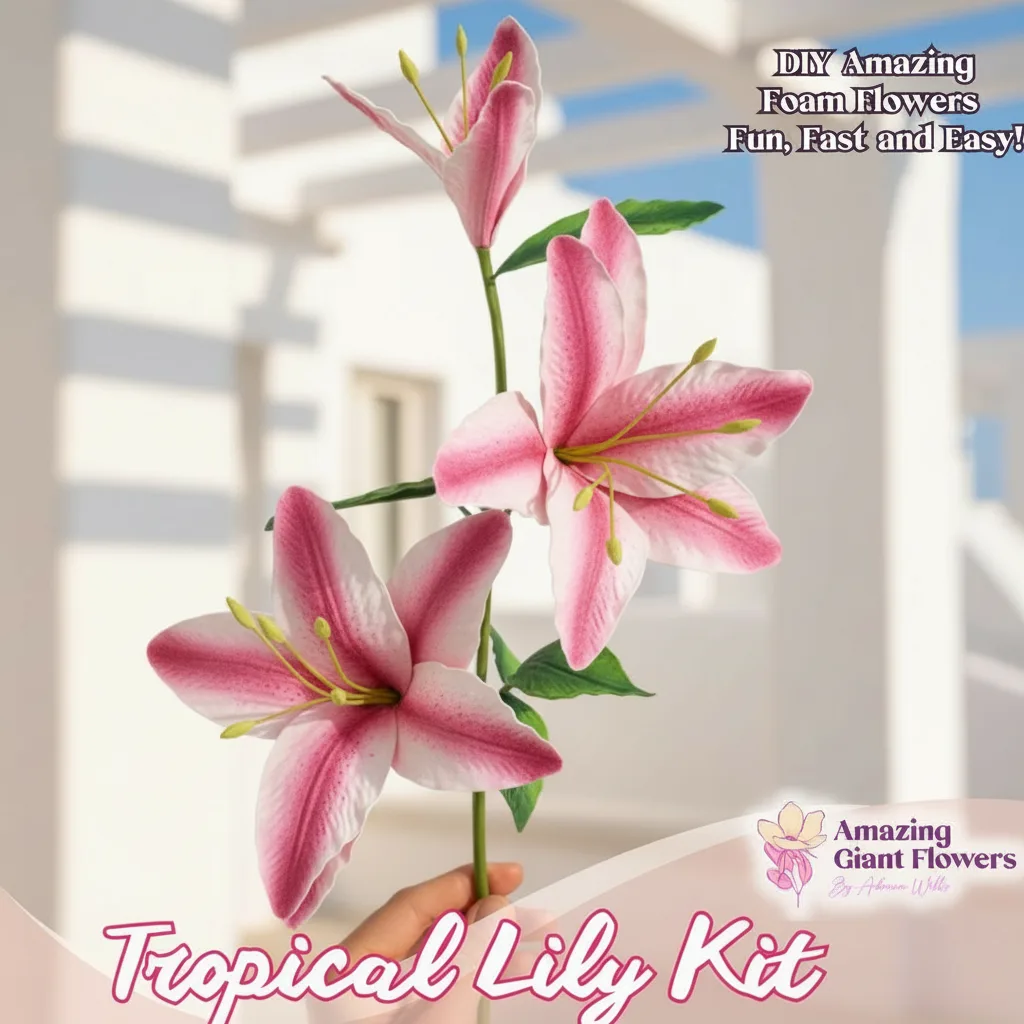
Real Touch Stargazer Lily Foam Flower Kit — Tropical DIY Lilies with Painted Center, Reusable Mold & Pre-Cut Petals
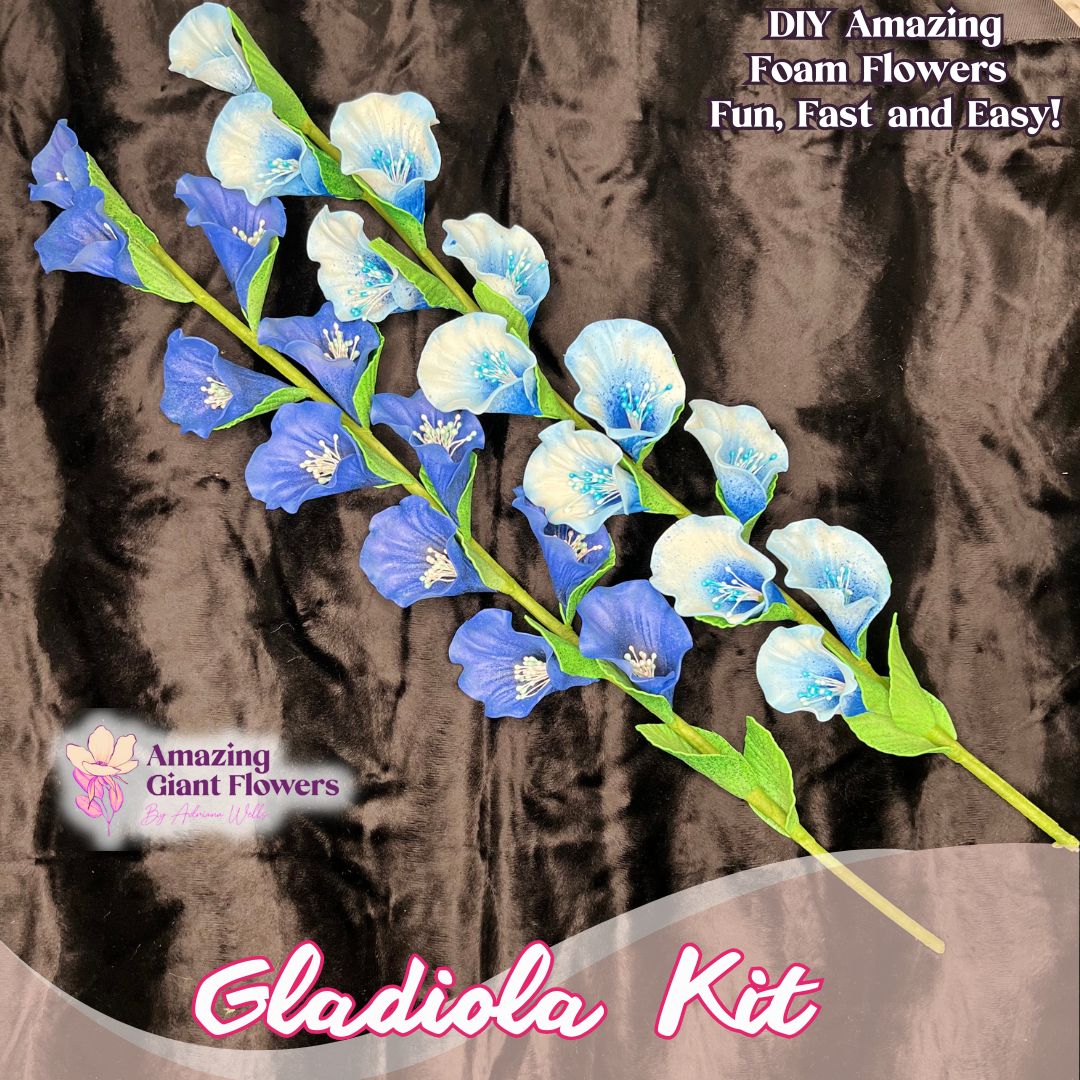
Real Touch Gladiolus Foam Flower Kit (Gladiola) — Two Tall 24" DIY Stems with Reusable Mold, Pre-Cut Petals & Leaves
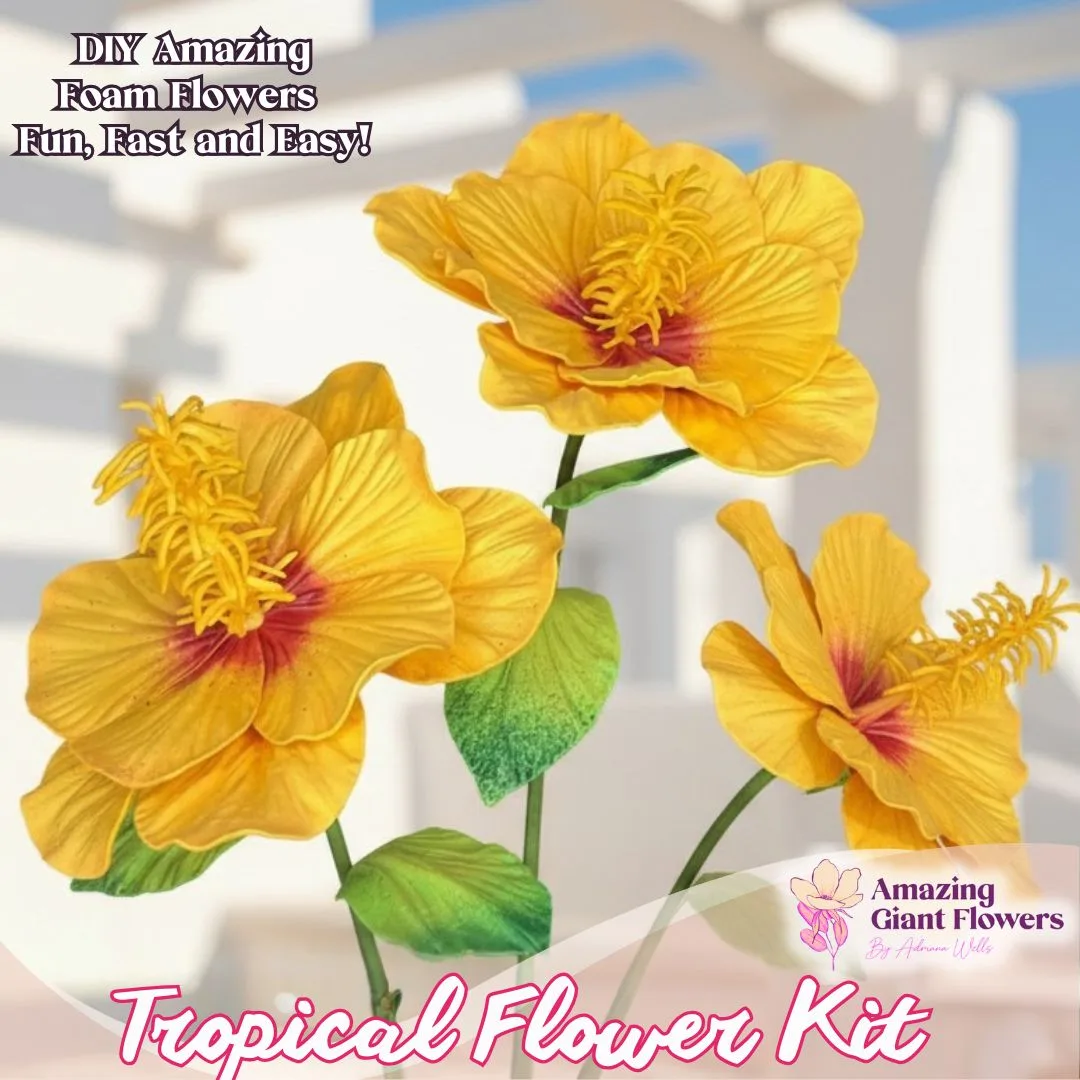
Real Touch Tropical Flower Foam Kit — Large DIY Hibiscus Blooms with Reusable Double-Sided Mold, Pre-Cut Petals, Bud & Leaves
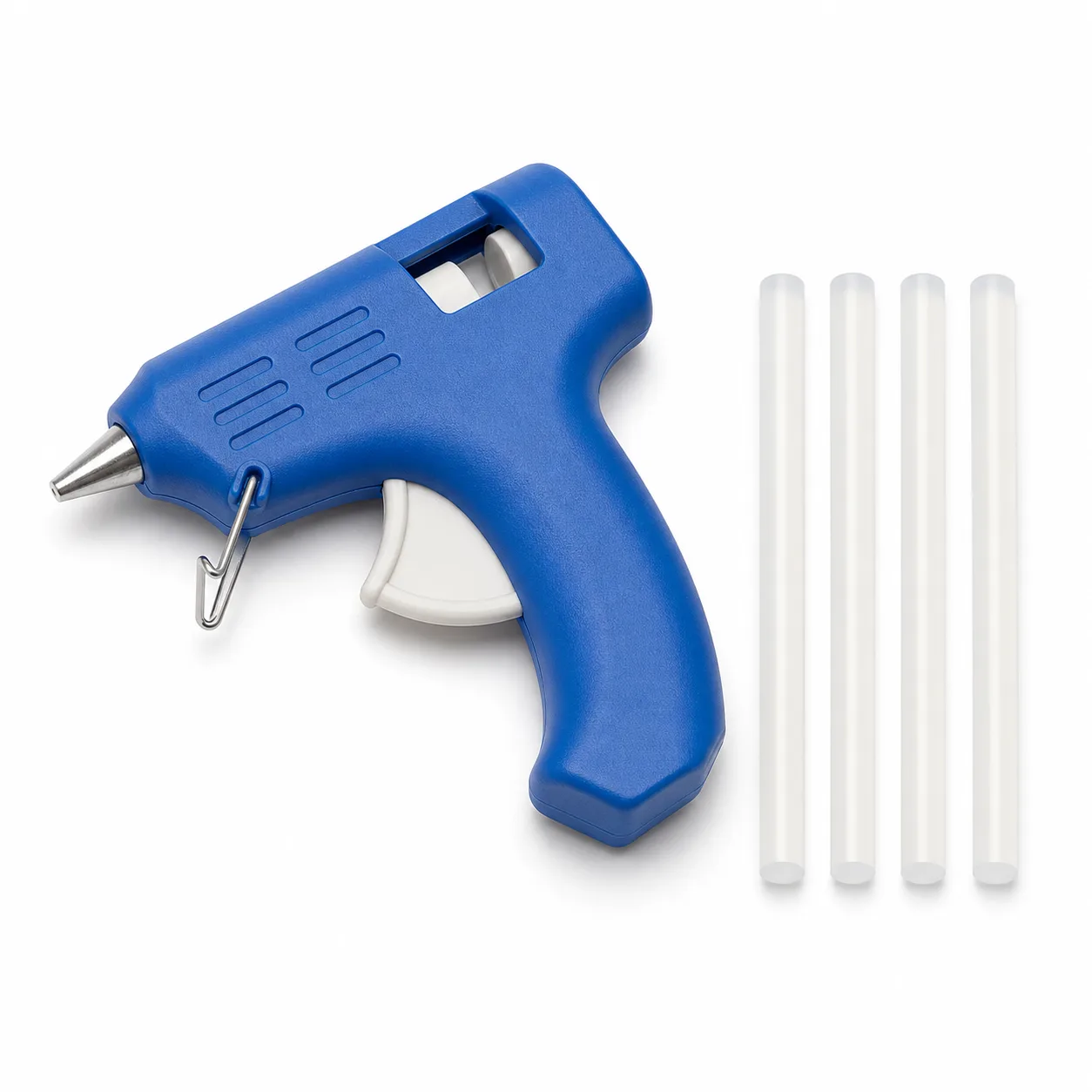
Hot Glue Gun + 4 Silicone Glue Sticks — Fast, Strong Petal Assembly
Ready to Create Something Amazing?
Browse our collection of giant flower kits and start your next project today.