EVA Foam Thickness Guide: Which mm to Use for Each Petal

If you've ever stood in front of a shelf of EVA foam sheets wondering which one to grab, you are not alone. This is honestly one of the most common questions I get — and it makes total sense, because the answer actually matters a lot. Getting your EVA foam thickness guide flower crafting knowledge dialed in is the difference between petals that hold their shape beautifully and petals that flop, crack, or just look... off.
I learned this the hard way. When I first started making giant flowers, I grabbed whatever foam was cheapest and available. Some petals came out gorgeous. Others were a disaster — too stiff to curl, too thin to hold structure, too thick to layer without looking bulky. It took me years of experimenting (and a lot of wasted foam) to figure out the system I'm going to share with you today.
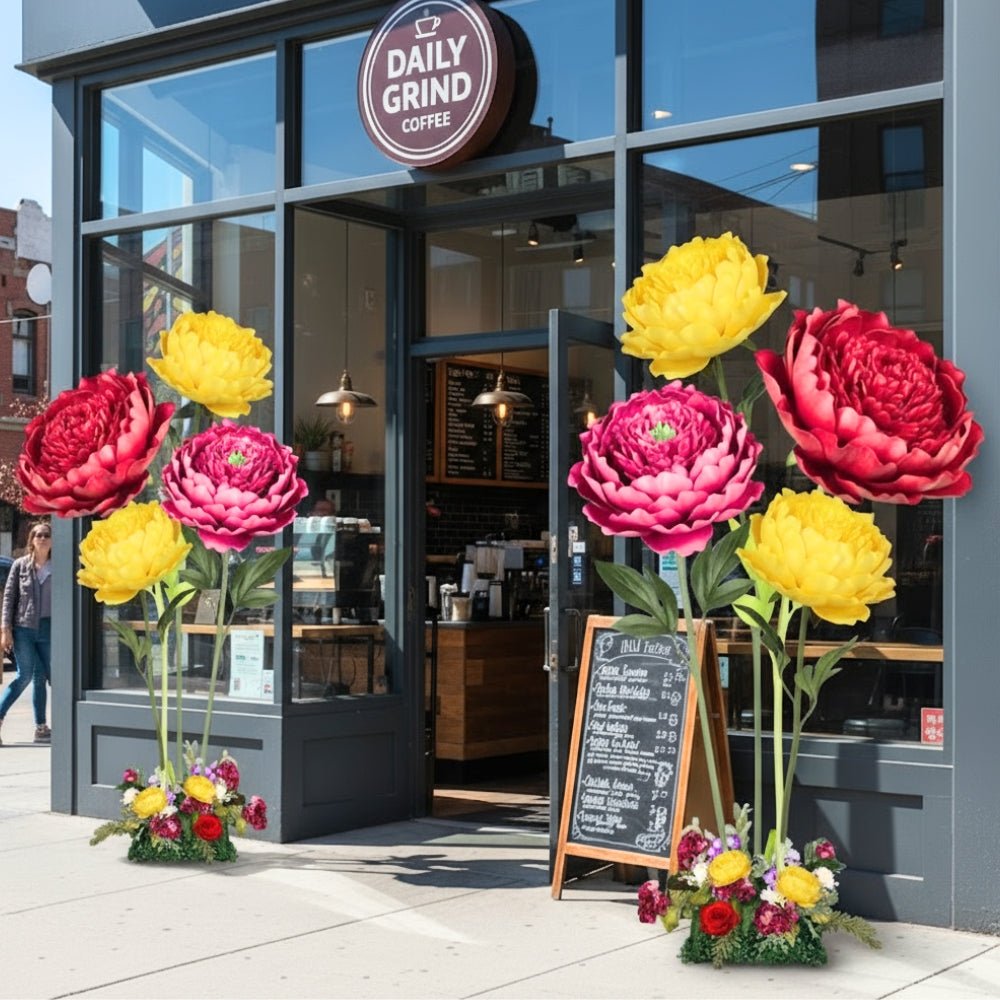
So whether you're making a 2-foot dahlia for a baby shower or a 5-foot statement rose for a wedding arch, this guide will tell you exactly which foam thickness to reach for — and why.
EVA foam isn't just foam. It's a material with real engineering behind it — and thickness is the variable that controls almost everything about how your flower behaves.
Thickness affects flexibility. Thinner sheets bend and curl easily. Thicker sheets hold rigid structure. Neither is better — it depends entirely on what you're building.
Thickness affects weight. This matters more than most people realize. A giant flower made from 6mm foam can get surprisingly heavy, which affects how it mounts, hangs, or stands.
It also affects how your foam responds to heat. Thinner foam shapes quickly with a heat gun — sometimes in just a few seconds. Thicker foam needs more sustained heat and more deliberate shaping technique. If you haven't read my post on heat gun techniques for shaping foam flower petals, that's a great companion to this guide.
And honestly? Thickness affects cost. Thicker foam costs more per sheet. When you're making a bundle of 8-12 flowers, those pennies add up fast. Choosing the right thickness from the start means you're not over-engineering petals that don't need it.
According to Statista, the US craft industry generates over $44 billion annually — and foam crafting is one of the fastest-growing segments within it. More people than ever are working with EVA foam, which means more people than ever are getting confused about which thickness to use. Let's fix that.
Here's how I think about it. EVA foam for giant flowers typically comes in 2mm, 3mm, 4mm, 6mm, and 8mm thicknesses. Each one has a sweet spot. Let me walk you through all of them.
2mm foam is the thinnest you'll commonly find, and it is absolutely magical for the right applications. It's incredibly flexible right out of the package — you can curl it with your fingers without any heat at all.
I use 2mm for small inner petals, stamens, and decorative centers. Think of the tiny curled petals at the heart of a peony or the delicate inner cone of an anemone. Those details need foam that moves and curves naturally.
It's also my go-to for leaves and foliage on smaller arrangements. Real leaves are thin and slightly flexible — 2mm foam captures that quality better than anything else.
What 2mm is NOT good for: large outer petals. It won't hold its shape under its own weight once you get above about 8-10 inches in petal length. The edges will droop and the whole petal looks tired.
- Best for: Inner petals, stamens, flower centers, small decorative leaves
- Ideal petal size: Up to 8 inches
- Heat gun response: Very fast — watch it carefully, it can warp
- Flexibility: Extremely flexible, curves with minimal effort
- Avoid for: Large outer petals, freestanding structural elements
3mm EVA Foam — The All-Around Workhorse
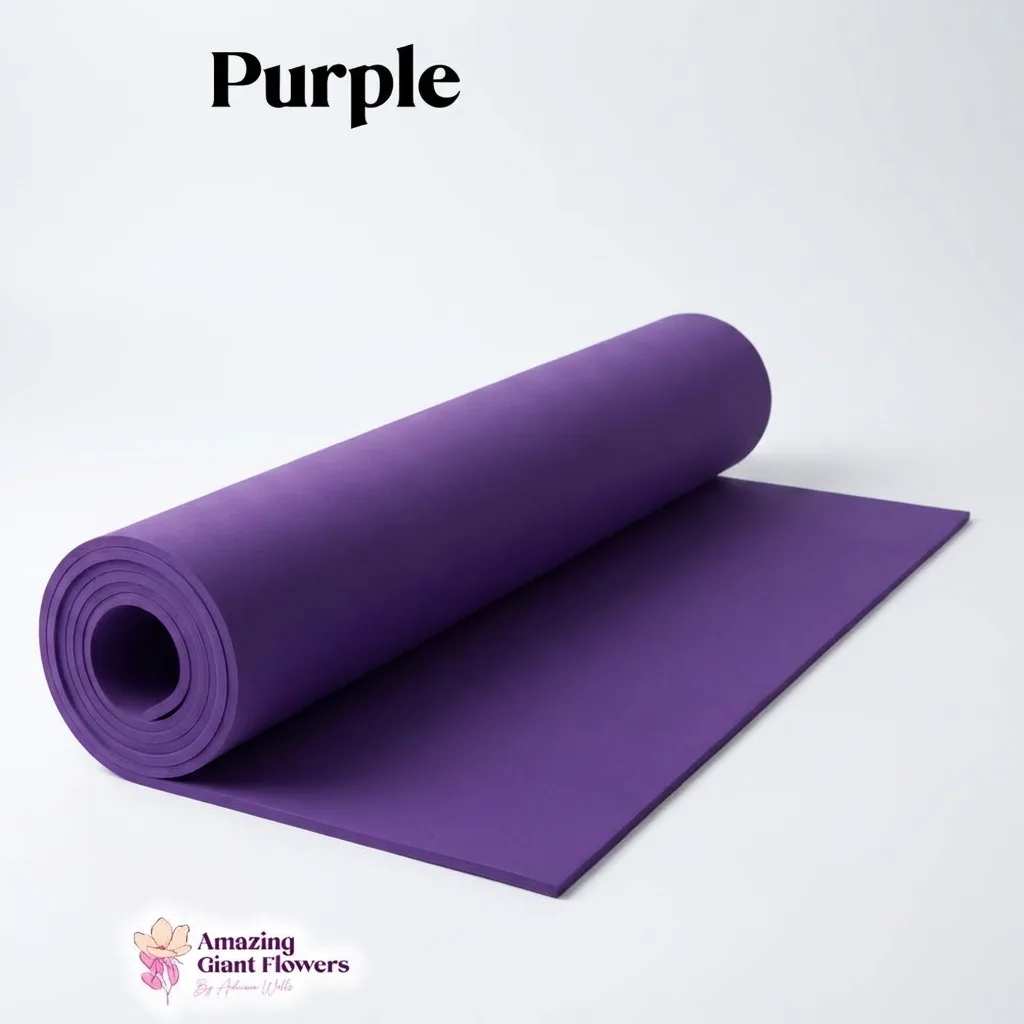
If I had to pick one thickness to work with for the rest of my life, it would be 3mm10-18 inch range.
It has enough body to hold its shape, but it's still flexible enough to curl beautifully with a heat gun. When I'm making a giant ranunculus or a big open garden rose, 3mm is almost always what I reach for first.
It also layers really well. You can stack 4-6 layers of 3mm petals without the flower getting so heavy that it can't be wall-mounted. That's a real practical consideration, especially for wall decor flower installations where weight is always a factor.
Real talk? If you're just getting started with giant foam flowers and you want one foam to experiment with, buy 3mm in a few colors and start there. You'll figure out the rest from that baseline.
4mm foam is where things start to feel more substantial in your hands. It has a satisfying firmness — petals cut from 4mm stand up on their own without flopping even before you heat-shape them.
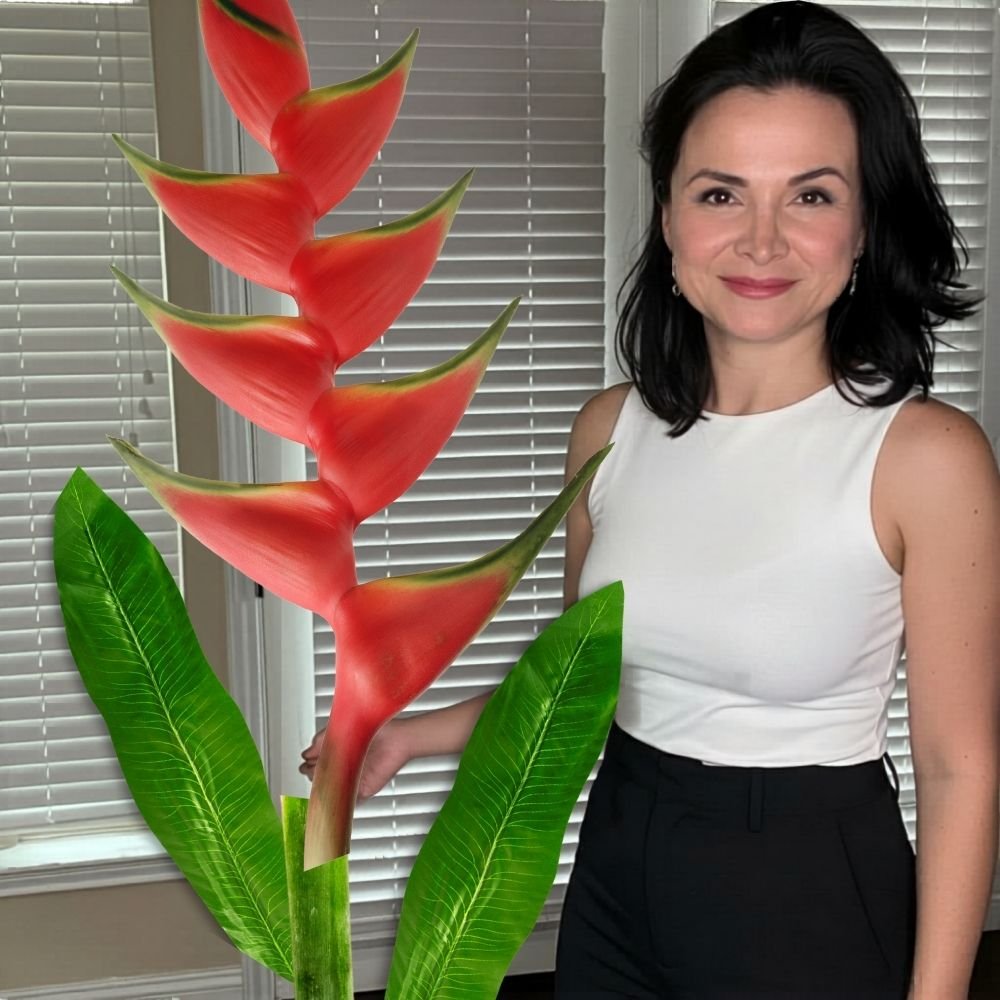
I use 4mm for large outer petals on statement flowers — the kind that are 20+ inches long and need to hold a dramatic curve without sagging. Think of the big swooping outer petals on a giant magnolia or a tropical heliconia.
It's also excellent for structural base layers — the bottom tier of petals that everything else sits on top of. Those petals need to be stiff enough to support the weight of all the layers above them.
The tradeoff is that 4mm takes more heat and more time to shape. You can't rush it. Move your heat gun slowly and evenly, and give the foam time to relax into the curve you want before it cools. If you try to force it, you'll get uneven warping.
Ok, this is where it gets really fun — and also where beginners sometimes go wrong.
6mm foam is thick. It's rigid. And it is absolutely not meant for delicate petal work. But for the right applications, it is completely irreplaceable.
I use 6mm for flower bases, structural cones, and large flat backing pieces. When I'm building a freestanding giant flower that needs to support its own weight on a stem, the base piece that everything attaches to is almost always 6mm. It gives the whole structure integrity.
According to IBISWorld, the US floral industry is worth $7.9 billion — and event decorators are one of the fastest-growing customer segments. Professional decorators working on large commercial installs rely on 6mm foam for the structural elements that have to hold up all day (or all weekend) under real event conditions.
Disney-level installs — yes, we've worked with Disney — require structural integrity that thinner foam simply cannot provide. When a giant flower is going to be touched by hundreds of people or sit in direct sunlight for hours, 6mm backing pieces make the difference between an installation that holds and one that falls apart by noon.
Shaping 6mm with a heat gun takes patience. Keep the gun moving, work in sections, and don't expect tight curls — this foam is for broad, gentle curves and flat structural forms.
8mm foam is the heaviest and most rigid option you'll encounter for flower crafting. Honestly? Most people making giant flowers for events and weddings will never need it.
I use 8mm for very large freestanding bases that need to anchor a flower arrangement without any wobble — think a 4-5 foot statement flower at the entrance of a venue that's going to be photographed all night. The base has to be absolutely rock solid.
It's also useful for custom display props and signage backings — when the foam itself is serving more as a rigid panel than a flower component. Some of our commercial clients use 8mm sheets as the backing for entire wall flower installations at retail stores.
If you're just making flowers for a wedding or a birthday party, skip the 8mm. You don't need it, and it'll just make your project heavier and harder to work with than necessary.
Matching Foam Thickness to Flower Type — Quick Reference
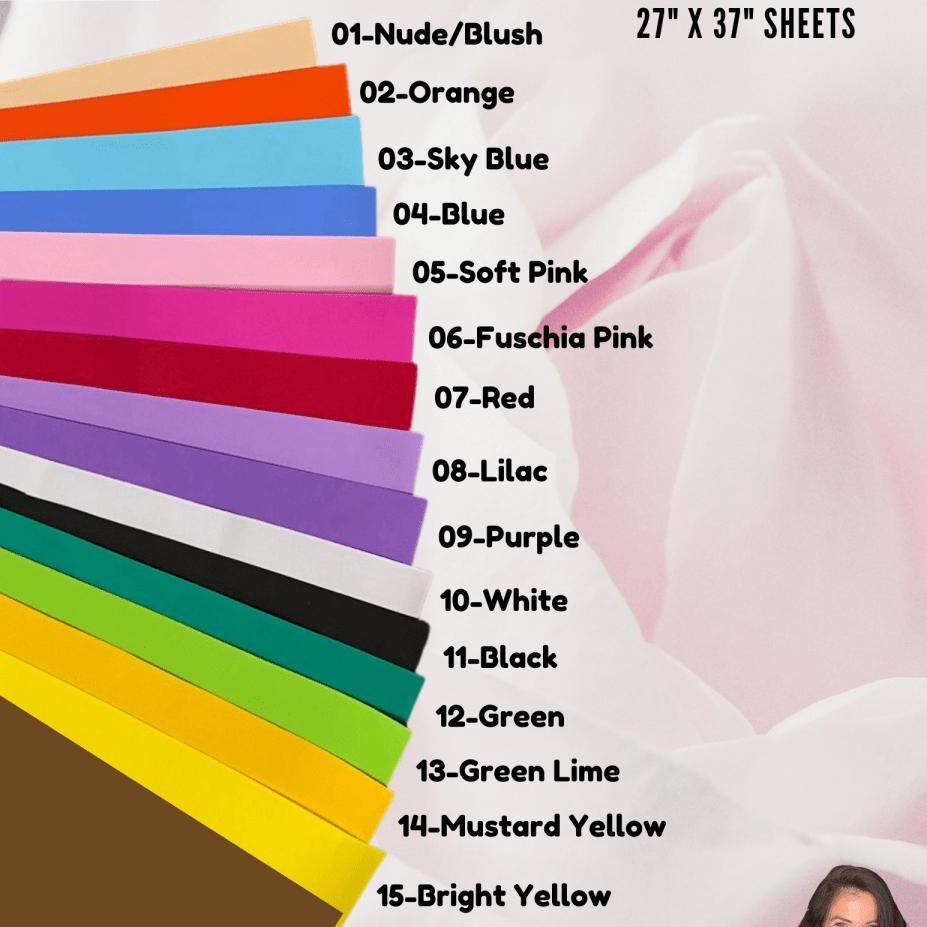
I know some of you just want the cheat sheet. I get it. Here's how I match thickness to flower type in my own work.
Giant Roses (2-4 feet): Outer petals in 3mm, inner petals in 2mm, base cone in 6mm. The contrast between the flexible inner petals and the more structured outer ones is what makes a foam rose look realistic and dimensional.
Giant Dahlias: Almost entirely 3mm. Dahlias have so many petals that you need a thickness that's workable in volume — 4mm would make the whole flower too heavy to hang on a wall.
Giant Peonies: This is my favorite flower to make, so I have opinions. Outer petals in 3mm or 4mm, the fluffy inner petals in 2mm cut into thin strips and curled tightly. That combination gives you the full, lush peony look.
Tropical Flowers (Anthuriums, Heliconias): These often have large, flat, waxy-looking petals. 4mm is perfect — it holds the broad, smooth shape without needing much curl.
Sunflowers: Petals in 3mm, center disk in 6mm for structure, then covered with textured 2mm foam details. The thick center is what gives a foam sunflower that satisfying three-dimensional look.
Anemones and Ranunculus: Almost entirely 2mm and 3mm. These flowers are all about delicate layering and tight curls — thicker foam would kill the effect entirely.
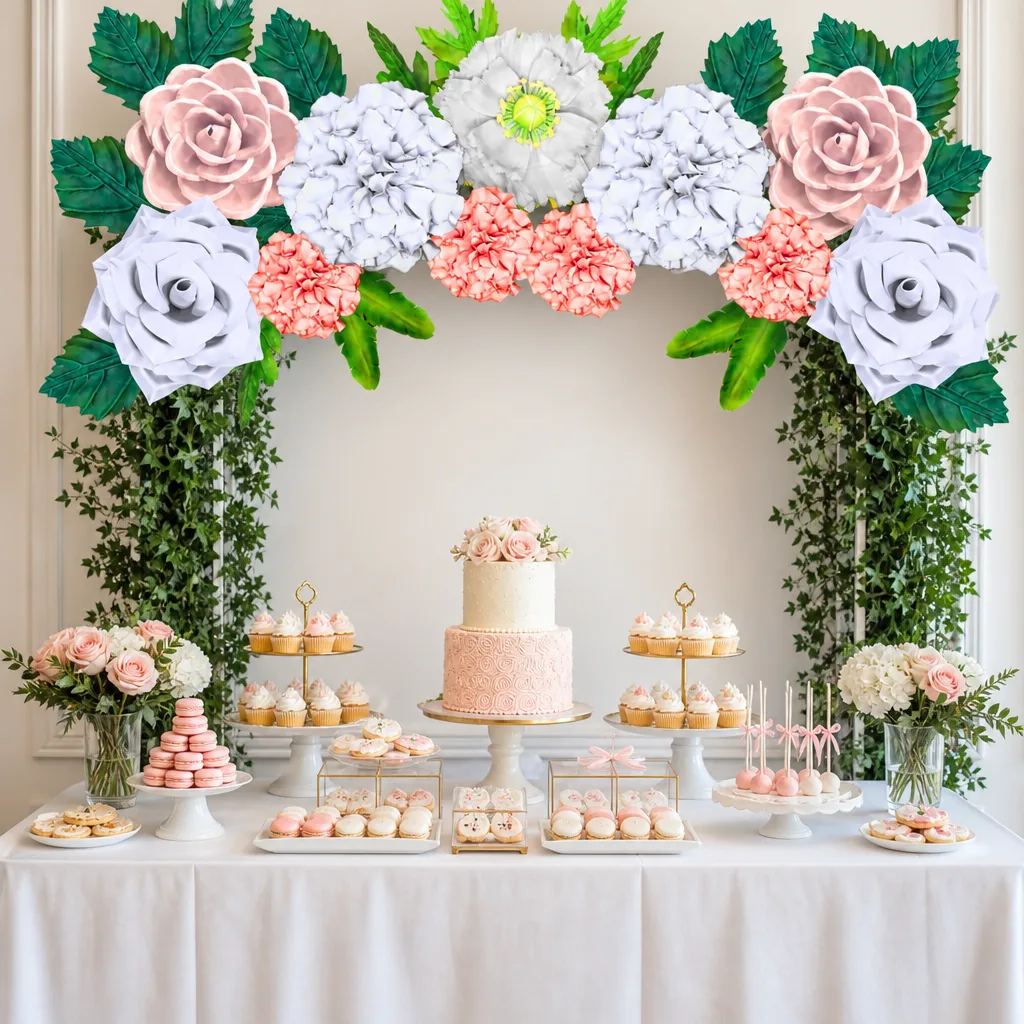
A Brides.com survey found that couples spend an average of $2,000-$2,500 on wedding flowers. That's exactly why so many DIY brides are turning to giant foam flowers — you can create a stunning giant flower wedding arch for a fraction of that cost when you know what you're doing.
Not all EVA foam is created equal. I've tested a lot of brands over the years, and there are real differences in quality that affect your finished flowers.
Density matters as much as thickness. Two sheets of "3mm" foam from different manufacturers can feel completely different — one firm and consistent, one soft and spongy. Look for foam with a smooth, closed-cell surface that doesn't compress easily under light finger pressure.
Color consistency matters too. Cheap foam often has color that's uneven or fades after heat shaping. If you're making flowers for a professional event, test a small piece with your heat gun before committing to a large order.
Honestly? Skip the craft store foam floor mats that people sometimes try to repurpose. They're not the right density for flower petals and they don't heat-shape cleanly. Invest in proper EVA foam sheets designed for crafting — the difference in your finished flowers will be immediately obvious.
At Amazing Giant Flowers, we carry EVA foam in the thicknesses that actually matter for giant flower making — pre-tested, color-consistent, and ready to work with. No guessing whether the foam will behave the way you need it to.
According to The Knot's annual wedding report, the average US wedding now costs over $30,000, with décor being one of the top three expenses. Giant foam flowers are genuinely one of the smartest ways to create high-impact décor without blowing the entire budget — but only if you're using the right materials from the start.
For event planners doing large installs, I always recommend buying foam in bulk sheets rather than pre-cut packs when you know what thickness you need. The per-sheet cost drops significantly, and you have full control over your cut sizes. Our freestanding giant flower arrangements guide goes deep on planning large-scale installs if that's where you're headed.
One more thing worth mentioning: EVA foam is paintable, dyeable, and takes acrylic paint beautifully — but thickness affects how paint behaves on the surface. Thinner foam can warp slightly if you apply too much wet paint at once. Thicker foam is more stable. If you're planning to paint your petals, lean toward 3mm or 4mm for the most stable painting surface. My guide on foam board paint finishes has everything you need on that front.
According to Event Marketer, 74% of event attendees say they have a more positive opinion of a brand after an experiential event. That's why companies like Dolce & Gabbana invest in giant floral installations — the visual impact is real and measurable. And the secret to installations that photograph beautifully and hold up all day is, in large part, choosing the right foam thickness for every single component.
If you're working on a DIY giant flower backdrop for photos, the thickness choices become even more important because backdrops are seen up close and in high resolution. Every petal detail matters. A mix of 2mm for inner details and 3mm for outer petals will give you that lush, layered look that reads beautifully on camera.
For quinceañeras, graduations, and baby showers — events where the backdrop IS the photo moment — I see so many people underestimate how much the material quality shows in photos. Check out our quinceañera backdrop ideas and graduation party backdrop ideas for real examples of what the right foam thickness combination looks like in finished installations.
A quick note on mixing thicknesses in a single flower — this is actually the professional move. Almost no beautiful giant foam flower is made from a single thickness throughout. The variation in stiffness and flexibility between layers is what creates that organic, realistic look. Don't be afraid to use 2mm, 3mm, and 4mm in the same flower. That's not overcomplicating it — that's doing it right.
According to HGTV's DIY trend reports, oversized botanical décor has been one of the top home and event styling trends for several consecutive years. The demand isn't slowing down — if anything, giant flowers are showing up in more places than ever, from retail visual merchandising (see our visual merchandising ideas for boutiques) to corporate events and brand activations.
And according to WeddingWire, flowers and décor account for roughly 8-10% of the total wedding budget for most couples. When you're making your own giant foam flowers instead of ordering fresh florals, that percentage can drop dramatically — freeing up budget for other priorities without sacrificing any of the visual impact.
So here's the thing. You don't need to memorize every detail in this guide on your first read. Bookmark it, come back to it when you're planning your next project, and use it as a reference while you're shopping for foam. Over time, you'll develop your own instincts — you'll pick up a sheet of foam and just know whether it's right for what you're building.
That instinct comes with practice. And it starts with understanding the basics you now have in front of you.
If you're ready to start building, head over to the Amazing Giant Flowers shop — we have EVA foam in the thicknesses that actually matter, plus pre-cut kits with video tutorials so you're never guessing. What flower are you planning to make first? I'd genuinely love to know — drop it in the comments below.
Ready to Create Something Amazing?
Browse our collection of giant flower kits and start your next project today.