Paper vs Foam Giant Flowers: A Durability and Cost Breakdown

If you've ever spent hours crafting a stunning giant flower backdrop only to watch it wilt, tear, or fall apart before the event even ends — you know exactly why the giant paper flower vs foam flower durability debate matters so much. I've been there. Multiple times. And it cost me both time and money before I finally figured out which material actually holds up when it counts.
This comparison isn't just theoretical. I've made hundreds of giant flowers using both materials, shipped kits all over the country, and worked with clients ranging from backyard birthday parties to Disney-level productions. So when I break this down for you, it's coming from real experience — not just a spec sheet.
By the end of this article, you'll know exactly which material is right for your event, your budget, and your skill level. No fluff. Just the honest breakdown you need to make a smart decision.
Key Takeaways
Here's something nobody tells you when you're deep in a Pinterest spiral planning your event decor: not all giant flowers are created equal. The material you choose affects everything — how long they last, how they look in photos, how easy they are to make, and what happens when someone accidentally bumps into them.
When people say "paper flowers," they usually mean one of a few different materials. And honestly, the type of paper matters enormously. Let me break down what's actually out there.
The Three Main Paper Types
- Tissue paper: The most fragile option. Looks beautiful for about twenty minutes, then starts drooping. Truly single-use — and even that's generous if the venue has any humidity at all.
- Crepe paper: The gold standard for paper flowers. It stretches, holds curves, and can look genuinely stunning. But it's also the most skill-intensive to work with, and it still degrades under heat, humidity, and repeated handling.
- Cardstock: Holds its shape better than the others, but it's stiff, prone to creasing, and tends to look flat and artificial compared to the organic softness of crepe or foam.
According to Statista, the global paper and paperboard industry produces over 400 million metric tons annually — but very little of that is engineered for the kind of stress a giant event flower endures. Paper is designed to be written on, printed on, or packaged in. It was never meant to be bent, shaped, displayed outdoors, handled by crowds, and reused across multiple events.
That's the core problem — and it's one no amount of crafting skill can fully overcome.
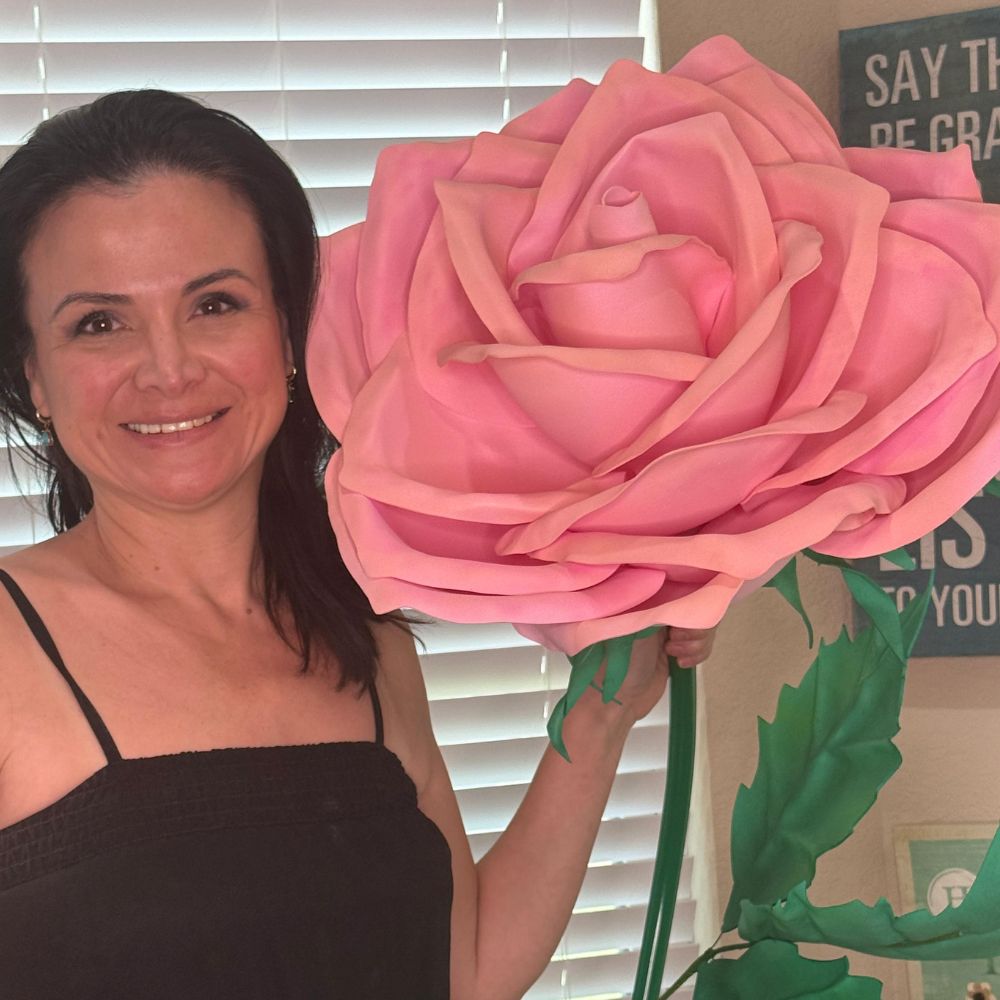
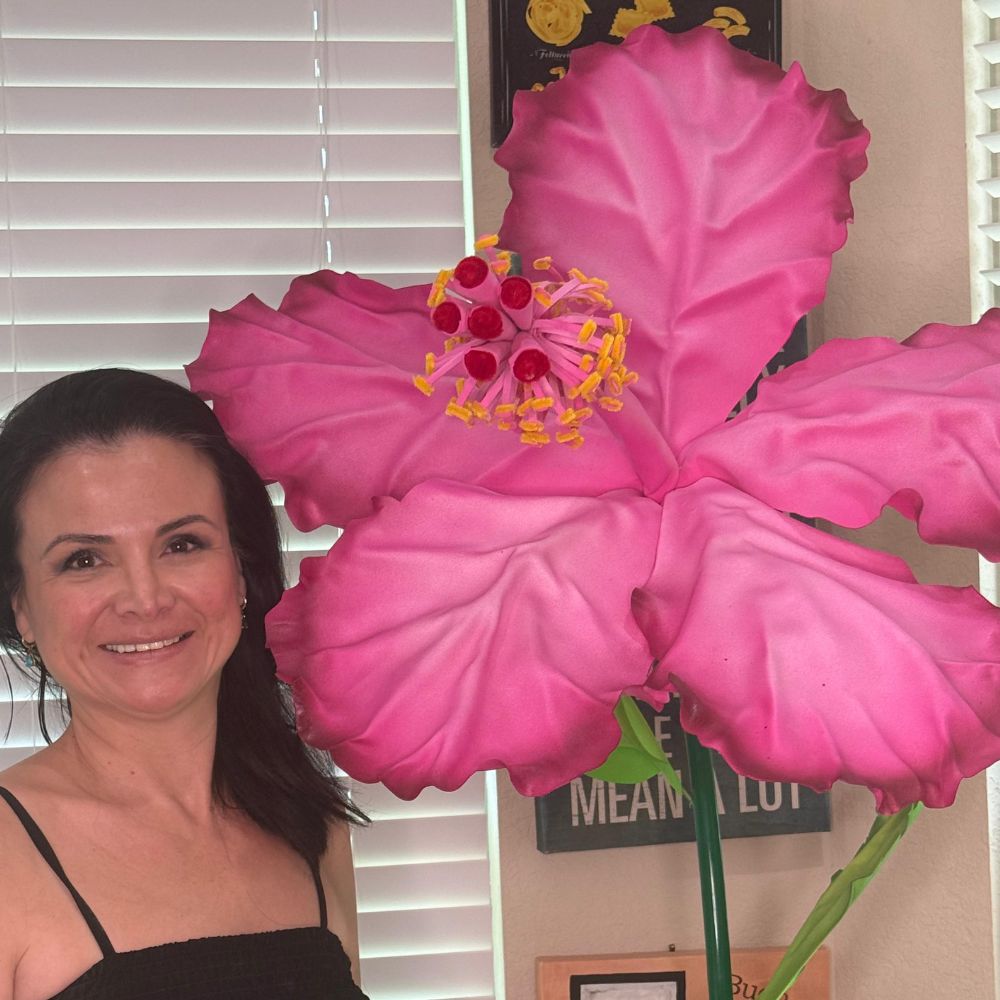
EVA foam stands for Ethylene-Vinyl Acetate. It's the same material used in high-quality yoga mats, athletic shoe soles, and children's play mats. It's engineered to be flexible, resilient, and long-lasting — which makes it almost suspiciously well-suited for giant flower construction.
When I first discovered EVA foam for giant flowers, it was a total game-changer. I'd been struggling with paper petals that wouldn't hold their shape in the Houston heat. The first time I heat-formed an EVA petal and watched it curl perfectly — and stay curled — I knew I'd found something special.
Our kits use premium EVA foam sheets in thicknesses ranging from 2mm to 6mm, depending on the flower type. Here's how the layering logic works:
Every piece in our kits is pre-cut to exact dimensions, so you're not starting from scratch with scissors and a template. You heat-form, layer, and assemble — and the result looks professional even on your very first attempt.
Ok, this is the section you actually came for. Let's get into the giant paper flower vs foam flower durability numbers — real, honest, and side-by-side.
Paper flowers — even well-made ones using quality crepe paper — typically hold up for 1 to 3 uses before they start showing significant wear. Edges fray. Petals lose their shape. Colors fade, especially under event lighting or any sun exposure. I've watched gorgeous paper flower walls get destroyed by a single humid afternoon in Houston.
EVA foam flowers, stored properly in flat boxes or hanging bags, routinely last 5 to 10 years. I have clients — event planners especially — who are still using foam flower sets I made back in 2017. They've been to dozens of events and still look incredible.
The Humidity Factor
Living in Houston means I deal with extreme humidity basically year-round. Paper flowers in our climate are a liability. I've seen a paper backdrop that looked perfect at setup turn limp and droopy within two hours of an outdoor event.
Foam doesn't care about humidity. It doesn't care about light rain. It's not going to warp in a hot car or absorb moisture from a venue's air conditioning condensation. For outdoor events especially, foam is the only material I recommend.
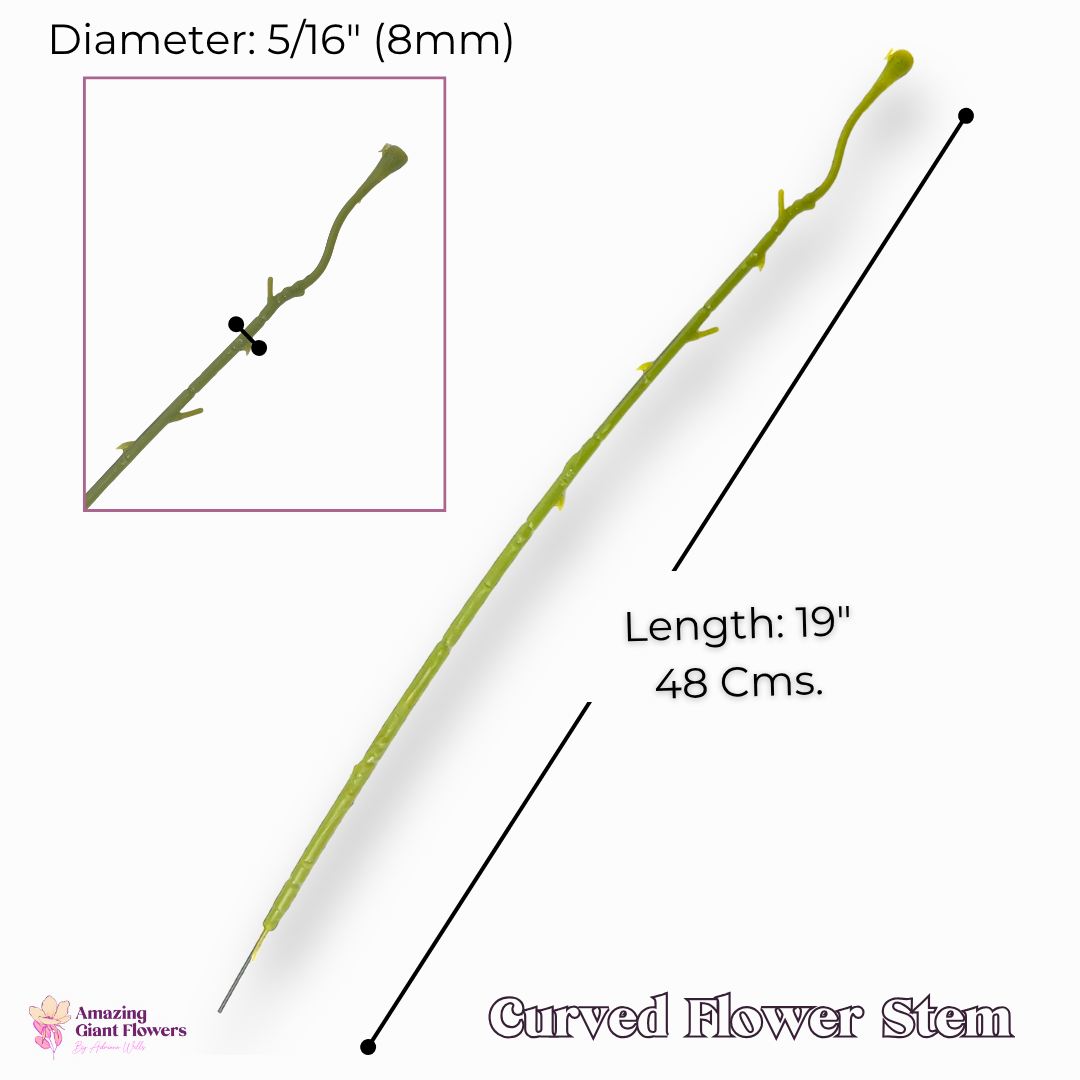
Paper flowers rely on glue joints that weaken with humidity and temperature changes. The petals start to separate. The base layers buckle. Foam flowers, especially when assembled with hot glue and reinforced with wire or our bendable pipe stems, hold their structure remarkably well — even after being disassembled, packed, transported, and rebuilt multiple times.
Real talk? Paper flowers look cheaper at first glance. And they are — upfront. But let's actually do the math here, because cost-per-use tells a very different story.
A DIY paper flower using quality crepe paper might cost you $8–$15 in materials per large bloom. Sounds great, right? But factor in the time — easily 45–90 minutes per flower for someone still learning — and the fact that you'll likely need to remake them for each event, and that "cheap" option starts looking a lot more expensive.
According to a Brides.com survey, couples spend an average of $2,000–$2,500 on wedding flowers alone. DIY paper flowers are a popular way to cut that cost — but only if they actually survive the event looking beautiful.
What Our Foam Kits Actually Cost
- Single freestanding flower kits: Start at around $80, up to about $180 for larger or more complex designs.
- Bundle kits (8–12 flowers): Range from $350 to $600, depending on size and style mix.
- Cost per use (bundle kit over 10 events): As low as $35–$60 per event for a full backdrop — a fraction of what paper costs when you factor in remake time.
Yes, that's more upfront. But here's the thing: if you use that bundle kit for even three events, you've already beaten the cost of making paper flowers from scratch each time. Use it for ten events? You've basically gotten your decor for free.
Event planners who rent out their foam flower sets charge anywhere from $50–$150 per flower per event. A bundle kit pays for itself after just a handful of rentals. That's a real business model — and I've seen our customers build it from the ground up.
According to The Knot's annual wedding report, couples are increasingly looking for reusable decor elements to offset rising event costs. Foam flowers fit that trend perfectly.
I don't want to be one of those people who says "foam is always better, full stop." Because honestly? Context matters. Let me give you the real breakdown by situation.
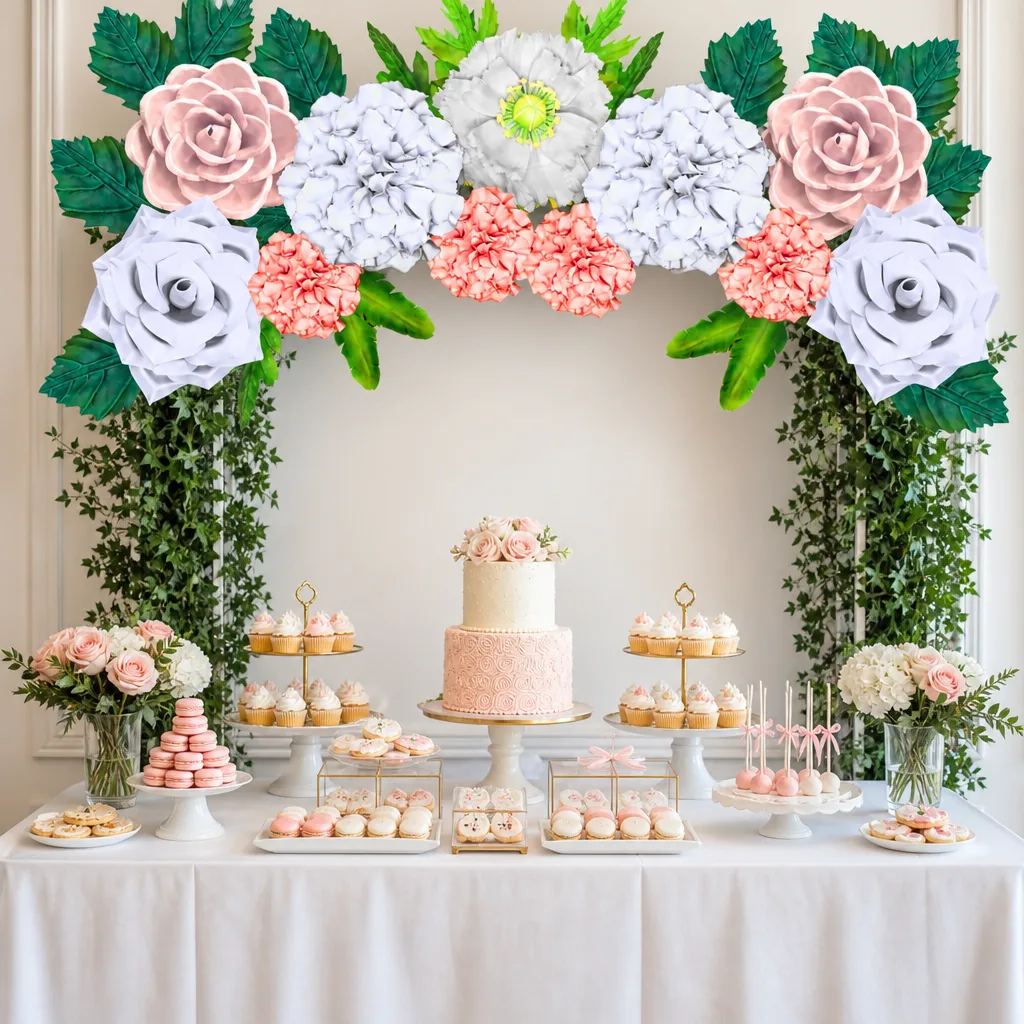
For wedding arches specifically — where flowers need to hold up through an entire ceremony, cocktail hour, and reception — I wrote a whole guide on giant foam flowers for wedding arches that walks you through exactly how to build something that lasts.
Check out our thoughts on giant flower centerpieces for 2026 events — nearly every professional installation we feature uses foam, and the reasons why become very clear when you see them side by side.
The Learning Curve: Which Material Is Actually Easier to Work With?
Ok, let's be honest about the learning curve. Because durability and cost don't matter if you can't actually make the thing look good.
Paper flower tutorials are everywhere, and the barrier to entry is low. But getting them to look truly professional takes real skill. Stretching crepe paper correctly, forming petals with consistent curves, layering without bunching — it's an art form that takes genuine practice. When I first started making giant flowers, I ruined so many petals trying to get the curl right. Too much heat from the iron and it scorches. Too little and it won't hold. The margin for error is genuinely small.
With our pre-cut EVA foam kits, you're skipping the hardest part entirely — the cutting and sizing. Every petal is already cut to the exact right shape and dimension. You heat-form, layer, and assemble. Our video tutorials walk you through every single step, filmed specifically for people who have never worked with foam before.
The heat gun does have a small learning curve — but foam is far more forgiving than paper. And once you get comfortable with it, the speed and consistency you gain are genuinely remarkable.
Here's something worth knowing: when Disney and Dolce & Gabbana came to us for giant flower installations, they didn't ask for paper. They needed flowers that could withstand professional lighting, crowds, repeated setups, and high-stakes visual standards. Foam was the only answer.
According to IBISWorld, the US event planning industry generates over $5 billion annually. Professional planners in that space don't gamble on materials that might fail. They choose what they know will perform — every single time.
A Event Marketer industry report noted that experiential marketing budgets have grown by over 60% in the last decade, with brands investing heavily in large-scale visual installations. Those installations need to look perfect — and hold up — under intense scrutiny.
For corporate events specifically, I'd recommend checking out our piece on corporate event engagement ideas for 2026 — foam flowers are showing up everywhere in branded activations right now. And for visual merchandising in retail, our guide on visual merchandising ideas for boutiques has incredible real-world examples of how shops are using giant flowers to drive foot traffic and social shares.
Storage, Transport, and Setup: The Practical Reality
This is the part people forget about when they're deep in the planning phase. Making the flowers is one thing. Getting them to the venue in one piece is another challenge entirely.
Paper flowers need to be stored in rigid boxes, individually wrapped, away from any humidity. Even then, they're vulnerable to crushing. A stack of boxes in a storage unit over a hot Houston summer? I've opened those boxes and found flowers that looked like they'd been through a hurricane.
If you're building a flower arch or backdrop, our guide on DIY giant flower backdrops for photos has a whole section on transport and setup logistics that'll save you a lot of headaches on event day.
Honestly, it depends on the paper and the conditions. Quality crepe paper flowers in a controlled indoor environment can last through 2–3 events if handled carefully. Tissue paper flowers are really single-use. Cardstock flowers hold their shape longer but are prone to creasing and color fade under bright event lighting.
If longevity matters to you at all — and it should, especially if you're spending real time making these — foam is the smarter investment by a significant margin. I have foam flowers from 2017 still in active rotation. I don't have a single paper flower that survived past its third event.
Yes! This is one of the biggest advantages of EVA foam over paper. Foam flowers handle humidity, light rain, and temperature changes without warping or falling apart. For extended outdoor use in direct sunlight, I recommend using UV-resistant paint or a clear sealant to prevent any color fading over time.
For outdoor weddings and garden parties especially, foam is the material I always recommend. Check out our full guide on giant flower wedding arches for outdoor setup tips that cover everything from anchoring to weatherproofing.
Is EVA foam difficult to work with if you're a beginner?
Not at all — especially with our pre-cut kits. Since every petal is already cut to size, you're just heat-forming, layering, and gluing. Most people complete their first flower in 1–2 hours. Our video tutorials cover every step, and I filmed them specifically for beginners who've never touched EVA foam before.
The heat gun takes a little practice to get comfortable with, but foam is forgiving. If a petal doesn't look right, you can reheat and reshape it. You simply can't do that with paper — once it's scorched or torn, it's done.
Paper flower materials run roughly $8–$15 per large bloom, but that cost repeats every time you need to remake them. Our EVA foam kits start at ~$80 for a single freestanding flower and $350–$600 for bundle kits of 8–12 flowers. When you factor in reusability — especially for event planners using them across multiple events — foam delivers dramatically better value per use.
According to The Knot's annual wedding report, couples are increasingly looking for reusable decor elements to offset rising event costs. Foam flowers fit that trend perfectly — and for planners building a rental business, they're genuinely income-generating assets.
Absolutely. Acrylic paint bonds beautifully to EVA foam, and you can achieve everything from soft pastels to bold saturated colors to metallic finishes. I recommend a light base coat first, then build up color in thin layers for the most professional result. Our guide on painting on foam core has all the technique details you need to get a flawless finish.
You can also use spray paint, alcohol inks for a watercolor effect, or even fabric dye for a deeply saturated look. The versatility of foam when it comes to color customization is genuinely one of its most underrated advantages over paper.
Are foam flowers safe for events with young children?
EVA foam is non-toxic, soft, and flexible — it's literally the same material used in children's play mats. Giant foam flowers are actually safer around kids than paper flowers, which can have sharp cut edges and are more likely to fall apart and create small debris. For baby showers, birthday parties, and quinceañeras, foam is my top recommendation every single time.
We have a whole collection of ideas for baby shower backdrops using giant flowers that shows just how versatile and kid-friendly foam flowers can be — from soft blush nursery installs to bold, colorful party backdrops.
So here's where I land after years of working with both materials: paper flowers have their place, and I'll never completely write them off. For a single intimate indoor event where the handmade aesthetic is the whole point — they're genuinely beautiful. I have deep respect for the craft.
But if you're investing your time, your money, and your creative energy into making something truly beautiful — you deserve a material that's going to hold up and show off that effort. Foam gives you durability, reusability, weather resistance, and professional results that paper simply can't match at scale or over time.
If you're ready to try foam and see what the difference feels like firsthand, head over to our shop at Amazing Giant Flowers. Every kit ships with pre-cut pieces and video tutorials, so you're never starting from zero. I can't wait to see what you make.
Ready to Create Something Amazing?
Browse our collection of giant flower kits and start your next project today.